
Travel photography has evolved dramatically over the past decade. What once required bulky gear and technical expertise can now be accomplished with a smartphone pulled from a back pocket. As social media platforms like Instagram prioritize visual storytelling, the debate between using an entry-level DSLR and the latest iPhone—like the iPhone 15 Pro—for travel content has never been more relevant. Is carrying a dedicated camera still worth it, or has smartphone technology rendered traditional cameras obsolete for casual creators?
The answer isn’t black and white. It depends on your goals, shooting environment, editing habits, and how much control you want over your final image. Let’s break down the capabilities of both options and explore whether a “real” camera still matters in the age of computational photography.
Image Quality: Beyond Megapixels
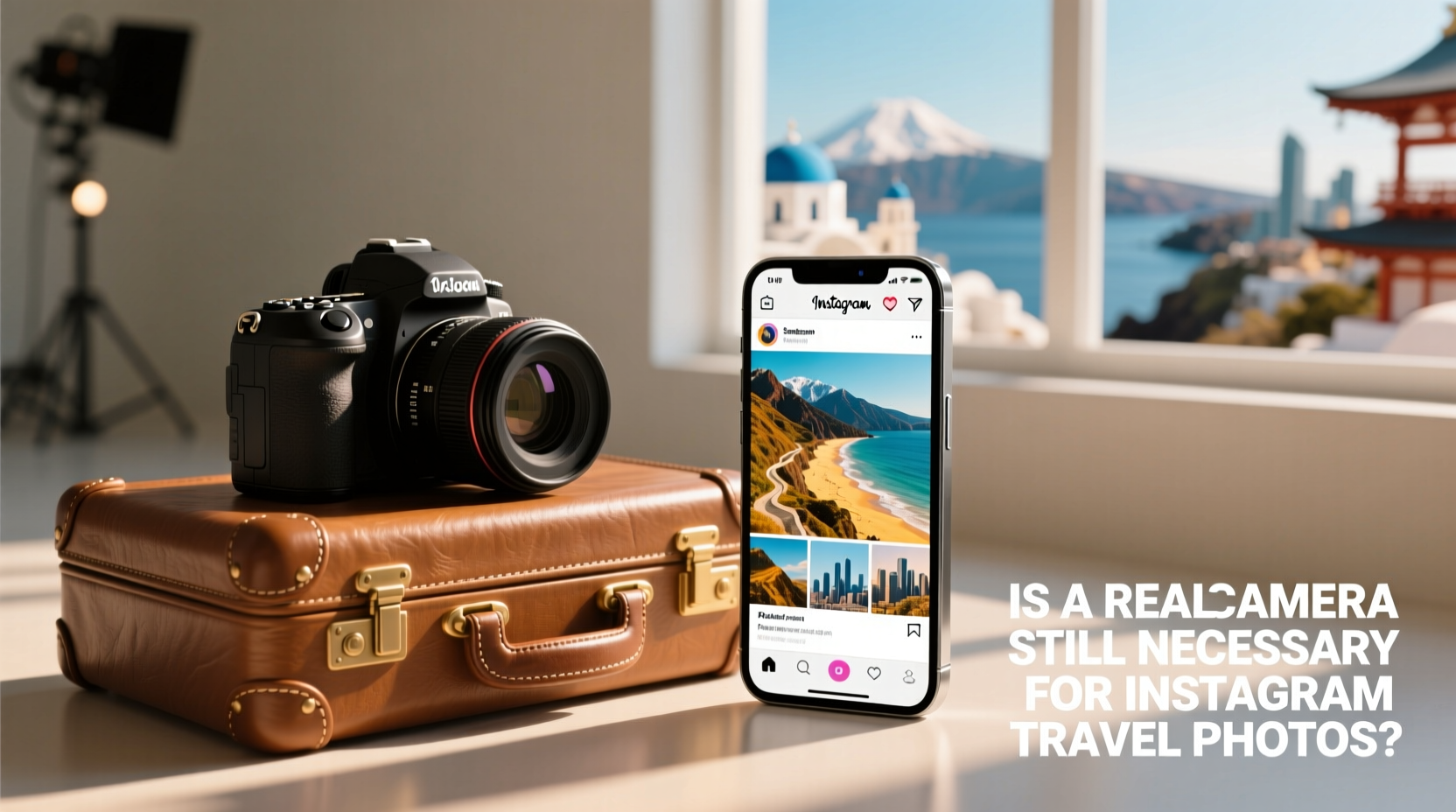
At first glance, specs might suggest the iPhone 15 Pro holds its own against entry-level DSLRs. It features a 48MP main sensor, advanced HDR, Deep Fusion, and Photonic Engine—all designed to optimize dynamic range and color accuracy. Meanwhile, entry-level DSLRs like the Canon EOS Rebel T7 or Nikon D3500 offer 24MP APS-C sensors, which are physically larger than the iPhone’s tiny chip.
Sensor size remains a critical differentiator. Larger sensors capture more light, resulting in better performance in low-light conditions and superior depth of field control. While the iPhone uses software to simulate bokeh (background blur), DSLRs achieve it optically through aperture settings—a distinction visible upon close inspection.
In daylight, the difference may be negligible to the average viewer. But in golden hour shots, dimly lit alleys, or mountainous backdrops with high contrast, the DSLR’s ability to retain detail in shadows and highlights becomes apparent.
“Smartphones have closed the gap significantly, but optical advantages still favor dedicated cameras—especially when you’re not just posting, but archiving memories.” — Lena Torres, Travel Photographer & Educator
Lens Flexibility and Zoom Capabilities
One of the most underrated advantages of DSLRs is lens interchangeability. With an entry-level kit, you typically start with an 18–55mm zoom lens, which covers wide-angle to short telephoto ranges. Add a 55–200mm telephoto lens, and suddenly you can capture distant landscapes or wildlife without losing quality.
The iPhone 15 Pro offers a triple-camera system: 24mm f/1.79 (wide), 2x optical zoom (48mm), and 5x telephoto (120mm) via its periscope lens. While impressive, digital zoom beyond 5x degrades image sharpness quickly. DSLRs, by contrast, maintain clarity across their entire optical zoom range—and can go much further with affordable telephoto lenses.
For travel photographers visiting diverse environments—from narrow city streets to open deserts—having multiple focal lengths at your disposal makes a tangible difference. Wide angles emphasize scale; telephotos isolate subjects. Smartphones simulate this with cropping and stitching, but they can’t match true optical reach.
| Feature | Entry-Level DSLR (e.g., Nikon D3500 + 18–55mm) | iPhone 15 Pro |
|---|---|---|
| Primary Sensor Size | APS-C (23.5 x 15.6 mm) | 1/1.28” (~9.7 x 7.3 mm) |
| Optical Zoom Range | 3x (18–55mm), expandable to 11x+ with additional lenses | 5x (120mm equivalent) |
| Low-Light Performance | Natural, less noise at ISO 1600+ | Strong AI processing up to ISO 3200, but synthetic grain appears |
| Manual Controls | Full control over shutter speed, aperture, ISO | Limited via third-party apps; defaults to auto |
| RAW Support | Native .NEF/.CR2 support | ProRAW available only in 12MP mode |
| Portability | Bulkier, requires bag space | Fits in pocket |
User Experience and Workflow Efficiency
The convenience factor cannot be overstated. The iPhone is always with you. You don’t need to remember batteries, memory cards, or lens caps. Open the camera app, tap, and share directly to Instagram. Geotagging, facial recognition, and automatic album sorting happen seamlessly in the background.
DSLRs require more intentionality. You must charge the battery, format the card, adjust settings manually, transfer files via card reader or Wi-Fi adapter, then edit before posting. This workflow slows you down—but that slowness can be beneficial. It forces deliberate composition, reduces snap-happy behavior, and often results in higher-quality selections.
Moreover, DSLRs excel in continuous shooting and burst modes, crucial for capturing fast-moving scenes like street festivals or wildlife encounters. The iPhone 15 Pro handles bursts well too, but buffer limitations mean it may drop frames during extended sequences.
When Simplicity Wins: A Real Example
Consider Sarah, a solo traveler documenting her three-week journey through Morocco. She brought both her Nikon D3500 and her iPhone 15 Pro. In bustling markets like Marrakech’s Medina, she relied almost entirely on her phone. Navigating crowds, haggling with vendors, and staying aware of her surroundings made pulling out a DSLR impractical. Her best candid moments—the spice vendor laughing, children chasing goats through alleys—were all captured discreetly on her iPhone.
But when she reached the Sahara Desert, she switched to the DSLR. At sunrise, the interplay of light and shadow across dunes demanded manual exposure control. She used a tripod, shot in RAW, and captured gradients no smartphone could replicate organically. These images became her top-performing posts—not because they were technically perfect, but because they felt immersive and authentic.
Sarah’s experience reflects a growing trend: hybrid use. Many successful travel influencers no longer choose one tool over the other—they leverage both strategically.
Editing and Post-Production Realities
Instagram success isn’t just about capture—it’s about presentation. Both platforms support robust editing, but the starting point matters. A well-exposed DSLR file gives you room to darken skies, lift shadows, and fine-tune white balance without introducing artifacts. An overprocessed iPhone photo, even with Smart HDR, can look plasticky or oversharpened.
That said, Apple’s ecosystem integration is unmatched. Photos sync instantly across devices. Third-party apps like Lightroom Mobile work flawlessly with ProRAW files. And with iCloud storage, backup is nearly automatic. DSLR users often face fragmented workflows unless they invest time setting up tethering, cloud backups, or external hard drives.
If your goal is daily posting with minimal friction, the iPhone streamlines the entire pipeline. If you aim to build a portfolio or sell prints, the DSLR provides archival-grade assets that stand up to scrutiny years later.
Do You Really Need a “Real” Camera for Instagram?
Let’s address the core question: Is a dedicated camera still necessary for Instagram travel content?
The short answer: No, not strictly necessary. The iPhone 15 Pro produces stunning, share-ready images straight out of the camera. Its computational photography compensates for hardware limitations, and its seamless integration with social platforms makes it ideal for consistent, high-volume posting.
However, “necessary” depends on your definition of success. If your goal is engagement, aesthetics, and authenticity, there are scenarios where a DSLR adds undeniable value:
- You shoot frequently in low light – Think candlelit dinners, night markets, or early-morning hikes.
- You want full creative control – Aperture, shutter speed, and focus stacking aren’t fully accessible on iPhones without workarounds.
- You plan to monetize your photography – Brands and publishers often prefer high-resolution originals from dedicated cameras.
- You value longevity – DSLR files age better. Future displays will reveal the limitations of heavily processed smartphone JPEGs.
For many casual travelers, the iPhone 15 Pro is sufficient—and sometimes preferable. But for those seeking depth, dimension, and artistic precision, a DSLR remains a powerful ally.
Checklist: Choosing the Right Tool for Your Travel Photography
- ✅ Assess your typical shooting environment (urban, natural, indoor, nighttime).
- ✅ Determine how much time you’re willing to spend editing and managing files.
- ✅ Consider your audience—do they value authenticity over polish?
- ✅ Evaluate portability needs—will extra weight hinder your experience?
- ✅ Test both devices side-by-side before deciding.
- ✅ Decide if you’ll ever print or license your photos.
- ✅ Be honest about consistency—are you more likely to carry a phone or a camera?
FAQ
Can the iPhone 15 Pro replace a DSLR for professional travel blogging?
It can for many bloggers, especially those focused on lifestyle content rather than technical photography. However, professionals who rely on image licensing, print publications, or brand collaborations often still prefer DSLR or mirrorless systems for their resolution, dynamic range, and reliability in varied conditions.
Does Instagram compress photos differently based on device?
No, Instagram compresses all uploads similarly regardless of source. However, higher-quality source files (from DSLRs) tend to degrade less during compression because they contain more detail and tonal information to begin with.
Are mirrorless cameras a better alternative than DSLRs?
Mirrorless cameras combine DSLR-level image quality with compact designs and advanced video features. Models like the Sony ZV-E10 or Fujifilm X-S10 offer excellent travel photography performance and are increasingly popular among influencers. They represent a middle ground between smartphones and bulkier DSLRs.
Final Verdict: Tools Serve Purpose
The debate between entry-level DSLRs and the iPhone 15 Pro isn’t about which is objectively better—it’s about alignment with purpose. The iPhone excels in immediacy, connectivity, and ease of use. The DSLR shines in creative control, optical performance, and long-term asset value.
You don’t need a “real” camera to take great Instagram photos. But if you find yourself wishing for sharper zoom, cleaner night shots, or shallower depth of field, a dedicated camera might be the upgrade you didn’t know you needed.
Many seasoned travel photographers now operate under a simple rule: Phone for stories, camera for stills. Use the iPhone for Reels, behind-the-scenes clips, and quick updates. Reserve the DSLR for hero images—the ones that define your journey and stop scrollers mid-feed.
“The best camera is the one you have with you. But the best photo often comes from the one you chose to bring.” — Amir Shah, National Geographic Contributor
Take Action Today
Don’t overthink your gear. Start by auditing your last 20 travel photos. Ask: Which device took the shots you’re most proud of? Where did you feel limited? Try a week-long experiment—shoot only with your phone, then repeat with a DSLR. Compare results, not just technically, but emotionally. Which images feel more like *you*?
Whether you stick with your iPhone or invest in a starter DSLR, remember that storytelling transcends tools. Clarity of vision matters more than megapixels. Intention beats automation. And connection—with place, people, and audience—is what turns good photos into unforgettable ones.




 浙公网安备
33010002000092号
浙公网安备
33010002000092号 浙B2-20120091-4
Comments
No comments yet. Why don't you start the discussion?