
For centuries, the act of reading has been inseparable from paper—ink-stained fingers, dog-eared pages, and the quiet rustle of turning sheets. Today, that tradition is being challenged by sleek devices that fit thousands of books in the palm of your hand. The rise of e-readers like Kindle, Kobo, and Nook has transformed how we access literature, but it’s also sparked a debate: does reading on a screen diminish the experience?
The answer isn’t binary. For some, digital reading offers unmatched convenience and accessibility. For others, nothing replaces the sensory richness of a physical book. This article examines both sides—not to declare a winner, but to help readers understand the trade-offs and make informed choices based on their habits, goals, and preferences.
The Sensory Appeal of Physical Books
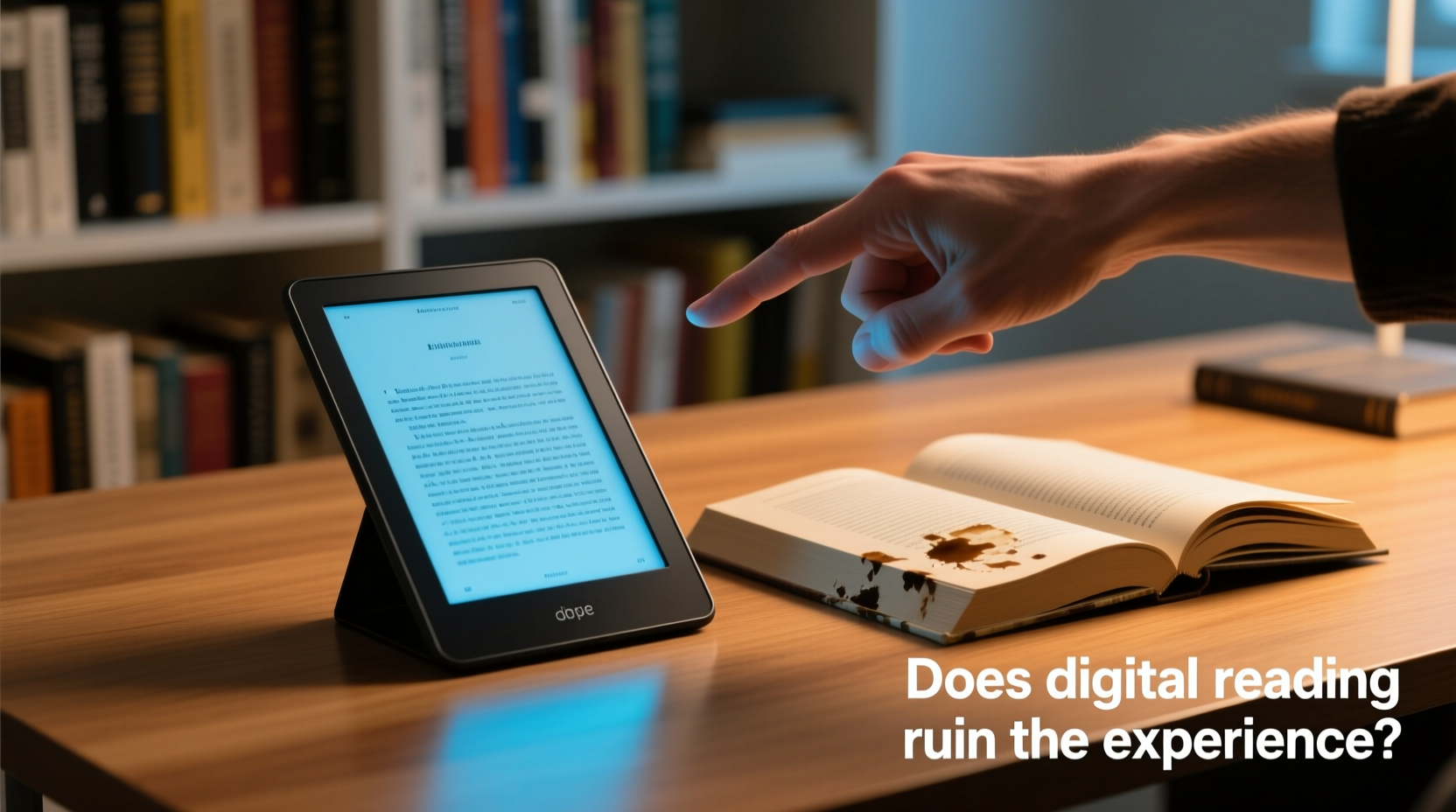
Physical books engage more than just the eyes. They are tactile objects with weight, texture, and even scent. The feel of paper, the visual layout of a page, and the spatial memory of where a passage appears—all contribute to a deeper cognitive and emotional connection.
Researchers have found that readers often remember information better when it comes from a printed book. A 2014 study published in International Journal of Educational Research showed that participants who read on paper performed better on comprehension tests than those using screens, especially with longer or more complex texts. The researchers attributed this to stronger mental mapping—the ability to recall where something was on a page.
“Reading a physical book creates a three-dimensional mental map. You remember not just the content, but its location—top of the left page, near the end of chapter three. That spatial context aids retention.” — Dr. Naomi Baron, Professor of Linguistics, American University
Additionally, physical books offer fewer distractions. There are no notifications, no hyperlinks, no temptation to check email mid-chapter. This undivided attention fosters deeper immersion, particularly important for literary fiction or dense nonfiction.
The Practical Advantages of E-Readers
E-readers shine in situations where portability, accessibility, and functionality matter most. Travelers, commuters, and students benefit from carrying an entire library without the bulk. A single device can hold textbooks, novels, and reference materials, making it ideal for academic or professional use.
Modern e-readers use e-ink technology, which mimics the appearance of ink on paper and reduces eye strain compared to tablets or smartphones. Unlike LCD screens, e-ink displays don’t emit blue light directly and are readable in bright sunlight. Many models are also waterproof, allowing reading at the beach or in the bath without fear.
Customization is another major advantage. Readers can adjust font size, line spacing, and margins—critical for those with visual impairments or dyslexia. Built-in dictionaries, highlighting tools, and note-taking features enhance engagement, especially for scholarly work.
Moreover, e-books are often cheaper than print editions, and many classics are available for free through public domain libraries like Project Gutenberg. Subscription services such as Kindle Unlimited provide unlimited access to thousands of titles for a monthly fee, offering exceptional value for voracious readers.
Comparing Reading Experience: A Side-by-Side Analysis
| Feature | Physical Books | E-Readers |
|---|---|---|
| Portability | Limited by number and weight of books | Thousands of books in one lightweight device |
| Eye Comfort | Natural, no screen glare | E-ink reduces strain; adjustable lighting |
| Durability | Vulnerable to water, wear, and damage | Waterproof models; long battery life |
| Distractions | None (no connectivity) | Potential interruptions if Wi-Fi enabled |
| Ownership & Resale | Can lend, gift, or resell | Licensed content; no resale rights |
| Environmental Impact | Uses paper, ink, shipping emissions | Manufacturing footprint, but lower per-use impact over time |
| Accessibility Features | Limited to print size and lighting | Adjustable fonts, text-to-speech, dictionary integration |
This comparison reveals that neither format is universally superior. The best choice depends on context: purpose of reading, environment, personal needs, and emotional preferences.
A Real-World Example: Sarah’s Reading Journey
Sarah, a graduate student in psychology, used to rely entirely on physical textbooks. She highlighted passages, wrote notes in margins, and arranged her books around her desk like reference sentinels. But during a semester abroad, lugging heavy books became impractical. She bought a Kindle Paperwhite and was skeptical at first.
To her surprise, she adapted quickly. She appreciated the ability to search terms across all her books, look up definitions instantly, and sync notes to her cloud. When studying dense research papers, the ability to resize fonts helped reduce eye fatigue. On weekends, however, she still visited local bookshops and bought novels in print—especially poetry and literary fiction.
“I realized I wasn’t abandoning books,” she said. “I was just using the right tool for the job. My e-reader handles utility; my physical books handle soul.”
Sarah’s experience reflects a growing trend: hybrid reading. Many people now fluidly switch between formats depending on need, mood, and circumstance.
When Screens May Diminish the Experience
While e-readers have improved dramatically, certain aspects of screen-based reading can detract from immersion. One issue is the lack of haptic feedback. Without the physical progress of turning pages, readers may feel less connected to the narrative arc. Some studies suggest this leads to shallower processing—skimming rather than deep reading.
A 2021 meta-analysis in Computers & Education found that students consistently reported lower satisfaction and higher mental effort when reading digitally, particularly for long-form content. The authors noted that even with e-ink, the brain treats screen reading differently, often anticipating distraction.
Another concern is digital ownership. When you buy a physical book, it’s yours forever. With e-books, you’re purchasing a license. Publishers can revoke access, and platforms can shut down. In 2019, Amazon remotely deleted copies of George Orwell’s *Animal Farm* and *1984* from users’ devices—a chilling irony given the themes of the books.
Maximizing Your Reading Experience: A Practical Checklist
Whether you prefer e-readers, physical books, or both, these steps can help you get the most out of your reading:
- Evaluate the purpose: Choose format based on why you’re reading (learning, relaxing, researching).
- Minimize distractions: Turn off Wi-Fi and notifications on your e-reader during focused sessions.
- Use night mode wisely: Enable warm lighting on e-readers in the evening to reduce blue light exposure.
- Take handwritten notes: Even when reading digitally, jotting thoughts on paper can improve retention.
- Rotate formats: Try reading a novel on paper and a nonfiction book on your device to compare experiences.
- Store properly: Keep physical books away from humidity and sunlight; protect e-readers with cases.
- Support local bookstores: Buy print editions from independent sellers to sustain literary culture.
Frequently Asked Questions
Does reading on a screen cause more eye strain than reading a book?
Traditional backlit screens (like phones and tablets) can cause eye fatigue due to blue light and glare. However, e-readers with e-ink technology are designed to mimic paper and typically cause less strain than LCDs. Many users report reading for hours on e-ink devices without discomfort, especially with front lighting adjusted to ambient conditions.
Are e-books really cheaper than physical books?
Not always. While new e-books are often priced lower than hardcovers, they’re frequently similar in price to paperbacks. Additionally, used physical books can be purchased at steep discounts or borrowed for free from libraries. However, subscription models and free public domain titles give e-books a cost advantage for high-volume readers.
Can I annotate and highlight effectively on an e-reader?
Yes. Most e-readers allow tapping to highlight and adding notes. These annotations sync across devices and can be exported. However, some readers find the process less intuitive than writing directly on paper. Handwritten margin notes in physical books often feel more personal and spontaneous.
Conclusion: It’s Not About Replacement—It’s About Choice
The question isn’t whether e-readers ruin the reading experience, but how we choose to integrate them into our lives. Technology doesn’t have to displace tradition; it can complement it. The tactile joy of a well-made book remains irreplaceable for many. Yet the convenience, accessibility, and innovation of e-readers have opened reading to millions who might otherwise struggle with space, cost, or physical limitations.
Rather than viewing this as a battle between old and new, consider embracing a balanced approach. Use e-readers for travel, research, or when storage is limited. Return to physical books when you want to savor language, build a personal library, or disconnect from digital noise. The future of reading isn’t one or the other—it’s both.




 浙公网安备
33010002000092号
浙公网安备
33010002000092号 浙B2-20120091-4
Comments
No comments yet. Why don't you start the discussion?