
Bread is one of the most commonly wasted foods in households worldwide. A loaf that was soft and fresh two days ago can quickly turn dry, tough, and seemingly unusable. But tossing stale bread isn’t just wasteful—it’s unnecessary. With a few simple kitchen techniques, you can transform hardened loaves into golden, crunchy croutons or versatile breadcrumbs. Not only does this reduce food waste, but it also enhances your cooking with homemade ingredients that store well and outperform store-bought versions in both taste and texture.
The transformation from stale to sensational hinges on understanding moisture, heat, and timing. Whether you're reviving yesterday's baguette or repurposing last week’s sandwich bread, this guide walks you through reliable methods, expert-backed tips, and real-world applications that turn a kitchen problem into a culinary opportunity.
Why Stale Bread Isn’t Dead Bread
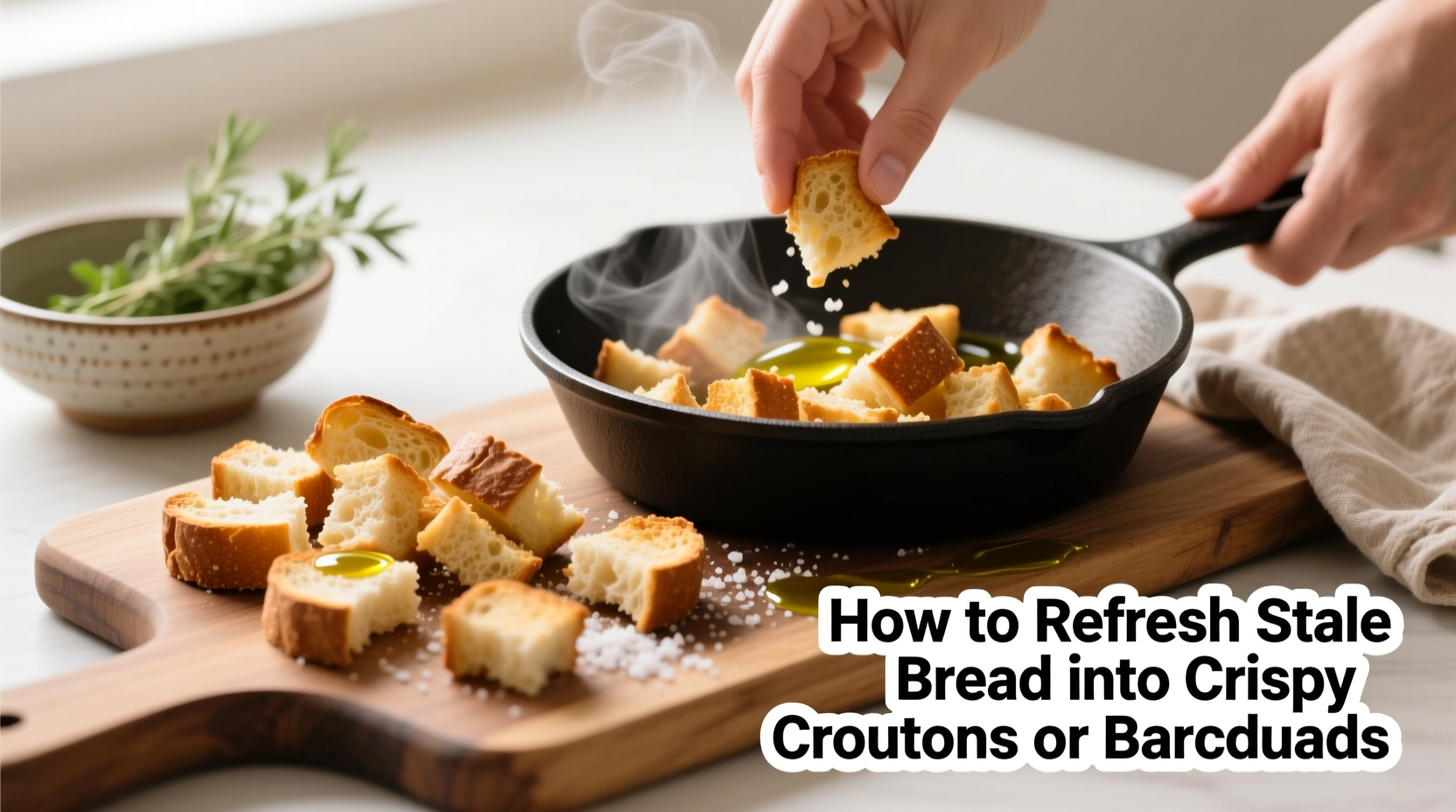
Staling, or \"retrogradation,\" is a natural process where starch molecules in bread recrystallize as moisture migrates out of the crumb and into the crust or surrounding air. This results in a dry, tough texture—but crucially, the bread isn’t spoiled unless mold appears. In fact, slightly stale bread often performs better in recipes like French toast, strata, or stuffing because it absorbs liquids without disintegrating.
For croutons and breadcrumbs, staleness is actually an advantage. Dry bread browns more evenly in the oven and grinds more cleanly in a processor. The key is controlling the next phase: dehydration and crisping.
“Stale bread is not a loss—it’s a transition point. Many classic preparations rely on it. Croutons, in particular, benefit from starting dry.” — Chef Marcus Bell, Culinary Instructor at New England Institute of Food Arts
How to Make Crispy Croutons from Stale Bread
Croutons are small cubes of baked or fried bread that add crunch and flavor to salads, soups, and casseroles. When made at home, they’re infinitely customizable—unlike commercial versions, which often contain preservatives and excess sodium.
Step-by-Step Guide to Homemade Croutons
- Cut the bread into uniform cubes: Use a serrated knife to slice stale bread into ¾-inch cubes. Uniformity ensures even baking. Remove any excessively hard or moldy sections.
- Season generously: In a bowl, toss the cubes with 1–2 tablespoons of olive oil (or melted butter) per 2 cups of bread. Add salt, freshly ground black pepper, garlic powder, dried herbs (such as oregano, thyme, or rosemary), or grated Parmesan for extra depth.
- Spread on a baking sheet: Arrange the seasoned cubes in a single layer on a parchment-lined tray. Crowding leads to steaming instead of crisping.
- Bake at 375°F (190°C): Roast for 12–18 minutes, flipping halfway through, until golden brown and crisp throughout. Thicker breads like sourdough may need up to 25 minutes.
- Cool completely: Let the croutons cool on the tray. They’ll continue to crisp as they lose residual heat.
Variations by Bread Type
| Bread Type | Cutting Size | Best Seasoning Pairings | Baking Time |
|---|---|---|---|
| Sourdough | ¾ inch | Garlic, rosemary, olive oil | 15–20 min |
| Brioche | ½ inch | Cinnamon, sugar, butter (sweet version) | 10–14 min |
| Whole Wheat | ¾ inch | Thyme, onion powder, paprika | 16–20 min |
| Baguette | ½–¾ inch | Herbes de Provence, sea salt | 12–16 min |
| Gluten-Free | ¾ inch | Tamari, sesame oil, nutritional yeast | 14–18 min |
Store cooled croutons in an airtight container at room temperature for up to two weeks. For longer storage, freeze them for up to three months—no thawing needed before use.
Turning Stale Bread into Breadcrumbs
Breadcrumbs serve multiple roles: as binders in meatballs and veggie burgers, coatings for frying, or toppings for baked dishes. Homemade breadcrumbs offer superior flavor and texture control compared to pre-packaged options.
Dry vs. Fresh Breadcrumbs
- Dry breadcrumbs: Made from fully dehydrated bread. Ideal for breading and topping casseroles. They absorb less oil when frying, resulting in a lighter crust.
- Fresh breadcrumbs: Pulverized from slightly moist bread. Better for binding mixtures like meatloaf, as they retain more moisture during cooking.
For long-term storage and versatility, dry breadcrumbs are recommended.
Step-by-Step: From Loaf to Breadcrumb
- Pre-dry the bread (if not already stale): Cut bread into slices or cubes and spread on a baking sheet. Bake at 300°F (150°C) for 15–20 minutes until completely dry but not browned.
- Cool completely: Warm bread will clump in the processor.
- Pulse in batches: Use a food processor or blender. Pulse until desired consistency is reached—fine for dusting, coarse for crunch.
- Optional toasting: For golden crumbs, return processed breadcrumbs to the oven at 350°F (175°C) for 5–8 minutes, stirring once.
- Season after grinding: Add salt, herbs, or spices post-processing to maintain even distribution.
Storage Guidelines
Transfer cooled breadcrumbs to airtight glass jars or resealable containers. Store in a cool, dark pantry for up to one month. For extended shelf life—especially if using whole grain or enriched breads—freeze for up to six months. Freezing prevents rancidity from natural oils in wheat germ.
Real Example: A Week of Zero-Waste Cooking
When Sarah, a home cook in Portland, committed to reducing her household’s food waste, she started saving every leftover bread end in a freezer bag. Over ten days, she accumulated over two pounds of assorted stale bread: sourdough heels, ciabatta scraps, and even a forgotten English muffin.
On Sunday, she dedicated 45 minutes to processing it all. She sorted by type, toasted each batch separately, and ground them into three distinct breadcrumb varieties. The sourdough became a garlic-herb topping for her roasted broccoli gratin. The ciabatta cubes were turned into croutons for a kale Caesar salad. The English muffin crumbs? Mixed into turkey burgers for improved texture.
“I used to throw away so much bread,” she said. “Now I see it as a base ingredient—like flour or stock. It’s changed how I plan meals.”
Checklist: Turn Stale Bread into Gold
✅ Collect stale bread in a labeled bag or container ✅ Sort by type for consistent flavor and color ✅ Pre-toast if bread is still soft ✅ Use a food processor for fast, even crumbs ✅ Season after grinding for better control ✅ Store in airtight containers in pantry or freezer ✅ Label with date and contents
Avoid These Common Mistakes
- Using moldy bread: Even if only one corner is fuzzy, discard the entire piece. Mold spreads microscopically.
- Overcrowding the baking sheet: Leads to uneven crisping and chewy centers.
- Adding wet ingredients before baking: Tossing herbs or cheese into bread cubes before drying can cause sogginess. Add delicate seasonings after baking.
- Grinding warm bread: Steam creates clumps. Always cool completely before processing.
- Storing in humid environments: Breadcrumbs absorb moisture and spoil faster. Avoid placing near stoves or sinks.
FAQ
Can I make croutons without an oven?
Yes. Use a skillet over medium heat. Add oil or butter, then bread cubes. Stir frequently for 6–10 minutes until golden and crisp. Watch closely to prevent burning.
Are homemade breadcrumbs healthier than store-bought?
Typically, yes. You control the ingredients—no added sugars, preservatives, or anti-caking agents. Whole grain homemade versions also retain more fiber and nutrients.
Can I use sweet bread like cinnamon raisin for savory dishes?
It depends on the recipe. Sweet breadcrumbs can clash with savory flavors. Reserve them for fruit stuffings, sweet dumplings, or dessert toppings. If repurposing, avoid adding extra sugar.
Expert Insight: The Value of Bread Repurposing
“In professional kitchens, we never throw away bread. It’s too valuable. Croutons, breadcrumbs, thickeners—even bread pudding—all stem from the same principle: respect the ingredient. Home cooks can adopt this mindset easily.” — Chef Lila Tran, Sustainable Cuisine Advocate
This philosophy extends beyond cost savings. According to ReFED, a nonprofit focused on food waste reduction, the average American household throws away about 10% of its purchased bread. That’s roughly $1.5 billion worth of bread wasted annually in the U.S. alone. Small habits—like transforming stale loaves—add up to meaningful environmental and economic impact.
Conclusion: Waste Less, Flavor More
Reviving stale bread isn’t just a kitchen hack—it’s a shift in perspective. Instead of viewing dry bread as a failure, see it as a blank canvas for culinary creativity. Whether you're crafting restaurant-quality croutons for a weekday salad or whipping up breadcrumbs for Sunday’s meatloaf, you’re enhancing your meals while reducing waste.
The tools you need are already in your kitchen: a knife, a baking sheet, and a little patience. No special equipment, no complicated steps. Just practical, time-tested methods that connect you more deeply to your food.




 浙公网安备
33010002000092号
浙公网安备
33010002000092号 浙B2-20120091-4
Comments
No comments yet. Why don't you start the discussion?