
Quartz watches are celebrated for their accuracy, affordability, and low maintenance. Yet even the most reliable timepieces can develop problems over time. Whether your watch has stopped ticking, displays inconsistent timekeeping, or shows signs of moisture damage, understanding the root causes and solutions can save you time and money. This guide walks through the most frequent quartz movement issues, how to diagnose them, and practical steps to restore function—without immediately resorting to professional repair.
Understanding Quartz Movement Basics
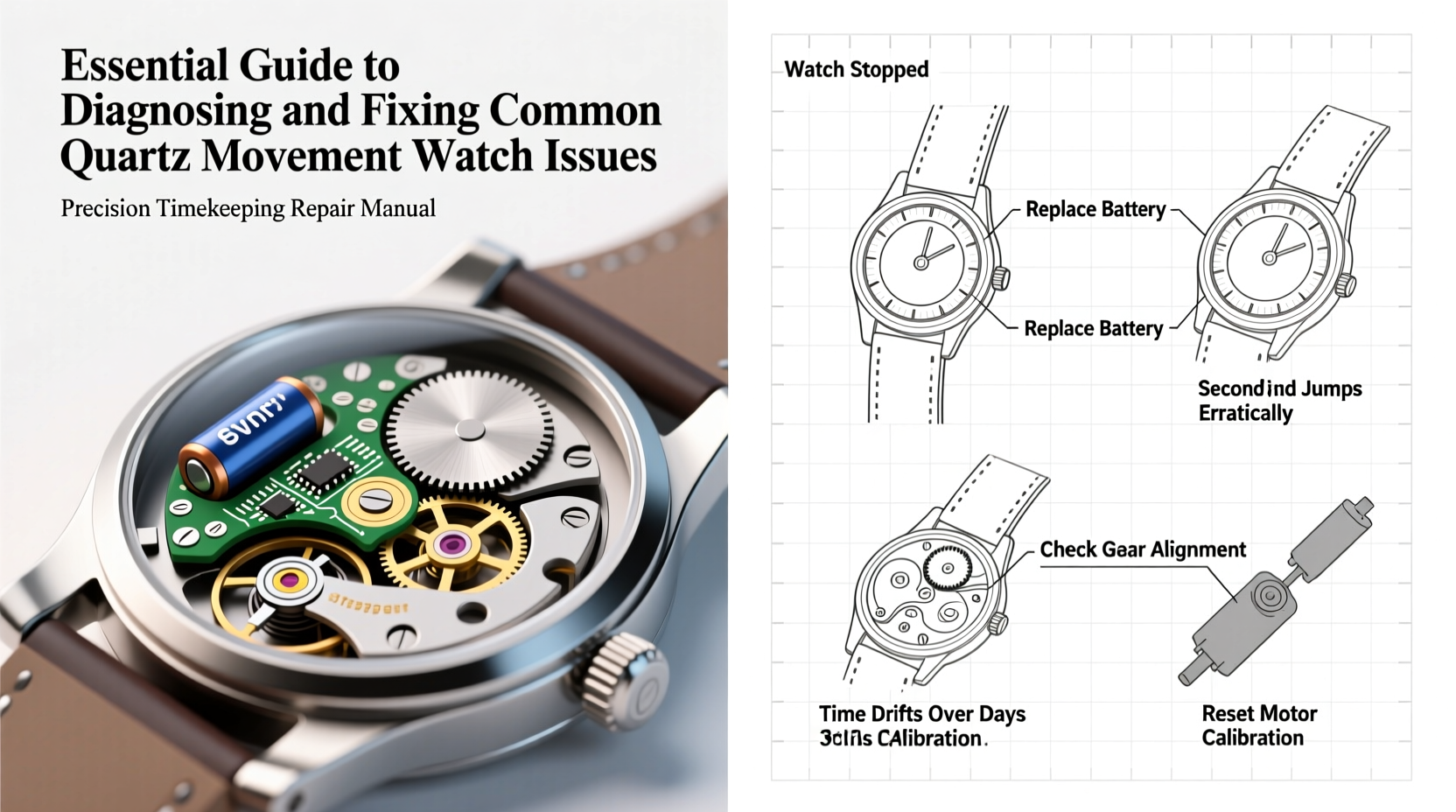
Before troubleshooting, it helps to know how a quartz watch works. At its core, a quartz movement uses a battery to send an electrical current through a small quartz crystal. The crystal vibrates at a precise frequency—32,768 times per second—which an integrated circuit counts and converts into a single pulse per second. This pulse drives the motor that moves the watch hands. Because this system relies on multiple components working in harmony, failure in any part can disrupt performance.
Common components include:
- Battery – Powers the entire system; typically lasts 1–3 years.
- Quartz Crystal – The timekeeping oscillator.
- Integrated Circuit (IC) – Processes signals from the crystal.
- Stepper Motor – Converts electrical pulses into mechanical motion.
- Hands and Dial Assembly – Display time; misalignment affects readability.
- Case and Gasket Seals – Prevent moisture and dust ingress.
When one element fails, symptoms vary widely—from complete stoppage to erratic hand movement. Recognizing patterns is key to accurate diagnosis.
Diagnosing Common Quartz Watch Problems
Most quartz issues fall into predictable categories. Identifying the correct one narrows down possible fixes.
1. Watch Has Stopped Running
The most common complaint. Begin by checking the battery. A dead battery is responsible for over 80% of stopped quartz watches. If the second hand jumps in two-second intervals before stopping, it’s a classic sign of low power.
2. Inaccurate Timekeeping
If the watch runs fast or slow by minutes per day, the issue may lie beyond the battery. Possible culprits include:
- Magnetic interference disrupting the IC or motor.
- Damaged or aged quartz crystal (rare but possible).
- Moisture affecting circuit conductivity.
3. Second Hand Skips Multiple Seconds
A jumping second hand—especially in two- or five-second intervals—is a built-in warning feature. Most modern quartz movements signal low battery this way. However, intermittent skipping could also indicate poor electrical contact due to corrosion or loose parts.
4. Hands Are Misaligned or Stuck
If the watch runs but the hands don’t move correctly, the problem may be mechanical. The hour or minute hand might be touching each other or the crystal, causing friction. Alternatively, the stem may not have been properly reset after setting the time.
5. Moisture Inside the Case
Fogging under the crystal suggests compromised seals. Exposure to steam, hot showers, or underwater use without proper water resistance often leads to condensation. Left untreated, moisture corrodes circuits and ruins the movement.
“Even water-resistant watches need seal inspections every 18 months. Gaskets degrade over time, especially with temperature fluctuations.” — Daniel Reeves, Master Watch Technician
Step-by-Step Guide to Fixing a Non-Working Quartz Watch
Follow this logical sequence to identify and resolve the issue safely.
- Inspect the watch externally. Check for visible damage, fogging, or stuck hands. Ensure the crown is fully pushed in.
- Replace the battery. Use the correct model (found in the case back or manual). Clean the battery contacts with a cotton swab and rubbing alcohol if corroded.
- Verify hand alignment. After battery replacement, set the time carefully. If the second hand jumps erratically, gently pull and push the crown to reset the circuit.
- Check for magnetization. Hold a compass near the watch. If the needle moves, demagnetize using a $20 demagnetizer tool available online.
- Test for moisture. If condensation is present, remove the battery and place the watch face-down on a warm (not hot) surface for 24 hours. Avoid direct sunlight.
- Observe operation. After reassembly, monitor for 24 hours. If issues persist, internal damage is likely.
Troubleshooting Checklist
Use this checklist to systematically evaluate your watch:
- ✅ Battery replaced recently? (If not, do so now.)
- ✅ No visible condensation or fogging?
- ✅ Hands moving freely without obstruction?
- ✅ Crown fully seated and not loose?
- ✅ Watch exposed to magnets (e.g., speakers, phone cases)?
- ✅ No signs of impact damage or cracked crystal?
- ✅ Second hand moving in regular one-second ticks?
If all items are checked and the watch still fails, the movement itself may need replacement—a cost-effective option given that new quartz movements are often under $20.
Do’s and Don’ts of Quartz Watch Maintenance
| Do’s | Don’ts |
|---|---|
| Replace batteries promptly when low. | Leave a dead battery inside—it can leak and destroy the movement. |
| Clean the case and crystal regularly with mild soap and water. | Submerge non-water-resistant watches in any liquid. |
| Store in a cool, dry place away from magnets. | Expose to extreme temperatures or direct heat sources. |
| Have gaskets checked annually if used near water. | Attempt complex disassembly without proper tools or training. |
| Use a soft brush to clean crevices. | Use harsh chemicals like bleach or acetone on the case or strap. |
Real Example: Reviving a Family Heirloom
Sarah inherited her grandfather’s vintage Seiko quartz watch. It hadn’t run in over five years. She opened the case, found a corroded battery, and cleaned the terminals with isopropyl alcohol. After installing a fresh SR626SW battery, the second hand began jumping in two-second intervals. Suspecting residual resistance, she gently tapped the watch and cycled the crown several times. Within minutes, the hand resumed normal one-second ticks. The watch now keeps perfect time and holds sentimental value restored.
This case illustrates how simple interventions—battery replacement, contact cleaning, and resetting—can revive seemingly dead watches.
When to Seek Professional Help
While many issues are DIY-friendly, some require expertise:
- Visible corrosion on the circuit board.
- Broken gears or damaged stepper motor.
- Need for pressure testing after seal replacement.
- Desire to preserve collectible or vintage models.
For these cases, consult a certified watchmaker. They have specialized tools for movement diagnostics, ultrasonic cleaning, and waterproofing verification.
FAQ
How long should a quartz watch battery last?
Most last between 1 and 3 years, depending on features like backlights, alarms, or chronographs. Simpler three-hand models tend to have longer battery life.
Can I replace a quartz movement myself?
Yes. Replacement movements are inexpensive and standardized. With basic tools (case opener, tweezers, hand press), you can swap the movement in under 30 minutes. Ensure the new movement matches the stem position and hand sizes.
Why does my watch stop after I change the battery?
This often happens if the battery isn’t making contact due to dirt or misalignment. Double-check orientation and clean the contacts. Also ensure the second hand isn’t touching other hands or the dial, which can stall the motor.
Final Thoughts
Quartz watches combine precision engineering with everyday durability. By learning to diagnose common issues—battery failure, hand misalignment, moisture intrusion—you gain control over maintenance and avoid unnecessary repairs. Regular care extends not only functionality but emotional connection, especially with heirloom pieces. A few simple habits make a lasting difference.




 浙公网安备
33010002000092号
浙公网安备
33010002000092号 浙B2-20120091-4
Comments
No comments yet. Why don't you start the discussion?