
For drummers living in apartments, sharing walls, or practicing late at night, noise control is a constant challenge. A high-quality drum practice pad offers a practical solution—allowing you to refine technique, build speed, and maintain rhythm without disturbing others. But not all pads deliver the same results. The right one mimics real drum feel, responds accurately to dynamics, and supports long-term skill development. Choosing poorly means wasted time and compromised progress.
This guide breaks down what truly matters when selecting a practice pad: responsiveness, durability, sound suppression, and realism. Whether you're a beginner building fundamentals or a seasoned player refining stick control, understanding these factors ensures your investment enhances—not hinders—your growth.
Key Features of an Effective Practice Pad
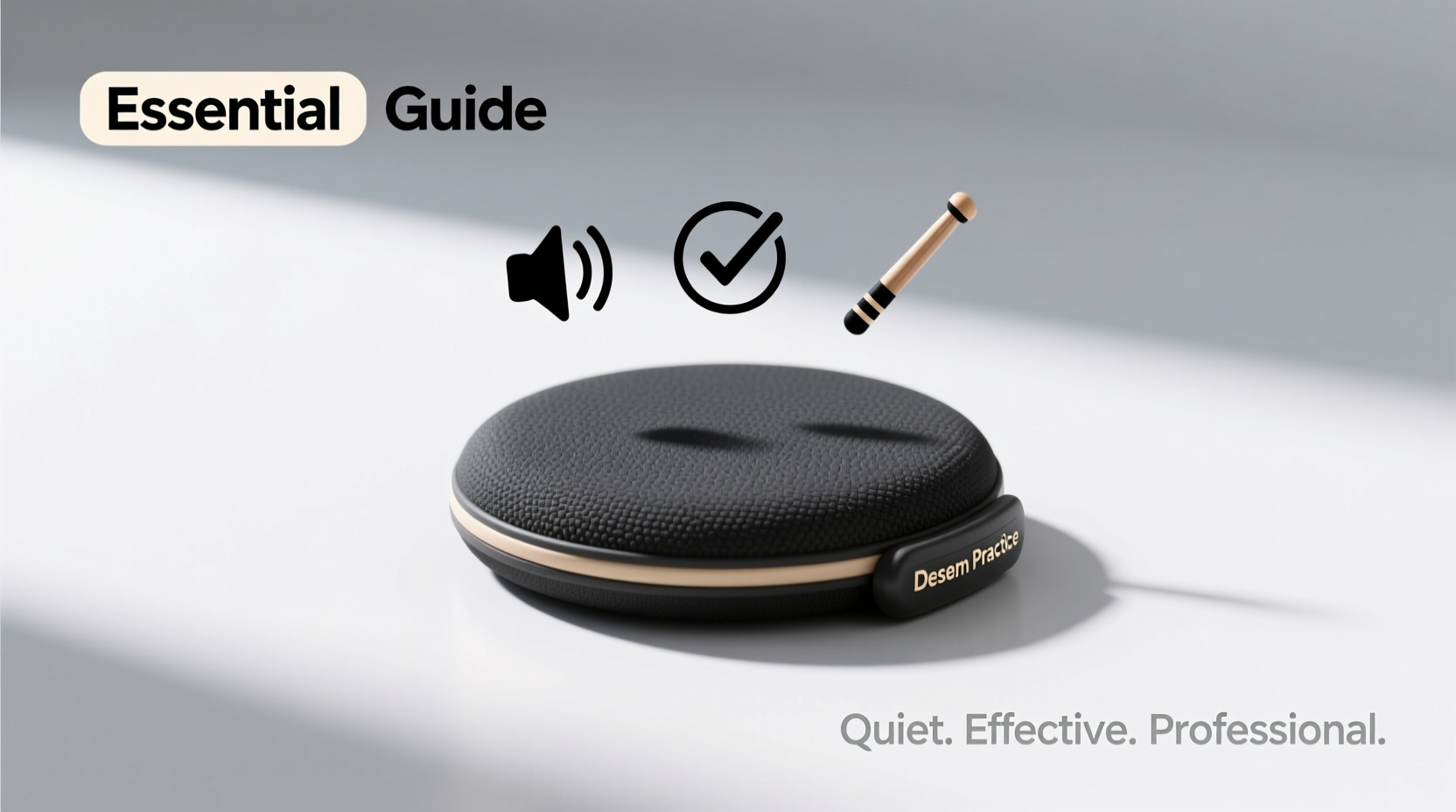
A good practice pad must balance realism with discretion. It should provide enough rebound to develop proper wrist motion while minimizing acoustic output. Here are the core attributes to evaluate:
- Surface Material: Most pads use rubber, mesh, or silicone. Rubber is durable and affordable but can feel stiff. Mesh offers superior rebound and a more natural drum-like response. Silicone strikes a middle ground—quiet, responsive, and gentle on sticks.
- Rebound Control: The pad should return energy to your stroke. Too little rebound leads to poor technique; too much can encourage lazy playing. Look for adjustable tension models if available.
- Noise Level: Even within quiet options, some materials produce more click or thud than others. Test recordings or user reviews often reveal subtle differences in sound signature.
- Size and Portability: Standard sizes range from 6” to 12”. Smaller pads are ideal for travel and rudiment drills; larger ones better simulate snare drum spacing.
- Mounting Options: Some pads include tripod stands, clamp attachments, or non-slip bases. Consider where and how you’ll use it—on a desk, table, or full drum throne setup.
Top Practice Pad Types Compared
Different designs serve different needs. Understanding their strengths helps match the tool to your goals.
| Type | Best For | Pros | Cons |
|---|---|---|---|
| Rubber Pads (e.g., Evans Realfeel) | Beginners, basic rudiments | Inexpensive, durable, widely available | Stiff rebound, less dynamic response |
| Mesh Head Pads (e.g., Roland RT-10 series) | Advanced players, electronic integration | Realistic rebound, ultra-quiet, velocity-sensitive | Higher cost, requires stand or mount |
| Silicone Pads (e.g., LP Nitro) | Balanced practice, stick longevity | Soft on sticks, excellent feel, very quiet | Limited availability, can be slippery |
| Foldable/Travel Pads (e.g., Ahead Drumsticks Pad) | Touring musicians, compact spaces | Portable, doubles as stick case | Smaller surface, limited rebound accuracy |
Step-by-Step Guide to Choosing Your Ideal Pad
Selecting the right pad isn’t just about brand names—it’s about aligning the tool with your environment, goals, and playing style. Follow this sequence to make a confident decision:
- Assess Your Practice Environment: Are you in a shared space? Do vibrations travel through walls or floors? If so, prioritize ultra-quiet materials like mesh or silicone and pair them with isolation mounts.
- Define Your Primary Use: Will you focus on rudiments, speed drills, or coordination exercises? Small rubber or silicone pads work well for hand techniques. Larger mesh pads suit full-stroke development.
- Test Rebound Quality: If possible, try before buying. Strike the pad with a controlled downstroke—does it return energy smoothly? Does it allow soft strokes to be heard clearly?
- Check Mounting Compatibility: Ensure the pad fits your existing stand or comes with a stable base. Unstable pads disrupt timing and cause frustration.
- Evaluate Long-Term Durability: Read user feedback on wear patterns. Some rubber pads crack over time; cheaper mesh heads may sag. Invest in brands known for consistency.
- Set a Realistic Budget: Entry-level pads start around $25. Premium mesh or electronic-integrated models can exceed $150. Determine how much daily use justifies higher upfront cost.
Expert Insight: Why Technique Starts With the Surface
The surface you train on shapes your muscle memory. A poorly chosen pad can reinforce bad habits—like excessive grip tension or inconsistent stroke height.
“Your practice pad is not just a substitute for a drum—it’s a diagnostic tool. The way it responds tells you whether your stroke is efficient or forced.” — Marcus Bell, Percussion Instructor at Berklee College of Music
Bell emphasizes that even slight inconsistencies in rebound can lead to uneven dynamics over time. He recommends rotating between pad types occasionally to build adaptability, but always returning to a consistent primary surface for foundational work.
Mini Case Study: From Apartment Drummer to Studio Call-Ins
Jamal Reyes, a session drummer based in Brooklyn, spent two years confined to a small apartment with strict noise rules. Unable to play his kit after 8 PM, he invested in a 10” mesh practice pad mounted on an isolation stand. He structured his routine around 30-minute daily sessions focused on single-stroke rolls, paradiddles, and dynamic control.
Within six months, he noticed improved consistency in live performances. “I could finally hear the difference between a true tap and a dead stroke,” he said. “The pad made me listen closer.” His disciplined approach led to three studio call-ins within a year—proof that quiet practice doesn’t mean low impact.
Essential Checklist Before You Buy
Before finalizing your purchase, run through this checklist to avoid common pitfalls:
- ✅ Is the pad significantly quieter than a real drum?
- ✅ Does it offer realistic rebound for your playing style?
- ✅ Can it be securely mounted or placed on a flat surface?
- ✅ Is the size appropriate for your intended exercises?
- ✅ Will it withstand daily use without degrading?
- ✅ Does it integrate with other gear (e.g., triggers, recording apps)?
- ✅ Is it portable if needed for lessons or gigs?
Frequently Asked Questions
Can I learn proper technique on a practice pad?
Yes—provided the pad has consistent rebound and allows dynamic expression. Many professionals use pads exclusively for warm-ups and rudiment refinement. The key is choosing one that mirrors the response of an acoustic drum head.
How do I reduce floor vibrations when using a pad?
Place the pad on a dense, non-resonant surface like a wooden table, then add isolation material such as a mousepad, yoga mat, or specialized drum isolation pad underneath. Avoid placing directly on hollow furniture.
Are electronic practice pads worth the extra cost?
If you want built-in sound modules, headphone outputs, or MIDI connectivity, yes. Models like the Roland TM-2 or Yamaha DTX-Multi 12 offer expanded functionality for composition and silent monitoring. For pure stick control, a high-end passive pad may suffice.
Final Thoughts: Practice Quietly, Progress Loudly
The best drum practice pad isn’t the loudest or flashiest—it’s the one that lets you show up consistently. When noise constraints disappear, dedication takes over. By investing in a pad that supports accurate technique, encourages daily repetition, and fits seamlessly into your life, you create the conditions for real growth.
Don’t wait for the perfect studio or unlimited time. Start now, wherever you are. A single pad, used with intention, can lay the foundation for years of musical confidence.




 浙公网安备
33010002000092号
浙公网安备
33010002000092号 浙B2-20120091-4
Comments
No comments yet. Why don't you start the discussion?