
Bringing natural fragrance into your home with essential oils is a popular way to enhance mood, purify the air, and create a calming atmosphere. But when it comes to distributing that scent effectively, two common methods stand out: essential oil diffusers and sprays. While both deliver aromatic benefits, they differ significantly in how evenly and consistently they disperse scent throughout a space. Understanding these differences can help you choose the right method for your home environment and desired sensory experience.
How Scent Distribution Works in Indoor Spaces
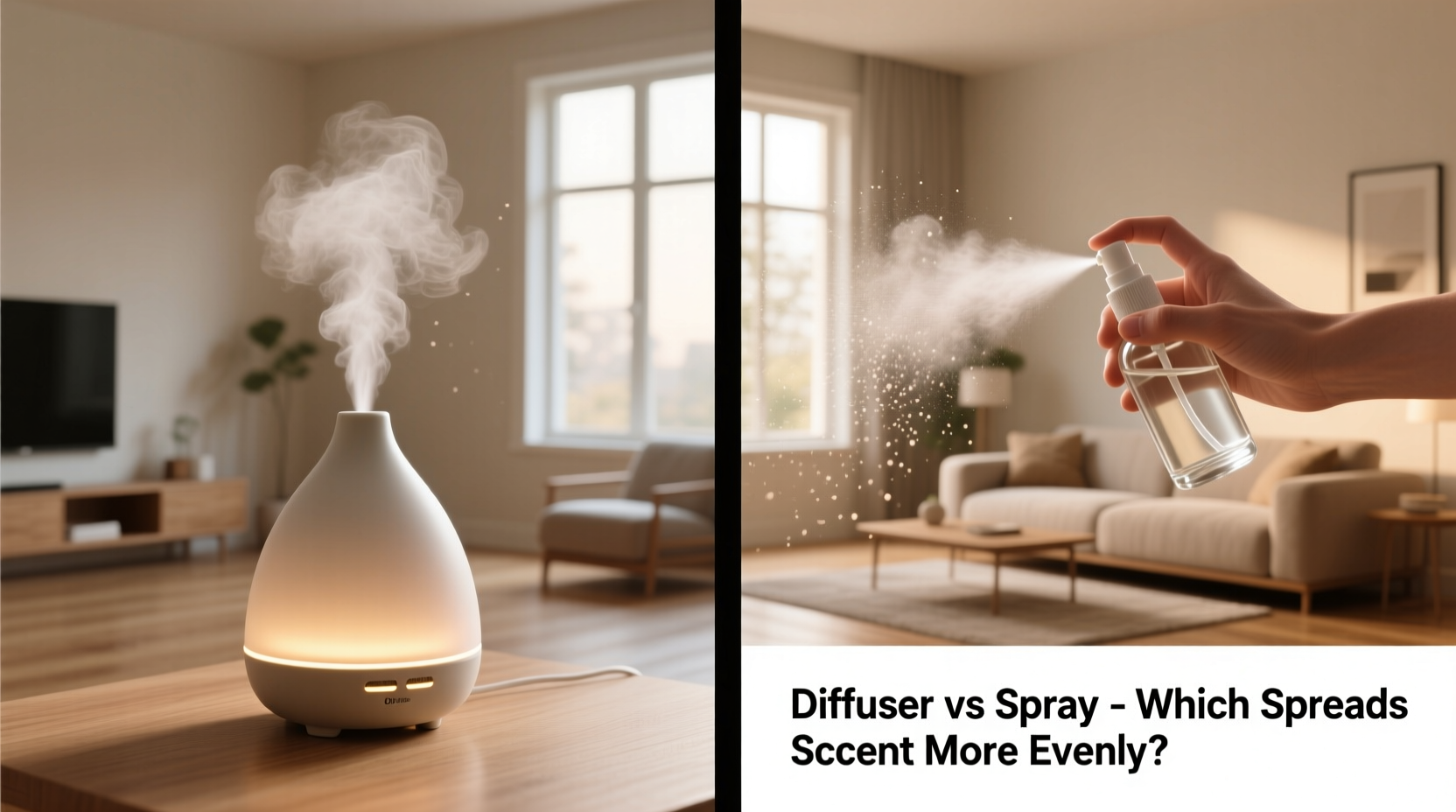
Scent dispersion depends on several factors: particle size, volatility of the oil, airflow in the room, and the delivery mechanism. Essential oils are volatile compounds, meaning they evaporate easily. When released into the air, their molecules bind to air particles and travel via convection currents, HVAC systems, or natural movement. The goal of even distribution is not just about intensity but consistency—ensuring the aroma reaches all corners of a room without creating isolated pockets of strong or weak fragrance.
Different delivery methods affect this process in distinct ways. A diffuser uses mechanical action (ultrasonic vibration, heat, or nebulization) to break down essential oils into micro-particles suspended in mist or vapor. A spray, on the other hand, relies on manual application—propelling a liquid solution into the air using a pump or aerosol mechanism. This fundamental difference shapes everything from coverage area to longevity and uniformity of scent.
Essential Oil Diffusers: Continuous, Passive Aroma Dispersion
Diffusers operate automatically once set up, releasing a steady stream of scented mist over time. The most common type—ultrasonic diffusers—use high-frequency vibrations to turn water and essential oils into a fine cool mist. Because this mist is light and buoyant, it disperses gradually through the air, carried by natural convection and minor air movements within a room.
The continuous output of a diffuser allows for consistent background fragrance. Over 30 minutes to several hours, depending on settings, the scent builds subtly and fills the space more uniformly than intermittent spraying. In medium-sized rooms (up to 300 sq ft), a well-placed diffuser can achieve balanced coverage, especially if there’s some ambient airflow from ceiling fans or open doorways.
Real-World Example: Evening Relaxation Routine
Consider Sarah, who lives in a two-bedroom apartment and uses lavender essential oil to unwind after work. On weekdays, she uses a handheld spray in her bedroom before bed. She notices the scent is strong right after spraying but fades within 20 minutes. Sometimes she forgets entirely, disrupting her routine. Her living room remains unscented unless she remembers to spray there separately.
After switching to an ultrasonic diffuser placed centrally in the hallway, she programs it to run for one hour starting at 8 PM. Within days, she observes a noticeable change: the entire lower level of her home carries a gentle, consistent floral note. There’s no need to remember multiple sprays, and the aroma lingers longer due to sustained release. Her partner, who previously disliked the sudden burst of scent from the spray, now appreciates the subtle ambiance.
This shift illustrates how automation and dispersion mechanics influence perceived evenness—not because the diffuser emits more total fragrance, but because it delivers it in a way that aligns with human sensory perception and environmental dynamics.
Maximizing Even Scent Spread: Best Practices
To get the most balanced fragrance distribution, consider combining tools strategically while optimizing placement and usage habits.
- Use diffusers as primary scent sources for main living areas and bedrooms where prolonged, ambient fragrance is desired.
- Supplement with sprays for touch-ups, such as refreshing cushions, curtains, or entryways after guests arrive.
- Avoid over-saturating any single area—this can dull your sense of smell (olfactory fatigue) and reduce effectiveness.
- Open interior doors temporarily during diffusion to allow cross-flow between rooms.
- Clean devices regularly—mineral buildup in diffusers or clogged spray nozzles can impair performance.
Step-by-Step Guide to Optimizing Home Scent Distribution
Follow this sequence to ensure even, pleasant fragrance coverage across your home:
- Assess Your Space: Measure room sizes and note airflow patterns (e.g., presence of fans, vents, open layouts).
- Select the Right Device: Choose a diffuser with adequate output for your largest frequently used room. For example, a 100ml diffuser typically covers up to 300 sq ft.
- Position Strategically: Place the diffuser in a central location, elevated slightly, and away from obstructions. Avoid placing it behind furniture or in enclosed cabinets.
- Set a Schedule: Use timers to diffuse during key times (e.g., evenings, mornings) rather than running continuously.
- Monitor and Adjust: After a few days, walk through your home to evaluate scent strength. If certain areas remain weak, consider adding a second diffuser or briefly opening connecting doors during operation.
- Use Sprays Judiciously: Apply sprays only where needed—like car interiors, closets, or guest bathrooms—for targeted freshness.
When to Choose Each Method
While diffusers generally win in terms of even distribution, sprays have unique advantages in specific scenarios:
- Choose a diffuser if: You want whole-room fragrance, nighttime aromatherapy, or low-maintenance daily use.
- Choose a spray if: You need quick odor neutralization (e.g., after cooking), want to scent linens or upholstery, or prefer customizable, on-demand bursts.
Hybrid solutions exist too—some smart diffusers integrate motion sensors or app-based controls to activate based on occupancy, bridging the gap between passive diffusion and responsive delivery.
Frequently Asked Questions
Can I use a spray to mimic a diffuser’s effect?
Not effectively. Repeated spraying might cover more area, but it won’t replicate the steady, fine mist of a diffuser. Over-spraying increases the risk of oil buildup and respiratory irritation, especially in poorly ventilated spaces.
Do diffusers work in large open-concept homes?
Yes, but strategic placement is key. Central locations like hallways or near stairwells help distribute mist to multiple zones. For homes over 1,500 sq ft, consider using multiple diffusers or rotating them between areas.
Are there health concerns with either method?
Both are safe when used properly. However, sprays may pose a higher risk of inhalation irritation due to alcohol carriers or propellants. Diffusers, especially ultrasonic ones, are gentler on lungs but should be avoided around pets sensitive to essential oils, like cats.
Final Recommendations
If your primary goal is even, consistent scent distribution throughout your home, an essential oil diffuser is the superior choice. Its ability to release fragrance gradually and continuously ensures a balanced olfactory experience across rooms, minimizing dead zones and abrupt changes in aroma intensity. Ultrasonic and nebulizing models excel in coverage and control, particularly when paired with thoughtful placement and timing.
Sprays serve a complementary role—they’re ideal for quick refreshment, targeted deodorizing, or personal use—but fall short in delivering uniform, lasting fragrance. Relying solely on sprays often leads to inconsistent results and increased effort over time.
For best outcomes, adopt a layered approach: use a diffuser as your foundation for ambient scenting, and keep a quality essential oil spray on hand for spot treatments. This combination maximizes both coverage and convenience, giving you full control over your home’s aromatic environment.




 浙公网安备
33010002000092号
浙公网安备
33010002000092号 浙B2-20120091-4
Comments
No comments yet. Why don't you start the discussion?