
Designing a custom home is one of the most rewarding endeavors a homeowner can undertake. Unlike purchasing an existing property or selecting from pre-designed floor plans, building from scratch allows you to shape every detail—from layout and materials to lighting and energy efficiency—around your lifestyle, values, and vision. However, the process demands careful planning, informed decisions, and collaboration with skilled professionals. This guide outlines the essential steps and expert-backed strategies to help you create a custom house that stands the test of time.
Define Your Goals and Priorities
Before sketching layouts or selecting finishes, begin with clarity on what you want from your home. Are you prioritizing sustainability? Open-concept living? Multi-generational accessibility? Defining these goals early shapes every subsequent decision.
Start by listing non-negotiables: number of bedrooms, preferred location, budget range, timeline, and long-term use (e.g., aging in place). Then consider aspirational elements—such as a home office, indoor-outdoor flow, or passive solar heating—that align with your ideal lifestyle.
Assemble Your Design Team Strategically
A successful custom home begins with the right team. While some homeowners choose architects first, others start with builders. The optimal approach depends on your priorities.
- Architect: Best if you have a unique site, complex design needs, or desire high architectural distinction.
- Design-Build Firm: Offers integrated design and construction services, reducing miscommunication and streamlining timelines.
- Draftsperson: A cost-effective option for simpler homes or when working within local code-compliant templates.
“A great architect doesn’t just draw plans—they listen deeply and translate your life into space.” — Laura Bennett, Residential Architect & AIA Member
Interview at least three professionals. Ask about their experience with projects similar to yours, how they handle changes during construction, and examples of problem-solving under budget constraints.
Conduct a Site Analysis and Zoning Review
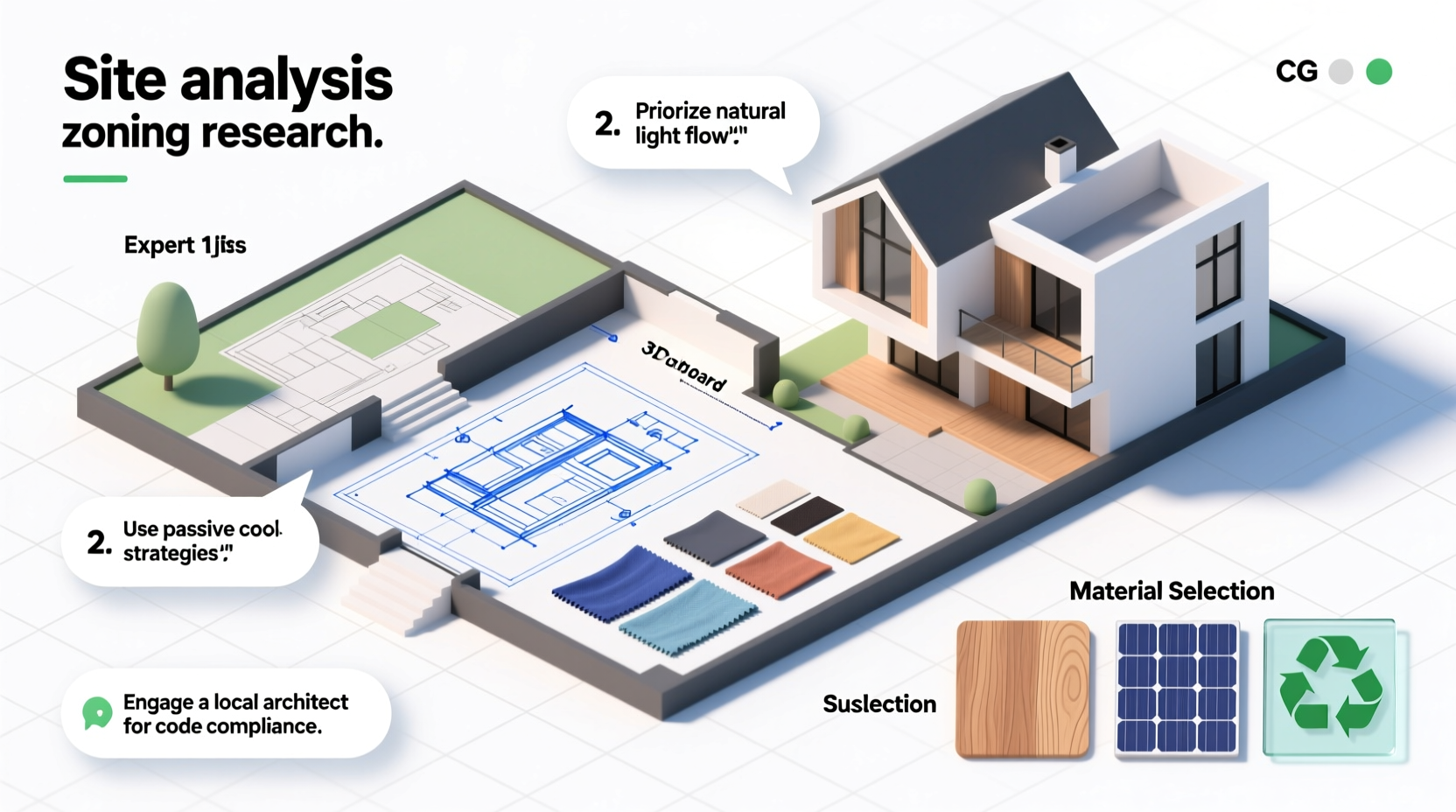
Your lot significantly influences your design. Topography, sunlight exposure, wind patterns, vegetation, and municipal regulations all play critical roles.
Hire a land surveyor to assess boundaries, elevation changes, and soil conditions. Work with your architect to analyze solar orientation—ideally, living areas should face south (in the Northern Hemisphere) to maximize natural light and passive heating.
| Factor | Impact on Design | Considerations |
|---|---|---|
| Slope | Foundation type, drainage, access | Steep slopes may require stepped foundations or retaining walls |
| Zoning Laws | Setbacks, height limits, lot coverage | Check local ordinances before finalizing footprint |
| Tree Preservation | Site layout, environmental impact | Protected trees may restrict excavation zones |
| Flood Zone | Elevation requirements, insurance costs | FEMA maps determine base flood elevation |
Step-by-Step Guide: From Concept to Construction Documents
Creating a buildable custom home involves a phased design process. Follow this sequence to ensure thoroughness and avoid costly revisions later.
- Schematic Design: Develop rough sketches based on your program and site. Explore massing, room relationships, and exterior style. Expect 2–3 iterations.
- Design Development: Refine materials, window placement, structural systems, and mechanical layout. Begin energy modeling if pursuing sustainability.
- Construction Drawings: Produce detailed blueprints including electrical, plumbing, HVAC, framing, and finish schedules. These are required for permits and bidding.
- Permitting: Submit drawings to local authorities. Approval times vary—allow 4–12 weeks depending on jurisdiction.
- Bid and Contractor Selection: Obtain quotes from at least three licensed builders. Evaluate not only price but also communication style and references.
Integrate Smart and Sustainable Features Early
The initial design phase is the best time to incorporate long-term value through energy efficiency and technology. Retrofitting later is far more expensive.
Consider:
- Super-insulated envelopes with thermal breaks
- Energy recovery ventilators (ERVs) for indoor air quality
- Strategic window glazing (low-e coatings, U-values)
- PV-ready roofs for future solar panel installation
- Smart home wiring infrastructure (structured cabling, central hub location)
Passive House or LEED certification isn’t necessary for sustainability, but adopting core principles—like minimizing air leakage and orienting for daylight—can reduce energy bills by 30–50%.
Mini Case Study: The Hillside Net-Zero Home
A couple in Oregon wanted a modern, low-maintenance home on a wooded hillside. Their architect oriented the main living area southward with floor-to-ceiling triple-glazed windows. A modest overhang blocked summer sun but allowed winter warmth. Insulated concrete forms (ICFs) provided superior thermal mass, while rooftop solar panels offset annual consumption. Despite rugged terrain, the design minimized excavation, preserving native trees. The result was a net-zero energy home that blended into the landscape and cut utility costs to nearly zero.
Custom Home Design Checklist
Use this checklist to stay organized throughout the design process:
- ☐ Define functional and aesthetic priorities
- ☐ Secure financing or confirm budget parameters
- ☐ Select architect or design-build firm
- ☐ Complete site survey and soil testing
- ☐ Review zoning, setbacks, and easements
- ☐ Finalize schematic design and get feedback
- ☐ Approve materials, finishes, and systems
- ☐ Complete construction drawings and specifications
- ☐ Obtain building permits
- ☐ Hire general contractor and schedule kick-off
Frequently Asked Questions
How long does it take to design a custom home?
Typically 3–6 months, depending on complexity and revision cycles. Simpler designs may take 8–10 weeks; high-end or architecturally intricate homes can require 9–12 months.
Can I modify a stock plan instead of designing from scratch?
Yes, many firms offer customizable plans. However, significant modifications often cost nearly as much as original design work. If more than 30% of the plan needs changing, starting fresh may be more efficient.
Should I involve the builder during the design phase?
Highly recommended. Builders provide practical insights on constructability, material availability, and cost control. An integrated design-build approach often reduces change orders and delays.
Conclusion: Build with Purpose and Confidence
Creating a custom house from scratch is not merely a construction project—it’s an act of personal expression and long-term investment. By defining your needs clearly, choosing the right team, respecting your site, and integrating smart design principles early, you lay the foundation for a home that serves you beautifully for decades.
The blueprint you create today will shape how you live, host, rest, and grow. Don’t rush the early stages. Thoughtful planning now prevents compromise later. Whether your dream is a minimalist retreat, a sprawling family compound, or an eco-conscious sanctuary, the power to design it rests in your hands.




 浙公网安备
33010002000092号
浙公网安备
33010002000092号 浙B2-20120091-4
Comments
No comments yet. Why don't you start the discussion?