
Launching a startup is more than just having a great idea—it’s about creating something sustainable, scalable, and resilient from day one. Many founders focus solely on product development or funding, only to realize later that weak operational, strategic, and cultural foundations lead to early failure. Building a solid base requires deliberate planning, disciplined execution, and continuous adaptation. These essential strategies will guide you through forming a startup with longevity in mind.
1. Validate Your Idea Before Investing Time and Capital
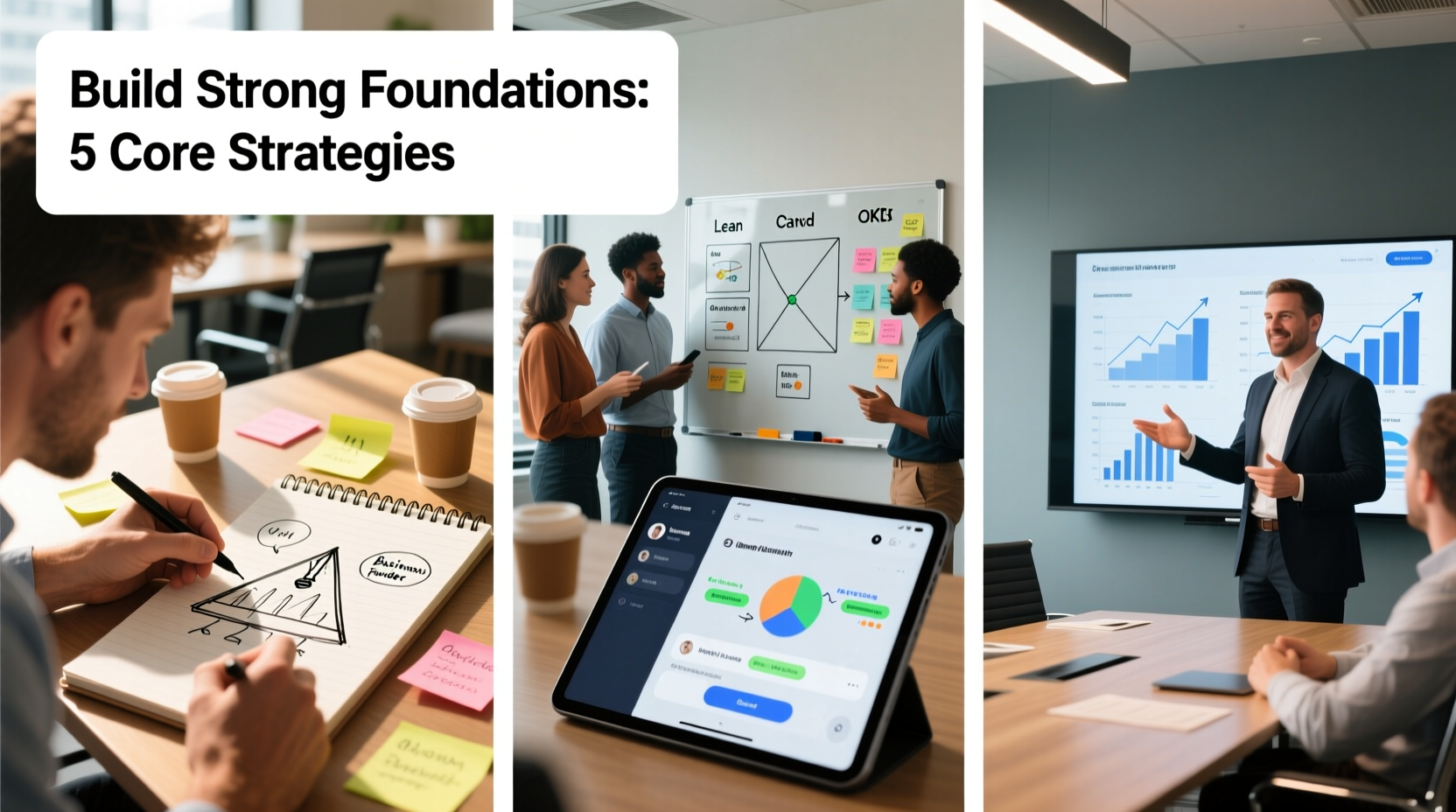
One of the most common mistakes new entrepreneurs make is building a product without confirming there's actual demand. Validation isn’t a one-time step; it’s an ongoing process of testing assumptions with real users.
Start by identifying your core hypothesis: Who is your customer? What problem are you solving? How do they currently solve it? Then conduct interviews, surveys, or create a minimum viable product (MVP) to gather feedback. Tools like landing pages with sign-up forms can help gauge interest before writing a single line of code.
“We found out our app solved a problem only 3% of people actually had. That pivot saved us nine months of wasted effort.” — Lena Patel, Founder of TaskFlow
2. Build a Lean but Scalable Business Model
A strong foundation starts with a clear understanding of how your business will generate value—and revenue. Use frameworks like the Business Model Canvas to map out key components: customer segments, value propositions, channels, customer relationships, revenue streams, key resources, activities, partnerships, and cost structure.
The goal is not perfection but clarity. A lean model forces you to answer hard questions early: Can this scale? Is the unit economics positive? Are we dependent on a single supplier or channel?
| Component | Key Question | Action Step |
|---|---|---|
| Value Proposition | Why should someone choose us over alternatives? | Define unique benefits in one sentence |
| Revenue Stream | How will we get paid? | Test pricing tiers with early adopters |
| Customer Acquisition | How will we reach first 100 customers? | Map out three low-cost channels to test |
| Cost Structure | What are our fixed vs. variable costs? | Identify top three expenses and ways to reduce them |
3. Assemble the Right Founding Team
No startup succeeds on vision alone. The founding team determines whether ideas turn into action. Look for complementary skills—technical, operational, sales—and shared values around work ethic and risk tolerance.
Equity distribution should reflect contribution, commitment, and role longevity. Avoid equal splits unless all co-founders are contributing full-time with balanced responsibilities. Use vesting schedules (typically four years with a one-year cliff) to protect the company if someone leaves early.
Cultural alignment matters as much as competence. A misaligned founder can derail morale, decision-making, and investor trust.
4. Establish Legal and Operational Infrastructure Early
Many startups delay legal setup to save money, but this creates risk down the line. Register your business entity (LLC, C-Corp, etc.) early, especially if seeking investment. Choose a jurisdiction wisely—Delaware is common for U.S.-based startups due to its favorable corporate laws.
Secure intellectual property (IP) rights, draft founder agreements, and set up basic accounting systems. Use tools like QuickBooks or Xero for bookkeeping, and engage a startup-savvy attorney for contracts and compliance.
Operational hygiene includes defining roles, documenting processes, and setting up cloud-based collaboration (e.g., Notion, Google Workspace). These may seem trivial at first, but they compound efficiency as your team grows.
Startup Formation Checklist
- Choose and register business name and entity type
- Obtain EIN and open a business bank account
- Draft founder agreement with equity, roles, and vesting terms
- File necessary IP assignments and trademarks
- Set up payroll and tax compliance system
- Adopt a cap table management tool (e.g., Carta, Pulley)
- Establish data security and privacy policies
5. Focus on Sustainable Growth Over Speed
While rapid growth grabs headlines, sustainable growth builds enduring companies. Prioritize customer retention, product-market fit, and cash flow over vanity metrics like downloads or social media followers.
Track leading indicators such as activation rate, churn, and lifetime value (LTV) to CAC ratio. Aim for LTV:CAC > 3:1 and payback period under 12 months. These metrics signal healthy unit economics and scalability.
Funding can accelerate growth, but it shouldn’t replace sound fundamentals. Bootstrapping longer allows you to refine your model, maintain control, and negotiate from strength when raising capital.
“Speed kills startups. The ones that last aren’t the fastest—they’re the ones who learn fastest.” — Rajiv Mehta, Venture Partner at ScaleForward Ventures
Real Example: From Side Project to Profitable SaaS
Jess Nguyen launched a time-tracking tool for freelancers while working her day job. Instead of chasing investors, she spent six months interviewing 50 freelancers, built an MVP in Webflow, and charged $5/month from day one. She reinvested early revenue into development and grew to 1,200 paying users within a year—all without external funding. By focusing on retention and word-of-mouth, her company HitRate now generates over $200k ARR with a two-person team.
Her strategy? Solve a narrow problem exceptionally well, charge immediately, and listen relentlessly to users. No flash, no hype—just consistent progress.
6. Develop a Clear Go-to-Market Strategy
Even the best product fails without a path to market. Your go-to-market (GTM) strategy defines how you’ll acquire and convert customers profitably.
Start by identifying where your ideal customers spend time—online communities, industry events, specific platforms—and meet them there. Content marketing, partnerships, and referral programs often outperform paid ads for early-stage startups.
For B2B startups, outbound sales via personalized cold outreach can yield high conversion rates when targeted correctly. For B2C, leveraging micro-influencers or niche forums builds authentic traction.
Step-by-Step GTM Launch Plan
- Define target customer profile (demographics, behaviors, pain points)
- Select 1–2 primary acquisition channels to test
- Create messaging tailored to each channel
- Launch pilot campaign with limited budget
- Measure conversion rates and cost per acquisition
- Double down on what works; iterate or abandon what doesn’t
- Scale gradually with reinvested revenue or funding
FAQ
How much funding do I need to start a startup?
It depends on your model. Some tech startups begin with less than $10,000 using no-code tools and freelance talent. Others require significant capital for inventory, R&D, or regulatory approval. Focus on launching with the minimum viable budget, then raise only when you have proof of concept.
Should I quit my job to start a startup?
Not necessarily. Many successful founders start part-time while validating demand. Transition full-time only when you have consistent revenue, user traction, or secured seed funding. This reduces personal financial risk and increases odds of survival.
When should I incorporate my startup?
Incorporate as soon as you plan to bring on co-founders, accept outside money, or generate revenue. It protects personal assets, establishes credibility, and simplifies taxes and fundraising. Most founders incorporate within the first 3–6 months.
Conclusion
Building a startup isn’t about luck or lightning-fast growth—it’s about laying a foundation strong enough to withstand uncertainty, competition, and change. From validating your idea to assembling the right team, establishing legal clarity, and growing sustainably, each step compounds your chances of long-term success.
The strongest startups aren’t born from perfect plans, but from persistent iteration, customer obsession, and operational discipline. Start small, think long-term, and build with intention. Your future self—and your stakeholders—will thank you.




 浙公网安备
33010002000092号
浙公网安备
33010002000092号 浙B2-20120091-4
Comments
No comments yet. Why don't you start the discussion?