
Making international calls from the United States no longer has to be a costly or complicated process. With advancements in communication technology, travelers, expatriates, and families with loved ones abroad now have more options than ever to stay connected across borders. Whether you're calling a business partner in London, a relative in Manila, or a friend studying in Berlin, understanding the most effective and economical methods can save both time and money. This guide outlines practical strategies, tools, and best practices to help you make high-quality international calls without draining your wallet.
Understanding International Dialing Basics
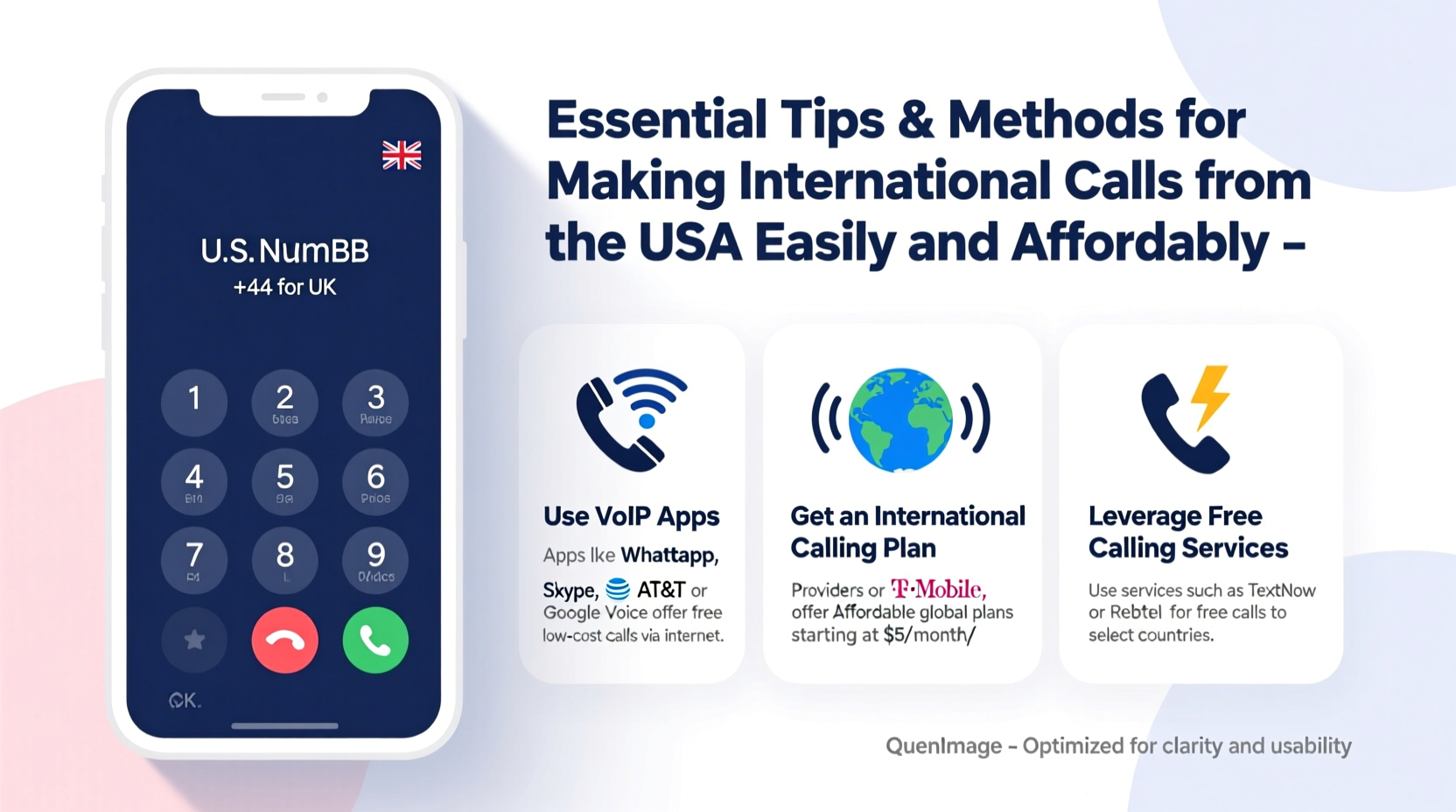
Before diving into cost-saving methods, it's important to understand how international dialing works from the U.S. The standard format involves three key components: the exit code, country code, and local number.
- Exit Code: Dial 011 to signal an international call from the U.S.
- Country Code: Each country has a unique numeric code (e.g., 44 for the UK, 33 for France).
- Local Number: Enter the recipient’s full phone number, omitting any leading zero.
For example, to call Paris, France, you would dial: 011 + 33 + [local number].
While traditional carriers like AT&T and Verizon support this method, rates can vary widely—sometimes exceeding $2 per minute. That’s where smarter alternatives come into play.
Top Affordable Methods for International Calling
Modern solutions offer clarity, convenience, and dramatically lower costs compared to legacy phone services. Below are the most reliable and budget-friendly options available today.
1. VoIP Services (Voice over Internet Protocol)
Voice over Internet Protocol (VoIP) converts your voice into digital signals transmitted over the internet. Services like Skype, Google Voice, and Vonage allow users to make international calls at a fraction of traditional rates—or even for free when calling other users on the same platform.
- Skype: Offers pay-as-you-go plans with rates as low as $0.02/min to landlines in over 60 countries.
- Google Voice: U.S.-based accounts can purchase credits for international calling starting at $0.01/min to select destinations.
- Vonage World Plan: Provides unlimited calling to over 70 countries for a flat monthly fee (~$30/month).
These platforms also support video calling, messaging, and group chats, enhancing overall communication value.
2. Mobile Apps with Wi-Fi Calling
Many smartphone carriers now offer Wi-Fi calling, allowing you to make calls over a stable internet connection instead of cellular networks. This is especially useful when traveling or if your recipient also uses Wi-Fi calling.
iOS and Android devices support built-in Wi-Fi calling features. When enabled, your regular phone number remains active, and calls to international numbers are routed through Wi-Fi, often at reduced rates or included in certain plans.
3. Prepaid International Calling Cards
Despite the rise of digital tools, calling cards still serve a purpose—particularly for individuals without smartphones or consistent internet access. Reputable providers like Phone.com, United Telecom, and MyCallingPlus offer PIN-based systems with competitive rates.
Look for cards that:
- Have low or no connection fees
- Offer transparent per-minute pricing
- Provide toll-free access numbers
4. Carrier International Plans
Major U.S. carriers offer international add-ons or bundled plans. For instance:
- T-Mobile: Many postpaid plans include free unlimited texting and data in over 210 countries, plus affordable per-minute rates (as low as $0.25/min).
- Verizon: The \"TravelPass\" option costs $5/day for limited usage in Mexico and Canada, or $10/day elsewhere.
- AT&T: Offers an International Day Pass for $10/day or monthly global add-ons.
If you travel internationally frequently, these plans may provide peace of mind despite higher daily costs.
Comparison Table: Cost & Features of Top Options
| Method | Cost Range | Best For | Key Limitation |
|---|---|---|---|
| Traditional Carrier Call | $0.50–$3.00/min | Emergency or occasional use | Expensive; inconsistent quality |
| Google Voice | $0.01–$0.15/min | Regular personal/business calls | Requires internet and setup |
| Skype Credit | $0.02–$0.30/min | Precise budget control | Interface less intuitive for older users |
| Wi-Fi Calling (via Carrier) | Included or $5–$10/day | Short-term travelers | Limited by plan and destination |
| Prepaid Calling Card | $0.03–$0.20/min | No-smartphone users | Connection fees may apply |
Step-by-Step Guide: Making Your First Low-Cost International Call
Follow this sequence to set up and place your first affordable international call using a VoIP service like Google Voice:
- Create a Google Account if you don’t already have one.
- Sign up for Google Voice at voice.google.com (available to U.S. residents).
- Select a free phone number and verify your existing mobile device.
- Add calling credit via the Google Pay system (minimum $10 recommended).
- Dial the international number using the format: [Country Code] + [Local Number] (e.g., 44 20 7946 0018 for London).
- Confirm connection and speak clearly—ensure your microphone and internet connection are stable.
- Monitor usage in the Google Voice dashboard to track minutes and spending.
This method typically costs under $0.05 per minute to major cities and supports call forwarding, voicemail transcription, and spam filtering.
Real Example: Staying Connected Across Continents
María, a nurse in Chicago, has elderly parents living in Guadalajara, Mexico. She used to spend over $80 a month on calls via her mobile carrier at $0.99 per minute. After researching alternatives, she switched to Skype’s “Unlimited Mexico” plan for $8.99/month. Now, she makes daily 30-minute calls without worrying about charges. Her parents also downloaded Skype on their tablet, enabling free video calls during holidays. María estimates she saves nearly $1,000 annually while enjoying better call quality.
“Switching to VoIP wasn’t just about saving money—it brought my family closer. Seeing my mom’s smile during our weekly video calls is priceless.” — María R., Illinois
Expert Insight on Communication Trends
The shift toward internet-based calling isn't just consumer-driven—it's supported by telecommunications experts who see VoIP as the future of global connectivity.
“The cost gap between traditional telephony and VoIP will continue to widen. By 2025, over 80% of international voice traffic will route through IP networks due to scalability, clarity, and affordability.” — Dr. Alan Zhou, Telecommunications Analyst at MIT Media Lab
Essential Checklist Before Making an International Call
- ✅ Confirm the correct country and area code
- ✅ Check time zone differences to avoid disturbing the recipient
- ✅ Test your internet connection if using VoIP or Wi-Fi calling
- ✅ Verify your account balance or subscription status
- ✅ Use headphones in noisy environments for clearer audio
- ✅ Keep emergency contact numbers handy in case of technical failure
Frequently Asked Questions
Do I need a special app to make international calls?
No, but using apps like Google Voice, Skype, or WhatsApp significantly reduces cost and improves call quality. Most modern smartphones support these services natively or via download.
Are there hidden fees with calling cards?
Sometimes. Some prepaid cards charge maintenance fees after a few months of inactivity or impose high connection surcharges. Always review the terms before purchasing.
Can I keep my U.S. number when using VoIP?
Yes. Services like Google Voice and Vonage let you retain your U.S. number and receive calls on multiple devices, maintaining consistency for contacts.
Final Thoughts: Stay Connected Without Breaking the Bank
Making international calls from the USA doesn’t have to be expensive or technically daunting. By leveraging internet-based calling platforms, understanding dialing codes, and choosing the right service for your needs, you can maintain meaningful connections across borders with minimal expense. Whether you're supporting family overseas, managing remote teams, or simply staying in touch with friends abroad, the tools are readily available and increasingly user-friendly.




 浙公网安备
33010002000092号
浙公网安备
33010002000092号 浙B2-20120091-4
Comments
No comments yet. Why don't you start the discussion?