
Stacked heeled cowboy boots blend rugged charm with elevated style, making them a standout in any wardrobe. But their intricate construction—especially the layered heel—requires more than casual upkeep. Without proper care, leather dries out, stitching weakens, and heels can shift or crack under stress. The good news: with consistent, informed maintenance, your boots can remain sharp, stable, and comfortable for years. This guide delivers practical, expert-backed strategies to preserve both appearance and structural integrity.
Understand Your Boot’s Anatomy
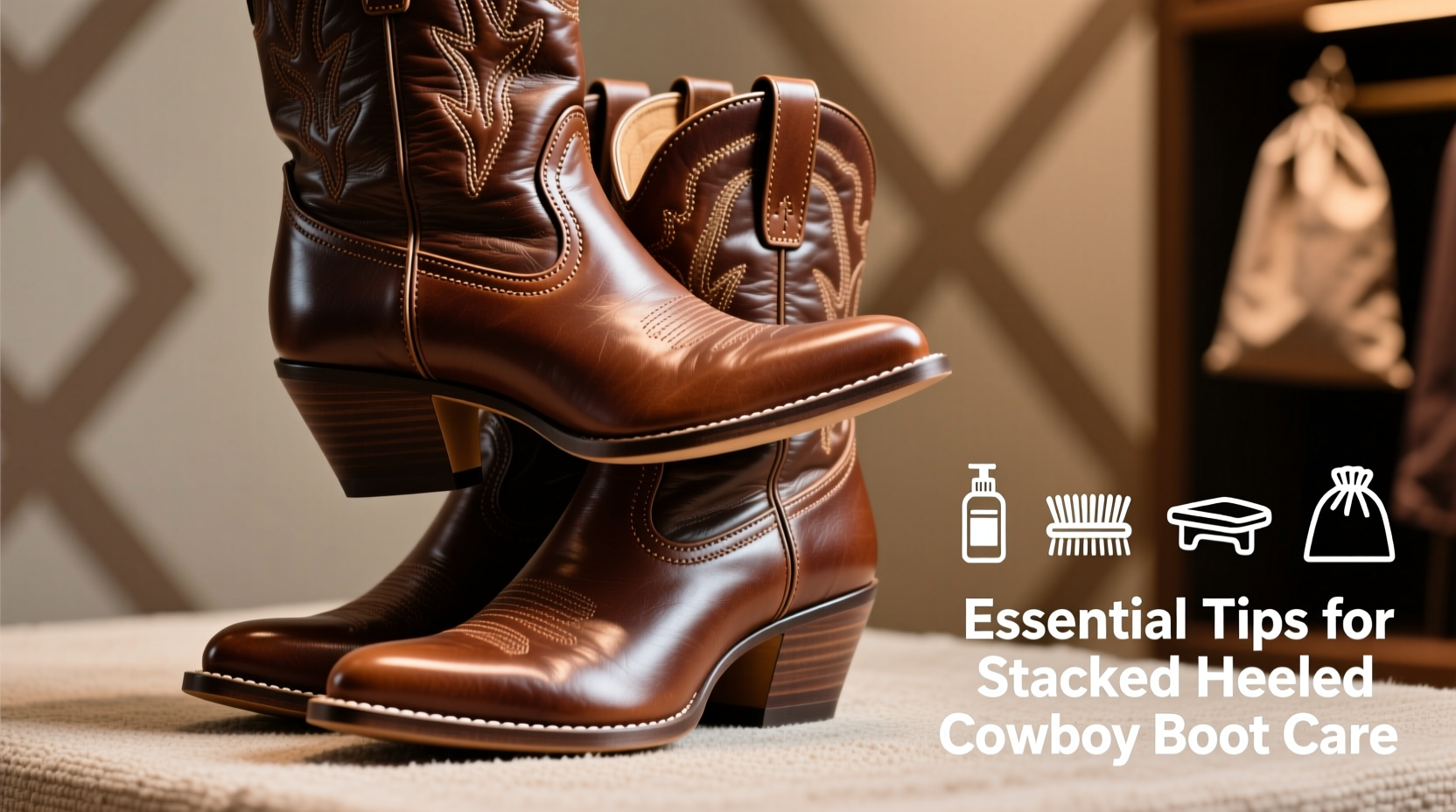
Before diving into care routines, it helps to know what makes stacked heeled boots different. Unlike standard cowboy boots with solid heels, stacked heels are built from compressed layers of leather or fiber glued and nailed together. This design allows for height and flexibility but introduces vulnerabilities—moisture absorption, delamination, and uneven wear. The upper is typically made from full-grain or exotic leathers like snake, ostrich, or calfskin, each reacting differently to cleaning agents and environmental conditions.
Caring for these boots isn’t just about aesthetics; it’s about preserving function. A compromised heel stack can affect balance and posture, while neglected uppers invite cracking and permanent staining.
“Stacked heels are beautiful but delicate. They need moisture control and regular inspection just as much as the rest of the boot.” — Carlos Mendez, Master Bootmaker & Restoration Specialist
Daily Maintenance Habits That Make a Difference
The foundation of long-term boot care starts with daily habits. Most damage occurs gradually through repeated exposure to avoidable stressors.
- Rotate your wear: Wearing the same pair two days in a row doesn’t give leather time to breathe and recover. Moisture from sweat needs 24–48 hours to evaporate naturally.
- Brush after every use: Use a soft horsehair brush to remove dust, dirt, and salt. Focus on seams and around the heel base where debris accumulates.
- Avoid wet surfaces: Stacked heels absorb water quickly. If caught in rain, blot dry immediately and let air-dry at room temperature—never near a heater.
- Check heel stability: Tap the heel lightly on a hard surface. A hollow sound may indicate internal separation.
Step-by-Step Cleaning and Conditioning Routine
A structured cleaning process prevents buildup and maintains suppleness. Follow this weekly-to-monthly routine depending on usage.
- Remove laces and loosen shaft: This gives better access to hidden areas like the tongue and collar.
- Dry brush thoroughly: Use upward strokes to lift dirt without pressing grime deeper into pores.
- Wipe with a damp cloth: Slightly moisten a lint-free cloth (not dripping) and gently clean stained areas. Avoid soaking the heel stack.
- Apply leather conditioner: Use a pea-sized amount of pH-balanced conditioner. Work in circular motions, focusing on high-flex zones like the vamp and quarter.
- Buff with a dry cloth: After 10–15 minutes, polish lightly to restore shine and remove residue.
- Treat the heel stack carefully: Dab conditioner sparingly on the edges of the stack using a cotton swab—do not saturate.
For exotic leathers, always use conditioners labeled for that specific material. Ostrich, for example, has quill follicles that trap dirt and require gentle exfoliation with a rubber nub brush.
Do’s and Don’ts: Protecting Structure and Finish
Mistakes in care often come from good intentions gone wrong. Refer to this table to avoid common pitfalls.
| Do | Don’t |
|---|---|
| Use cedar shoe trees to absorb moisture and maintain shape | Store boots flat without support—this warps the heel and crushes the counter |
| Condition leather every 4–6 weeks with moderate use | Over-condition—this softens leather too much and weakens heel adhesion |
| Repair loose stitching or wobbly heels early | Walk on broken heels—this causes misalignment and further damage |
| Use a rubber heel cap for frequent pavement wear | Expose boots to direct sunlight or radiators for drying |
| Store in breathable cotton bags away from humidity | Keep in plastic bins—trapped moisture leads to mold and glue breakdown |
Real Example: How One Owner Extended Boot Life by Three Years
Jamie R., a ranch manager from West Texas, wears her stacked heel Ariat boots five days a week. After noticing cracking near the ball of the foot within eight months, she consulted a cobbler who recommended a strict regimen: brushing after each shift, bi-weekly conditioning, and using custom-fit boot trees. She also added protective heel caps and stopped leaving boots in her truck’s cab, where temperatures exceeded 130°F (54°C).
Within six months, the leather regained flexibility, and the heel remained intact despite heavy use. Now over three years in, the boots still perform reliably. “I thought they were doomed,” she said. “But once I treated them like an investment instead of just workwear, everything changed.”
Storage Solutions That Prevent Long-Term Damage
Improper storage is a silent killer of stacked heel boots. Heat, light, and poor positioning degrade materials faster than regular wear.
Always store boots upright using boot shapers or rolled towels inside the shaft to prevent slouching. Keep them in a closet with stable temperature and low humidity—ideally between 60–75°F (15–24°C). Avoid garages, attics, or basements unless climate-controlled.
If you own multiple pairs, rotate them seasonally and inspect stored boots every few months. Reapply a light coat of conditioner before returning them to active use.
Frequently Asked Questions
Can I repair a separated stacked heel myself?
Minor edge lifting might be reattached with leather-specific adhesive, but full delamination requires professional re-stacking. Attempting DIY fixes often worsens alignment and comfort. Visit a reputable cobbler experienced with western footwear.
How often should I have my boots resoled?
Resole when the outer layer of the heel shows significant wear or the sole is thinning near the ball. For regular use, this is typically every 12–18 months. Addressing it early prevents damage to the stacked heel and midsole.
Is it safe to wear stacked heel boots in the rain?
Short exposure is manageable if dried properly, but prolonged wetness compromises glue integrity in the heel stack. For rainy climates, consider switching to rubber-heeled styles or apply a water-resistant spray designed for leather boots (reapplied monthly).
Boot Care Checklist
Stay on track with this simple monthly checklist:
- ☑ Brush off dirt and dust from entire boot
- ☑ Inspect heel for wobbling or separation
- ☑ Check stitching along welt and toe box
- ☑ Clean leather with approved cleaner
- ☑ Condition upper and heel edges lightly
- ☑ Insert boot trees or shapers for storage
- ☑ Confirm storage area is cool, dry, and dark
Final Thoughts: Treat Them Like Heirlooms
Stacked heeled cowboy boots aren’t disposable fashion—they’re crafted pieces of functional art. Their longevity depends not on luck, but on deliberate care. By integrating smart cleaning, cautious storage, and timely repairs, you protect both their visual appeal and structural resilience. These habits don’t demand hours of effort; they require consistency and attention to detail.




 浙公网安备
33010002000092号
浙公网安备
33010002000092号 浙B2-20120091-4
Comments
No comments yet. Why don't you start the discussion?