
Long-sleeved outerwear—whether a wool coat, trench, denim jacket, or puffer—represents both a financial and stylistic investment. These garments endure exposure to weather, pollutants, and daily wear, making proper maintenance essential. With the right care routine, you can preserve fabric integrity, color vibrancy, and shape far beyond their expected lifespan. The key lies not in occasional deep cleaning but in consistent, thoughtful habits applied from day one.
Understand Your Fabric Type
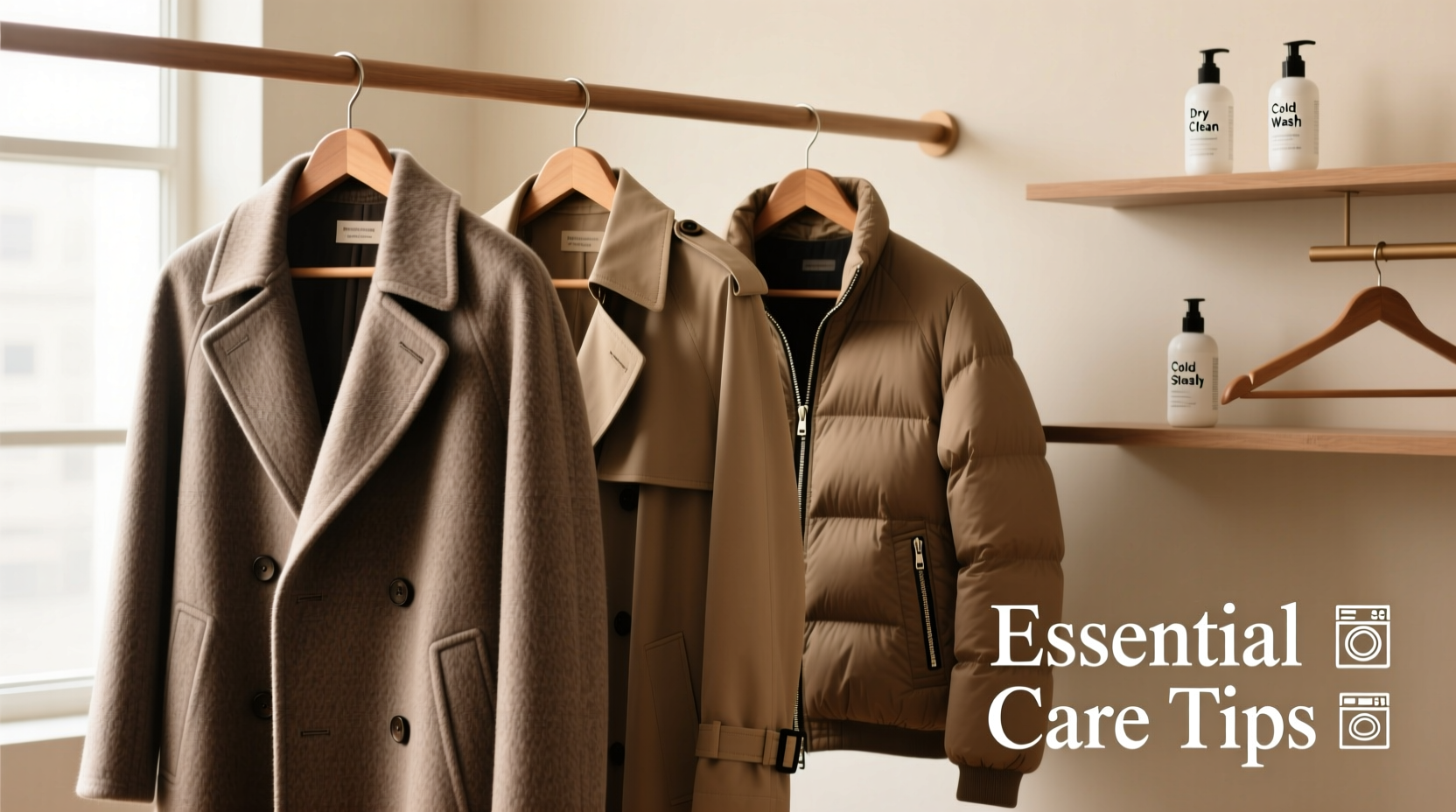
Not all outerwear is created equal. The material dictates how you should clean, store, and handle your garment. Missteps like machine-washing a wool coat or steaming a leather jacket can cause irreversible damage. Before any maintenance, identify the fabric composition using the care label and manufacturer’s guidelines.
| Fabric | Cleaning Method | Storage Tip |
|---|---|---|
| Wool/Cashmere | Dry clean only; spot clean with damp cloth | Hang on wide wooden hanger; use breathable cotton bag |
| Cotton/Twill (e.g., trench coats) | Machine wash cold, gentle cycle; air dry | Hang or fold flat; avoid plastic covers |
| Down/Puffer Jackets | Machine wash with down-specific detergent; tumble dry low | Store loosely folded; never compressed long-term |
| Leather/Faux Leather | Wipe with damp cloth; condition 2–3 times yearly | Hang on padded hanger; keep away from heat |
| Synthetic Blends (Polyester, Nylon) | Machine wash cold; mild detergent | Fold or hang; avoid direct sunlight |
Develop a Routine Cleaning Schedule
Outerwear accumulates dirt, oils, and environmental grime even if it doesn’t appear soiled. Regular surface cleaning prevents buildup that degrades fibers over time. How often you clean depends on usage: city commutes demand more attention than occasional weekend wear.
- After every 3–5 wears: Brush off dust and debris with a soft clothes brush or lint roller.
- Monthly: Inspect for stains, especially at cuffs, collars, and pockets. Use a fabric-safe wipe or damp microfiber cloth.
- Seasonally: Perform a full clean—either at home (for washable fabrics) or via professional dry cleaning (for wool, silk linings, or structured pieces).
Avoid over-cleaning, which strips natural oils and weakens fibers. For example, washing a wool coat too frequently causes felting and shrinkage. Spot cleaning between deep cleans is often sufficient.
Step-by-Step Guide: How to Spot Clean a Stain Safely
- Blot excess liquid gently with a clean, absorbent cloth—do not rub.
- Moisten a corner of a microfiber cloth with distilled water or a small amount of mild detergent (like Woolite).
- Test on an inconspicuous area (inside seam or hem) first.
- Gently dab the stain in circular motions, working from the outside inward.
- Rinse by dabbing with a water-dampened cloth.
- Allow to air dry completely away from direct heat.
Proper Storage Techniques That Prevent Damage
Improper storage is the silent killer of outerwear. Wrinkles, misshapen shoulders, mold, and yellowing often result from poor storage choices. The ideal environment is cool, dry, dark, and well-ventilated.
- Use broad, padded hangers for structured coats to maintain shoulder shape.
- Never use wire hangers—they create indentations and stretch fabric.
- Cover garments with breathable cotton garment bags, not plastic, which traps moisture and encourages mildew.
- Fold knit outerwear (like cardigans worn as layers) to prevent stretching.
- For down jackets, store loosely in a large cotton sack—never vacuum-sealed.
“Many people ruin great coats simply by shoving them into crowded closets. A little space and airflow go a long way.” — Daniel Reyes, Textile Preservation Specialist
Real Example: Recovering a Neglected Wool Coat
Sarah, a teacher in Boston, pulled out her favorite wool trench coat after two years in a plastic bin. It had developed musty odor, faint mildew spots, and lost its drape. She avoided discarding it and instead took deliberate steps: aired it outdoors for several hours, brushed it thoroughly, then took it to a trusted dry cleaner experienced with wool. After cleaning, she conditioned the fabric with a light wool refresher spray and stored it on a wooden hanger inside a cotton cover. The coat regained its structure and now rotates regularly in her winter wardrobe—proof that even neglected outerwear can be revived with care.
Preventative Habits for Daily Wear
Maintenance isn’t just about cleaning—it’s also about how you wear and handle your outerwear. Small behavioral adjustments make a significant difference:
- Rotate outerwear when possible. Wearing the same coat daily leads to fatigue in stress points like elbows and underarms.
- Remove accessories like scarves or bags before taking off your coat to reduce friction and snagging.
- Avoid wearing backpacks with structured coats—they distort shoulder seams and compress padding.
- Let wet garments dry naturally before storing. Never hang a damp coat in a closet.
Pay special attention to zippers, buttons, and linings. Repair loose fasteners promptly to prevent further tearing. If the lining begins to separate, have it re-stitched early—delaying repair risks larger damage.
Checklist: Monthly Outerwear Maintenance Routine
- ✅ Inspect for stains, odors, or pest signs (moths, silverfish)
- ✅ Brush or lint-roll the surface
- ✅ Check closures: zippers, buttons, snaps
- ✅ Air out in shaded outdoor area (1–2 hours)
- ✅ Rotate garments if multiple are in regular use
- ✅ Reassess storage conditions: humidity, light, crowding
FAQ: Common Questions About Outerwear Care
Can I wash my wool coat at home?
No, most wool coats require professional dry cleaning. Home washing risks shrinking, felting, and distortion. If spot cleaning is needed, use a barely damp cloth and mild soap, then air dry flat away from heat.
How do I remove wrinkles without damaging the fabric?
Use a handheld steamer on low heat, holding it 6–8 inches from the fabric. Never press wool or structured coats with an iron unless lined with a pressing cloth—and even then, test first. Hanging the garment in a steamy bathroom can also relax minor wrinkles.
Is it okay to store outerwear in vacuum bags?
Only for short-term storage and never for down or wool items. Vacuum sealing compresses insulation and damages natural fibers. Use breathable containers or garment bags instead.
Final Thoughts: Make Care a Seamless Habit
Maintaining long-sleeved outerwear doesn’t require excessive effort—just consistency and awareness. By understanding your fabric, establishing a simple cleaning rhythm, storing garments properly, and catching issues early, you preserve not just appearance but functionality. Well-maintained outerwear performs better in cold or wet conditions and retains resale or sentimental value for years.
Think of care not as a chore but as respect for craftsmanship and sustainability. Every time you brush a coat, check a seam, or choose proper storage, you’re extending its story. Start today: pull one piece from your closet, inspect it, and apply one tip from this guide. Small actions compound into lasting results.




 浙公网安备
33010002000092号
浙公网安备
33010002000092号 浙B2-20120091-4
Comments
No comments yet. Why don't you start the discussion?