
When it comes to gift-giving for children, parents, relatives, and friends often face a familiar dilemma: should they choose the latest toy or gadget, or opt for an outing, class, or family adventure? The debate between experience gifts and physical items is not just about preference—it’s about impact. While toys can spark immediate joy, research and anecdotal evidence increasingly suggest that experiences generate deeper, longer-lasting memories in children. Unlike objects that gather dust or break, shared moments become stories retold, lessons internalized, and emotional milestones remembered well into adulthood.
The shift toward valuing experiences over possessions isn’t new, but its relevance in child development is gaining attention. Psychologists point out that childhood is a critical period for forming identity, emotional regulation, and social skills—areas profoundly influenced by lived experiences. A bicycle may be ridden for a season, but a week at summer camp shapes confidence, independence, and resilience. This article examines the psychological, emotional, and developmental dimensions of experience-based gifting, compares tangible versus intangible benefits, and offers practical guidance for choosing meaningful alternatives to traditional presents.
The Psychology Behind Memory Formation in Children
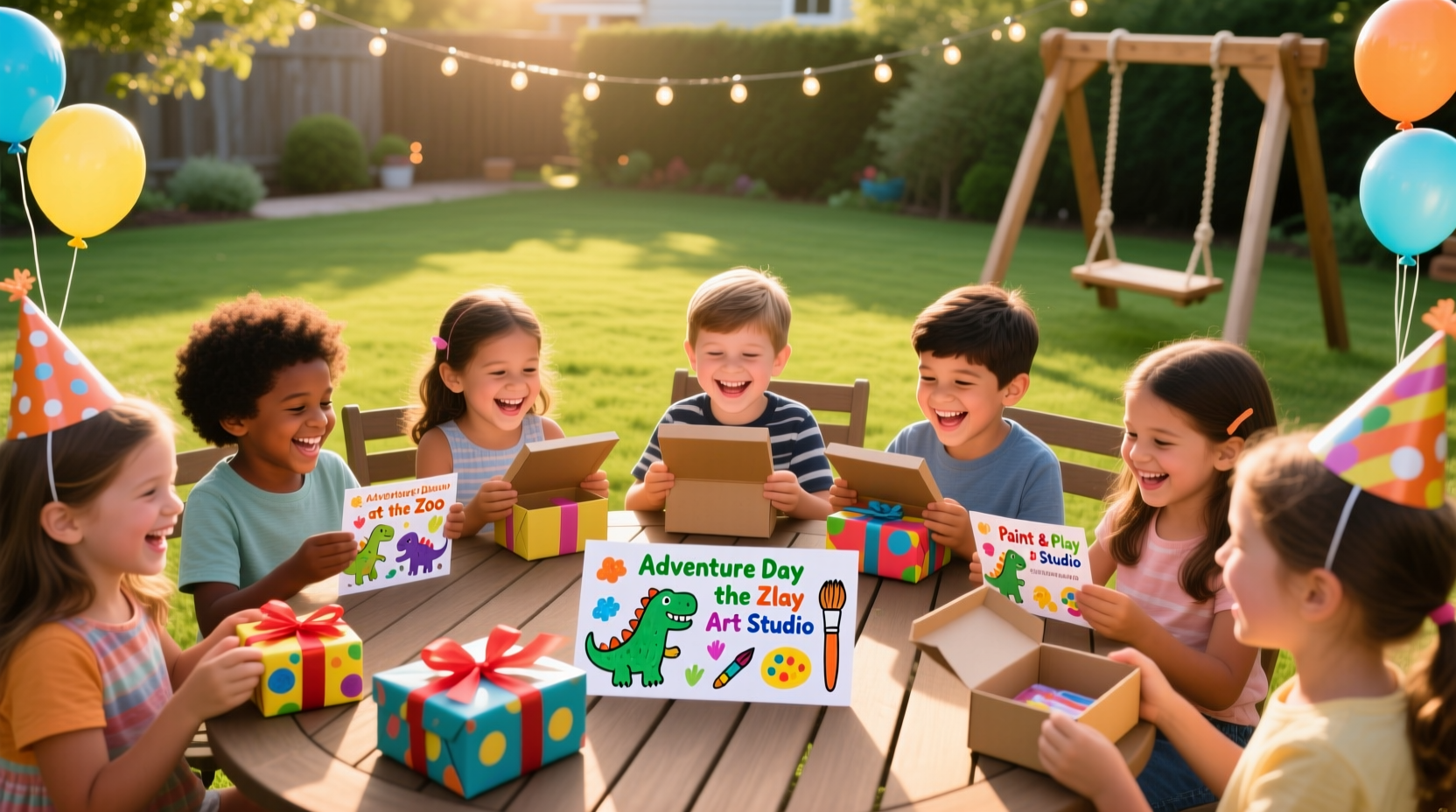
Children's brains are highly receptive during early and middle childhood, particularly in regions associated with emotion and memory—the amygdala and hippocampus. Experiences that involve novelty, emotion, and sensory engagement are more likely to be encoded as long-term memories. When a child rides a roller coaster for the first time, the surge of adrenaline, laughter, and wide-eyed wonder activates multiple neural pathways. These multisensory inputs make the memory richer and more durable compared to the fleeting excitement of unwrapping a new toy.
Dr. Linda Cheng, a developmental psychologist at the University of Toronto, explains:
“Experiences engage children on cognitive, emotional, and social levels simultaneously. A museum visit isn’t just about seeing dinosaurs—it’s about asking questions, interacting with caregivers, and feeling awe. That layered processing strengthens memory retention.”
In contrast, physical gifts often follow a predictable pattern: initial excitement peaks within hours or days, followed by habituation. A 2020 study published in the Journal of Consumer Psychology found that while children reported higher momentary happiness when receiving toys, their long-term recall of the event faded significantly after six weeks. Experiences, however, were remembered vividly months later, especially when they involved family participation or personal achievement.
Comparing Lasting Impact: Experiences vs. Physical Gifts
To understand the differences clearly, consider how each type of gift contributes to a child’s growth and memory bank.
| Aspect | Experience Gifts | Physical Items |
|---|---|---|
| Memory Longevity | Frequently recalled for years; often becomes a family story | Short-term recall; fades once novelty wears off |
| Emotional Depth | High—often tied to joy, accomplishment, or bonding | Moderate—centered on excitement, not sustained emotion |
| Developmental Value | Promotes curiosity, social skills, confidence, and learning | Limited unless educational (e.g., science kits) |
| Environmental Impact | Negligible—no waste or packaging | Can contribute to clutter and plastic waste |
| Cost Over Time | One-time expense (e.g., concert tickets, workshop) | Ongoing—replacement, batteries, accessories |
The table reveals a consistent advantage for experience gifts in areas that matter beyond the moment of opening. While physical toys can support play and creativity, many lack the depth to anchor themselves in a child’s autobiographical memory. Experiences, by contrast, often become part of a child’s narrative identity—“I’m someone who loves animals,” or “I once performed on stage.”
A Real-Life Example: The Science Camp That Changed Everything
Six-year-old Maya received two notable gifts during her birthday season: a high-end tablet loaded with games and a week-long spot at a local outdoor science camp. Initially, she was thrilled with the tablet, spending hours swiping through apps. Within three weeks, however, usage dropped sharply. The device became another screen among many, occasionally used for videos.
The science camp, scheduled for July, unfolded differently. For five days, Maya built solar ovens, identified insects, and went night hiking with glow sticks. She returned home with muddy shoes, sun-kissed cheeks, and a handmade journal filled with sketches and notes. Months later, she still refers to “the day I held a real scorpion” or “when we roasted marshmallows under the stars.” Her parents noticed a shift—she began asking more questions about nature, requested books on space, and even started a small rock collection.
This case illustrates a key insight: experiences don’t just create memories—they catalyze ongoing engagement. The camp didn’t end when the week concluded; it sparked curiosity that continued to unfold. As her mother noted, “The tablet entertained her. The camp changed her.”
How to Choose Meaningful Experience Gifts for Kids
Selecting the right experience requires thoughtfulness. Not every outing qualifies as a memorable gift. The most impactful experiences share certain qualities: they are novel, engaging, participatory, and emotionally resonant. Below is a step-by-step guide to help you design or select powerful experience-based presents.
- Assess the child’s age and interests – A toddler might enjoy a puppet show, while a preteen may prefer a photography workshop.
- Involve them in planning – Letting the child help choose the experience increases anticipation and ownership.
- Choose interactive over passive events – Hands-on activities like pottery classes or cooking sessions are more memorable than watching a movie.
- Include a memento – A certificate, photo, or small craft made during the experience helps anchor the memory.
- Pair with a loved one – Experiences shared with a parent, grandparent, or friend deepen emotional significance.
- Time it wisely – Avoid scheduling too close to holidays or other events that could overshadow it.
For example, instead of buying a soccer ball, gift a private lesson with a local coach. Rather than another board game, enroll them in a weekend escape room challenge designed for families. These choices transform consumption into participation, creating stories instead of storage.
Overcoming Common Objections
Despite growing support for experience gifts, some adults remain hesitant. Common concerns include perceived cost, logistical complexity, and uncertainty about the child’s reaction. Let’s address these directly:
- “Experiences are too expensive.” Not necessarily. Many meaningful experiences are low-cost: a picnic in a botanical garden, a scavenger hunt in a historic district, or a stargazing night with a telescope rental. Community centers often offer affordable workshops.
- “Kids love opening presents—experiences aren’t ‘tangible’ enough.” You can make the experience feel real through creative presentation. Give a map leading to the activity, a themed envelope with clues, or a “gift voucher” decorated with drawings.
- “What if they don’t enjoy it?” Risk exists with any gift. Mitigate this by involving the child in selection and choosing flexible options (e.g., gift cards for experience platforms like Fever or Classpop).
“We once gifted our nephew a hot air balloon ride. He was nervous at first, but afterward, he talked about it for months. It taught him courage—and gave us a memory we all cherish.” — Sarah Lin, Parent of Two
Practical Checklist: Planning an Unforgettable Experience Gift
- ✅ Is the activity age-appropriate and safe?
- ✅ Does it align with the child’s current interests or passions?
- ✅ Can a parent or guardian attend, or is supervision provided?
- ✅ Is there a way to document it (photos, certificate, keepsake)?
- ✅ Have I confirmed dates and booked in advance if needed?
- ✅ Can I present it creatively (e.g., treasure map, puzzle box)?
- ✅ Is there a backup plan in case of weather or cancellation?
Frequently Asked Questions
Can experience gifts work for very young children?
Yes, but they must be short, sensory-rich, and accompanied by a caregiver. Examples include baby music classes, zoo visits, or interactive theater performances designed for toddlers. The key is engagement, not duration.
What if we live in a rural area with limited options?
Focus on homemade experiences: a backyard camping night, a DIY science fair at home, or a “mystery day” where each hour brings a surprise activity. Creativity matters more than location. Local farms, libraries, and parks often host free or low-cost events.
How do I explain the value of an experience gift to grandparents who prefer tangible presents?
Share research or a personal story. You might say, “We’ve noticed that our daughter remembers the aquarium trip more than any toy. Would you consider gifting her a class or outing? We’ll send photos and keep the certificate in her memory book.” Framing it as inclusion in a lasting memory can be persuasive.
Building a Legacy of Memories
In a culture saturated with consumerism, choosing experiences over objects is a quiet act of resistance—one that prioritizes meaning over materialism. For children, these choices shape not only what they remember, but who they become. A physical item satisfies a want; an experience nurtures curiosity, builds confidence, and strengthens relationships. Years from now, a child may not recall every birthday present, but they will remember the day they baked their first pie, touched a sea star, or saw their name in lights at a recital.
The most enduring gifts are not wrapped in paper, but woven into time. They live in laughter echoing through a planetarium, in the pride of a finished painting, in the shared silence of watching fireflies at dusk. When we give experiences, we’re not just offering entertainment—we’re investing in a child’s emotional archive, enriching their inner world with moments that last a lifetime.




 浙公网安备
33010002000092号
浙公网安备
33010002000092号 浙B2-20120091-4
Comments
No comments yet. Why don't you start the discussion?