
In the world of luxury accessories, few materials carry the prestige and timeless appeal of genuine crocodile leather. When it comes to Apple Watch bands—especially high-end aftermarket or vintage models—consumers are increasingly drawn to crocodile leather for its durability, texture, and refined aesthetic. However, with rising demand comes a flood of counterfeit products designed to mimic the look of real crocodile hide at a fraction of the cost. Misidentifying a fake as authentic not only wastes money but can also compromise comfort, longevity, and even safety due to poor craftsmanship.
This guide equips you with the knowledge and tools to inspect any crocodile leather iWatch strap with precision. From microscopic scale patterns to stitching quality and scent analysis, we break down every element that distinguishes the real from the replica.
Anatomy of Genuine Crocodile Leather
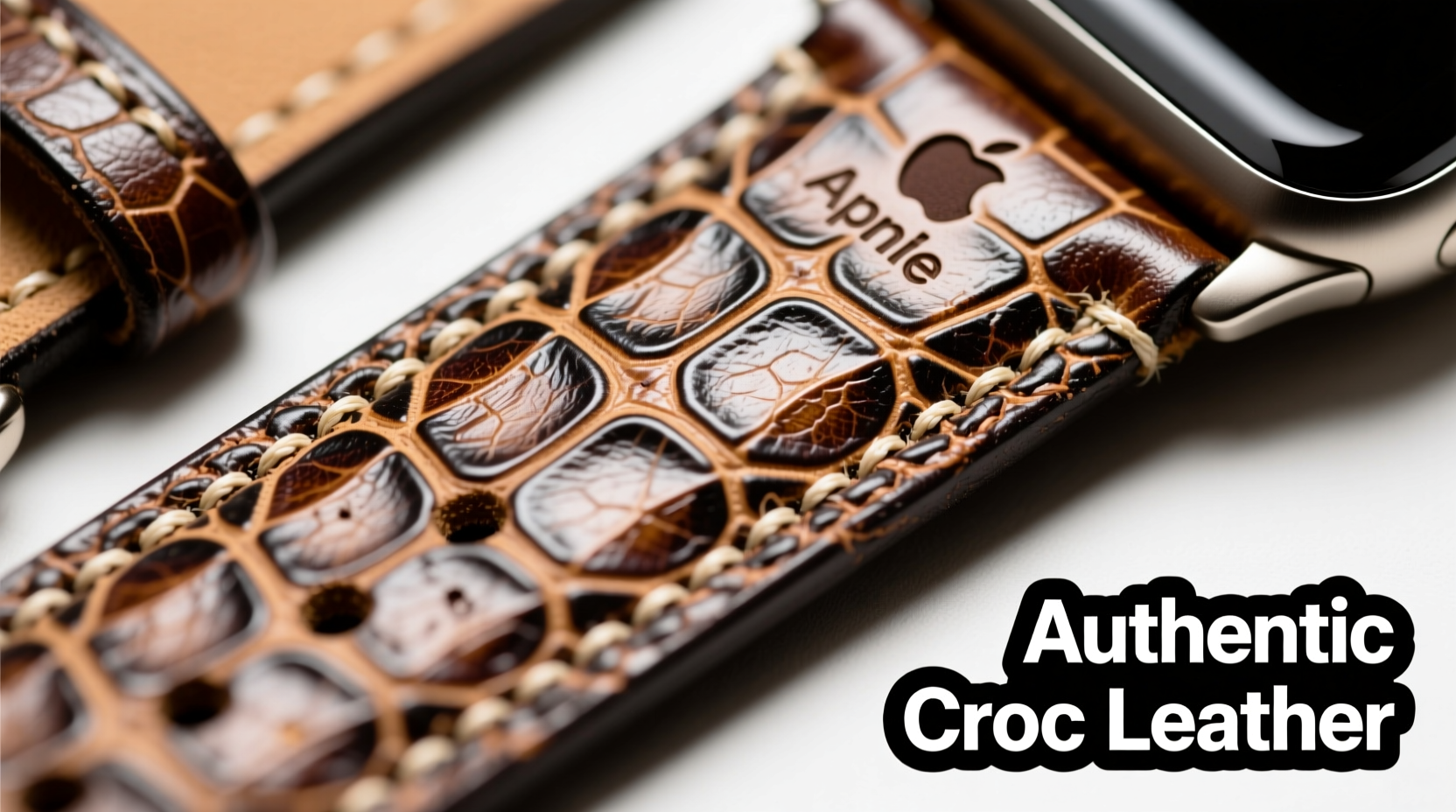
Crocodile leather is derived from the belly skin of crocodiles, primarily species like the Crocodylus porosus (saltwater crocodile) and Alligator mississippiensis (American alligator), though true “crocodile” refers specifically to non-alligator species. The belly region is prized for its smoothness, consistent scale pattern, and strength.
The unique characteristics of authentic crocodile leather stem from biological structure:
- Scales (Osteoderms): Natural bony deposits under the skin create raised, symmetrical rectangular scales with subtle variations between individual animals.
- Texture Gradient: The center of the belly has tightly packed, uniform squares; edges transition into larger, irregular scutes.
- Natural Imperfections: Minor scars, pigment variation, or asymmetry are signs of authenticity—not flaws.
Fake crocodile leather, often made from embossed cowhide or synthetic PU, replicates this pattern through stamping or printing. These imitations lack depth, flexibility, and natural irregularities.
Step-by-Step Verification Process
Authenticating a crocodile leather iWatch strap requires systematic observation. Follow these steps carefully before making a purchase or confirming ownership.
- Examine Scale Pattern Consistency
Use a magnifying glass or smartphone macro mode. Look for:- Symmetrical rows of rectangular scales along the central axis.
- Natural variation in size and spacing toward the edges.
- No repeating machine-like patterns—each section should feel organically arranged.
- Check the Edge Grain and Cut
Genuine crocodile leather is cut precisely across the belly panel. Fake versions often show:- Blurred or pixelated scale edges.
- Inconsistent thickness at the strap ends.
- Lack of layered grain transition when viewed from the side.
- Smell the Leather
Real crocodile leather has a rich, earthy, slightly oily scent from tanning oils. Counterfeits smell like plastic, varnish, or chemical adhesives. - Assess Flexibility and Weight
Bend the strap gently. Authentic leather will crease naturally without cracking. It should feel dense but not stiff. Imitations may crack or resist bending unnaturally. - Inspect Stitching and Lining
High-end crocodile straps use hand-stitched saddle stitching with waxed linen or silk thread. Poor alignment, glue residue, or synthetic lining indicate mass production and likely falsification.
Do’s and Don’ts: Quick Reference Table
| Do’s | Don’ts |
|---|---|
| ✅ Buy from authorized dealers or brands with traceable sourcing | ❌ Trust listings with stock photos only |
| ✅ Request batch numbers or certification documents | ❌ Assume “exotic leather” means genuine crocodile |
| ✅ Use UV light to detect hidden dyes or coatings | ❌ Rely solely on price—if it’s too low, it’s suspicious |
| ✅ Feel the backside: real leather has a fibrous suede-like underside | ❌ Ignore mismatched hardware engravings or logos |
Mini Case Study: The $350 Mistake
Mark, an Apple enthusiast based in London, purchased what he believed was a premium crocodile iWatch band from an online marketplace. Advertised as “handcrafted Italian crocodile leather,” the strap arrived in elegant packaging with gold-tone hardware. Initially impressed, Mark noticed within two weeks that the surface began peeling near the lugs. Upon closer inspection using a jeweler’s loupe, he observed a perfectly repeating diamond grid—a hallmark of embossed synthetic leather.
He contacted the seller, who refused a refund. A follow-up inquiry to a certified leather appraiser confirmed: the material was polyurethane printed with a crocodile motif. The lesson? Packaging and presentation can be faked. Only physical verification prevents costly errors.
“Crocodile leather cannot be perfectly replicated because no two hides are identical. That inconsistency is your best ally in spotting fakes.” — Lucien Moreau, Master Tanner & Luxury Goods Authenticator
Red Flags: What to Watch For
Even experienced buyers can fall for sophisticated counterfeits. Stay alert for these warning signs:
- Perfect Symmetry: Machine-made patterns repeat identically across the strap.
- Unnaturally Shiny Surface: Heavy lacquer coating masks low-quality base material.
- Price Below $200: Genuine crocodile iWatch straps typically start around $250–$600 due to sourcing and labor costs.
- No Origin Label: Legitimate sellers disclose species, country of origin, and tannery details.
- Peeling Edges or Bubbling: Indicates bonded layers or synthetic topcoats failing over time.
Expert Checklist for Buyers
Before finalizing any purchase, run through this checklist:
- 🔍 Verified scale pattern with organic variation?
- 👃 Distinctive leather smell present (not plastic)?
- 🧵 Hand-stitched seams with tight, even tension?
- 📄 Seller provides proof of origin or CITES documentation (if applicable)?
- ⚖️ Weight and drape consistent with dense reptile hide?
- 🔌 Compatibility with Apple Watch lug system secure and precise?
- 💰 Price aligns with market value for genuine exotic leather?
FAQ: Common Questions About Crocodile iWatch Straps
Is crocodile leather legal for watch straps?
Yes, provided it complies with CITES (Convention on International Trade in Endangered Species). Most commercial crocodile leather comes from regulated farms in Australia, South Africa, and Southeast Asia. Reputable sellers provide compliance documentation upon request.
How do I care for a real crocodile leather iWatch strap?
Wipe gently with a dry microfiber cloth after use. Avoid water, sweat, and direct sunlight. Condition every 6–8 weeks with a pH-balanced exotic leather cream. Store flat in a breathable pouch away from heat sources.
Can Apple sell genuine crocodile leather bands?
No. Apple does not offer crocodile leather straps due to ethical policies and sustainability standards. Any “Apple-branded” crocodile strap is third-party or counterfeit.
Final Thoughts: Confidence Through Knowledge
Purchasing a crocodile leather iWatch strap isn’t just about aesthetics—it’s an investment in craftsmanship, rarity, and enduring style. But that value disappears if the product isn’t what it claims to be. Armed with the right inspection techniques, awareness of red flags, and respect for legitimate sourcing, you can navigate the market with authority.
Whether you're upgrading your daily wear or adding a collector’s piece to your rotation, never underestimate the power of close examination. Authenticity isn’t always obvious at first glance—but it reveals itself to those who know where to look.




 浙公网安备
33010002000092号
浙公网安备
33010002000092号 浙B2-20120091-4
Comments
No comments yet. Why don't you start the discussion?