
As more pet owners seek natural alternatives to support their dogs’ well-being, cannabidiol (CBD) oil has emerged as a popular option—especially for managing anxiety. From thunderstorm phobias to separation distress, many report noticeable improvements in their pets after introducing CBD into their routines. But with enthusiasm comes caution: Is CBD truly safe for dogs? And does it genuinely reduce anxious behaviors, or is the effect mostly anecdotal?
The answer isn’t black and white. While research is still evolving, current evidence suggests that when used correctly, CBD oil can be both safe and effective for many dogs. However, safety depends heavily on product quality, proper dosing, and veterinary oversight. This article examines the science behind CBD for canine anxiety, explores potential risks, and provides practical guidance for pet owners considering this supplement.
Understanding CBD and How It Works in Dogs
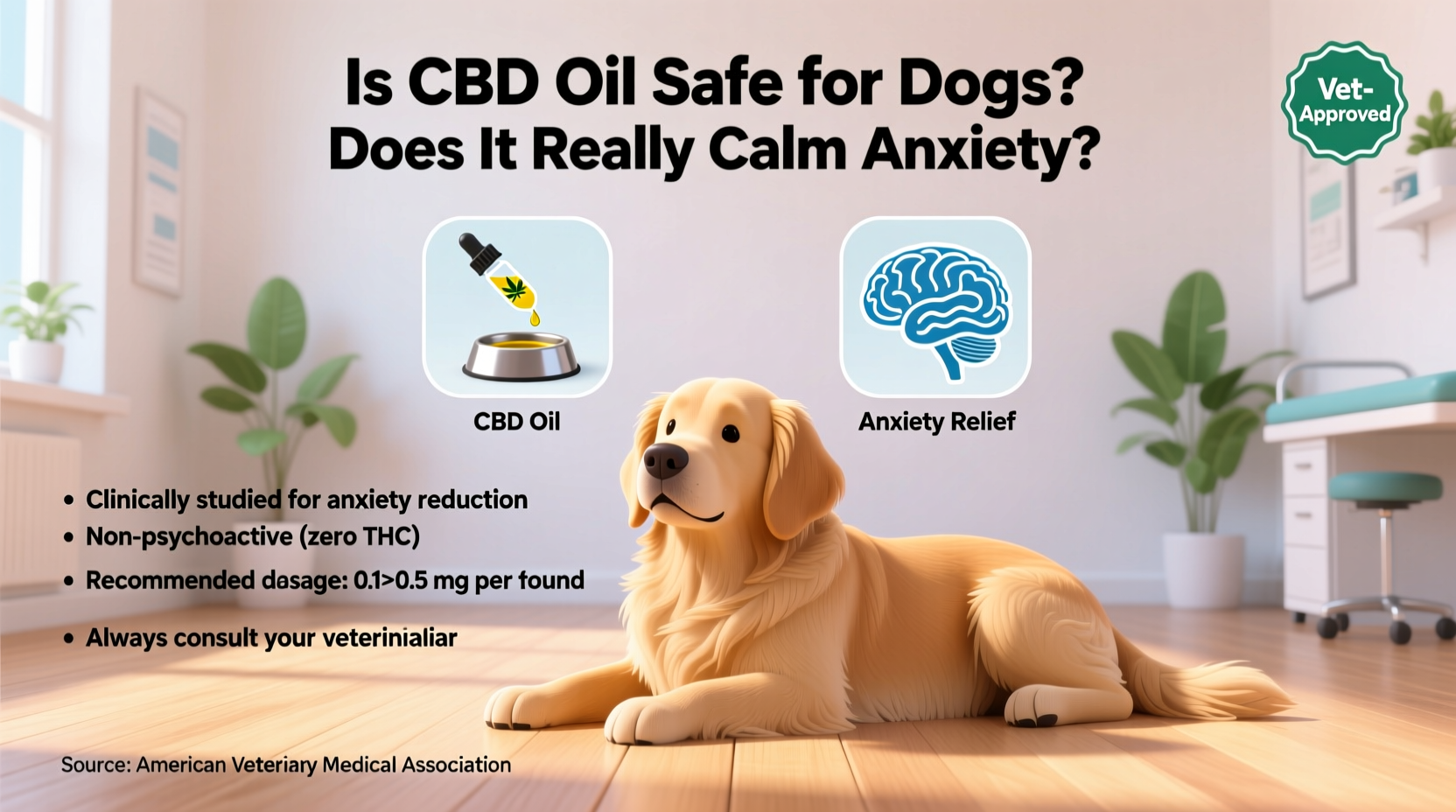
CBD, or cannabidiol, is a non-intoxicating compound derived from the hemp plant. Unlike THC (tetrahydrocannabinol), which produces a “high” in humans and animals, CBD does not alter mental state. Instead, it interacts with the endocannabinoid system (ECS)—a complex network of receptors found throughout the body that helps regulate mood, pain, inflammation, and sleep.
Dogs have a highly active ECS, particularly concentrated in the brain and nervous system. When CBD enters the bloodstream, it influences CB1 and CB2 receptors, potentially modulating stress responses and promoting a sense of calm. According to Dr. Stephanie McGrath, a veterinarian and neurologist at Colorado State University who has led clinical trials on CBD in dogs:
“CBD shows promise in reducing anxiety-related behaviors by influencing serotonin pathways and decreasing neuronal hyperactivity.” — Dr. Stephanie McGrath, DVM, DACVIM
This mechanism is similar to how some anti-anxiety medications work in humans, though CBD’s action is generally milder and less likely to cause sedation or dependency.
Evidence: Does CBD Actually Reduce Canine Anxiety?
Scientific research on CBD for dog anxiety is still limited but growing. A 2022 study published in *Frontiers in Veterinary Science* evaluated 26 dogs with noise aversion (such as fear of fireworks). The group receiving CBD showed significantly reduced anxiety behaviors—including trembling, pacing, and vocalizing—compared to the placebo group. Physiological markers like heart rate also decreased during exposure to loud sounds.
Another trial conducted by the American Kennel Club Canine Health Foundation found that 89% of dogs given CBD experienced a reduction in seizure frequency, suggesting neurological modulation that may extend to emotional regulation.
While these findings are promising, they don't guarantee results for every dog. Individual responses vary based on breed, size, metabolism, and the underlying cause of anxiety. Some dogs show improvement within minutes; others require consistent use over several days before changes become apparent.
Safety Profile: What You Need to Know Before Giving CBD to Your Dog
Most studies and veterinary reports indicate that CBD is well-tolerated in dogs when administered at appropriate doses. However, side effects can occur, especially with poor-quality products or incorrect dosing.
Common mild side effects include:
- Drowsiness
- Temporary drop in blood pressure
- Increased thirst
- Occasional gastrointestinal upset (e.g., loose stools)
More serious risks arise when CBD products contain detectable levels of THC or contaminants such as heavy metals, pesticides, or solvents. Even small amounts of THC can be toxic to dogs, leading to symptoms like ataxia (wobbly gait), vomiting, urinary incontinence, and extreme lethargy.
To minimize risk, always choose products labeled as “broad-spectrum” or “CBD isolate,” which contain no THC. Full-spectrum oils, while potentially more effective due to the \"entourage effect,\" carry a higher risk if not rigorously tested.
Choosing a Safe and Effective Product
Not all CBD oils are created equal. The pet supplement market is largely unregulated, meaning labels don’t always reflect reality. Third-party lab testing (also called Certificate of Analysis or COA) is essential to verify potency and purity.
| Feature | Safe Choice | Avoid |
|---|---|---|
| THC Content | 0% or undetectable (labeled THC-free) | Any measurable THC, especially in full-spectrum without COA |
| Lab Testing | Third-party COA available via QR code or website | No lab results or vague claims like “all-natural” |
| Carrier Oil | Hemp seed oil, MCT oil | Unknown oils or additives |
| Ingredients | Minimal, recognizable components | Artificial flavors, preservatives, or alcohol |
“The biggest concern I see in practice is contamination. I’ve had patients come in with THC toxicity from products marketed as ‘safe for pets.’ Always check the COA.” — Dr. Rachel Simmons, Veterinary Toxicologist
Step-by-Step Guide to Using CBD for Anxious Dogs
If you’re considering CBD for your dog’s anxiety, follow this structured approach to ensure safety and effectiveness:
- Consult Your Veterinarian: Discuss your dog’s medical history, current medications, and anxiety triggers. Some drugs (like sedatives or anti-seizure meds) may interact with CBD.
- Select a Reputable Product: Choose a pet-specific CBD oil with third-party lab verification. Avoid human formulations, which may contain ingredients unsafe for dogs.
- Start with a Low Dose: General guidelines suggest 0.1 to 0.5 mg of CBD per pound of body weight. For a 30-pound dog, that’s 3–15 mg daily. Begin at the lower end.
- Administer Consistently: Use the dropper to place oil under the tongue or mix it with food. Administer once or twice daily, depending on product instructions.
- Monitor for 48 Hours: Watch for changes in behavior, appetite, energy level, or adverse reactions. Keep a simple log.
- Adjust Gradually: If no improvement after one week, increase the dose by 0.1 mg per pound every 3–4 days until desired effect is achieved.
- Reassess After Two Weeks: Determine whether CBD is helping. If ineffective or causing side effects, discontinue and consult your vet.
Real-World Example: Managing Storm Anxiety in a Rescue Dog
Milo, a 4-year-old German Shepherd mix adopted from a rural shelter, exhibited severe storm anxiety. During rain or thunder, he would bark incessantly, hide under furniture, and sometimes urinate indoors. His owner, Lisa, tried calming vests and white noise machines with limited success.
After consulting her veterinarian, she began giving Milo 10 mg of broad-spectrum CBD oil (verified THC-free via COA) about 30 minutes before storms were forecast. Within two storms, Milo remained lying down instead of pacing. By the fourth exposure, he fell asleep during a thunderclap.
Lisa maintained the regimen only during high-risk weather, avoiding daily use unless needed. Over time, Milo’s reactivity decreased even without CBD, suggesting possible long-term desensitization supported by temporary pharmacological aid.
Common Misconceptions About CBD for Dogs
Despite rising popularity, several myths persist:
- Myth: CBD works instantly like a sedative. Truth: Effects can take 20–60 minutes when given orally and may require multiple doses to build up in the system.
- Myth: All CBD products are the same. Truth: Quality varies dramatically. One product may deliver 90% of labeled CBD; another may contain none—or harmful contaminants.
- Myth: More is better. Truth: High doses don’t necessarily increase benefits and may lead to drowsiness or digestive issues.
- Myth: CBD cures anxiety permanently. Truth: It manages symptoms but doesn’t replace behavioral training or environmental modifications.
Frequently Asked Questions
Can I give my dog human CBD oil?
It’s not recommended. Human CBD products may contain additives like xylitol (toxic to dogs), higher concentrations, or flavorings unsuitable for pets. Always use a formulation designed specifically for animals.
How long does it take for CBD to work in dogs?
When administered sublingually (under the tongue), effects typically begin within 20–40 minutes. When mixed with food, onset may take 60 minutes or longer. For chronic anxiety, consistent daily use for 5–7 days may be needed before noticeable changes occur.
Is CBD legal for pets?
In most U.S. states, hemp-derived CBD (containing less than 0.3% THC) is legal for pet use. However, regulations vary internationally and by state. No FDA-approved CBD products currently exist for dogs, though enforcement is generally focused on manufacturers, not consumers.
Final Checklist Before Starting CBD
Before administering CBD to your dog, complete this checklist:
- ✅ Consulted with a veterinarian familiar with cannabinoid therapeutics
- ✅ Selected a pet-specific CBD product with verifiable third-party lab results
- ✅ Confirmed the product contains zero THC
- ✅ Calculated correct starting dose based on your dog’s weight
- ✅ Prepared to monitor for side effects or behavioral changes
- ✅ Committed to using CBD as part of a broader anxiety management plan
Conclusion
CBD oil holds genuine potential as a supportive tool for dogs struggling with anxiety. Scientific evidence, combined with countless owner testimonials, suggests it can promote calmness without the grogginess or dependency risks associated with traditional medications. Yet its safety hinges on informed choices—choosing clean, transparent products, dosing responsibly, and involving your veterinarian in the process.
Every dog is different. What works wonders for one may do little for another. The key lies in patience, observation, and a commitment to holistic care. If you're exploring CBD for your anxious dog, start small, stay vigilant, and keep communication open with your vet. With the right approach, CBD might just help your furry companion find peace in a world that often feels overwhelming.




 浙公网安备
33010002000092号
浙公网安备
33010002000092号 浙B2-20120091-4
Comments
No comments yet. Why don't you start the discussion?