
Selecting the perfect ring goes beyond carat weight or metal type. The truth is, a ring that looks stunning on one person may appear awkward on another—not because of quality, but because it doesn’t complement their hand shape. Just as clothing styles vary by body type, so too should jewelry choices align with your unique proportions. Understanding your hand shape allows you to choose rings that enhance your fingers, creating balance, elegance, and visual harmony.
Whether you're shopping for an engagement ring, wedding band, or statement piece, knowing how different designs interact with various hand shapes can transform your entire look. This guide breaks down the five most common hand shapes, offers tailored recommendations, and provides practical strategies to help you make informed, flattering choices.
Understanding the Five Hand Shapes
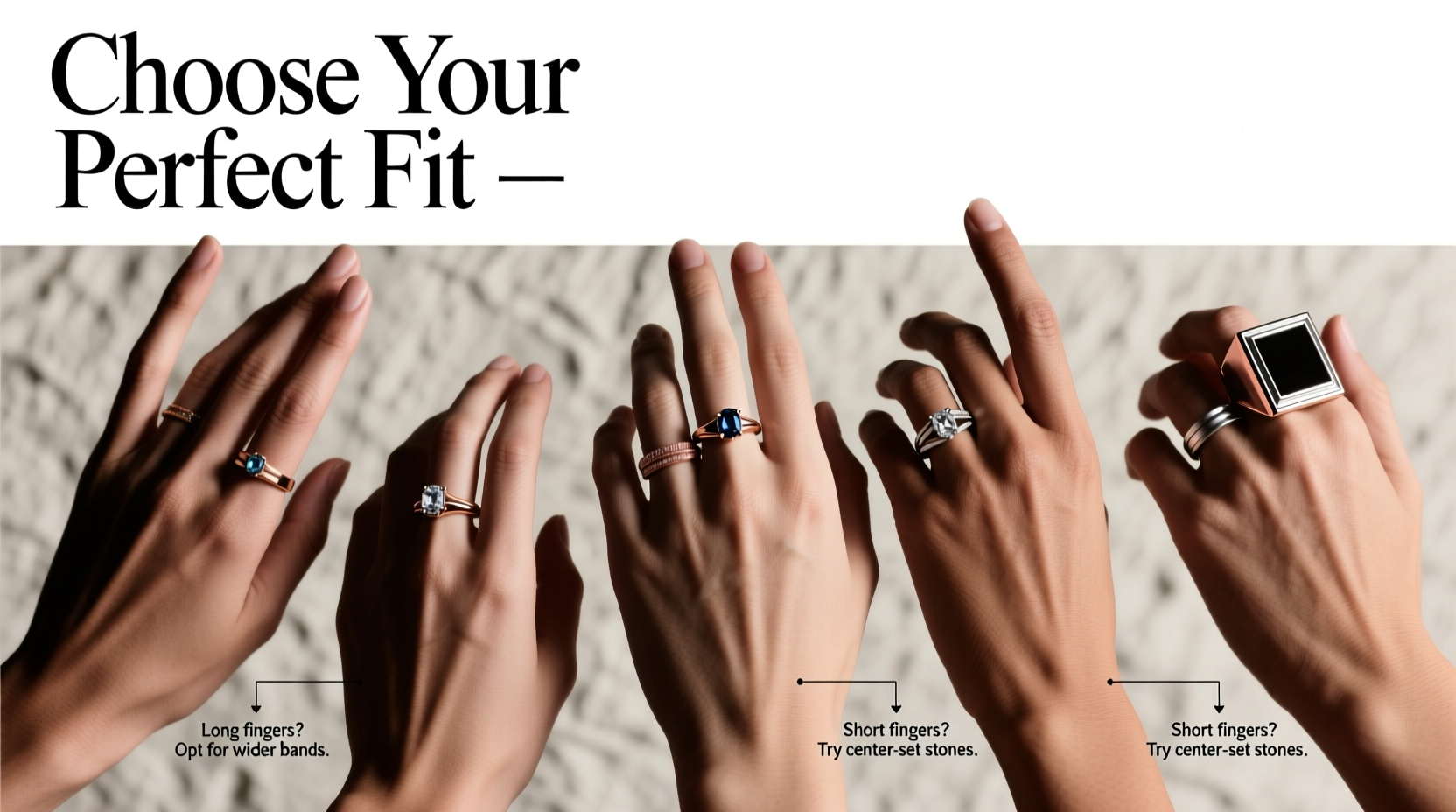
Hand shapes are generally categorized into five types: slender, short, wide, square, and tapered. Each has distinct characteristics that influence how a ring appears when worn.
- Slender hands: Long fingers with narrow palms. Rings with intricate details or larger stones often shine here.
- Short fingers: Fingers that appear compact relative to palm size. Elongating styles are ideal.
- Wide-set fingers: Broad palms and spaced digits. Wider bands or bold settings create balance.
- Square hands: Defined by broad fingertips and angular nail beds. Rounded or curved designs soften the appearance.
- Tapered fingers: Narrow at the tip, wider at the base. Symmetrical solitaires or halo settings offer proportion.
Ring Styles That Flatter Each Hand Shape
Matching ring design to hand structure isn’t about hiding flaws—it’s about enhancing what you already love. Here’s how to select styles that work with your anatomy.
For Slender Hands
The elongated finger provides a graceful canvas. Delicate pavé bands, east-west set stones, or vintage-inspired filigree designs emphasize elegance without overwhelming the hand.
For Short Fingers
Vertical design elements create the illusion of length. Opt for solitaire settings with raised prongs, marquise or pear-shaped stones set vertically, or rings with center stones elevated above the band.
“Rings with upward-facing profiles draw the eye along the finger, making them appear longer and more refined.” — Lila Montgomery, Jewelry Designer & Fit Consultant
For Wide-Set or Broad Hands
Bolder designs prevent the ring from looking lost. Consider three-stone rings, thicker shanks (3–5mm), or clusters that span across the finger. Avoid overly dainty settings, which can appear disproportionate.
For Square Hands
Round, oval, cushion, or radiant-cut stones help soften angular features. Curved bands, twisted shanks, or milgrain detailing add fluidity. Avoid boxy or geometric stones like princess cuts unless softened with a halo.
For Tapered Fingers
These fingers narrow significantly toward the tip. A well-proportioned solitaire or a halo ring centered over the widest part of the finger maintains symmetry. Petite hands benefit from lower-profile settings to avoid top-heaviness.
Key Design Elements and How They Impact Appearance
Beyond shape, specific ring components play crucial roles in how a piece complements your hand. Consider these factors carefully:
| Design Element | Effect on Hand Appearance | Best For |
|---|---|---|
| Band Width | Thinner bands (1–2mm) suit delicate hands; wider bands (4mm+) balance broader palms | All shapes, adjusted for proportion |
| Stone Cut | Marquise, oval, pear = elongating; square cuts = grounding | Short fingers (elongating); wide hands (grounding) |
| Setting Height | High settings draw attention upward; low settings hug the finger | Long fingers (high); shorter fingers (moderate-high) |
| Side Details | Pavé or accent stones widen visual footprint | Narrow or slender hands |
Step-by-Step Guide to Choosing Your Ideal Ring
Follow this process to ensure your selection enhances your hand’s natural beauty:
- Assess your hand shape in natural light. Take photos from front, side, and top views.
- Measure finger width and length using a ruler or ring sizer for reference.
- Identify proportions: Are your fingers long and thin? Short and strong? Balanced?
- Try on sample rings in different styles: vertical vs. horizontal, wide vs. narrow band.
- Evaluate visual balance: Does the ring dominate your finger or harmonize with it?
- Consider lifestyle fit: Choose practical height and durability if worn daily.
- Finalize based on confidence: You should feel both beautiful and comfortable.
Real-Life Example: Transforming a Ring Choice
Sophia, a teacher with short, wide-set fingers, initially fell in love with a delicate 1.5mm platinum band set with tiny round diamonds. When she tried it on, the ring looked swallowed by her hand, almost invisible. Her jeweler suggested switching to a 4mm twisted band with a central oval diamond in a raised bezel setting. The new design not only balanced her palm width but also made her fingers appear longer. “I didn’t realize a few millimeters could make such a difference,” she said. “Now my ring feels like it was made just for me.”
Jewelry Selection Checklist
Use this checklist before finalizing your purchase:
- ✅ I know my hand shape and finger proportions
- ✅ I’ve tried on multiple ring styles in person
- ✅ The band width complements my finger thickness
- ✅ The stone cut enhances, rather than clashes with, my finger shape
- ✅ The setting height feels secure and visually balanced
- ✅ Accent details (e.g., pavé, engraving) add value without overcrowding
- ✅ The ring feels comfortable during everyday movements
- ✅ I feel confident and joyful wearing it
Frequently Asked Questions
Can one ring suit all hand shapes?
No single ring universally flatters every hand. While classic solitaires are versatile, subtle differences in band width, stone orientation, and setting height affect how they appear across hand types. Customization ensures optimal fit and aesthetic.
Should I always follow traditional rules?
Guidelines are helpful starting points, but personal preference matters most. If you adore a princess-cut ring despite having square hands, consider a rounded band or halo to soften the look while honoring your taste.
Do metal colors affect hand appearance?
Yes. Rose gold can warm up cooler skin tones and subtly contrast against fair complexions, making fingers appear slimmer. White gold and platinum offer crispness that highlights detail. Yellow gold adds warmth and vintage charm. Match metal to your undertones for added enhancement.
Final Thoughts: Wear What Celebrates You
The right ring doesn’t just sparkle—it resonates. It feels like an extension of who you are and how you carry yourself. By understanding your hand shape, you gain the power to choose pieces that don’t just sit on your finger, but elevate your entire presence.
This knowledge empowers you to move beyond trends and marketing hype, focusing instead on timeless harmony between design and anatomy. Whether you’re choosing a lifelong symbol or a seasonal statement, let intention guide your decision.




 浙公网安备
33010002000092号
浙公网安备
33010002000092号 浙B2-20120091-4
Comments
No comments yet. Why don't you start the discussion?