
Pleated fabrics add elegance, movement, and dimension to garments—from haute couture gowns to tailored skirts and blouses. But their intricate folds are fragile. Once crushed or misshapen, restoring the original structure can be difficult, if not impossible. Unlike flat weaves, pleats rely on precise creases that are vulnerable to moisture, heat, and improper handling. Whether your wardrobe includes vintage accordion pleats, modern box pleats, or delicate knife folds in silk chiffon, proper care is non-negotiable. This guide delivers actionable, expert-backed strategies to preserve the integrity of pleated textiles through washing, drying, storage, and wear.
Understanding Pleat Types and Fabric Sensitivity
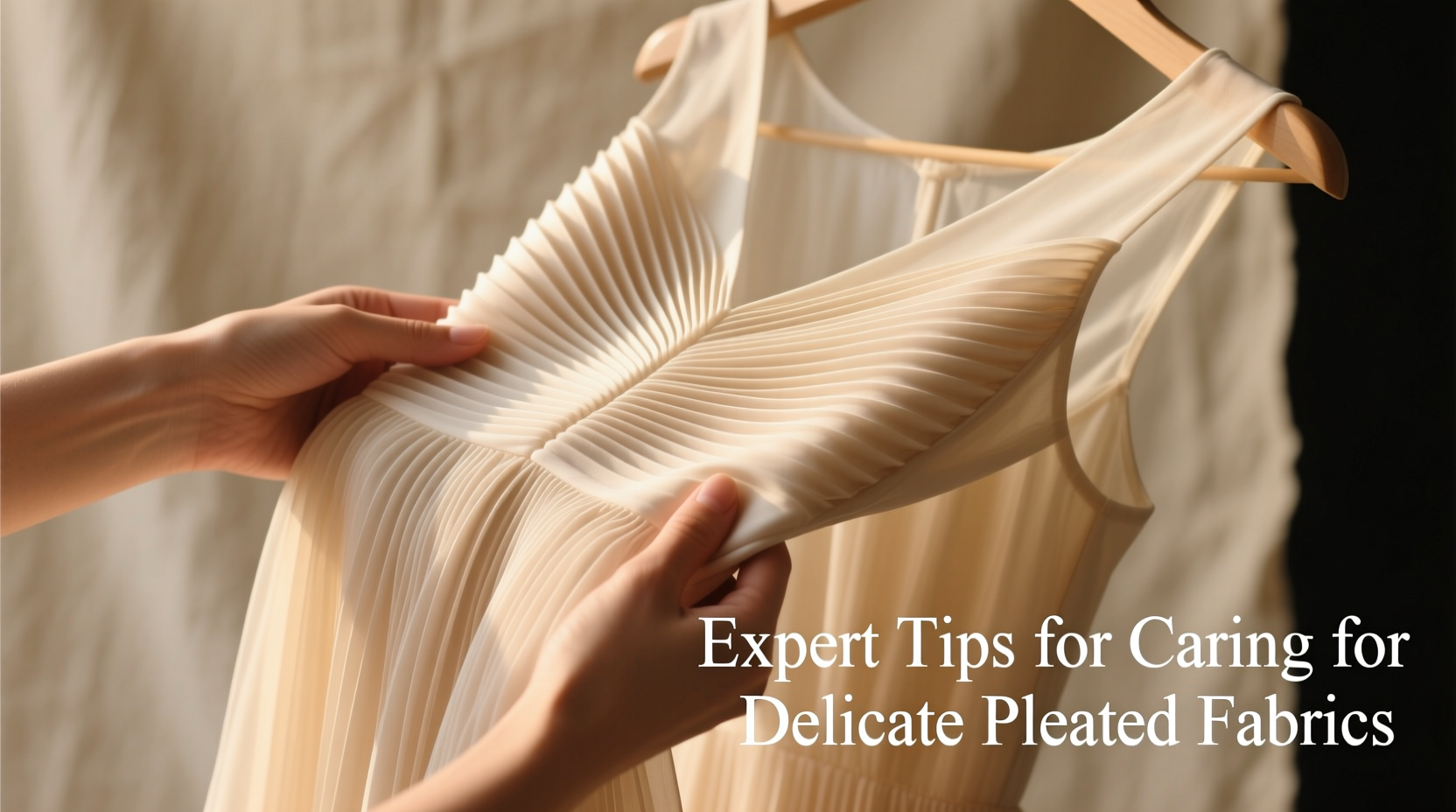
Pleats are not created equal. The method used to set them determines how they should be maintained. Permanent pleats, such as those heat-set in synthetic fibers like polyester, hold shape longer but can melt under high heat. Temporary or stitched pleats, common in cotton or linen garments, depend on thread tension and may loosen with aggressive laundering. Delicate materials like silk, rayon, or fine wool require extra caution due to their low tolerance for friction and moisture.
Common pleat styles include:
- Accordion pleats: Narrow, evenly spaced folds ideal for movement; easily distorted by compression.
- Box pleats: Wider, structured folds often used in skirts; more durable but still sensitive to crushing.
- Knife pleats: All folds facing one direction; elegant but prone to shifting if mishandled.
- Cartridge pleats: Gathered and stitched at the top, common in historical or bridal wear; extremely delicate.
The fabric base plays a critical role. Synthetic blends may resist wrinkling but are heat-sensitive. Natural fibers breathe better but shrink or stretch when wet. Always check the care label—but when in doubt, assume the pleated section demands gentler treatment than the rest of the garment.
Washing Pleated Fabrics: Do’s and Don’ts
Cleaning pleated garments requires precision. Most pleated items, especially those made from silk, acetate, or finely woven synthetics, should be professionally dry cleaned. Home washing risks collapsing pleats, particularly if agitation or spin cycles are involved.
If hand-washing is permitted, follow this protocol:
- Fill a basin with cool water and a mild detergent formulated for delicates (e.g., Woolite or The Laundress Delicate Wash).
- Submerge the garment gently—do not agitate or rub.
- Soak for no more than 3–5 minutes.
- Rinse twice in clean, cool water to remove all soap residue.
- Press water out by laying the item between two clean towels and rolling them up to absorb moisture—never wring.
Machine washing is strongly discouraged unless the manufacturer explicitly permits it—and even then, use a mesh laundry bag and the \"delicate\" cycle with cold water.
| Action | Recommended | Avoid |
|---|---|---|
| Water Temperature | Cool or cold | Hot or warm water |
| Detergent Type | Mild, pH-neutral | Bleach or enzyme-based cleaners |
| Agitation | None (gentle soaking only) | Wringing, scrubbing, machine spin |
| Drying Method | Lay flat on a drying rack | Hanging or tumble drying |
Proper Drying and Reshaping Techniques
How you dry a pleated garment can make or break its structure. Hanging wet pleated clothing pulls folds downward, stretching them irreversibly. Instead, lay the item flat on a clean, dry towel or mesh drying rack, reshaping the pleats with your fingers while damp.
To restore slightly flattened pleats:
- Lightly mist the fabric with distilled water using a spray bottle.
- Use a cool iron or steamer, holding it 2–3 inches from the surface.
- Gently realign each fold with a wooden dowel or rounded edge (like a spoon handle) as you go.
- Let air-dry completely before storing or wearing.
Never press directly on pleats with a hot iron. High heat can “set” wrinkles into the wrong places or melt synthetic fibers. Steaming is safer, but always test on an inconspicuous area first.
“Pleats are architectural. You’re not just cleaning fabric—you’re preserving design. One mistake in drying can undo hours of craftsmanship.” — Lila Nguyen, Textile Conservator at the Museum of Fashion Art
Storage Solutions to Prevent Crushing
Improper storage is the leading cause of ruined pleats. Folding creates sharp creases that compete with existing pleats, leading to ghost lines and distortion. For long-term preservation, hanging or rolling is preferable—but with caveats.
For lightweight pleated garments (e.g., silk skirts or dresses):
- Use padded hangers to distribute weight evenly.
- Place the garment in a breathable cotton garment bag—never plastic, which traps moisture.
- Avoid overcrowding in closets; pleated items need space to prevent side pressure.
For heavier or structured pieces:
- Roll loosely around an acid-free tissue-wrapped tube (like a mailing tube).
- Store horizontally in a drawer or archival box.
- Interleave folds with tissue paper to maintain separation.
Mini Case Study: Reviving a Vintage Pleated Gown
A client brought a 1950s taffeta evening gown with collapsed box pleats to a textile restoration studio. The dress had been folded in a cedar chest for over a decade. Initial inspection revealed stiffened fabric and misaligned folds due to prolonged compression and minor moisture exposure.
The conservator began by vacuuming the surface with a low-suction tool and nylon screen to remove dust without abrasion. The gown was then humidified in a controlled chamber for 20 minutes to relax fibers. Using tweezers and a cool steam wand, each pleat was manually re-formed and pinned into place on a padded board. After 48 hours of air setting, the pleats regained 95% of their original definition. The final step was storage on a custom padded hanger inside a breathable muslin cover. This case underscores that even severely damaged pleats can be recovered—if treated with patience and expertise.
Essential Care Checklist for Pleated Garments
Follow this checklist to maintain pleated fabrics year-round:
- ✔️ Read care labels carefully—assume dry clean unless otherwise specified.
- ✔️ Avoid wearing pleated garments in heavy rain or humid environments.
- ✔️ Store flat or on padded hangers; never fold sharply across pleats.
- ✔️ Use distilled water for steaming or spot cleaning to prevent mineral deposits.
- ✔️ Rotate pleated pieces in your wardrobe to reduce wear frequency.
- ✔️ Address spills immediately with blotting—not rubbing—and professional cleaning soon after.
- ✔️ Steam instead of iron; keep the nozzle at a safe distance.
Frequently Asked Questions
Can I machine dry a pleated polyester skirt?
No. Even synthetic pleated fabrics should never be tumble dried. Heat and tumbling cause pleats to shift and fabric to shrink unevenly. Always air-dry flat or hang with care, depending on weight.
What if my pleats start to look wavy?
Waviness usually indicates fiber relaxation due to moisture or heat. Lay the garment flat, gently reshape the pleats with your fingers, and allow it to dry slowly away from direct heat. Light steaming may help reset the structure.
Are there any fabrics that hold pleats better over time?
Yes. Crisp synthetics like polyester and acetate retain heat-set pleats longest. Natural fibers like cotton or wool can hold pleats if starched or fused with interfacing, but require more maintenance. Modern technical fabrics, such as those used in performance wear, are engineered for memory retention and durability.
Final Thoughts: Treat Pleats Like Precision Craftsmanship
Pleated fabrics are not merely decorative—they are feats of textile engineering. Each fold represents intentional design, requiring thoughtful upkeep. By avoiding harsh treatments, prioritizing gentle drying, and storing with spatial awareness, you honor both the material and the maker. These habits don’t just prolong a garment’s life; they preserve its aesthetic intent.




 浙公网安备
33010002000092号
浙公网安备
33010002000092号 浙B2-20120091-4
Comments
No comments yet. Why don't you start the discussion?