
Emerald zirconia—often marketed as a vibrant green synthetic gemstone—is prized for its brilliance and resemblance to natural emeralds. However, due to rising demand and inconsistent labeling, many consumers unknowingly purchase misrepresented or low-quality stones. Whether you're shopping for jewelry, verifying an existing piece, or building a collection, knowing how to distinguish authentic emerald zirconia from imitations is essential. This guide delivers actionable, expert-backed strategies to help you make informed decisions with confidence.
Understanding Emerald Zirconia: What It Is (and Isn’t)
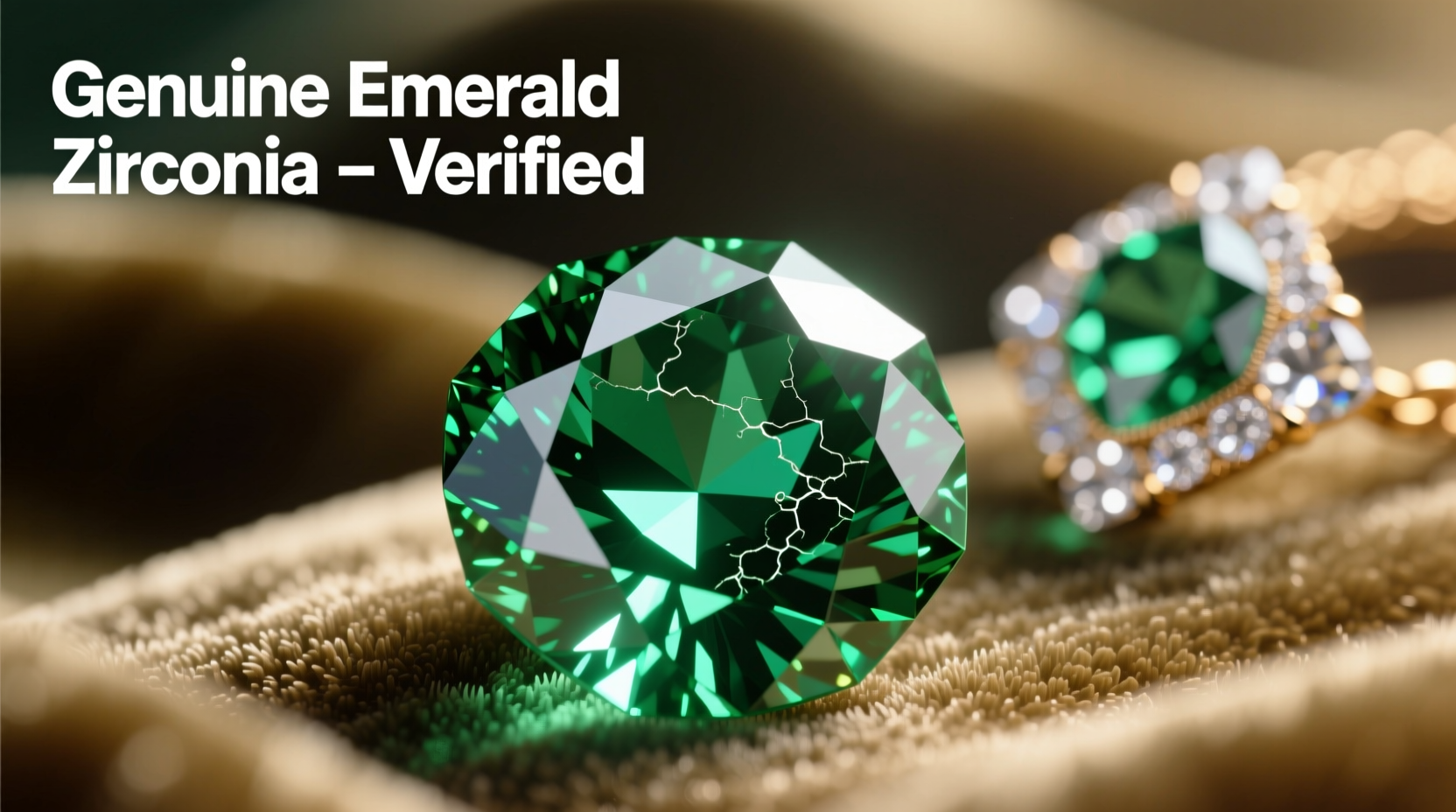
First, clarify the terminology. \"Emerald zirconia\" is not a naturally occurring mineral. It refers to cubic zirconia (CZ) that has been lab-created and color-enhanced to mimic the rich green hue of emeralds. Unlike natural emeralds, which are beryl crystals containing chromium or vanadium, emerald zirconia is a man-made material composed of zirconium dioxide with added coloring agents such as vanadium or chromium oxide.
The key distinction lies in origin and structure. Natural emeralds form over millions of years under extreme geological conditions and often contain inclusions—natural imperfections known as \"jardin.\" In contrast, emerald zirconia is flawless by design, produced in controlled environments with consistent color and clarity. While visually similar, their physical and optical properties differ significantly.
“Synthetic doesn’t mean fake—but it does require verification. Consumers should know what they’re buying: beauty with disclosure.” — Dr. Lena Torres, Gemologist & Materials Scientist
Visual Inspection: The First Line of Defense
Begin your evaluation with a thorough visual examination using a 10x jeweler’s loupe or magnifying glass. Authentic emerald zirconia exhibits specific characteristics that set it apart from both natural emeralds and inferior imitations.
- Color Uniformity: Genuine emerald zirconia displays even, saturated green throughout. Look for consistency; patchy or uneven coloring may indicate poor dyeing techniques or glass substitutes.
- Brilliance and Fire: Cubic zirconia is known for high refractive index and dispersion, meaning it reflects light intensely with noticeable fire (flashes of rainbow hues). If the stone appears dull or lifeless, it may be glass or plastic.
- Surface Flaws: While CZ is nearly flawless, minor manufacturing marks like polishing lines or tiny pits may appear under magnification. Deep scratches or bubbles suggest lower-grade materials.
- Double Refraction (when applicable): Some green simulants like synthetic spinel show double images through facet edges when viewed closely. True CZ does not exhibit this trait.
Physical and Scientific Testing Methods
For higher-value purchases, go beyond visual checks with simple but effective tests. These can be performed at home or with the help of a local jeweler.
Thermal Conductivity Test
Cubic zirconia conducts heat differently than glass or plastic. Use a thermal probe (available in affordable gem testers) to measure conductivity. CZ registers close to diamond on the scale, while glass reads much lower.
Weight and Density Check
Zirconia is denser than glass. A real emerald zirconia will feel heavier for its size compared to a glass imitation. Weigh the stone if possible and compare it to standard density values: CZ averages 5.6–6.0 g/cm³, while glass ranges between 2.2–4.2 g/cm³.
Scratch Resistance
On the Mohs hardness scale, cubic zirconia ranks 8–8.5, making it resistant to scratches from steel (which is around 5.5). Gently test an inconspicuous area with a metal pin—if it scratches easily, it's likely not CZ.
| Test | Genuine CZ Result | Imitation Indicators |
|---|---|---|
| Thermal Conductivity | High reading (similar to diamond) | Low or no response |
| Density | Heavy for size (~5.8 g/cm³) | Lightweight |
| Hardness | Resists scratching | Scratches easily |
| UV Fluorescence | May show faint orange or red glow | No reaction or bright colors |
Spotting Common Imitations and Red Flags
The market is flooded with alternatives sold as “emerald zirconia” that are, in fact, nothing more than colored glass or plastic. Be alert for these red flags:
- Pricing too good to be true: High-quality CZ still requires precision manufacturing. A $10 ring claiming to have a 2-carat emerald zirconia center stone is highly suspect.
- Vague or missing labeling: Reputable sellers specify “synthetic,” “lab-created,” or “cubic zirconia.” Terms like “emerald-like” or “green crystal” are evasive.
- Overly perfect clarity: While CZ is typically inclusion-free, some fakes use glass with air bubbles—visible under magnification.
- Loose settings or poor craftsmanship: Mass-produced costume jewelry often pairs fake stones with flimsy metal mounts.
“I once had a client bring in a ‘vintage emerald’ pendant that turned out to be dyed glass over CZ. The clue? Bubbles trapped beneath the surface.” — Marcus Reed, Certified Jewelry Appraiser
Mini Case Study: The Online Purchase Trap
Sophia bought a “luxury emerald zirconia tennis bracelet” online after seeing glowing photos and five-star reviews. When it arrived, she noticed the green had a bluish tint under sunlight and lacked sparkle. Using a jeweler’s loupe, she spotted tiny air bubbles inside the stones—impossible in true CZ. She contacted the seller, who admitted the product was “glass with CZ coating.” Sophia returned the item but learned a valuable lesson: visual appeal isn’t proof of authenticity.
Step-by-Step Guide to Verifying Your Stone
Follow this sequence to assess any emerald zirconia stone systematically:
- Inspect visually under multiple light sources for color consistency and brilliance.
- Use a loupe to check for internal flaws like bubbles or swirl marks (signs of glass).
- Compare weight against known CZ pieces of similar size.
- Perform a scratch test gently on an edge (only if unmounted).
- Use a thermal gem tester for definitive conductivity results.
- Consult a professional appraiser for certification, especially for investments over $200.
Frequently Asked Questions
Is emerald zirconia the same as a synthetic emerald?
No. Synthetic emerald is lab-grown beryl with the same chemical composition as natural emerald. Emerald zirconia is cubic zirconia dyed green—it mimics appearance only, not chemistry or value.
Can emerald zirconia pass a diamond tester?
Some multi-function gem testers may register CZ due to its thermal conductivity, but dedicated diamond testers are calibrated for carbon-based stones. CZ might trigger a false positive; always confirm with additional tests.
How do I care for emerald zirconia jewelry?
Clean with warm water, mild soap, and a soft brush. Avoid ultrasonic cleaners if the stone is coated or treated. Store separately to prevent scratches from harder gems like diamonds.
Final Checklist Before Buying
- ✅ Verified seller with transparent product details
- ✅ Consistent, vivid green color without undertones
- ✅ No visible bubbles, cracks, or cloudiness
- ✅ Proper weight and heft for size
- ✅ Accompanied by certification (if high-value)
- ✅ Comes with return policy or authenticity guarantee
Conclusion: Confidence Through Knowledge
Identifying genuine emerald zirconia doesn’t require a gemology degree—just attention to detail and access to basic tools. By understanding what to look for and how to test, you protect yourself from misleading marketing and ensure your jewelry reflects both beauty and honesty. Whether you're treating yourself or selecting a gift, let informed choices be the foundation of every purchase.




 浙公网安备
33010002000092号
浙公网安备
33010002000092号 浙B2-20120091-4
Comments
No comments yet. Why don't you start the discussion?