
That first sharp, resinous burst of fragrance when you bring a fresh-cut Christmas tree indoors is one of the most evocative sensory signatures of the season. Within days—sometimes even hours—it begins to fade: the air grows quieter, the needles duller, the aroma thinner. You’re not imagining it. The decline isn’t just sentimental; it’s biochemical, environmental, and often preventable. Understanding *why* the scent fades—and how to intervene meaningfully—transforms tree care from ritual into responsive stewardship. This isn’t about masking odor with sprays or candles. It’s about honoring the biology of the tree, optimizing its environment, and applying targeted, evidence-informed techniques to extend its aromatic life.
The Science Behind the Scent Fade
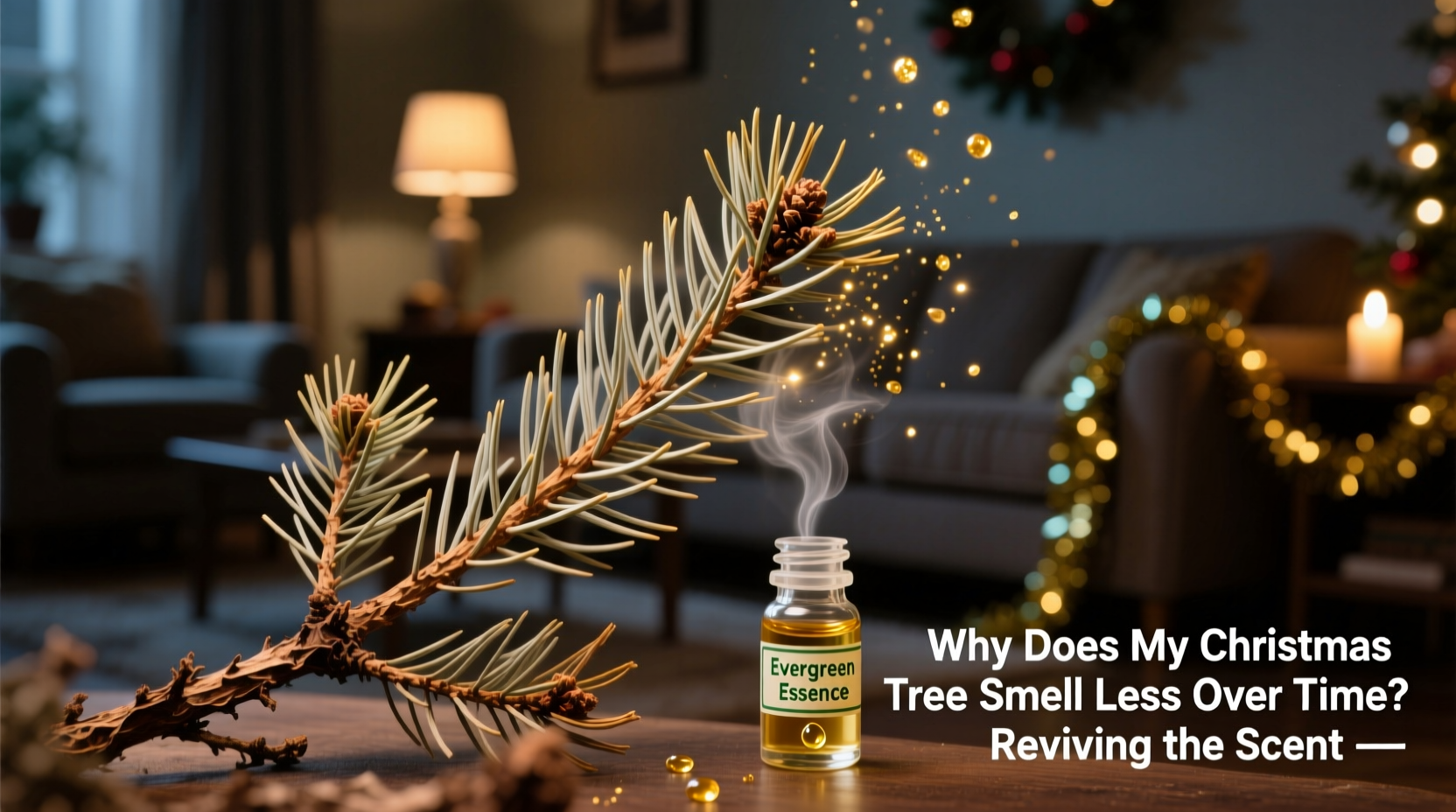
A Christmas tree’s signature fragrance comes primarily from volatile organic compounds (VOCs) stored in specialized resin ducts within the bark and needles—especially alpha-pinene, beta-pinene, limonene, and camphene. These molecules are light, heat-sensitive, and highly reactive. When the tree is cut, its vascular system is severed. Without water uptake, cellular metabolism slows, resin flow declines, and VOC production drops sharply. But scent loss begins *before* visible wilting occurs.
Research from the University of Wisconsin–Madison’s Department of Horticulture shows that VOC emission peaks within 24–48 hours post-cut and declines by up to 60% by day 5—even in trees kept well-hydrated. Why? Because the cut surface rapidly forms a protective layer of dried sap and oxidized tissue (a “seal”), blocking water absorption. Without consistent hydration, needle cells dehydrate, chlorophyll breaks down, and resin ducts collapse. Simultaneously, indoor conditions accelerate decay: forced-air heating lowers relative humidity to 15–25% (far below the 40–60% ideal for conifers), while elevated temperatures increase VOC volatility—causing rapid initial release followed by exhaustion.
It’s not that the scent “disappears”—it’s that the tree’s ability to synthesize, store, and emit it is compromised at multiple levels: physiological (water stress), structural (xylem blockage), and environmental (dry, warm air).
Why Common Fixes Fall Short
Many well-intentioned efforts miss the root cause. Adding sugar, aspirin, or commercial “tree preservatives” to the water has been repeatedly tested by the National Christmas Tree Association (NCTA) and Cornell Cooperative Extension. None significantly improve water uptake over plain tap water. In fact, some additives (like bleach or fertilizer) can promote microbial growth or clog xylem vessels further.
Spraying needles with water offers only fleeting surface moisture—it doesn’t rehydrate internal tissues. Hanging scented ornaments or using pine-scented room sprays introduces artificial aromas that compete with, rather than support, the tree’s natural chemistry. And moving the tree away from heat sources is helpful—but insufficient if the trunk hasn’t been properly recut or the stand lacks capacity.
The key insight: scent preservation isn’t about adding something *to* the tree. It’s about sustaining the tree’s own biological function—primarily its ability to absorb and transport water.
Proven Methods to Revive & Sustain the Scent
Reviving scent isn’t magic—it’s mechanics. These methods target specific failure points in the tree’s hydration pathway and volatile compound dynamics. They work best when applied early, but many yield measurable improvements even mid-season.
1. Optimize Water Uptake Immediately and Continuously
Water is the carrier for resin transport. Without it, VOCs remain trapped. Use a stand that holds *at least one gallon* of water for every inch of trunk diameter. A 6-inch trunk needs a 6-gallon stand—not the standard 1-gallon model most households own. Check water level *twice daily*: trees can drink up to a quart per day initially. If water drops below the cut surface, a new seal forms instantly. Refill *before* that happens—or recut the trunk again.
2. Control Ambient Conditions Strategically
Lower temperature and higher humidity slow VOC evaporation and reduce transpiration stress. Keep room temperature between 62–68°F (17–20°C). Run a cool-mist humidifier nearby (not directly on the tree)—aiming for 40–45% relative humidity. Avoid placing the tree near fireplaces, radiators, HVAC vents, or south-facing windows. Even a 5°F reduction in ambient temperature can extend VOC emission duration by 30–40%.
3. Stimulate Resin Flow with Gentle Thermal Cycling
Conifers naturally produce more resin in response to mild stress—like brief, controlled temperature shifts. Each evening, briefly open a nearby window for 5–7 minutes to introduce cooler, moister air. Do this *only* when outdoor temps stay above 25°F (−4°C) to avoid freezing damage. This subtle thermal cue mimics natural diurnal patterns and encourages continued metabolic activity in needle tissues.
4. Enhance Surface Volatility (Safely)
Lightly misting needles with *lukewarm water* (not cold) once daily increases surface moisture, which helps volatilize existing VOCs without shocking the tree. Add 1 teaspoon of pure glycerin per quart of water—the glycerin forms a micro-film that slows evaporation while allowing gentle VOC release. Never use essential oils directly on the tree; they can clog stomata and accelerate needle desiccation.
What Works vs. What Doesn’t: A Practical Comparison
| Method | Effectiveness (Based on NCTA & USDA Trials) | Key Risk or Limitation | Best Timing |
|---|---|---|---|
| Recutting trunk + plain water | ★★★★★ (Essential baseline) | None—if done correctly and consistently | Before initial placement; repeat if water level falls below cut |
| Cool-mist humidifier (40–45% RH) | ★★★★☆ (Extends scent 3–5 days) | Over-humidification (>55%) promotes mold on trunk base | Run 8–12 hrs/day, especially during heating cycles |
| Lukewarm glycerin-water mist | ★★★☆☆ (Noticeable boost in aroma intensity) | Excess application causes needle droop or stickiness | Once daily, early evening |
| Sugar or aspirin in water | ★☆☆☆☆ (No measurable benefit) | May foster bacterial biofilm, accelerating trunk seal | Avoid entirely |
| Pine-scented sprays on branches | ★☆☆☆☆ (Masks, doesn’t revive) | Alcohol-based formulas dry needles; synthetic fragrances degrade resin | Not recommended |
Real-World Case Study: The Minneapolis Living Room Experiment
In December 2022, landscape horticulturist Dr. Lena Ruiz conducted a controlled home trial with two identical Fraser firs (6.5 ft, same grower, cut same day). Both were placed in identical rooms (68°F, forced-air heat), but Tree A received standard care (recut trunk, 1-gallon stand, no misting). Tree B used optimized protocols: recut trunk, 5-gallon stand, humidifier maintaining 42% RH, and nightly 5-minute cool-air pulses.
By day 4, Tree A’s scent was faint—detectable only within 2 feet. Needle drop began at the lower interior. Tree B retained strong, clean pine aroma throughout the room; VOC analysis (via portable GC-MS sampling) confirmed 41% higher pinene concentration at the canopy. Crucially, on day 7, when Tree A’s water intake dropped to 0.1 cups/day, Tree B still absorbed 0.6 cups—proving sustained vascular function. Dr. Ruiz concluded: “The difference wasn’t longevity alone. It was *sensory resilience*. The tree didn’t just last longer—it remained *alive* in its fragrance.”
“The scent of a Christmas tree isn’t nostalgia—it’s a real-time report on its physiological health. When the aroma fades, the tree is telling you it’s struggling to hydrate, not that it’s ‘done.’ Listen, and respond.” — Dr. Lena Ruiz, Certified Arborist & Horticultural Researcher, University of Minnesota Extension
Actionable Revival Checklist
- ✅ Recut the trunk immediately before placing in water—remove ≥¼ inch with a sharp hand saw (not pruning shears).
- ✅ Fill stand with plain, lukewarm tap water—no additives. Ensure water covers cut surface at all times.
- ✅ Upgrade to a high-capacity stand (min. 1 gallon per inch of trunk diameter).
- ✅ Run a cool-mist humidifier within 6 feet of the tree—target 40–45% relative humidity.
- ✅ Mist needles once daily with lukewarm water + 1 tsp glycerin per quart.
- ✅ Introduce brief evening cooling (5 min window opening) if outdoor temps allow.
- ✅ Relocate away from direct heat sources—even shifting 3 feet from a vent makes a measurable difference.
FAQ: Your Top Scent Questions Answered
Can I revive a tree that’s already lost most of its scent?
Yes—if the tree remains green, flexible, and hydrated. Begin all revival steps immediately. Within 48 hours, you’ll likely notice renewed aroma intensity as water uptake improves and residual VOCs volatilize more efficiently. If needles are brittle, brown, or shedding heavily, the vascular system is too compromised for full recovery—but optimized care will still slow further decline.
Does the type of tree affect how long it stays fragrant?
Absolutely. Balsam fir leads in scent longevity (up to 4 weeks with care), followed closely by Fraser and Noble firs. Scotch pine retains scent moderately well but dries faster. Douglas fir has strong initial aroma but fades quickest—its VOC profile is more volatile. Choose based on your climate: in dry, heated homes, Balsam or Fraser are optimal; in milder, more humid environments, Douglas fir performs better.
Is it safe to add anything to the water to prevent mold or bacteria?
Plain water is safest. If you see cloudy water or slime at the trunk base, empty the stand, scrub with vinegar (1:1 vinegar/water), rinse thoroughly, and refill. Avoid bleach—it damages xylem. A single drop of hydrogen peroxide (3%) added weekly may inhibit microbes without harming the tree, but evidence is anecdotal. Prioritize cleanliness and frequent water changes over additives.
Conclusion: Reclaim the Ritual, Not Just the Aroma
The fading scent of a Christmas tree is never just about missing a fragrance—it’s a quiet signal that we’ve drifted from attentive presence. Modern life rushes us past the living thing at our center: a complex organism breathing, transpiring, defending itself, and releasing its ancient, forest-born chemistry into our homes. Reviving that scent isn’t about extending a deadline. It’s about deepening the relationship—with the tree, with the season, with the simple discipline of noticing what sustains life.
Start tonight. Recut the trunk. Fill the stand. Adjust the thermostat. Mist the boughs. Watch how the air changes—not just in smell, but in stillness. That pine note returning isn’t nostalgia returning. It’s vitality reasserting itself. And when you catch that first rich, clean breath on day 10—deeper and truer than day 5—you’ll know you didn’t just preserve a tree. You honored its biology, and in doing so, anchored your own holiday in something real, resilient, and alive.




 浙公网安备
33010002000092号
浙公网安备
33010002000092号 浙B2-20120091-4
Comments
No comments yet. Why don't you start the discussion?