
As temperatures rise and wardrobes shift toward lighter fabrics and breezier styles, the summer bag becomes more than an accessory—it’s a functional companion. Whether it’s a tote for beach days, a crossbody for city strolls, or a woven carryall for weekend getaways, not all summer bags are created equal. While aesthetics may draw you in, long-term value lies in material integrity, construction precision, and resistance to wear. Recognizing quality means going beyond brand labels and price tags to inspect what truly matters: craftsmanship and durability.
Understanding Material Choices for Summer Bags
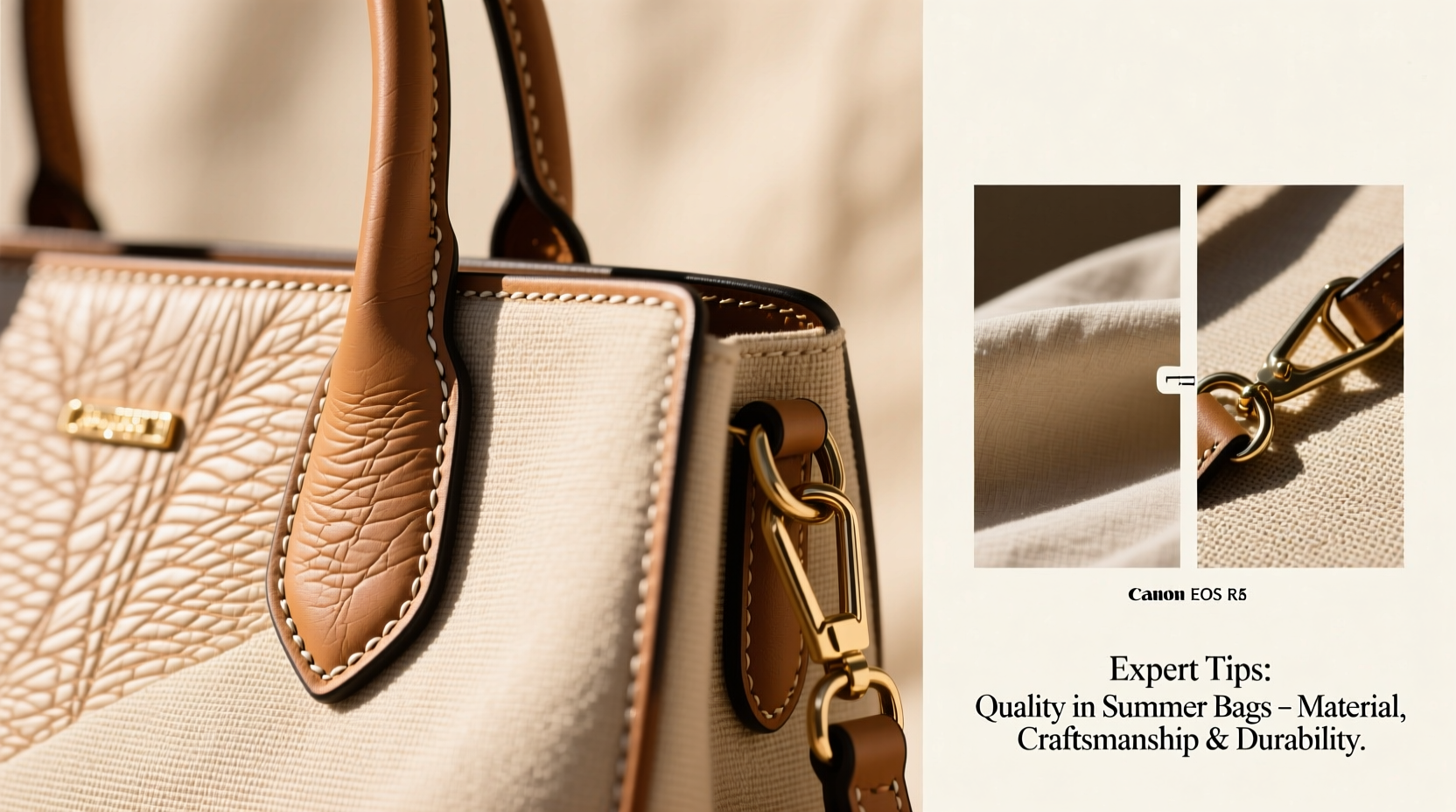
The foundation of any quality bag is its material. Summer-specific designs often prioritize breathability, lightness, and water resistance—qualities that vary dramatically across fabric types. The most common materials include canvas, raffia, nylon, leather (especially lightweight varieties), and synthetic blends. Each has strengths and weaknesses depending on usage and climate.
Canvas, when tightly woven and lined with protective coatings, offers resilience against sun and sand. Raffia and other natural woven fibers bring aesthetic charm but require careful handling to avoid fraying. Nylon and polyester blends excel in moisture resistance, making them ideal for beach-to-street transitions. Full-grain or vegetable-tanned leather, though less common in ultra-light summer styles, provides exceptional longevity when properly maintained.
Material Comparison: Pros, Cons & Best Uses
| Material | Pros | Cons | Best For |
|---|---|---|---|
| Canvas (cotton or duck) | Durable, breathable, easy to clean | Can sag when wet, prone to mildew if stored damp | Everyday totes, market bags |
| Raffia / Seagrass / Wicker | Stylish, eco-friendly, lightweight | Fragile when bent, sensitive to moisture | Resort wear, fashion-forward looks |
| Nylon / Polyester | Water-resistant, lightweight, stain-repellent | Less breathable, can look synthetic | Travel, beach bags, sporty styles |
| Vegetable-Tanned Leather | Ages beautifully, strong, biodegradable | Higher cost, requires conditioning | Luxury summer satchels, crossbodies |
| Synthetic Vegan Leather | Affordable, cruelty-free, diverse colors | Peels over time, poor ventilation | Fashion trends, short-term use |
Assessing Craftsmanship: What to Look For
Even premium materials fail when poorly constructed. Expert craftsmanship ensures structural integrity, comfort, and visual harmony. Begin by examining seams: they should be straight, tight, and double-stitched in high-stress areas like handles and strap attachments. Zigzag stitching near corners indicates reinforcement; loose or skipped stitches signal rushed production.
Zippers and hardware are equally telling. High-end brands use metal zippers (YKK is a trusted industry standard) that glide smoothly and lock securely. Plastic zippers may save weight but often degrade faster. Check for uniform finish on buckles, clasps, and rivets—uneven plating or sharp edges suggest low-tier manufacturing.
Interior linings matter too. A well-finished bag features fully lined interiors with no exposed raw edges. Pockets should be sewn-in, not glued, and positioned for usability. Asymmetrical pockets or misaligned flaps indicate sloppiness in assembly.
“Craftsmanship isn’t just about appearance—it’s the silent promise of performance. One loose thread today could mean a broken handle tomorrow.” — Lena Torres, Handbag Designer & Craft Consultant
Real Example: The Weekend Market Bag That Lasted Five Summers
Sophie, a coastal resident from Charleston, bought a handwoven seagrass tote during a trip to Martha’s Vineyard. Unlike similar bags she’d owned, this one included cotton-linen lining and leather trim at stress points. She used it weekly—from farmers’ markets to picnics—and stored it in a ventilated closet off-season. After five summers, the bag remains structurally sound, with only minor fading. “I avoided leaving it in humid bathrooms or direct sunlight,” she says. “The leather reinforcements never cracked, and the weave didn’t loosen.” Her experience underscores how thoughtful construction extends lifespan even in delicate materials.
Durability Factors Beyond Materials
Durability isn’t solely about toughness—it’s also about design intelligence. Consider weight distribution: wide, padded straps reduce strain and prevent tearing at attachment points. Bottom feet or protective studs elevate the base, minimizing abrasion and moisture contact. Reinforced corners act as shock absorbers, especially in structured silhouettes.
Climate plays a role too. In humid regions, natural fibers risk mold without proper drying. In arid zones, leather can dry out and crack. UV exposure fades dyes and weakens fibers over time. A quality summer bag anticipates these challenges through protective finishes, breathable linings, and smart geometry.
Step-by-Step Guide: Evaluating a Bag Before Purchase
- Inspect the exterior: Look for consistent color, tight weaves, and absence of blemishes or glue residue.
- Test the seams: Gently pull along stitch lines—no puckering or unraveling should occur.
- Check hardware: Open and close zippers multiple times; examine clasps for smooth operation.
- Evaluate interior: Ensure lining is secure, seams are finished, and pockets are functional.
- Assess structure: Place the bag upright—does it hold shape? Squeeze gently—does it rebound?
- Feel the weight: It should be light but not flimsy. Balance matters more than minimalism.
- Ask about care: Reputable sellers provide cleaning instructions and warranty details.
Essential Checklist for Buying a Quality Summer Bag
- ✅ Tight, even stitching with no loose ends
- ✅ Reinforced handles and strap anchors
- ✅ High-grade zippers (preferably metal)
- ✅ Fully lined interior with clean seam finishes
- ✅ Protective bottom feet or sturdy base panel
- ✅ Natural or performance fabric suited to your climate
- ✅ Balanced proportions and ergonomic design
- ✅ Manufacturer-provided care guidance
- ✅ Evidence of ethical production (optional but valuable)
Frequently Asked Questions
How can I tell if a woven bag is well-made?
A well-woven bag features uniform tension in fibers, symmetrical patterns, and secure edge binding. Run your hand over the surface—the weave should feel tight, not brittle or floppy. Check where straps meet the body; these junctions should have additional stitching or leather inserts for strength.
Are expensive summer bags always better?
Not necessarily. Price reflects branding, materials, labor, and markup. Some mid-range brands invest heavily in construction while luxury labels may prioritize aesthetics over function. Always assess build quality independently of cost. A $120 bag with YKK zippers, double stitching, and full lining may outlast a $400 version with glued seams and thin straps.
Can I improve a bag’s durability after purchase?
Yes. Apply fabric protectant sprays to canvas or linen to resist stains and moisture. Use leather conditioner quarterly on genuine leather trims. Store in breathable cotton bags—not plastic—to prevent trapped humidity. Avoid overloading, which stresses seams and distorts shape.
Final Thoughts: Invest in Integrity, Not Just Style
A great summer bag does more than complement an outfit—it withstands sun, salt, sand, and season after season of use. By learning to recognize quality in materials, scrutinize craftsmanship, and anticipate durability needs, you shift from reactive buying to intentional ownership. The best bags aren’t always the flashiest; they’re the ones that return value through reliability, comfort, and enduring appeal.




 浙公网安备
33010002000092号
浙公网安备
33010002000092号 浙B2-20120091-4
Comments
No comments yet. Why don't you start the discussion?