
Sometimes, the perfect necklace doesn’t sit quite right. A snake chain that once draped elegantly might now feel too long or too short after changes in style, weight, or wardrobe preferences. While professional jewelers can resize it, you don’t always need to visit a shop. With the right tools and careful technique, you can safely adjust the length of your snake chain necklace at home—preserving its integrity and shine.
Solidly constructed yet surprisingly delicate, snake chains consist of tightly interlocked metal rings that form a smooth, flexible surface resembling a serpent’s skin. This design makes them less forgiving than other chain types when it comes to resizing. Cutting or rejoining improperly can lead to weak points, misalignment, or even breakage. The key is precision, patience, and respect for the material.
Understanding Your Snake Chain: Structure and Sensitivity
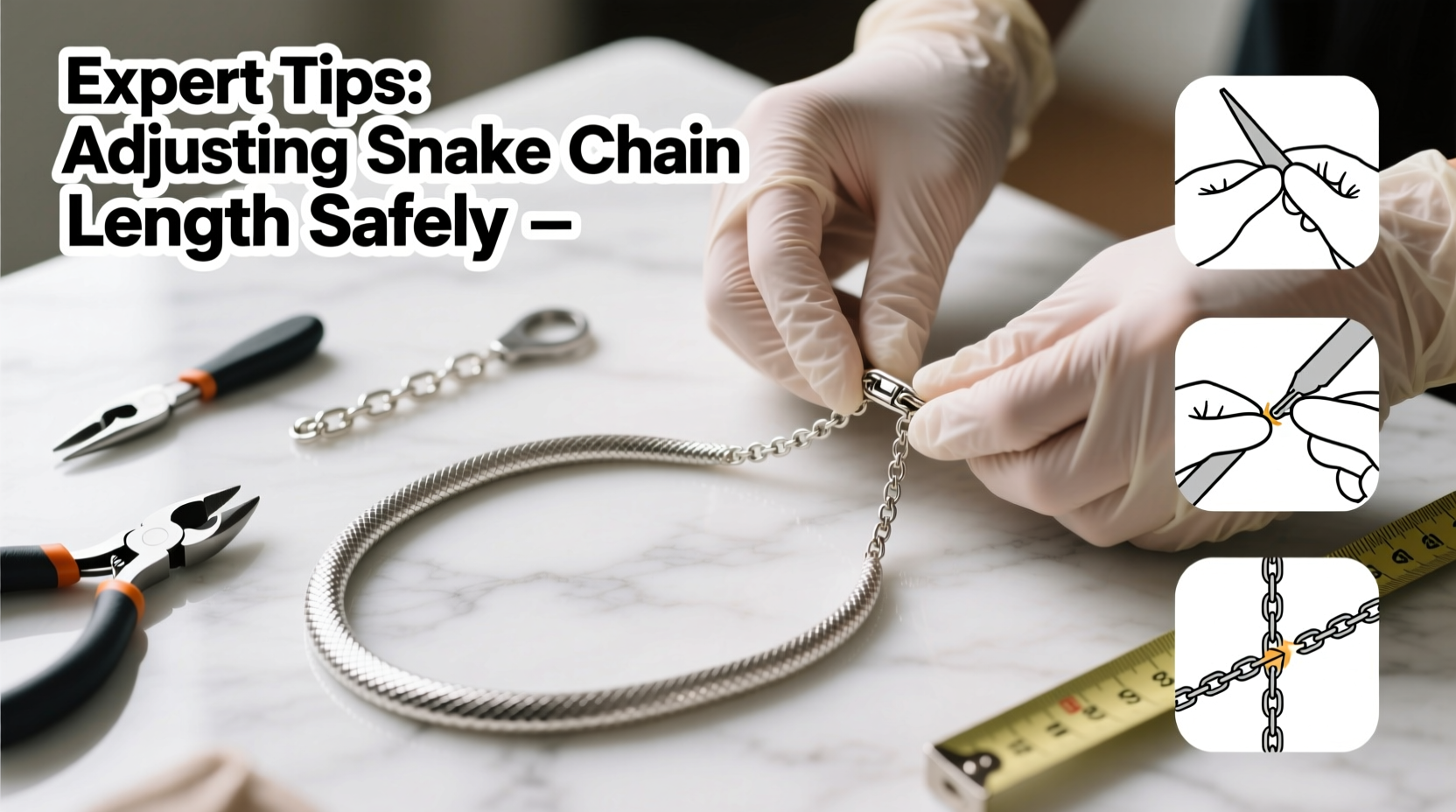
Before making any adjustments, it's essential to understand what sets a snake chain apart. Unlike cable or curb chains with visible gaps between links, snake chains are made from a continuous series of tiny, interwoven metal tubes compressed into a seamless-looking band. This gives them their signature sleekness but also means they lack natural separation points for easy shortening.
The absence of traditional jump rings means you can't simply open one link and remove a section. Instead, resizing involves either cutting the chain and reattaching the clasp or adding an extender. Because the chain relies on structural continuity, every modification affects its strength and drape.
Step-by-Step Guide: Shortening a Snake Chain Necklace
Adjusting the length requires minimal tools but maximum care. Follow this sequence to shorten your necklace safely:
- Gather your tools: Jewelry wire cutters (not household scissors), a measuring tape or ruler, a fine-tip marker, a polishing cloth, and a magnifying glass if available.
- Clean the chain: Wipe down the necklace with a soft, lint-free cloth to remove oils and debris. A clean surface ensures accurate marking and reduces contamination during cutting.
- Determine desired length: Put on the necklace and use a small safety pin or clip to temporarily gather excess chain at the back. Mark where the chain should end using a fabric-safe pen or chalk. Measure from the clasp attachment point to your mark.
- Mark the cut point: Lay the chain flat on a non-slip surface. Using the measurement, count back the necessary number of segments and make a tiny, precise mark across the top of the chain with a fine-tip marker.
- Cut with precision: Position sharp jewelry flush-cutters perpendicular to the chain at your mark. Apply steady pressure—do not twist or saw—to make a single clean cut. Jagged edges increase the risk of snagging and weaken the structure.
- Reattach the clasp: Most snake chains have a soldered end cap connected to the clasp. If your chain allows disassembly, use pliers to detach the clasp and slide it onto the newly cut end. Re-soldering is ideal but not feasible at home; instead, secure with a micro solderable jump ring or consult a jeweler for finishing.
- Polish and test: Buff the cut edge gently with a polishing cloth. Check that the clasp functions smoothly and the drape remains fluid.
“Snake chains are among the most elegant but technically challenging chains to resize. A millimeter too much or too little can affect both aesthetics and durability.” — Daniel Reyes, Master Jeweler & Repair Specialist
Do’s and Don’ts When Adjusting Snake Chains
| Do’s | <Don’ts |
|---|---|
| Use flush-cut jewelry shears designed for metal | Use household scissors or nail clippers |
| Measure twice and mark clearly before cutting | Cut without verifying the final length |
| Work on a clean, well-lit surface | Work over carpet or cluttered spaces where small parts can be lost |
| Consider adding a 1–2 inch extender instead of cutting | Remove more than 3 inches unless replacing the clasp assembly |
| Inspect the chain for stress points post-adjustment | Wear the necklace immediately without checking clasp security |
Real Example: Resizing a Heirloom Snake Chain
Maria inherited her grandmother’s 18-inch sterling silver snake chain, but found it sat too high on her neck due to a difference in frame size. She wanted to extend it by an inch rather than shorten it. Rather than cutting the chain—which would disrupt its symmetry—she added a 1.5-inch silver extender with matching finish. By attaching it via a secure lobster clasp to a new jump ring soldered at the end, she preserved the original craftsmanship while achieving a comfortable fit. The result was a wearable heirloom that honored both history and comfort.
This approach highlights a valuable alternative: extension over reduction. When in doubt, adding length maintains the chain’s integrity far better than removing it.
Checklist: Preparing for a Safe Adjustment
- ✅ Confirm the chain is made of solid metal (not plated or hollow)
- ✅ Identify whether the clasp can be detached or must be re-soldered
- ✅ Use only professional-grade jewelry cutters
- ✅ Double-check measurements on your neck, not just a mannequin
- ✅ Have a backup plan—know where your nearest reputable jeweler is located
- ✅ Work slowly and avoid rushing the process
Frequently Asked Questions
Can I lengthen a snake chain at home?
Directly adding links to a snake chain is nearly impossible without specialized equipment. However, you can attach an extender chain with a matching metal finish and secure it using a high-quality jump ring. This provides additional length without altering the original piece.
What if I cut too much off?
If you accidentally remove more than intended, the safest solution is to take it to a jeweler. They may be able to add a decorative spacer or extender to compensate. Unfortunately, once metal is removed, it cannot be restored at home.
Will cutting my snake chain cause it to break later?
A clean, properly executed cut followed by smoothing and secure reattachment minimizes future risks. However, the cut point will always be a potential weak spot. Avoid frequent tension on that area and store the chain straight, not coiled tightly.
Final Tips for Long-Term Care After Adjustment
After resizing, treat your snake chain with extra care during the first few weeks. Monitor how the clasp feels and check regularly for signs of fraying near the cut edge. Store it separately in a soft pouch to prevent scratches. Clean gently with a polishing cloth after each wear, especially if exposed to sweat or perfume.
Conclusion
Adjusting the length of a snake chain necklace at home is a delicate but achievable task with the right preparation and mindset. Whether you're tailoring a gift, restoring a favorite piece, or customizing for comfort, the goal is to maintain the chain’s elegance and function. Precision matters more than speed. By respecting the material, following best practices, and knowing when to call in a professional, you preserve not just the necklace—but the value and sentiment behind it.




 浙公网安备
33010002000092号
浙公网安备
33010002000092号 浙B2-20120091-4
Comments
No comments yet. Why don't you start the discussion?