
A plush dog keychain isn’t just a charming accessory—it’s a personal statement. Whether it’s a gift from a loved one or a self-purchase that reflects your playful side, securing it properly ensures it stays with you through daily commutes, travel, and adventures. Unfortunately, many people lose these sentimental items simply because they’re attached haphazardly. The right method balances durability, visibility, and aesthetic appeal. This guide delivers expert-backed techniques to keep your plush keychain safely fastened while enhancing your bag’s overall look.
Why Secure Attachment Matters
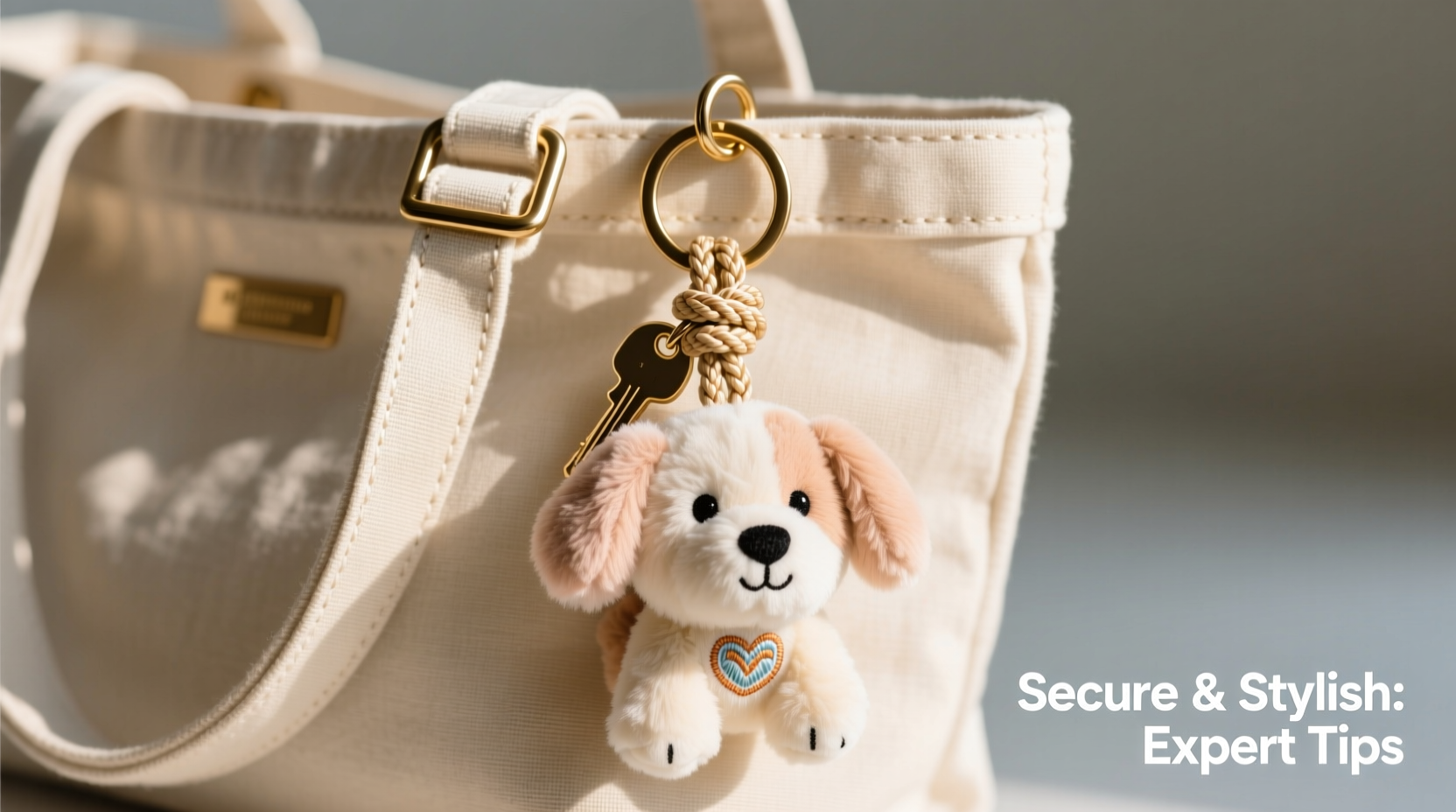
Plush keychains are often lightweight and soft, making them prone to slipping off or getting caught on objects. A poorly secured keychain can be lost in seconds—especially when entering crowded spaces, boarding public transit, or placing your bag down quickly. Beyond the risk of loss, an unsecured charm can fray, stretch, or detach from its metal hardware over time due to constant tugging.
More than just function, how you attach your keychain influences your bag’s visual balance. A lopsided or dangling plush can make even a high-end tote look disorganized. Thoughtful placement and secure mounting elevate the accessory from afterthought to intentional design element.
Choosing the Right Attachment Method
The ideal attachment method depends on your bag’s structure, the keychain’s hardware, and your lifestyle. Below are four proven techniques, each suited to different needs.
1. Carabiner Clip + Key Ring (Best for Durability)
This two-part system combines strength and flexibility. Use a small stainless steel carabiner clipped to a sturdy loop on your bag—such as a zipper pull or D-ring. Then, connect the plush keychain’s ring directly to the carabiner. Stainless steel resists corrosion and won’t snap under tension.
2. Split Ring Adapter (Ideal for Minimalists)
If your bag has tight openings (like thin strap loops), a split ring allows you to thread the keychain without needing a larger gap. These compact metal rings open slightly to slide onto fabric loops, then snap shut securely. Attach your plush charm to the split ring using its existing jump ring.
3. Lanyard Loop Integration (For Style & Visibility)
Some bags feature built-in lanyard attachments or ID tag loops. Use these intentionally by connecting your plush keychain via a short decorative chain or ribbon. This raises the plush into clear view and prevents it from being buried under other items. Choose a colored ribbon that complements your bag or the plush’s outfit for added flair.
4. Double-Loop Lock Technique (Maximum Security)
For frequent travelers or active users, this method uses two connection points. If your keychain has multiple rings or loops, distribute them across two separate anchor points on the bag—such as one on a zipper and another on a side D-ring. This prevents rotation and reduces strain on any single point.
“Over 60% of lost accessories are due to reliance on a single weak link. Dual-point anchoring cuts failure risk dramatically.” — Jordan Lee, Product Design Engineer at Urban Gear Labs
Step-by-Step Guide: Secure Your Plush Dog Keychain in 5 Minutes
Follow this quick process to ensure your plush stays put and looks great:
- Inspect the keychain hardware: Check the jump ring, chain, or clasp for signs of bending or wear. Replace if weakened.
- Identify optimal attachment points: Look for reinforced areas like zipper pulls, D-rings, or belt loops on backpacks or crossbodies.
- Select your connector: Choose a carabiner, split ring, or decorative link based on accessibility and aesthetics.
- Attach with tension control: Clip or thread the connector firmly, ensuring no excessive slack that could snag.
- Test and adjust: Simulate walking with the bag, opening zippers, and setting it down. Reposition if the plush twists or drags.
Dos and Don’ts of Plush Keychain Attachment
| Do | Don’t |
|---|---|
| Use metal connectors rated for load-bearing (e.g., nickel-coated steel) | Attach directly to flimsy fabric loops not designed for weight |
| Position the plush so its face is visible and upright | Let it hang upside-down or face into the bag where it’s hidden |
| Clean the plush occasionally with a damp cloth to preserve appearance | Submerge it in water, which can damage stuffing and stitching |
| Match the keychain color to your bag’s accent tones for cohesion | Clutter the same area with too many competing charms |
| Check connections monthly for wear or loosening | Forget about it entirely until something breaks or goes missing |
Real-Life Example: How Sarah Saved Her Lucky Poodle Keychain
Sarah, a college student and frequent commuter, owned a small pink poodle plush keychain her grandmother had given her before moving to the city. Within weeks, she lost two similar ones—one caught on a train door, another slipped off a weak key ring. Determined not to lose this sentimental item, she applied the double-loop lock technique using her backpack’s side compression strap and top handle D-ring. She added a miniature silver carabiner for extra grip. Over the next 14 months, the keychain survived subway rides, rainy days, and packed lecture halls. “It’s still perfectly positioned every time I open my bag,” she said. “People even compliment it now.”
Essential Checklist Before Attaching Your Keychain
- ✅ Confirm the plush’s metal components are rust-free and tightly closed
- ✅ Choose a highly visible, balanced location on your bag
- ✅ Use a connector stronger than the keychain’s weakest link
- ✅ Avoid overcrowding the same attachment zone with multiple heavy items
- ✅ Align the plush’s orientation so it faces outward when the bag is carried
- ✅ Perform a tug test and simulate real-use motion
Frequently Asked Questions
Can I sew the keychain directly onto my bag?
While sewing adds permanence, it limits flexibility and risks damaging expensive materials. Instead, use removable hardware. If you must sew, do so only on fabric bags you don’t plan to upgrade, and reinforce the stitch area with interfacing to prevent tearing.
What if my bag has no D-rings or loops?
Consider adding a luggage tag sleeve or magnetic clip-on loop designed for accessories. These attach without damage and provide a reliable anchor point. Alternatively, use a retractable badge reel mounted inside the bag, letting the plush dangle just outside the top opening.
How do I clean a plush keychain without detaching it every time?
You don’t need to remove it frequently. Use a soft toothbrush with a drop of mild soap to spot-clean stains. For deeper cleaning, detach it monthly and hand-wash in cold water, then air-dry flat away from direct heat. Reattach only when completely dry to prevent mold.
Final Thoughts: Style Meets Security
Attaching a plush dog keychain securely isn’t just about preventing loss—it’s about honoring the joy it brings. When done right, the keychain becomes a seamless part of your daily carry, drawing smiles without compromising safety. By choosing durable connectors, positioning thoughtfully, and inspecting regularly, you protect both sentiment and style. These small acts of care reflect a broader mindset: valuing what matters, even in the smallest details.




 浙公网安备
33010002000092号
浙公网安备
33010002000092号 浙B2-20120091-4
Comments
No comments yet. Why don't you start the discussion?