
Walking for hours—whether exploring a new city, hiking local trails, or navigating a busy workday—demands footwear that won’t leave your feet aching by mid-afternoon. While canvas boots are often praised for their lightweight feel and casual style, not all models deliver long-term comfort. Choosing the right pair involves more than just aesthetics; it requires attention to construction, cushioning, fit, and breathability. With input from podiatrists, outdoor gear testers, and everyday walkers, this guide breaks down what truly makes a canvas boot suitable for extended wear.
Understand the Anatomy of a Comfortable Canvas Boot
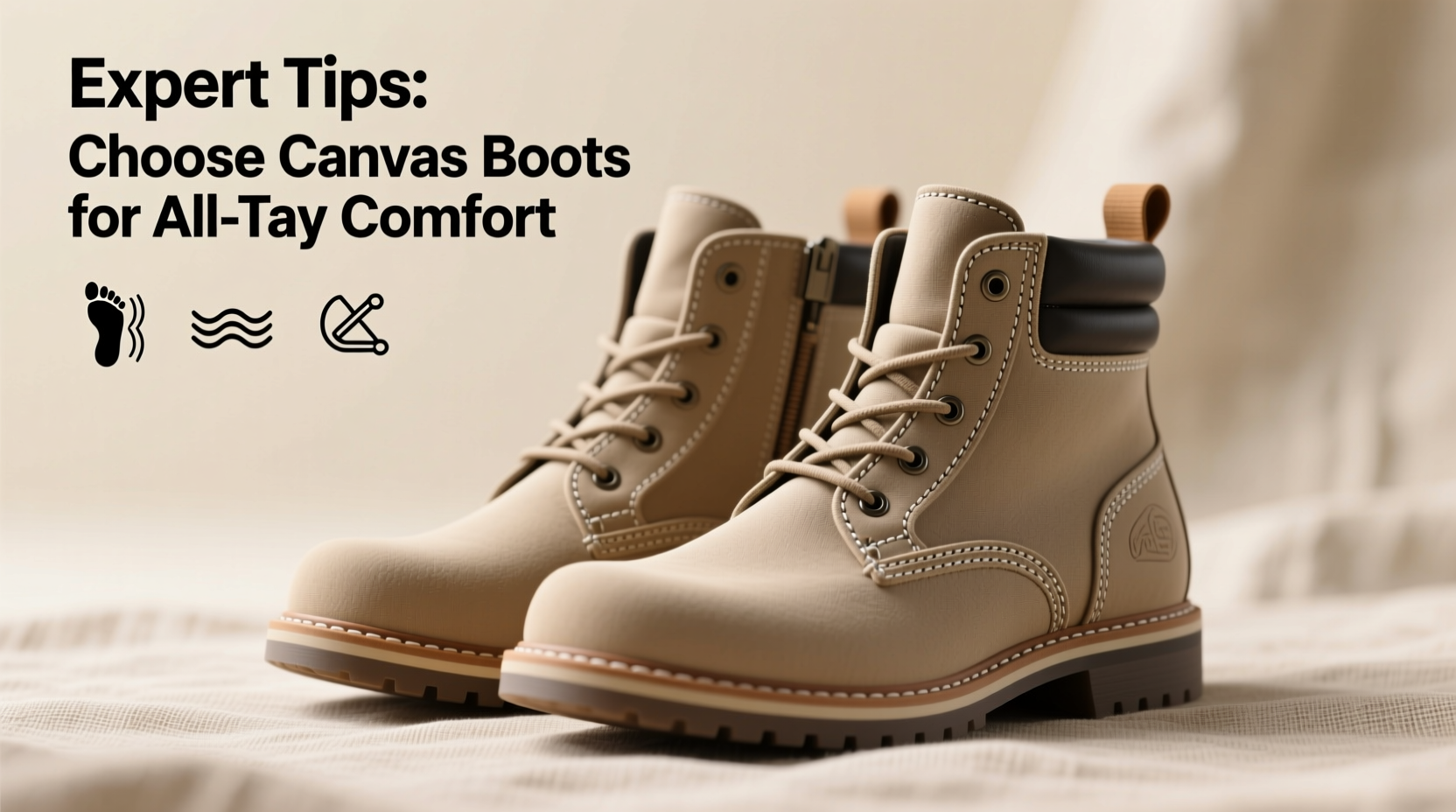
A canvas upper is inherently flexible and breathable, but comfort over long distances depends heavily on the supporting elements beneath the surface. The outsole, midsole, insole, and heel counter all play critical roles in how a boot performs under prolonged use.
- Outsole: Look for rubber soles with multidirectional tread patterns. These provide grip on varied surfaces and absorb impact with each step.
- Midsole: EVA (ethylene-vinyl acetate) foam is a common choice for its lightweight cushioning. Some premium models use dual-density foam for enhanced arch support and shock absorption.
- Insole: Removable, contoured insoles offer better support and allow for custom orthotics if needed. Memory foam inserts can improve comfort but should be paired with firm underlying structure.
- Heel Counter: A reinforced heel cup stabilizes your foot and reduces strain on tendons during extended movement.
Fit Matters More Than Size Alone
Many people assume that wearing their standard shoe size ensures a good fit, but fit encompasses width, instep height, toe box volume, and heel slip. A well-fitting canvas boot should hold your foot securely without pinching or sliding.
Walk around in any potential purchase for at least 10 minutes. Pay attention to pressure points, especially across the ball of the foot and along the sides. Your toes should have room to wiggle slightly but not bang against the front when walking downhill.
| Fit Factor | What to Look For | Red Flags |
|---|---|---|
| Length | Thumb’s width between longest toe and end | Toes pressing forward or lifting off ground |
| Width | No bulging at sides; laces lie flat | Pinching, creased canvas, numbness |
| Heel Slip | Minimal lift (1–2 mm) when walking | Noticeable bounce or rubbing |
| Arch Support | Even contact across sole; no collapsing inward | Flat feeling, fatigue after short walks |
“Foot swelling during activity is normal—especially in warm conditions. Buying boots with slight extra volume helps prevent constriction later in the day.” — Dr. Lena Torres, Podiatrist & Gait Specialist
Key Features That Enhance All-Day Wear
Beyond basic fit, certain design features significantly influence endurance comfort. Prioritize these when comparing options:
- Padded Collar and Tongue: Soft lining around the ankle prevents chafing and adds cushion where friction occurs.
- Ventilated Uppers: Some canvas blends incorporate mesh panels or moisture-wicking linings to reduce sweat buildup.
- Reinforced Toe Caps: Rubber or synthetic overlays protect against abrasion and extend lifespan.
- Flexible Flex Grooves: Scored soles bend naturally with your foot, reducing muscular effort.
- Water-Resistant Treatment: While pure canvas absorbs moisture, many modern versions include DWR (durable water repellent) coatings to handle light rain.
Real Example: Urban Explorer’s Experience
Sophie, a travel blogger based in Lisbon, tested five canvas boot models during a week-long city tour averaging 15,000 steps daily. She prioritized lightweight construction and breathability due to the Mediterranean heat. After three days, two pairs caused blisters from stiff collars; another lacked arch support, leading to plantar fasciitis flare-ups.
The winning model featured a hybrid canvas-mesh upper, anatomical EVA midsole, and a padded heel lock system. “It felt broken in from day one,” she noted. “I wore them for eight hours straight visiting museums and didn’t need to sit down just to relieve foot pain.” Her takeaway? Structure matters even in soft-looking footwear.
Step-by-Step Guide to Choosing Your Ideal Pair
- Determine Your Primary Use: Will you walk on pavement, mixed terrain, or uneven trails? This guides sole thickness and traction needs.
- Measure Both Feet: Use a Brannock device or trace your foot on paper. Many people have asymmetrical feet—size up if necessary.
- Visit Stores Late in the Day: Feet expand throughout the day; shopping then gives a realistic sense of fit.
- Test Walk Indoors: Take laps on different surfaces (carpet, tile). Simulate inclines if possible.
- Check Return Policy: Even online purchases should allow returns. Wear them briefly indoors first before committing.
- Break Them In Gradually: Start with 1–2 hour walks, increasing duration over 3–5 days to assess long-term comfort.
Common Mistakes to Avoid
- Choosing Style Over Support: Sleek silhouettes often sacrifice internal structure. Balance fashion with function.
- Ignoring Sock Compatibility: Wear the socks you plan to use regularly when trying on boots. Thick hiking socks require more room.
- Skipping Break-In Periods: Even high-comfort boots need adjustment time. Don’t rely on them for an all-day event immediately.
- Overlooking Weight: Heavy canvas boots increase leg fatigue. Aim for under 18 oz per shoe for urban walking.
Expert-Recommended Brands and Models
Based on performance reviews and ergonomic testing, several brands consistently deliver comfort-focused canvas boots:
- Converse Chuck Taylor All Star II: Features OrthoLite insoles and Nike-derived cushioning while retaining classic looks.
- Vans Sk8-Hi Pro: Enhanced with UltraCush HD sockliners and vulcanized soles for board flexibility and street durability.
- Teva Original Muk Luks: Combines canvas uppers with supportive sandals’ DNA—ideal for variable terrain.
- KEEN Targhee Vent Canvas: Offers hiking-boot stability with breathable canvas panels and wide toe boxes.
Frequently Asked Questions
Can canvas boots be resoled?
Most traditional canvas boots have cemented soles, which can sometimes be reattached or replaced by a cobbler. However, few are designed for multiple resoling like leather boots. Check manufacturer policies before assuming repairability.
How do I clean canvas boots without damaging them?
Use a soft brush and mild soap (like dish detergent) mixed with cool water. Spot-clean stains gently and air-dry away from direct heat. Never machine wash unless explicitly stated by the brand.
Are canvas boots suitable for rainy weather?
Limited exposure is manageable with DWR-treated canvas, but prolonged wetness weakens fibers and promotes mold. For frequent rain, consider waxed canvas or waterproof synthetics instead.
Final Thoughts: Prioritize Long-Term Comfort
Choosing the most comfortable canvas boots for all-day walking isn’t about finding the softest or trendiest option—it’s about identifying smart engineering beneath a casual exterior. Supportive midsoles, secure heel locks, breathable uppers, and proper fit form the foundation of enduring wearability. Whether you're commuting, traveling, or simply logging miles through daily life, investing time in selecting the right pair pays off in reduced fatigue, fewer foot issues, and greater enjoyment of every step.




 浙公网安备
33010002000092号
浙公网安备
33010002000092号 浙B2-20120091-4
Comments
No comments yet. Why don't you start the discussion?