
A biography, even when condensed into a few sentences, holds immense power. Whether it's a Twitter profile, a book jacket, or a speaker introduction, a well-crafted bio shapes first impressions, builds credibility, and invites connection. But what separates a forgettable summary from the best bio ever written? It’s not just about listing achievements—it’s about voice, precision, storytelling, and authenticity. This article dissects standout bios across industries, extracts actionable principles, and offers a framework to craft your own unforgettable narrative.
The Anatomy of a Standout Bio
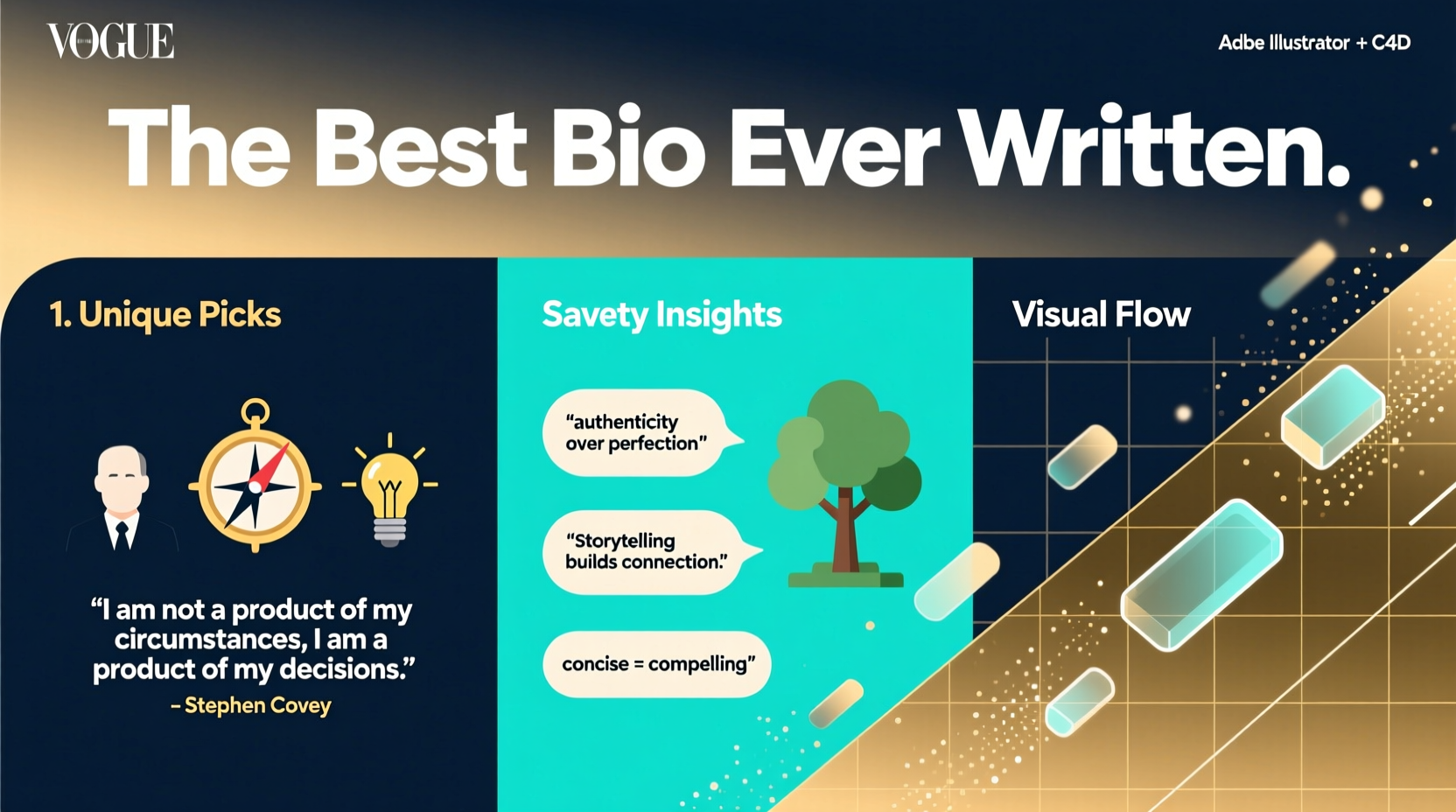
Great bios share common traits regardless of format or platform. They are concise yet vivid, professional but personable, informative without being dry. The best ones don’t just tell you what someone does—they make you *feel* who they are.
Consider David Sedaris’s author bio: “David Sedaris is the author of *Theft by Finding*, *Let’s Explore Diabetes with Owls*, and *Me Talk Pretty One Day*. His work appears in *The New Yorker* and on NPR. He lives abroad and is slowly learning French.”
What makes this effective? Minimalism with personality. No jargon, no inflated claims—just facts laced with subtle humor (“slowly learning French”). It reflects his writing style, making the bio an extension of his brand.
Unique Picks: Bios That Redefined the Game
Certain bios transcend their purpose and become cultural touchstones. Here are three uniquely influential examples and why they work.
1. Maya Angelou – Poet & Activist
“Dr. Maya Angelou was a poet, memoirist, and civil rights activist. She authored *I Know Why the Caged Bird Sings*, one of the most impactful autobiographies of the 20th century. A recipient of the Presidential Medal of Freedom, she used words to heal, challenge, and inspire.”
This bio emphasizes legacy over resume. It doesn’t list every award; instead, it frames her impact through emotional resonance. The focus on “healing” and “inspiring” elevates her beyond titles.
2. Elon Musk – Technologist & Entrepreneur
Early in Tesla’s rise, Musk’s bio read: “Elon Musk cofounded PayPal, SpaceX, and Tesla. He believes in a future powered by sustainable energy and interplanetary life.”
Notice the absence of CEO titles or net worth. Instead, it highlights vision. The second sentence transforms him from a businessman into a futurist—a narrative device that aligns with public perception.
3. Roxane Gay – Writer & Cultural Critic
“Roxane Gay is the author of *Bad Feminist* and *Hunger*. Her writing explores identity, inequality, and the complexities of modern womanhood with unflinching honesty.”
Here, the bio mirrors the themes of her work. Words like “unflinching honesty” aren’t just descriptors—they signal integrity and courage, qualities readers seek in thought leaders.
Key Elements of the Best Bios: A Checklist
To craft a bio that stands out, ensure it includes these essential components:
- Clear identity: Who are you at your core? (e.g., “award-winning journalist,” “climate data scientist”)
- Notable achievement(s): One or two career-defining milestones
- Distinctive voice: Formal, playful, poetic—your tone should reflect your personality
- Relevance: Tailored to audience (e.g., academic bio vs. Instagram caption)
- Call to action (optional): Invite engagement (“Find her work at roxanegay.com”)
- Humanizing detail: A quirky fact, passion, or location (“lives in Portland with three rescue cats”)
Do’s and Don’ts: A Comparison Table
| Do | Don’t |
|---|---|
| Use active verbs: “leads,” “creates,” “champions” | Use passive language: “responsible for,” “involved in” |
| Highlight uniqueness: “only researcher to map X in Y region” | List generic skills: “team player,” “excellent communicator” |
| Keep it audience-appropriate (150 words for websites, 1–2 lines for social) | Copy-paste the same bio everywhere |
| Add a touch of personality: “when not coding, he bakes sourdough” | Include irrelevant details: “born on a Tuesday” |
| Update regularly to reflect current work | Leave outdated roles or defunct projects |
Expert Insight: What Professionals Say About Bio Writing
“The best bios function like micro-stories. They answer not just ‘what do you do,’ but ‘why does it matter?’” — Dr. Lena Torres, Communication Professor at NYU
“Clients don’t hire resumes. They hire people. Your bio is where you stop being a list of jobs and start being a human.” — Marcus Bell, Executive Coach and Brand Strategist
These insights reinforce a central truth: bios are not summaries—they are invitations. They open doors by building relatability and trust.
Real Example: Transforming a Generic Bio Into a Compelling One
Meet Sarah Kim, a UX designer seeking freelance clients. Her original bio:
“Sarah Kim has worked in design for 7 years. She has experience in user research and interface design. She graduated from Michigan State University.”
Accurate, but flat. Now consider the revised version:
“Sarah Kim designs digital experiences that feel intuitive, not confusing. After seven years in tech—including work at startups and Fortune 500s—she now helps mission-driven brands create apps people actually enjoy using. When she’s not wireframing, you’ll find her hiking Pacific Northwest trails or teaching design workshops for underrepresented students.”
The transformation lies in specificity, purpose, and humanity. The new bio answers: What problem does she solve? Who does she serve? What drives her?
Step-by-Step Guide to Writing Your Own Standout Bio
- Define your purpose: Is this for LinkedIn, a conference, or a newsletter? Adjust length and tone accordingly.
- List key accomplishments: Pick 1–3 that define your reputation or expertise.
- Identify your audience: Are they investors, peers, or general readers? Use language they understand.
- Write in third person (usually): Creates professionalism, though first person works on social media.
- Add voice and flavor: Replace “skilled in” with “passionate about” or “relentlessly curious about.”
- Include a human element: A hobby, value, or geographic detail grounds the bio.
- Edit ruthlessly: Cut filler words. Aim for brevity and rhythm.
- Test it: Read it aloud. Does it sound like you? Would a stranger remember it?
Frequently Asked Questions
How long should a professional bio be?
For websites and speaker profiles, aim for 100–150 words. Social media bios should be under 160 characters. Resumes often include a 3–4 line summary.
Should I include pronouns in my bio?
Yes, especially in inclusive spaces. Adding pronouns (e.g., she/her, they/them) fosters respect and clarity. It’s increasingly seen as a standard practice in professional bios.
Can humor work in a bio?
Yes—if it fits your brand. A well-placed joke can disarm and delight, but avoid forced wit. Humor works best when it feels natural, not performative.
Final Thoughts: Crafting a Bio That Lasts
The best bio ever written isn’t necessarily the longest or most decorated—it’s the one that resonates. It speaks with clarity, confidence, and a hint of soul. Whether you’re an artist, engineer, or entrepreneur, your bio is often the first impression you make in the digital world. Treat it not as an obligation, but as an opportunity: to define yourself, connect authentically, and leave a lasting trace.




 浙公网安备
33010002000092号
浙公网安备
33010002000092号 浙B2-20120091-4
Comments
No comments yet. Why don't you start the discussion?