
Peppercorns are more than just a staple on the dinner table—they are one of the most transformative spices in global cuisine. Revered for centuries as both currency and cure, today they remain indispensable in kitchens from Parisian bistros to home stovetops in Mumbai. Despite their ubiquity, many cooks use peppercorns without fully understanding their diversity, flavor potential, or proper application. This guide demystifies the world of peppercorns, offering a comprehensive look at their origins, varieties, culinary roles, and best practices for use and storage. Whether you're seasoning a steak, building a curry, or crafting a spice blend, knowing how to leverage the right peppercorn can elevate your cooking from good to exceptional.
Definition & Overview
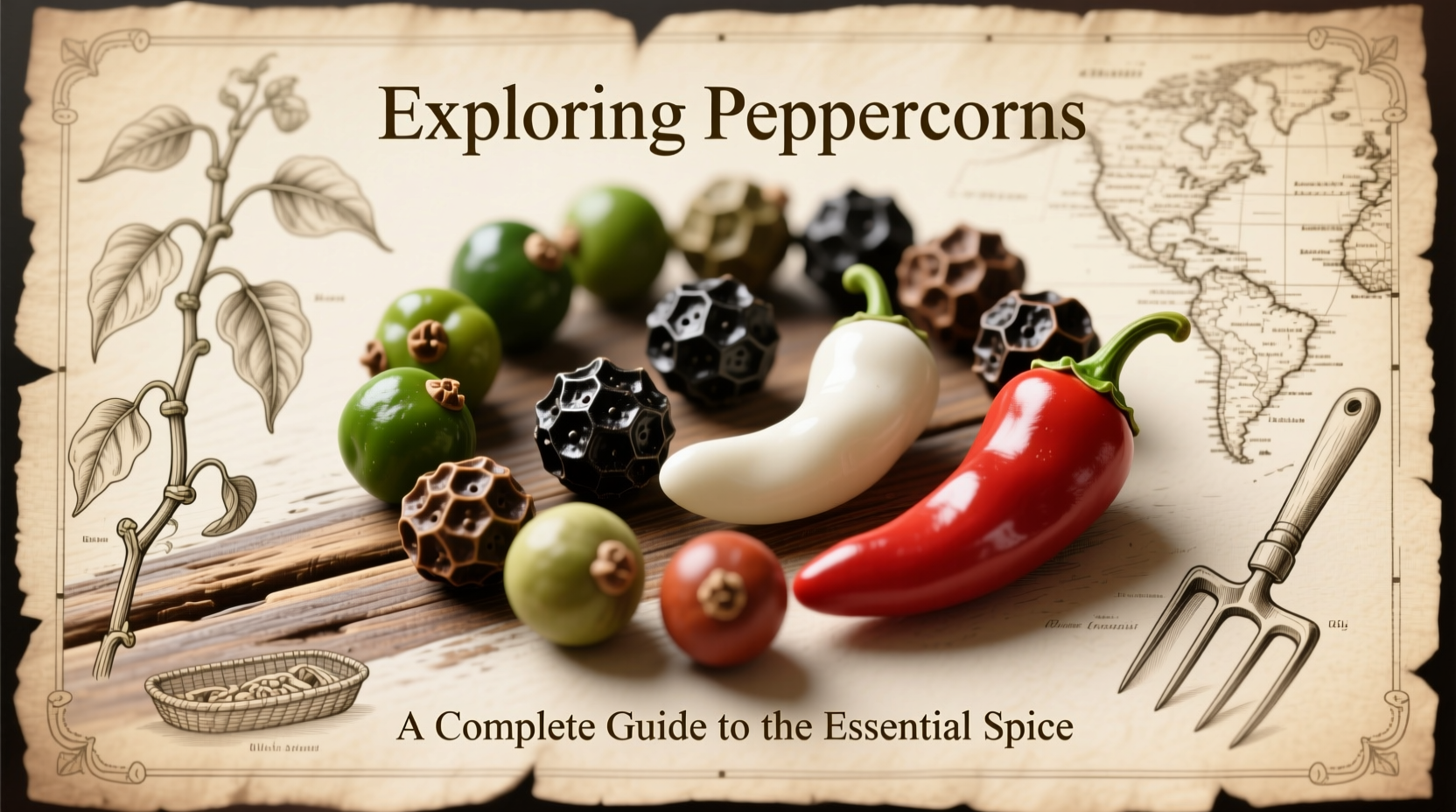
Peppercorns are the dried fruit of Piper nigrum, a flowering vine native to South India’s Malabar Coast. Though commonly referred to as “pepper,” they are botanically distinct from chili peppers (which belong to the Capsicum genus). Harvested at different stages of ripeness and processed in various ways, peppercorns yield several color forms—black, white, green, and red—each with unique sensory profiles.
The global trade in peppercorns dates back over 3,000 years. They were so valuable in antiquity that they were used as collateral, accepted as tax payments, and even mentioned in ancient Sanskrit texts. Today, Vietnam is the largest producer, followed by Indonesia, India, and Brazil. While black pepper dominates international markets, specialty and heirloom varieties are gaining attention among chefs and food enthusiasts seeking complexity and terroir-driven nuances.
Key Characteristics
The flavor, aroma, and culinary function of peppercorns vary significantly by type. Below is a breakdown of the primary characteristics across the four main forms:
| Type | Flavor Profile | Aroma | Heat Level | Color & Form | Shelf Life (Whole) |
|---|---|---|---|---|---|
| Black Peppercorn | Pungent, earthy, slightly floral with sharp heat | Woody, warm, camphorous notes | Moderate to high | Oval, dark brown to black, wrinkled | 3–4 years |
| White Peppercorn | Milder, musty, fermented undertone; less bright | Earthy, faintly cheesy (from fermentation) | Low to moderate | Smooth, pale beige to cream | 2–3 years |
| Green Peppercorn | Fresh, herbal, tangy, slightly resinous | Grassy, vegetal | Low | Small, bright green, soft texture | 1–2 years (brined); 6 months (dried) |
| Red Peppercorn | Sweet, fruity, complex with mild heat | Floral, jammy, tropical hints | Low to moderate | Rounded, deep red to maroon | 1–2 years (dried) |
All peppercorns owe their signature bite to **piperine**, an alkaloid compound responsible for both the pungency and the bioavailability-enhancing properties of black pepper. Piperine also contributes to pepper’s slight numbing sensation and lingering warmth.
Variants & Types
While all peppercorns originate from the same plant, processing methods determine their final form and flavor. Understanding these variants allows for precise seasoning tailored to specific dishes.
Black Peppercorns
The most common form, black peppercorns are harvested when nearly ripe and then sun-dried. The outer layer oxidizes during drying, forming the characteristic dark, wrinkled skin. Their bold, assertive flavor makes them ideal for grinding fresh over meats, soups, sauces, and roasted vegetables. High-quality Tellicherry and Malabar black peppercorns from India offer pronounced floral and citrus notes, prized by chefs worldwide.
White Peppercorns
Produced by soaking fully ripe peppercorns in water to remove the outer fruit layer, leaving only the inner seed. This fermentation process imparts a mustier, less vibrant flavor. White pepper is often used in light-colored dishes—like béchamel sauce, mashed potatoes, or Chinese stir-fries—where black specks would be visually disruptive. It's also a key component in classic French sauces such as *sauce Robert*.
Green Peppercorns
Harvested while unripe and preserved either in brine, vinegar, or freeze-dried to retain their color and freshness. Green peppercorns have a bright, tart quality and are central to dishes like *steak au poivre vert*, a French bistro favorite. Their delicate nature means they’re best added late in cooking to preserve their character.
Red Peppercorns
The rarest form, red peppercorns come from fully ripe berries. Due to their high sugar content, they spoil quickly unless preserved immediately. When dried carefully, they offer a sweet, berry-like depth with subtle heat. Often used in gourmet blends or paired with game meats and fruit-based sauces, they add complexity rather than dominance.
Specialty Varieties
- Tellicherry: A premium grade of black peppercorn, larger and more aromatic than standard black pepper. Harvested from Kerala, India, it contains higher concentrations of essential oils.
- Lampong (Indonesian Black): Smaller, rounder, and more pungent with smoky, pine-like notes. Excellent in rubs and marinades.
- Sarawak (Malaysian): Balanced heat with eucalyptus and citrus overtones. Widely used in Southeast Asian cuisine.
- Pink Peppercorns: Not true peppercorns (they come from the Peruvian pepper tree, Schinus molle), but often grouped with them due to appearance. Mildly sweet and resinous, they should be used sparingly—especially for those with nut allergies, as they can trigger reactions.
Pro Tip: Always buy whole peppercorns and grind them fresh. Pre-ground pepper loses up to 80% of its volatile oils within four months, resulting in flat, dusty flavor. A simple burr mill or mortar and pestle makes all the difference.
Practical Usage: How to Use Peppercorns in Cooking
Peppercorns are not merely a finishing touch—they play multiple functional roles in cooking, from enhancing savory depth to balancing sweetness and cutting through fat.
Dry Roasting & Blooming
For maximum flavor extraction, lightly dry roast whole peppercorns in a skillet over medium heat until fragrant (about 2–3 minutes). This technique, common in Indian and Middle Eastern cuisines, unlocks deeper, nuttier tones. Use in spice blends like garam masala or crushed into lentil dishes such as dal.
Crushing vs. Grinding
- Coarse Crush: Ideal for crusts on steaks, duck breast, or salmon. The uneven texture provides bursts of heat and crunch.
- Fine Grind: Best for even distribution in soups, stews, and batters. Use freshly ground pepper in scrambled eggs or creamy risotto for brightness.
- Whole Peppercorns: Used in braises, pickling liquids, stocks, and poaching liquids. They infuse flavor subtly and are typically strained out before serving.
Culinary Applications by Cuisine
- French: Green peppercorns in cream sauce; cracked black pepper in *steak au poivre* with cognac and shallots.
- Indian: Whole black peppercorns tempered in ghee for curries; coarsely ground in spice mixes like *sambar powder*.
- Thai: Freshly cracked pepper in noodle dishes and dipping sauces; combined with lime and chilies for marinades.
- Italian: Finely ground pepper in pasta carbonara, cacio e pepe, and meatballs.
- Vietnamese: Ground black pepper in pho broth and grilled meats; paired with fish sauce and lime.
Pairing Guidelines
Pepper enhances other ingredients without overpowering them when used thoughtfully. Consider these pairings:
- Dairy: Balances richness in butter, cream, and cheese. Try cracked pepper on burrata or in mac and cheese.
- Eggs: A pinch elevates omelets, frittatas, and soft-boiled eggs.
- Fruit: Complements strawberries, mango, and pineapple—common in modern desserts and salads.
- Chocolate: Adds intrigue in dark chocolate truffles or mole sauce.
- Seafood: Enhances grilled shrimp, scallops, and tuna tataki when used lightly.
Recommended Ratios
To avoid over-seasoning, follow these general guidelines:
- Steak (per 6 oz): ½ tsp freshly cracked black pepper
- Cream sauce (per cup): ¼–⅓ tsp fine grind
- Pasta (per serving): ⅛–¼ tsp fine grind
- Stock or soup (per quart): 6–8 whole peppercorns
- Spice blend (e.g., garam masala): 15–20% black pepper by volume
Case Study – Perfect Steak Au Poivre: Season a ribeye generously with coarse Tellicherry peppercorns. Sear hard, then deglaze the pan with brandy and heavy cream. Simmer briefly and finish with a knob of butter. The result? A deeply aromatic, spicy-savory crust balanced by a rich, velvety sauce.
Comparison with Similar Ingredients
Peppercorns are frequently confused with other spicy or peppery-tasting ingredients. Clarifying these differences ensures accurate usage in recipes.
| Ingredient | Botanical Source | Heat Source | Flavor Difference | Substitution Advice |
|---|---|---|---|---|
| Chili Pepper (e.g., cayenne) | Capsicum annuum | Capsaicin (burns tongue) | Sharp, fiery, sometimes sweet; lacks piperine’s warmth | Not interchangeable; use only if heat—not pepper flavor—is needed |
| Pink Peppercorn | Schinus molle | None (mildly numbing) | Sweet, resinous, slightly medicinal | Use as garnish only; do not substitute 1:1 for black pepper |
| Sichuan Peppercorn | Zanthoxylum spp. | Hydroxy-alpha-sanshool (tingling/numbing) | Citrusy, floral, electric; not truly “hot” | No direct substitute; serves a different sensory role |
| Long Pepper (Pipli) | Piper longum | Piperine + additional compounds | Sweeter, more complex, with cinnamon and clove notes | Can replace black pepper 1:1 in small amounts; more intense |
“Black pepper is the backbone of seasoning. It doesn’t just add heat—it rounds out flavor, lifts aromatics, and creates harmony in a dish.” — Chef Yotam Ottolenghi
Practical Tips & FAQs
How should I store peppercorns?
Keep whole peppercorns in an airtight container away from heat, light, and moisture. Glass jars in a cool pantry are ideal. Avoid storing near the stove or dishwasher. Properly stored, they retain peak flavor for up to four years. Ground pepper should be used within three to six months.
Can I substitute one type of peppercorn for another?
In some cases, yes—but with caveats. White pepper can replace black in light dishes, though it lacks brightness. Green peppercorns work well in creamy sauces but shouldn’t be substituted for black in dry rubs. Red peppercorns are too delicate for high-heat applications. For best results, match the peppercorn to the dish’s visual and flavor profile.
Are there health benefits to peppercorns?
Yes. Piperine has been studied for its ability to enhance nutrient absorption, particularly of curcumin (the active compound in turmeric). It also exhibits antioxidant and anti-inflammatory properties. However, excessive consumption may irritate the digestive tract in sensitive individuals.
Why does my white pepper smell musty?
This is normal. The fermentation process required to remove the outer layer of the peppercorn produces compounds that give white pepper its distinctive earthy, sometimes barnyard-like aroma. If it smells moldy or rancid, however, it has spoiled and should be discarded.
What’s the best pepper mill to use?
Opt for a mill with adjustable grind settings and a ceramic or carbon steel burr mechanism. Ceramic resists corrosion from salt and moisture, making it ideal for humid environments. Avoid plastic grinders, which can impart off-flavors and wear down quickly.
Can I grow my own peppercorn plant?
In tropical climates (USDA zones 10–12), yes. Piper nigrum thrives in humid, shaded conditions with support for climbing. It takes 2–3 years to produce fruit. In cooler regions, it can be grown indoors as a houseplant, though fruiting is rare.
Storage Checklist
- ✅ Store in opaque, airtight glass jar
- ✅ Keep in a cool, dark pantry (not above the stove)
- ✅ Label with purchase date
- ❌ Do not refrigerate (causes condensation)
- ❌ Avoid clear containers exposed to sunlight
Summary & Key Takeaways
Peppercorns are far more nuanced than their reputation as a basic table spice suggests. From the bold punch of Tellicherry black pepper to the delicate fruitiness of red peppercorns, each variety offers distinct culinary possibilities. Understanding their origin, processing, and flavor profiles empowers cooks to use them with precision and creativity.
Key takeaways include:
- Always use **whole peppercorns** and grind them fresh for optimal flavor.
- Choose the type based on both **flavor and appearance**: black for robust seasoning, white for clean finishes, green for brightness, red for complexity.
- Use **different preparations**—crushed, whole, or ground—to match the dish’s texture and cooking method.
- Store properly to preserve essential oils and pungency for years.
- Recognize that **true peppercorns differ fundamentally** from Sichuan, pink, or chili peppers in both chemistry and culinary role.
Mastering the use of peppercorns is not about adding heat—it’s about layering flavor, balancing richness, and refining the overall taste experience. By treating this ancient spice with the respect it deserves, you unlock one of the most powerful tools in the culinary arsenal.
Next time you reach for the pepper mill, pause and consider: which peppercorn best serves this dish? Experiment with different types, and note how a simple switch can transform a familiar recipe into something new and exciting.




 浙公网安备
33010002000092号
浙公网安备
33010002000092号 浙B2-20120091-4
Comments
No comments yet. Why don't you start the discussion?