
Across social media, dinner tables, and news outlets, a common sentiment echoes: “2024 just feels off.” It’s not just isolated events—it’s a pervasive undercurrent of fatigue, anxiety, and unpredictability. While some years pass quietly, others leave a mark on the collective psyche. 2024 is shaping up to be one of those years. But why? The answer isn’t found in a single event, but in a convergence of global instability, digital overload, economic strain, and psychological exhaustion. Understanding these forces can help make sense of the discomfort and point toward resilience.
Global Instability and Ongoing Conflicts
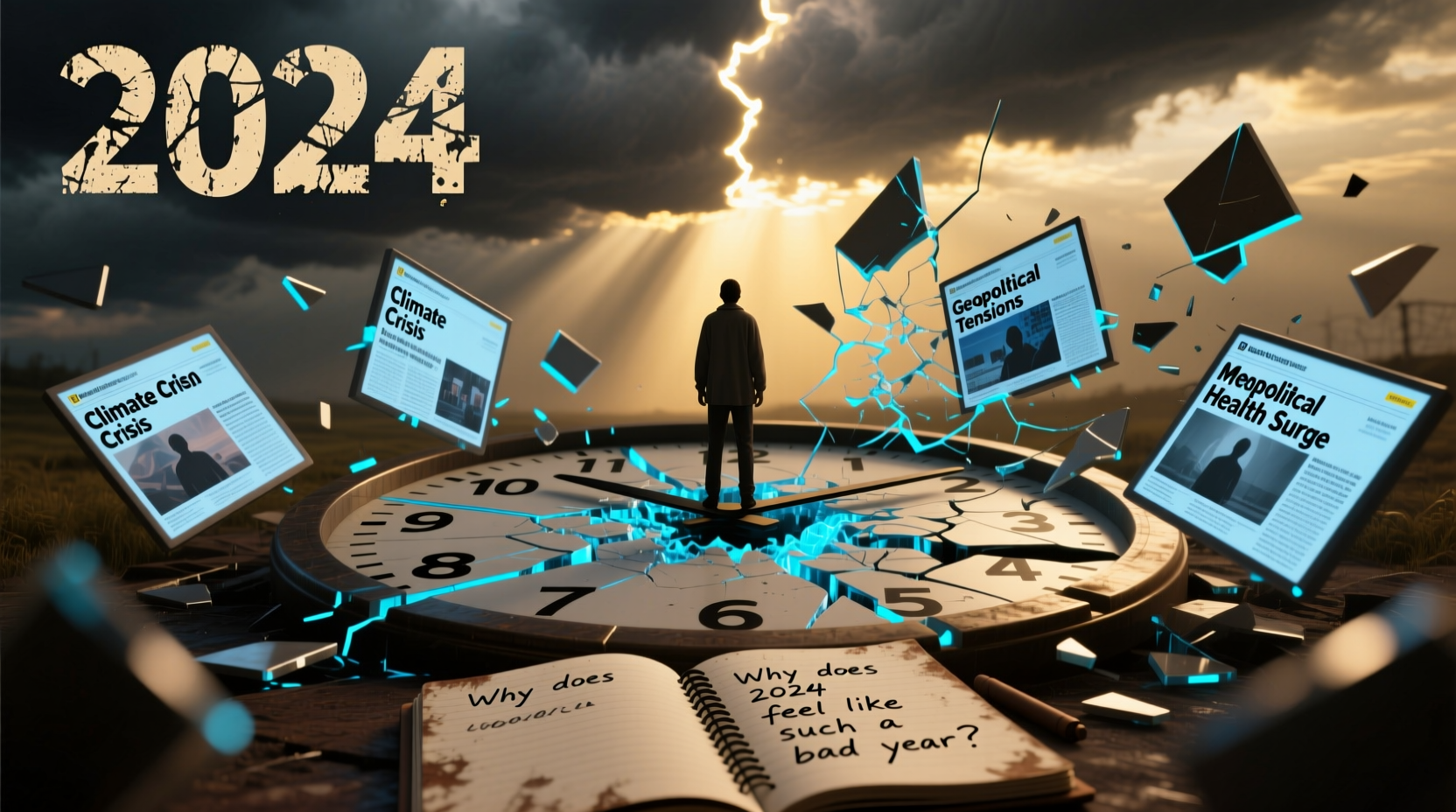
The world entered 2024 amid multiple active conflicts, from prolonged wars in Ukraine and Gaza to rising tensions in the South China Sea and civil unrest in parts of Africa and Latin America. Unlike past decades where major conflicts were often geographically contained, today’s crises are broadcast in real time, making them feel immediate and inescapable.
This constant exposure contributes to what psychologists call “vicarious trauma”—emotional distress experienced from repeated exposure to others’ suffering. With 24/7 news cycles and social media algorithms prioritizing dramatic content, people are absorbing more crisis imagery than ever before, even if they’re physically safe.
“Chronic exposure to global suffering without agency leads to emotional numbness or despair. We’re wired to respond to threats, but not to sustain that response indefinitely.” — Dr. Lena Patel, Clinical Psychologist and Trauma Specialist
Economic Pressures and Cost-of-Living Anxiety
Inflation may have cooled slightly since 2022, but its effects linger. Housing costs, groceries, and healthcare continue to outpace wage growth in many countries. In the U.S., rent hit record highs in early 2024. In the UK, food bank usage reached levels not seen since the financial crisis. Even nations with strong social safety nets report growing public dissatisfaction.
What makes this different from past recessions is the expectation gap. Many had hoped for post-pandemic recovery by now. Instead, people face a “slow burn” economy—stable enough to avoid collapse, but strained enough to erode quality of life. This breeds a quiet frustration: not crisis-level panic, but a steady drip of financial stress affecting mental health, relationships, and long-term planning.
| Country | Inflation Rate (Early 2024) | Public Sentiment Trend |
|---|---|---|
| United States | 3.2% | Negative (cost of living cited as top concern) |
| United Kingdom | 4.0% | Declining confidence in government handling |
| Germany | 2.5% | Stagnant wages despite low unemployment |
| Argentina | 280% | Severe currency devaluation and protests |
Digital Fatigue and Algorithmic Negativity
It’s no coincidence that feelings of dread spiked alongside increased screen time. Social media platforms in 2024 are more fragmented and polarized than ever. Algorithms favor outrage, conflict, and fear-based content because it drives engagement. As a result, users are fed a distorted view of reality—one where disasters dominate and progress goes unnoticed.
A 2024 study by the Digital Wellbeing Institute found that individuals who spent over two hours daily on social media were 3.2 times more likely to report feelings of hopelessness about the future than those who limited use to under 30 minutes.
This phenomenon, known as “doomscrolling,” creates a feedback loop: negative content increases anxiety, which leads to more passive consumption, which reinforces negativity.
Mini Case Study: Sarah’s Experience with Digital Detox
Sarah, a 34-year-old teacher from Toronto, noticed her mood worsening every evening in early 2024. She attributed it to work stress until she tracked her phone usage and realized she was spending nearly three hours a day on news apps and Twitter (now X). After implementing a digital detox—no screens after 8 PM and deleting high-stress apps—she reported improved sleep, reduced anxiety, and a renewed sense of control within two weeks.
Climate Anxiety and Environmental Uncertainty
2024 began with extreme weather patterns across continents: historic flooding in Spain, wildfires in Canada during winter months, and unseasonably high temperatures globally. Scientists confirmed January 2024 as the warmest January on record. These aren’t anomalies—they’re part of a trend.
For younger generations especially, climate change isn’t a distant threat. It’s a lived reality affecting career choices, family planning, and emotional stability. A 2023 Lancet survey found that 68% of young adults aged 16–25 believe “the future is frightening” due to environmental collapse.
Unlike other stressors, climate anxiety involves a sense of helplessness. Individual actions feel insignificant against systemic inertia, leading to what some call “eco-paralysis”—knowing the problem but feeling unable to act meaningfully.
Step-by-Step Guide to Rebuilding Emotional Resilience in 2024
While external conditions may be beyond control, personal coping strategies can restore a sense of balance. Follow this five-step approach to regain perspective and reduce overwhelm:
- Assess Your Inputs: Audit your media diet. Unfollow accounts that trigger anxiety. Subscribe to science-based climate newsletters instead of sensationalist headlines.
- Set Boundaries: Designate tech-free hours each day. Use app timers to limit social media.
- Focus on Agency: Identify one area where you can make a tangible difference—community volunteering, reducing household waste, or advocating locally.
- Prioritize Physical Health: Sleep, nutrition, and movement regulate mood. Even 20 minutes of daily walking improves emotional resilience.
- Seek Connection: Talk about your feelings with trusted friends. Join support groups focused on climate action or mental wellness.
Checklist: Signs You Might Be Experiencing 2024 Burnout
- Constant fatigue despite adequate sleep
- Irritability over minor inconveniences
- Feeling detached from usual activities
- Difficulty concentrating or making decisions
- Relying heavily on caffeine, alcohol, or distractions
- Believing “nothing will ever get better”
If three or more apply, consider speaking with a mental health professional or taking a structured break from information overload.
Frequently Asked Questions
Is it normal to feel worse in 2024 even if nothing bad happened in my personal life?
Yes. Collective stress—driven by global events, economic trends, and cultural mood—can impact individuals regardless of personal circumstances. This is sometimes called “ambient anxiety,” where the general atmosphere of uncertainty affects mental well-being.
Can positive news make a difference?
Yes. Research shows that balanced media consumption—including stories of innovation, cooperation, and recovery—can counteract helplessness. Seek out solutions-focused journalism or newsletters like “The Good News Network” or “Positive News.”
Are we objectively worse off than in previous years?
Objectively, some metrics have improved: global poverty rates remain lower than in the 20th century, medical advancements continue, and renewable energy adoption is accelerating. However, the *perception* of decline is fueled by faster information spread and heightened awareness of risks—making it feel worse, even if long-term trends are mixed.
Conclusion: Moving Forward with Intention
2024 doesn’t have to define us by its challenges. Recognizing why it feels so difficult is the first step toward reclaiming agency. The world is complex, often unjust, and undeniably volatile—but it is also full of resilience, innovation, and quiet acts of courage.
By managing our inputs, reconnecting with meaningful action, and supporting one another, we can navigate this year not as passive victims of circumstance, but as intentional participants in shaping a better tomorrow. The weight of the world shouldn’t rest on individual shoulders, but small, consistent choices can still create ripples.




 浙公网安备
33010002000092号
浙公网安备
33010002000092号 浙B2-20120091-4
Comments
No comments yet. Why don't you start the discussion?