
When comparing two of the most ambitious Japanese RPGs released in recent years—Final Fantasy XVI and Xenoblade Chronicles 3—it’s easy to focus on graphics, combat systems, or lore depth. But one of the most defining elements of a great RPG experience is often overlooked: pacing. How a game unfolds over its runtime—how quickly it introduces mechanics, how tightly it structures story beats, and how it balances exploration with progression—can make the difference between an unforgettable journey and a slog. Final Fantasy XVI, a narrative-driven action RPG from Square Enix, and Xenoblade Chronicles 3, a sprawling open-world epic from Monolith Soft, approach pacing in fundamentally different ways. One prioritizes cinematic momentum; the other embraces deliberate, expansive storytelling. So which RPG handles pacing better? The answer depends on what kind of player you are—and what you value in a long-form gaming experience.
Narrative Structure and Story Delivery
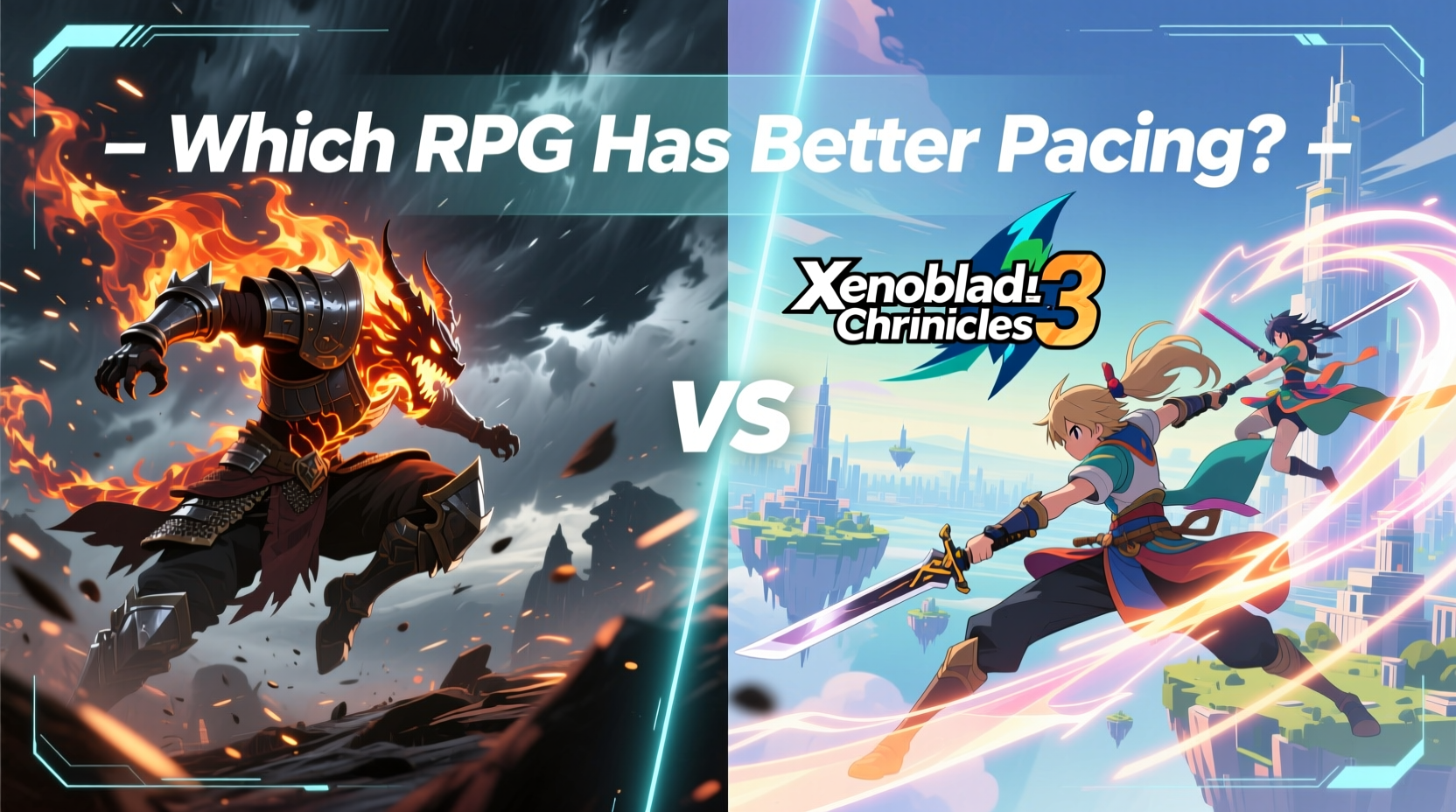
Final Fantasy XVI follows a tightly scripted, linear path through its central plot. From the opening prologue to the final confrontation, the game maintains a consistent tone of political intrigue, personal tragedy, and mythic scale. The story centers on Clive Rosfield, a warrior caught in a world defined by magical domination and warring nations. What sets FFXVI apart is its commitment to a singular, focused arc. Cutscenes are frequent, often lengthy, and cinematic in presentation—reminiscent of a prestige TV drama. This approach ensures that key emotional beats land with precision and that character motivations are clearly communicated.
In contrast, Xenoblade Chronicles 3 unfolds across a broader canvas. Its narrative begins with two opposing armies locked in eternal conflict, only to gradually reveal deeper layers involving time, identity, and existential purpose. The first 20 hours of the game are deliberately paced, establishing dual protagonists (Noah and Mio), their respective worlds, and the rules of their reality. The story doesn’t truly converge until well past the midpoint, when the party gains the ability to travel between realms. This slower ramp-up allows for organic character development but risks alienating players expecting immediate payoff.
Gameplay Integration and Progression Flow
Pacing isn’t just about story—it’s also about how gameplay evolves alongside the narrative. Final Fantasy XVI uses a mission-based structure, where players complete discrete chapters that blend story cutscenes with linear combat arenas. Each chapter advances both plot and character power, ensuring a steady sense of progression. Abilities are unlocked at predictable intervals, usually tied to story milestones, giving players a clear sense of growth without overwhelming them with options.
Xenoblade Chronicles 3, however, employs a more traditional open-zone design. Players explore vast environments, take on side quests, and unlock abilities through class leveling and affinity systems. While this grants freedom, it can disrupt narrative momentum. It’s possible—and common—for players to spend several hours grinding classes or completing side content before returning to the main quest. This flexibility enhances replayability but can dilute the urgency of the central storyline.
The real divergence lies in how each game integrates new mechanics. FFXVI introduces Eikonic Abilities and full-scale Titan battles early and revisits them consistently, reinforcing core gameplay loops. XC3, on the other hand, layers systems gradually: Interlink combat, Ouroboros forms, Class Strikes, and Chain Attacks all emerge over time. While this creates a rewarding learning curve, it can feel overwhelming during the mid-game when multiple systems intersect.
“Pacing in RPGs isn’t about speed—it’s about rhythm. You need peaks and valleys, tension and release. Final Fantasy XVI nails the crescendo; Xenoblade gives you the symphony.” — Akira Tanaka, Game Design Lecturer at Tokyo Polytechnic University
Combat Rhythm and Encounter Design
Combat pacing plays a crucial role in maintaining engagement. Final Fantasy XVI features fast-paced, spectacle-driven battles with a strong emphasis on timing, dodging, and combo execution. Enemy encounters are designed like boss fights—each major enemy requires pattern recognition and strategic use of abilities. Even standard enemies often have attack tells and environmental interactions, keeping players alert. The game rarely lets up, especially in later chapters where multi-phase Eikon battles demand sustained attention.
Xenoblade Chronicles 3 opts for a more methodical combat system. Battles are menu-driven, turn-based in essence but real-time in execution. Positioning, aggro management, and skill cooldowns matter significantly. The pace feels slower, more tactical. While this rewards thoughtful play, it can lead to repetitive grinding if players aren’t invested in optimizing builds. Additionally, random encounters and respawn timers in certain zones can interrupt immersion, particularly during backtracking.
One notable strength of XC3 is its seamless transition between exploration and combat—no loading screens, no abrupt shifts. This contributes to a smoother overall rhythm, even if individual fights feel less intense than FFXVI’s set pieces. Conversely, FFXVI’s cinematic transitions and dramatic entrances enhance emotional impact but break flow with frequent cutscene interruptions.
Pacing Comparison: A Side-by-Side Analysis
| Aspect | Final Fantasy XVI | Xenoblade Chronicles 3 |
|---|---|---|
| Main Story Length | ~35–40 hours | ~50–60 hours |
| Side Content Volume | Moderate (Missions, Collectibles) | Extensive (Side Quests, Colonies, Challenges) |
| Narrative Focus | Linear, Character-Driven | Expansive, Thematically Layered |
| Combat Pacing | Fast, Cinematic, High-Stakes | Tactical, Repetitive Without Optimization |
| Exploration Freedom | Low (Mission-Based Zones) | High (Open Zones, Backtracking) |
| Player Control Over Pace | Low (Guided Experience) | High (Flexible Playstyle) |
| Cutscene Frequency | High (Every 20–30 mins) | Moderate (Key Moments Only) |
This table highlights a fundamental trade-off: FFXVI offers a curated, directorial vision with minimal downtime, while XC3 provides autonomy at the cost of narrative tightness. Neither approach is inherently superior, but they cater to different preferences.
Real-World Player Experience: A Mini Case Study
Consider the experience of Mark, a 32-year-old software engineer and longtime JRPG fan. He began both games during a two-week vacation, aiming to finish one fully. With Final Fantasy XVI, he completed the main story in six sessions, averaging six hours per day. He described the experience as “like watching a gripping HBO series—you don’t want to stop once you start.” The constant escalation kept him emotionally invested, and he rarely felt the urge to pause for side activities.
With Xenoblade Chronicles 3, his experience was markedly different. After ten hours, he felt confused by the dual-world setup and overwhelmed by the number of systems. He paused the game for three days, consulted a guide, and returned with a plan: focus on main quests only. Once past the 25-hour mark, he reported a “narrative payoff” that made earlier ambiguity worthwhile. However, he admitted that without prior experience in the Xenoblade series, the slow burn could have led to abandonment.
This case illustrates a critical point: pacing effectiveness is highly dependent on player expectations and tolerance for ambiguity. FFXVI assumes you want to be led; XC3 assumes you’re willing to wander before understanding the destination.
Actionable Tips for Maximizing Pacing Enjoyment
- For Final Fantasy XVI: Play in longer sessions to maintain narrative momentum. Avoid spreading play across too many short sittings, as emotional continuity matters.
- For Xenoblade Chronicles 3: Set personal milestones (e.g., “I’ll reach Colony 9 before checking side quests”) to avoid aimless wandering.
- Use autosave checkpoints strategically. In XC3, save before major decisions; in FFXVI, rely on chapter-based saves to preserve dramatic surprise.
- Don’t skip tutorials early on. Both games introduce complex systems—FFXVI through cinematic prompts, XC3 through incremental UI tips.
- Manage difficulty settings. FFXVI becomes grindy on Expert; XC3 can stall progress if levels fall behind due to side exploration.
Frequently Asked Questions
Is Final Fantasy XVI too fast-paced for traditional RPG fans?
Some fans of turn-based, exploratory RPGs find FFXVI too linear or cutscene-heavy. However, its pacing is intentional—designed for players who prioritize story and spectacle over open-ended gameplay. If you enjoy titles like God of War or The Last of Us, you’ll likely appreciate FFXVI’s rhythm.
Does Xenoblade Chronicles 3 ever pick up the pace?
Yes—around the 25–30 hour mark, the narrative converges, the party unites, and the stakes escalate dramatically. The second half of the game is significantly more focused and emotionally charged, making the early investment worthwhile for many players.
Which game is better for busy players with limited time?
Final Fantasy XVI is more accommodating for shorter play sessions due to its chapter structure and clear objectives. Each session ends on a narrative beat, making it easier to pause and return. Xenoblade Chronicles 3 benefits from longer stretches of play to maintain context and momentum.
Conclusion: Pacing as a Reflection of Design Philosophy
The question of which RPG has better pacing ultimately comes down to philosophy. Final Fantasy XVI treats the player as an audience member in a grand theatrical production—every act is timed, every line delivered with intent. Its pacing is polished, efficient, and emotionally resonant, ideal for those who want a powerful, self-contained story without distractions.
Xenoblade Chronicles 3, by contrast, invites the player to become a traveler in a living world. Its pacing mimics real exploration: slow starts, unexpected detours, and delayed revelations. It asks for trust and rewards it with depth. For players who value world immersion and gradual discovery, XC3’s pacing isn’t a flaw—it’s a feature.
Neither game is objectively “better” in terms of pacing. But if forced to choose based on modern player habits—shorter attention spans, demand for narrative clarity, preference for cinematic delivery—Final Fantasy XVI edges ahead in consistency and accessibility. That said, Xenoblade Chronicles 3 offers a richer, more patient kind of satisfaction—one that lingers long after the credits roll.




 浙公网安备
33010002000092号
浙公网安备
33010002000092号 浙B2-20120091-4
Comments
No comments yet. Why don't you start the discussion?