
In an era where health monitoring is increasingly personalized, fitness trackers have evolved from simple pedometers to sophisticated wearable devices capable of measuring heart rhythms, sleep quality, and even blood oxygen levels. At the core of this evolution lies a critical choice for consumers: should you opt for a basic step counter that tracks movement and encourages daily activity, or invest in a more advanced fitness tracker with ECG (electrocardiogram) capabilities that offers deeper health insights? More importantly, which device type is better at motivating consistent workouts over time?
The answer isn’t just about technology—it’s about psychology, usability, long-term engagement, and personal health goals. While both devices aim to promote physical activity, their mechanisms for doing so differ significantly. Understanding these differences can help you choose the right tool to support lasting fitness habits.
Understanding the Core Differences
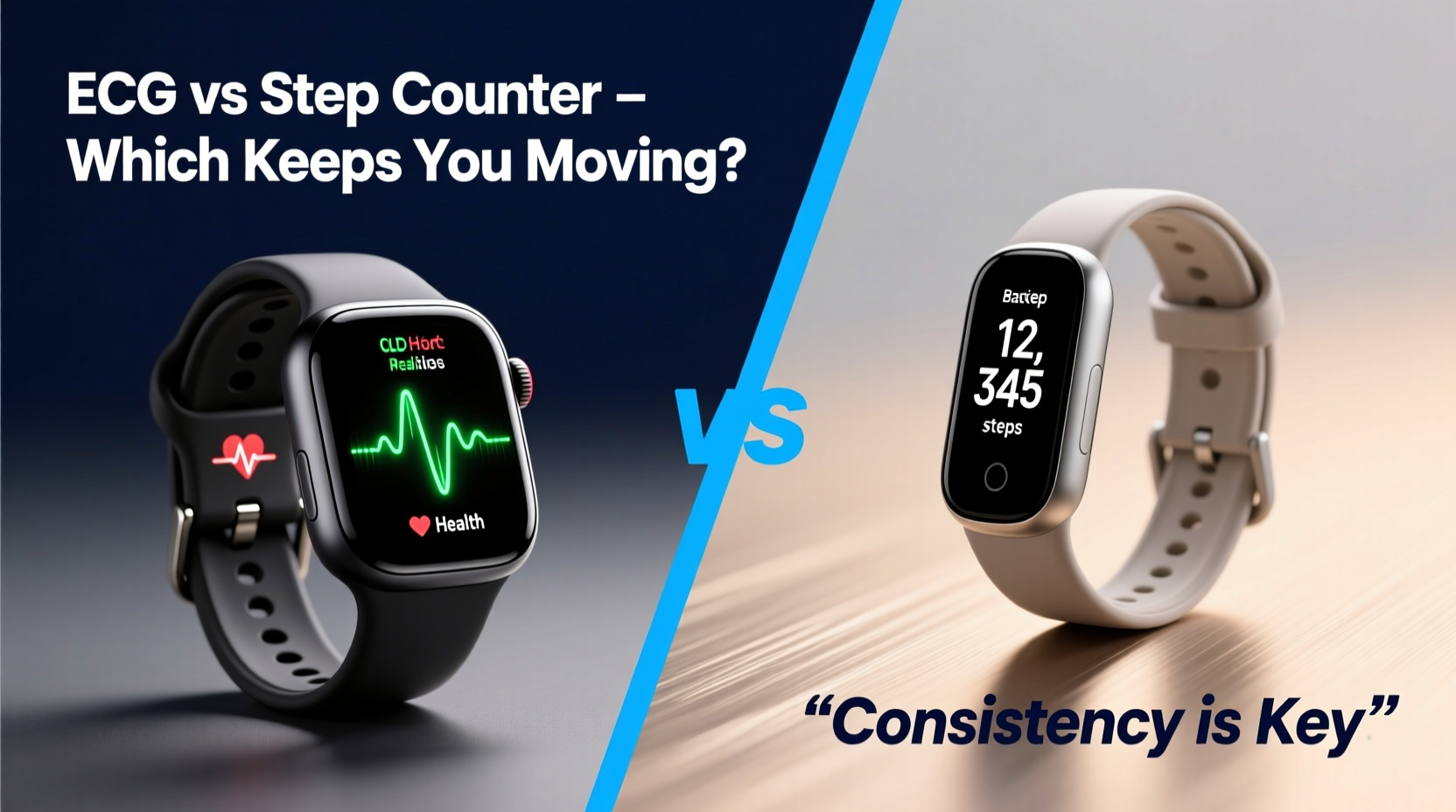
A basic step counter, often embedded in entry-level fitness bands or smartphone apps, measures one primary metric: steps taken. It operates on simplicity—displaying your daily count, setting modest goals (like 10,000 steps), and using gentle reminders or celebratory notifications when targets are met. Its strength lies in accessibility and ease of use, making it ideal for beginners or those who want minimal tech involvement.
In contrast, a fitness tracker with ECG functionality goes far beyond motion sensing. These devices use electrical sensors to capture heart rhythm data, allowing users to detect irregularities such as atrial fibrillation (AFib). Brands like Apple, Fitbit, and Samsung now include FDA-cleared ECG tools in their premium wearables. Beyond cardiac monitoring, these trackers also measure resting heart rate, HRV (heart rate variability), sleep stages, stress levels, and workout intensity with greater accuracy.
But does having more data translate into better motivation for regular exercise?
Data Depth vs. Simplicity: The Motivation Trade-Off
One might assume that richer data leads to stronger motivation. After all, seeing your heart respond positively to training or spotting improvements in recovery metrics could inspire continued effort. However, research suggests that too much information can overwhelm users, especially those new to fitness.
A 2022 study published in the Journal of Medical Internet Research found that while advanced trackers increased short-term engagement due to novelty, their complexity led to higher abandonment rates after six months. In contrast, participants using basic step counters reported sustained usage because the interface was intuitive and goal-setting felt achievable.
Mechanisms of Motivation: How Devices Influence Behavior
Motivation in fitness hinges on three psychological drivers: goal setting, feedback, and reinforcement. Both types of devices leverage these elements—but in different ways.
- Goal Setting: Basic counters typically default to 10,000 steps—a well-known benchmark. This clear, measurable target provides immediate direction. Advanced trackers allow custom goals based on calories, active minutes, or heart rate zones, offering flexibility but requiring more user input.
- Feedback: Step counters deliver instant numerical feedback. Seeing your step count rise throughout the day creates a gamified effect. ECG-enabled devices provide delayed but clinically relevant feedback, such as “Your heart rhythm showed signs of irregularity,” which may prompt medical follow-up rather than workout enthusiasm.
- Reinforcement: Celebratory badges, streaks, and social sharing features reward consistency. Basic trackers often emphasize these behavioral nudges. High-end models focus more on health alerts than motivational rewards.
This divergence reveals a key insight: basic step counters are designed around behavioral psychology principles, while ECG trackers prioritize clinical utility.
Real-World Example: Sarah’s Journey to Consistency
Sarah, a 42-year-old office worker, purchased a smartwatch with ECG after her doctor mentioned borderline hypertension. Initially fascinated by the detailed heart readings, she wore it diligently for two weeks. But soon, the constant notifications about elevated resting heart rate and occasional arrhythmia flags began causing anxiety. She stopped exercising out of fear of triggering another alert.
Frustrated, she switched to a basic clip-on step counter. Without complex biometrics, she focused simply on walking more each day. Within a month, she consistently hit 9,000+ steps daily. The lack of medical-grade data didn’t matter—what mattered was the sense of progress and control. Over six months, her blood pressure improved naturally through increased activity, validated during her next checkup.
Sarah’s experience illustrates how motivation sometimes thrives not on precision, but on positivity and attainability.
“Motivation is fueled by success, not surveillance. A device that makes you feel accomplished—even in small ways—is more likely to keep you moving.” — Dr. Lena Torres, Behavioral Health Researcher at Stanford Prevention Institute
Comparative Analysis: Features That Drive Engagement
To evaluate which device better supports consistent workouts, consider how each performs across key motivational dimensions.
| Feature | Basic Step Counter | Fitness Tracker with ECG |
|---|---|---|
| Primary Focus | Daily movement tracking | Comprehensive health monitoring |
| User-Friendliness | High – minimal setup, easy interface | Moderate to low – requires app navigation, interpretation skills |
| Motivational Feedback | Streaks, step milestones, visual progress bars | Health scores, anomaly warnings, trend graphs |
| Workout Encouragement | Passive – reminds to move if inactive | Active – suggests workouts based on readiness |
| Long-Term Adherence Rate | Higher among non-tech-savvy users | Lower due to complexity and potential anxiety |
| Battery Life | 7–30 days | 1–7 days (due to sensor load) |
| Cost | $20–$50 | $200–$400+ |
While ECG trackers offer impressive capabilities, they often fall short in delivering the kind of positive reinforcement that sustains habit formation. Their alerts, though medically valuable, can inadvertently discourage activity if misinterpreted.
When ECG Trackers Shine: Specific Use Cases
That said, ECG-equipped devices are invaluable for certain populations. Individuals managing heart conditions, recovering from cardiac events, or under physician supervision benefit greatly from continuous rhythm monitoring. For them, motivation stems not from step counts but from taking ownership of their cardiovascular health.
Moreover, some high-end trackers integrate ECG data into fitness programming. For example, Garmin’s Body Battery feature uses HRV (closely related to ECG insights) to recommend optimal times for exercise or rest. This personalized guidance helps prevent burnout and supports sustainable training schedules.
Still, for the average person aiming to build a routine of consistent workouts—not manage a chronic condition—the added complexity rarely translates into better adherence.
Actionable Checklist: Choosing the Right Device for Consistent Workouts
Use this checklist to determine which device aligns best with your fitness motivation needs:
- Are you primarily focused on increasing daily movement? → Choose a basic step counter.
- Do you get overwhelmed by too many numbers or notifications? → Avoid ECG trackers.
- Have you struggled to maintain workout habits in the past? → Prioritize simplicity and positive feedback.
- Are you managing a heart condition or advised by a doctor to monitor rhythm? → An ECG tracker is appropriate.
- Do you enjoy analyzing trends and diving into health data? → You may appreciate an advanced model.
- Is budget a concern? → Step counters offer far better value for general fitness motivation.
- Do you prefer wearing lightweight, low-maintenance devices? → Basic counters win on comfort and battery life.
Building Long-Term Habits: What Really Works
No device, regardless of sophistication, guarantees consistent workouts. Success depends on integration into lifestyle, emotional resonance with goals, and consistent reinforcement.
Here’s a proven four-step approach to building lasting fitness habits—regardless of your chosen tracker:
- Start Small: Aim for 5,000 steps per day instead of 10,000. Small wins build confidence.
- Attach to Existing Routines: Walk immediately after lunch or take the stairs without checking your device.
- Track Streaks, Not Perfection: Missing a day breaks data continuity but doesn’t break progress. Focus on weekly totals.
- Leverage Social Accountability: Share progress with a friend—even without syncing devices, verbal check-ins boost commitment.
Interestingly, studies show that people who manually log steps in a journal maintain habits longer than those relying solely on automated tracking. Why? Because intentional logging reinforces agency and mindfulness—key ingredients in behavior change.
Frequently Asked Questions
Can a fitness tracker with ECG help me exercise more safely?
Yes, particularly if you have known heart issues. ECG data can detect irregular rhythms that might make intense exercise risky. Always consult your doctor before starting a new program if you’re using ECG results for safety assessment.
Is a basic step counter accurate enough for fitness tracking?
For general activity monitoring, yes. Modern step counters use accelerometers that are 85–90% accurate under normal walking conditions. They’re less precise during cycling or weightlifting, but excellent for gauging daily movement trends.
Do I need ECG monitoring if I’m young and healthy?
Generally, no. Routine ECG screening isn’t recommended for asymptomatic, low-risk individuals. For most young adults, focusing on consistent physical activity through simpler tools yields better long-term outcomes than early detection of rare conditions.
Conclusion: Match the Tool to Your Goal
The debate between a fitness tracker with ECG and a basic step counter ultimately comes down to purpose. If your goal is clinical insight, cardiac monitoring, or managing a diagnosed condition, an ECG-enabled device is a powerful ally. But if your objective is to stay consistently active—to walk more, sit less, and gradually build a resilient fitness habit—a basic step counter is often the superior motivator.
Simplicity reduces friction. Clear goals foster achievement. Positive feedback loops sustain momentum. These are the foundations of lasting behavior change, and they thrive best in tools designed around human psychology, not medical instrumentation.
You don’t need a lab on your wrist to become more active. You need encouragement, clarity, and consistency. Often, the humble step counter delivers exactly that—without the noise, cost, or anxiety of advanced diagnostics.




 浙公网安备
33010002000092号
浙公网安备
33010002000092号 浙B2-20120091-4
Comments
No comments yet. Why don't you start the discussion?