
Choosing the right handbag isn’t just about matching your outfit—it’s about function, comfort, and long-term usability. Two of the most popular styles in modern wardrobes are flap bags and tote bags, each with loyal followings and distinct advantages. While one leans toward sleek sophistication, the other champions spacious utility. But when it comes to daily wear—commuting, errands, workdays, or weekend outings—which truly earns its place on your shoulder?
The answer depends on your lifestyle, needs, and priorities. This guide breaks down both options with real-world insights, usage scenarios, and expert-backed comparisons to help you decide which bag serves you best every day.
Design & Structure: Form Meets Function
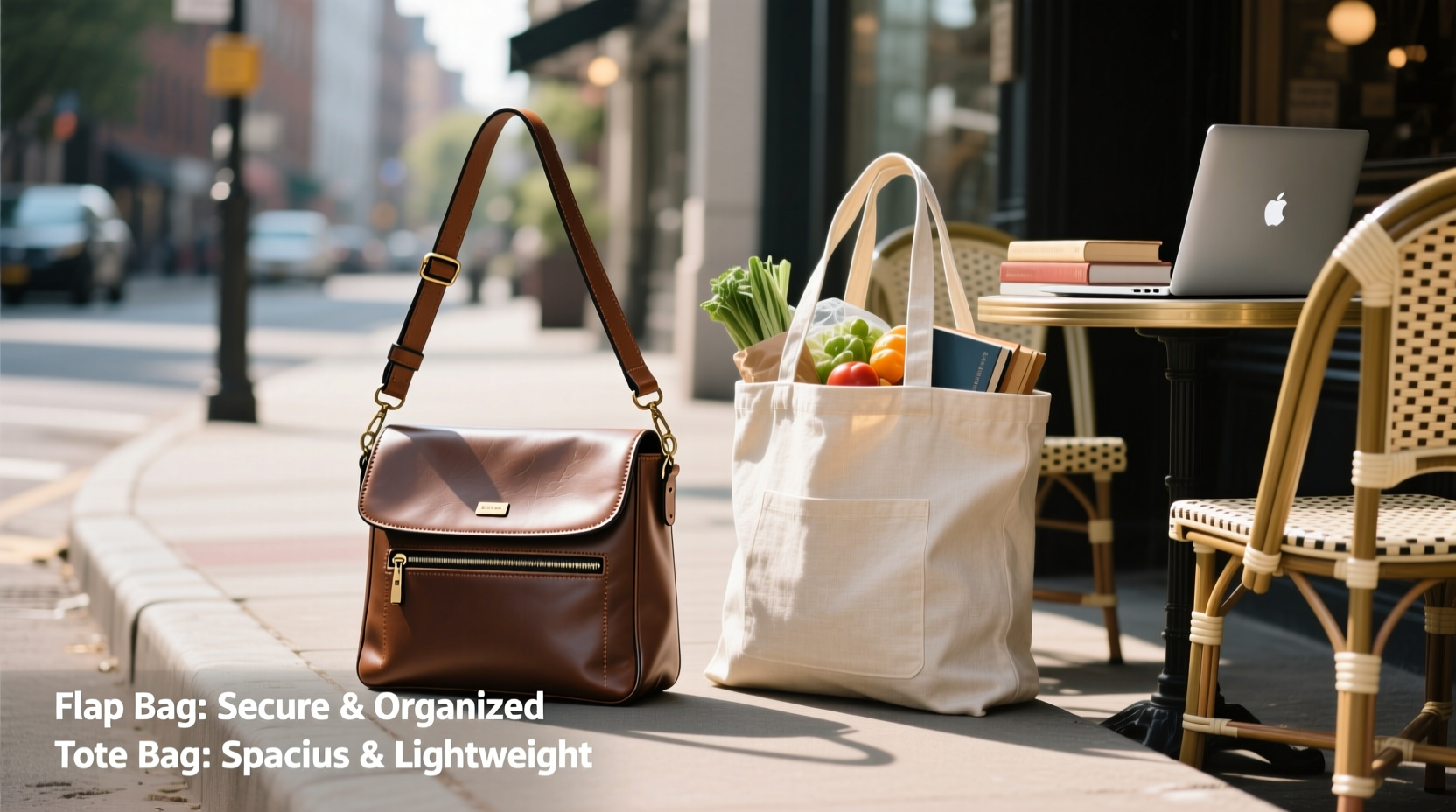
Flap bags and tote bags differ fundamentally in construction, influencing everything from security to ease of access.
Flap bags typically feature a front cover that folds over the main compartment, often secured with a magnetic snap, turn-lock, or zipper. Their compact silhouette emphasizes minimalism and elegance. Iconic examples include the Chanel 2.55 and the Gucci Soho. These are designed to carry essentials only—phone, wallet, keys, lipstick—and fit comfortably across the body or tucked under the arm.
Tote bags, by contrast, are open-top or zippered rectangular carriers with two parallel handles. Originally inspired by gym and grocery carriers, modern totes come in leather, canvas, nylon, and structured synthetics. They prioritize volume and accessibility, making them ideal for those who carry laptops, notebooks, water bottles, or extra layers.
Capacity & Daily Usability
One of the most decisive factors in everyday practicality is how much you need to carry—and how easily you can find it.
For professionals, students, or parents on the move, tote bags offer unmatched space. A standard tote measures 13–16 inches wide and can accommodate a 13-inch laptop, a small umbrella, snacks, and personal items without strain. Many include interior pockets, key clips, or padded sleeves, enhancing organization.
Flap bags, while stylish, limit what you can realistically carry. Overstuffing distorts their shape and defeats their design intent. They suit minimalist lifestyles or evening wear where less is more. However, some hybrid models now include detachable straps or expandable gussets to bridge the gap between form and function.
“Totes win for utility, but flap bags excel in intentional carrying—they force you to edit what you bring, which can be a productivity tool.” — Lena Park, Lifestyle Organizer & Author of *Carry With Purpose*
Comfort & Ergonomics
No bag is practical if it causes discomfort after 30 minutes of use. Weight distribution, strap length, and balance play crucial roles.
Tote bags rely on top handles or shoulder straps. When heavily loaded, they can pull on the shoulder, especially if carried on one side. Wide, padded straps and crossbody convertible versions improve comfort. Leather totes tend to mold to the body over time, reducing pressure points.
Flap bags usually come with adjustable chains or leather straps, allowing crossbody or shoulder carry. The weight sits closer to the body’s center, reducing strain. Their lighter load also means less fatigue during extended wear. For urban commuters navigating subways or walking long distances, this ergonomic advantage matters.
Comparison Table: Flap Bag vs. Tote Bag
| Feature | Flap Bag | Tote Bag |
|---|---|---|
| Capacity | Low (essentials only) | High (laptop, books, etc.) |
| Closure Type | Secure (flap + lock/snap) | Open or zipper (variable security) |
| Weight When Full | Light | Moderate to heavy |
| Ease of Access | Moderate (must lift flap) | High (open top or full-zip) |
| Style Flexibility | High (dresses up easily) | Moderate (can look casual) |
| Durability Under Load | Lower (not designed for heavy items) | Higher (structured materials) |
| Best For | Evenings, light days, fashion-forward looks | Work, travel, errands, busy lifestyles |
Real-Life Scenario: Office Worker’s Week
Consider Sarah, a marketing manager in a mid-sized city. Her week involves commuting via train, back-to-back meetings, client lunches, and occasional after-work events.
On Monday, she grabs her structured leather tote: laptop inside, folder organized in a slip pocket, water bottle clipped to the side. She slips her phone into the front zip compartment for quick access. The tote stays upright on conference room floors and fits neatly under her desk.
By Thursday, she opts for her quilted flap bag—lighter, chic, and perfect for a half-day with no presentations. She carries only her phone, cardholder, and lip balm. At a networking cocktail event, the flap bag blends seamlessly with her dress, drawing compliments.
Sarah’s experience reflects a growing trend: many users maintain both styles, choosing based on the day’s demands rather than loyalty to one type.
Step-by-Step: Choosing Your Everyday Bag
Follow this decision-making process to identify which bag aligns with your routine:
- Inventory your daily carry items. List everything you take with you regularly—phone, wallet, laptop, charger, makeup, notebook, etc.
- Weigh the total load. If it exceeds 5 pounds, a tote with sturdy straps is likely necessary.
- Assess your commute. Do you walk more than 20 minutes? Use public transit? A crossbody flap bag may be easier than a heavy tote.
- Evaluate your environment. In crowded cities, security matters—flap closures reduce pickpocket risk.
- Match to your wardrobe. If you wear blazers and dresses often, a flap bag complements your look. For jeans and sneakers, a tote feels natural.
- Test for one week. Rotate both bags and note which felt more convenient, comfortable, and stress-free.
FAQ: Common Questions Answered
Can a flap bag hold a tablet or small laptop?
Some larger flap bags (10+ inches wide) can fit a slim tablet or 10-inch iPad, but most aren’t padded or shaped for tech protection. Dedicated laptop compartments are rare. If digital devices are essential, a tote remains the safer bet.
Are tote bags unprofessional?
Not at all—when made from structured leather or high-quality fabric, totes project competence and preparedness. Avoid canvas grocery-style versions in formal offices, but tailored leather totes are office-appropriate and widely used in corporate environments.
How do I prevent my tote from sagging over time?
Choose a tote with a reinforced bottom (leather or rigid insert) and avoid overloading. Store it upright with light stuffing (tissue paper or a cloth pouch) to retain shape when not in use.
Checklist: Is This Bag Right for Daily Use?
- ✅ Fits all essential items without bulging
- ✅ Has a secure closure (especially in crowded areas)
- ✅ Distributes weight comfortably on your shoulder or body
- ✅ Made from durable, easy-to-clean material
- ✅ Matches at least three outfits in your regular rotation
- ✅ Includes interior pockets for organization
- ✅ Stands upright or maintains shape when set down
Final Verdict: Practicality Depends on Purpose
There’s no universal winner in the flap bag vs. tote bag debate. Each excels in different contexts.
Tote bags are objectively more practical for high-carry lifestyles. They support productivity, accommodate gear, and transition well from office to errands. Their openness allows quick access, though it sacrifices some security.
Flap bags shine in curated simplicity. They’re ideal for light days, social events, or anyone seeking a polished, intentional aesthetic. While limited in capacity, their design prioritizes safety, style, and ease of movement.
The smartest approach? Own both. Let your schedule—not trends—dictate your choice. Rotate based on need, and invest in quality pieces that last years, not seasons.




 浙公网安备
33010002000092号
浙公网安备
33010002000092号 浙B2-20120091-4
Comments
No comments yet. Why don't you start the discussion?