
When temperatures drop and winter sets in, workers across construction, landscaping, delivery, and utility sectors face a critical question: should they invest in fleece-lined work boots? Manufacturers claim that thermal linings lock in heat and improve comfort in cold conditions. But are these benefits real, or just clever marketing? More importantly, could wearing lined boots actually backfire in certain environments?
This article cuts through the noise with a detailed comparison of fleece-lined versus unlined work boots. We’ll explore insulation science, breathability, moisture management, durability, and real-world performance—so you can make an informed decision based on your job, climate, and foot health.
The Science of Insulation: How Linings Trap Heat
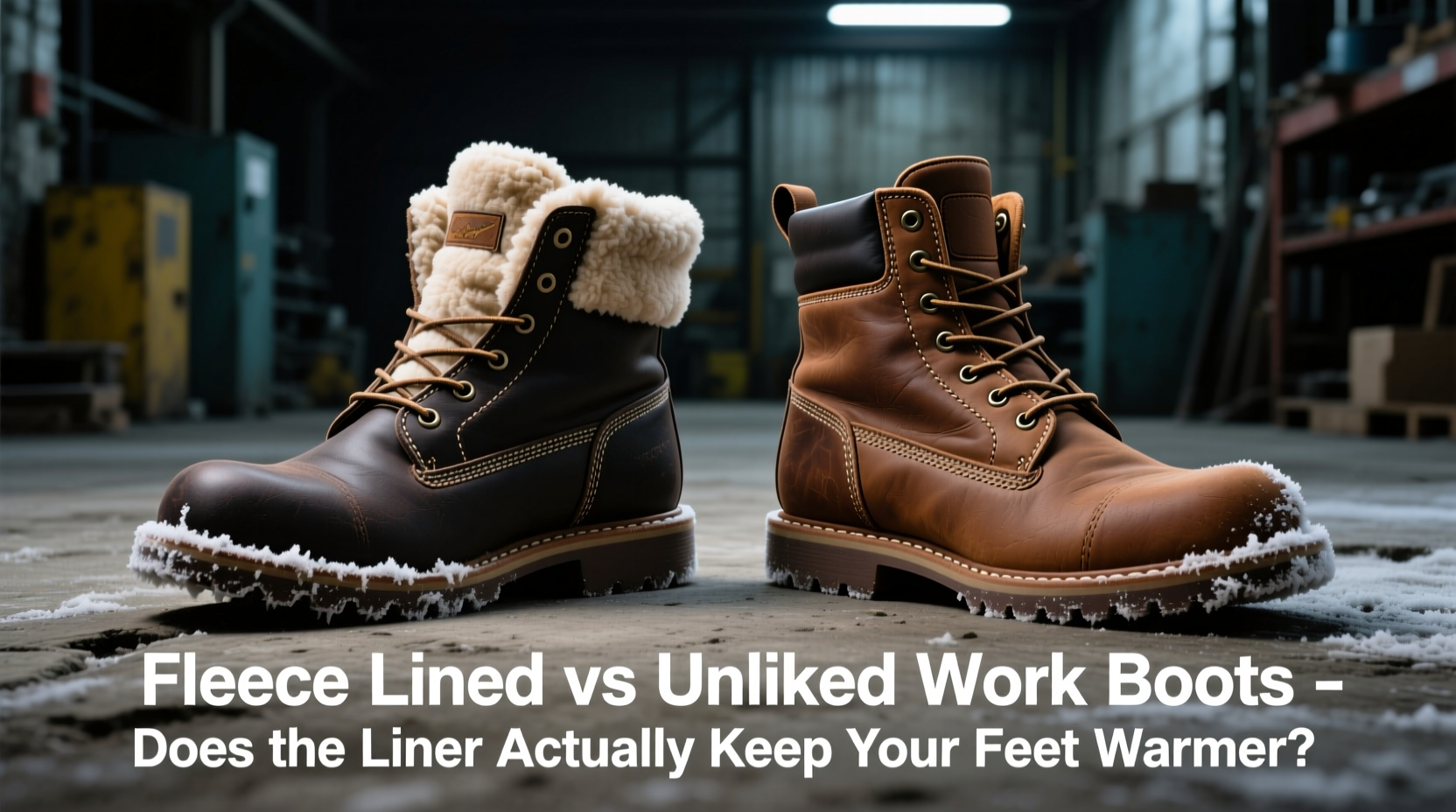
At its core, warmth retention in footwear depends on one principle: trapping air. Materials like fleece, Thinsulate™, wool, and synthetic blends create tiny air pockets that resist heat transfer from your foot to the cold outside environment. The more effective the material at holding still air, the better it insulates—even when compressed under body weight.
Fleece lining, typically made from polyester, excels at this. It’s lightweight, soft against the skin, and retains heat efficiently. However, insulation only works if the boot maintains a stable microclimate inside. If moisture builds up—either from sweat or external dampness—the lining loses effectiveness. Wet insulation conducts heat away from the body faster than dry materials.
“Insulation isn’t just about thickness—it’s about managing moisture while retaining trapped air. A poorly ventilated lined boot can feel colder than an unlined one after prolonged use.” — Dr. Lena Patel, Ergonomics & Footwear Researcher, University of Colorado Boulder
Performance Comparison: Lined vs Unlined Boots
To understand which type suits different scenarios, consider how each performs across key factors:
| Feature | Fleece-Lined Boots | Unlined Boots |
|---|---|---|
| Warmth (Dry Conditions) | Excellent – provides consistent heat retention below 40°F (-5°C) | Moderate – relies on socks and movement for warmth |
| Breathability | Poor to moderate – traps moisture over time | High – allows airflow and sweat evaporation |
| Moisture Management | Low unless paired with waterproof membranes | Superior – dries quickly, less prone to internal dampness |
| Weight | Heavier due to added layers | Lighter, more agile |
| Year-Round Use | Limited – best for fall/winter | Highly versatile – suitable for all seasons |
| Durability of Lining | May pill or degrade after 6–12 months of heavy use | N/A – no lining to wear out |
Real-World Scenarios: When Linings Help (and When They Don’t)
Not all jobs expose workers to the same conditions. A roofer standing on a metal roof in January faces different challenges than a warehouse worker walking concrete floors indoors.
Case Study: Cold Outdoor Work – Roofing Crew in Michigan
During a harsh winter, a team of roofers tested both lined and unlined steel-toe boots over four weeks. All wore moisture-wicking merino wool socks. Temperatures ranged from 15°F to 32°F (-9°C to 0°C).
Results: The crew using fleece-lined boots reported significantly warmer feet during static tasks like measuring or sealing edges. However, during high-movement phases (hauling shingles, climbing ladders), several developed damp interiors due to sweat accumulation. Two workers experienced mild discomfort from clammy feet by midday.
In contrast, those with unlined boots stayed drier but needed heated sock inserts to maintain comfort during long stationary periods. Their flexibility and breathability were preferred overall.
Common Misconceptions About Lined Boots
- Myth: “More lining = warmer feet”
Reality: Excessive bulk restricts circulation, which actually makes feet colder. Proper fit is more important than maximum insulation. - Myth: “Lined boots are waterproof”
Reality: Lining ≠ waterproofing. Many lined boots lack membranes like Gore-Tex®. Always check for separate waterproof ratings. - Myth: “You can wear them year-round”
Reality: In spring or fall, lined boots often cause overheating and excess perspiration, accelerating odor and fungal growth.
Choosing the Right Boot: A Practical Checklist
Before purchasing, evaluate your specific needs using this checklist:
- ✅ Will I be working primarily outdoors in sub-40°F temperatures?
- ✅ Am I frequently stationary (e.g., inspection, monitoring) rather than moving?
- ✅ Is my worksite wet or snowy? (If yes, ensure boot has a waterproof membrane in addition to lining.)
- ✅ Do I tend to have cold feet even with thick socks?
- ✅ Will I need to wear these boots beyond winter months?
- ✅ Can I rotate between multiple pairs to allow drying time?
If you answered “yes” to the first four, fleece-lined boots may be worth the investment. If questions five or six are concerns, consider unlined boots with removable thermal insoles for seasonal adaptability.
Smart Alternatives to Permanent Linings
For many professionals, permanent linings offer too little flexibility. Modern solutions provide targeted warmth without sacrificing breathability:
- Removable wool or thermal insoles: Add warmth only when needed and remove them in milder weather.
- Vapor-barrier sock liners: Thin polypropylene layers prevent sweat from reaching outer socks while retaining heat.
- Heated insoles: Battery-powered options deliver consistent warmth for up to 12 hours—ideal for extreme cold or poor circulation.
- Insulated overboots: Wear over regular boots only during transit or short outdoor stints.
These modular approaches often outperform permanently lined boots in versatility and longevity.
FAQ: Common Questions About Lined Work Boots
Do fleece-lined boots really keep feet warmer?
Yes—but only in dry, cold conditions where activity levels are low. In wet or high-exertion environments, the benefit diminishes due to moisture buildup. The warmth gain is real but context-dependent.
Can lined boots cause foot problems?
Potentially. Poor ventilation leads to excessive sweating, increasing risks of athlete’s foot, blisters, and odor-causing bacteria. Overheating can also reduce blood flow over time. Rotate footwear and use antimicrobial insoles to mitigate these issues.
Are unlined boots cheaper in the long run?
Often, yes. Unlined boots typically last longer because there’s no inner layer to degrade. They’re easier to clean, dry faster, and adapt to more climates. For workers in mixed conditions, they offer better value over 2–3 years.
Final Verdict: Is It a Scam?
No, fleece lining is not a scam—but it’s not a universal solution either. It delivers measurable warmth in appropriate settings. The issue arises when manufacturers imply that lined equals “better,” regardless of use case.
The truth is nuanced: a lined boot is a specialized tool for cold, dry, low-movement environments. Outside those parameters, its advantages fade. An unlined boot with quality leather, proper insoles, and smart sock choices can match—or exceed—thermal performance while offering superior breathability and lifespan.




 浙公网安备
33010002000092号
浙公网安备
33010002000092号 浙B2-20120091-4
Comments
No comments yet. Why don't you start the discussion?