
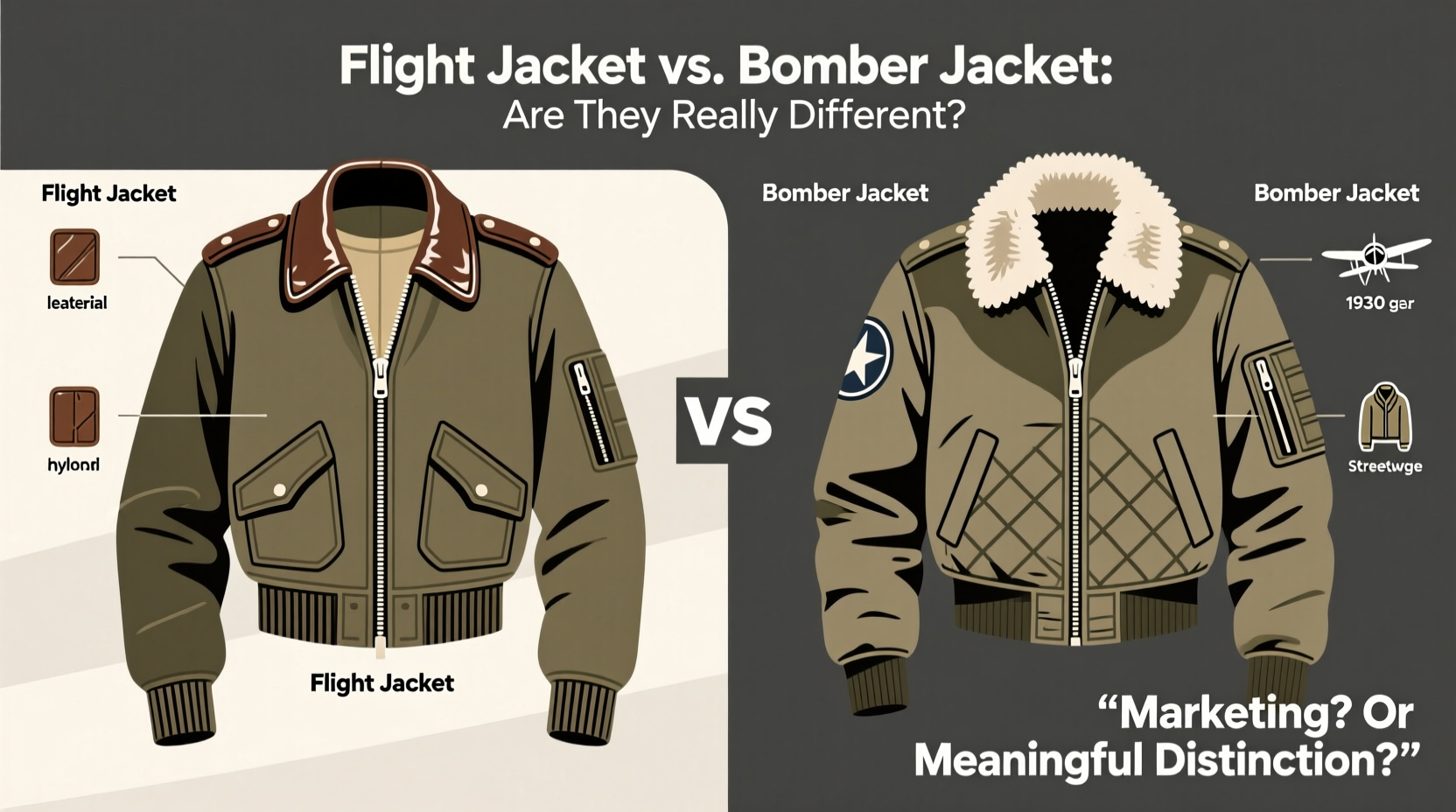
At first glance, a flight jacket and a bomber jacket look nearly identical—short silhouette, ribbed cuffs, zippered front, and rugged leather or nylon construction. Both have become staples in men’s fashion, worn from city streets to red carpets. But dig deeper, and you’ll find a nuanced story of military origin, functional evolution, and branding influence. Are they truly different garments, or is the distinction mostly a marketing strategy capitalizing on nostalgia and style trends?
The answer lies somewhere in between. While the terms are often used interchangeably today, their roots tell separate stories shaped by aviation history, material innovation, and cultural reinterpretation.
A Brief History: From Cockpit to Catwalk
The origins of both jackets trace back to early 20th-century military aviation. As planes evolved from open-cockpit biplanes to high-altitude jet fighters, so too did the gear required to protect pilots.
The earliest version—the flight jacket—emerged during World War I. These were heavy sheepskin-lined leather coats designed to keep pilots warm at freezing altitudes with no cabin heating. Known as “A-1” jackets, they featured simple shank buttons, wide collars, and minimal hardware.
By World War II, the U.S. Army Air Forces introduced standardized designs under the A-series (A-2) and later the B-series. The **B-3**, with its massive shearling collar and thick horsehide body, was built for bomber crews flying over Europe. It wasn’t until the 1940s and 1950s that synthetic materials and streamlined cuts led to the development of what we now call the modern bomber jacket.
The pivotal shift came with the **MA-1**, introduced in the 1950s for jet pilots. Made from sage-green nylon, it was lightweight, water-resistant, and reversible (with an orange lining for visibility during emergencies). This marked the birth of the true \"bomber\" aesthetic—functional, sleek, and suited for supersonic speeds.
“Aviation gear was never about style—it was about survival. Every zipper, pocket, and seam had a purpose.” — Colonel James Reed (Ret.), U.S. Air Force Historian
Design Differences: Function vs. Fashion
While modern versions blur the lines, original specifications reveal key distinctions:
| Feature | Flight Jacket (Classic) | Bomber Jacket (Modern) |
|---|---|---|
| Material | Heavy leather (horsehide, goatskin) | Nylon or polyester shell |
| Lining | Shearling or wool (natural insulation) | Synthetic padding or quilted nylon |
| Closure | Button-front or zipper with storm flap | Zipped front, no flap |
| Cuffs & Hem | Ribbed knit or wool | Elasticized ribbing |
| Color | Brown, black, tan | Olive green, navy, black, camouflage |
| Era | WWI–1940s | 1950s–present |
Today’s market, however, rarely adheres strictly to these categories. A “bomber” sold in a department store might be made of lambskin with a satin lining—more fashion than function. Similarly, a “flight jacket” label may simply denote a vintage-inspired leather jacket without any actual aviation heritage.
Marketing Influence: How Labels Shape Perception
Brands play a significant role in blurring the line. The term “bomber jacket” has become synonymous with urban cool—a symbol of rebellion, masculinity, and effortless style. Designers leverage this image, often using “bomber” to describe any short, zip-up jacket with ribbed trims, regardless of material.
In contrast, “flight jacket” evokes tradition, craftsmanship, and historical authenticity. Luxury brands like Schott, Belstaff, and Alpha Industries use the term to appeal to purists and collectors who value heritage.
This isn’t accidental. Marketing teams know that language shapes desire. Calling a jacket a “vintage aviator flight jacket” sounds more exclusive than “nylon bomber,” even if both refer to the same MA-1 design.
As fashion cycles evolve, the terminology shifts. In the 1980s, punk and streetwear subcultures adopted surplus military bombers. In the 2000s, high-fashion runways reimagined them in silk and embroidery. Today, sustainability trends have revived interest in genuine leather flight jackets made to last decades—not seasons.
Real-World Example: Choosing the Right Jacket
Consider Mark, a 32-year-old architect living in Chicago. He wanted a durable, stylish jacket for winter commutes. He visited three stores:
- Store A offered a “bomber jacket” made of polyester with a cotton lining—$89.
- Store B sold a “premium flight jacket” in lambskin with a quilted interior—$320.
- Store C carried an authentic Alpha Industries MA-1 nylon bomber—$140.
Mark chose Store B, drawn by the word “premium” and the soft leather. But after one snowy week, the jacket absorbed moisture and began to stiffen. He realized too late that lambskin, while luxurious, isn’t weather-resistant. Meanwhile, the MA-1 at Store C was engineered for harsh conditions—lightweight, water-repellent, and breathable.
His mistake? Trusting labels over function. The term “flight jacket” sounded more serious, but the real performance came from the bomber’s technical design.
How to Choose: A Practical Checklist
Before buying, ask yourself these questions to cut through marketing noise:
- What’s my climate? Cold and wet? Opt for water-resistant nylon (true bomber). Dry and frigid? Leather flight jackets with shearling work better.
- Do I need durability? Genuine flight jackets use heavy-duty zippers and reinforced stitching. Check seams and closures.
- Is warmth a priority? Older flight jackets excel here. Modern bombers focus on wind protection, not deep cold.
- Am I buying for style or function? If it’s fashion, any well-cut bomber will do. For real utility, stick to military-spec designs.
- Does the brand have heritage? Companies like Alpha Industries, Schott NYC, or Buzz Rickson produce historically accurate reproductions.
Frequently Asked Questions
Can a bomber jacket be made of leather?
Yes, but it’s a fashion adaptation. Traditional bombers are nylon. Leather versions are stylistic hybrids—often called “leather bombers”—but they originate from flight jacket designs like the A-2.
Is the MA-1 a flight jacket or a bomber?
Technically, it’s a bomber jacket. Designed for jet pilots, the MA-1 replaced heavier leather flight jackets. Its nylon shell, zip closure, and ribbed cuffs define the modern bomber category.
Why do some brands charge more for “flight” jackets?
Premium pricing reflects materials (e.g., horsehide vs. synthetic), craftsmanship, and brand legacy. A Schott Perfecto 618 flight jacket costs more because it’s hand-stitched and built to last generations.
Conclusion: Beyond the Label
The difference between a flight jacket and a bomber jacket was once a matter of life and death—dictated by altitude, speed, and survival. Today, the distinction is often cosmetic, shaped more by branding than function. Yet, understanding the history empowers smarter choices.
If you want authenticity, study the specs: material, era, and military designation. If you want style, embrace the bomber’s versatility. But don’t let marketing jargon fool you—real quality lies in construction, not just the name tag.




 浙公网安备
33010002000092号
浙公网安备
33010002000092号 浙B2-20120091-4
Comments
No comments yet. Why don't you start the discussion?