
If you’ve ever stood in a home goods store, squinting at a tag that calls one item a “floor mat” and another a “throw rug,” wondering if they’re secretly the same thing—welcome to the club. At first glance, the distinction can feel like marketing semantics. Both sit on the floor. Both add texture. Both can be rolled up and moved. But dig a little deeper, and you’ll find functional, material, and situational differences that matter—especially when choosing for durability, safety, or design cohesion.
The confusion isn’t unfounded. Retailers often use the terms interchangeably. Online listings label small cotton weaves as mats in one store and rugs in another. Yet interior designers, architects, and flooring professionals treat them as separate categories with distinct purposes. So let’s clarify: Are floor mats and throw rugs different, or is it all just semantics?
Defining the Terms: What Exactly Is a Floor Mat?
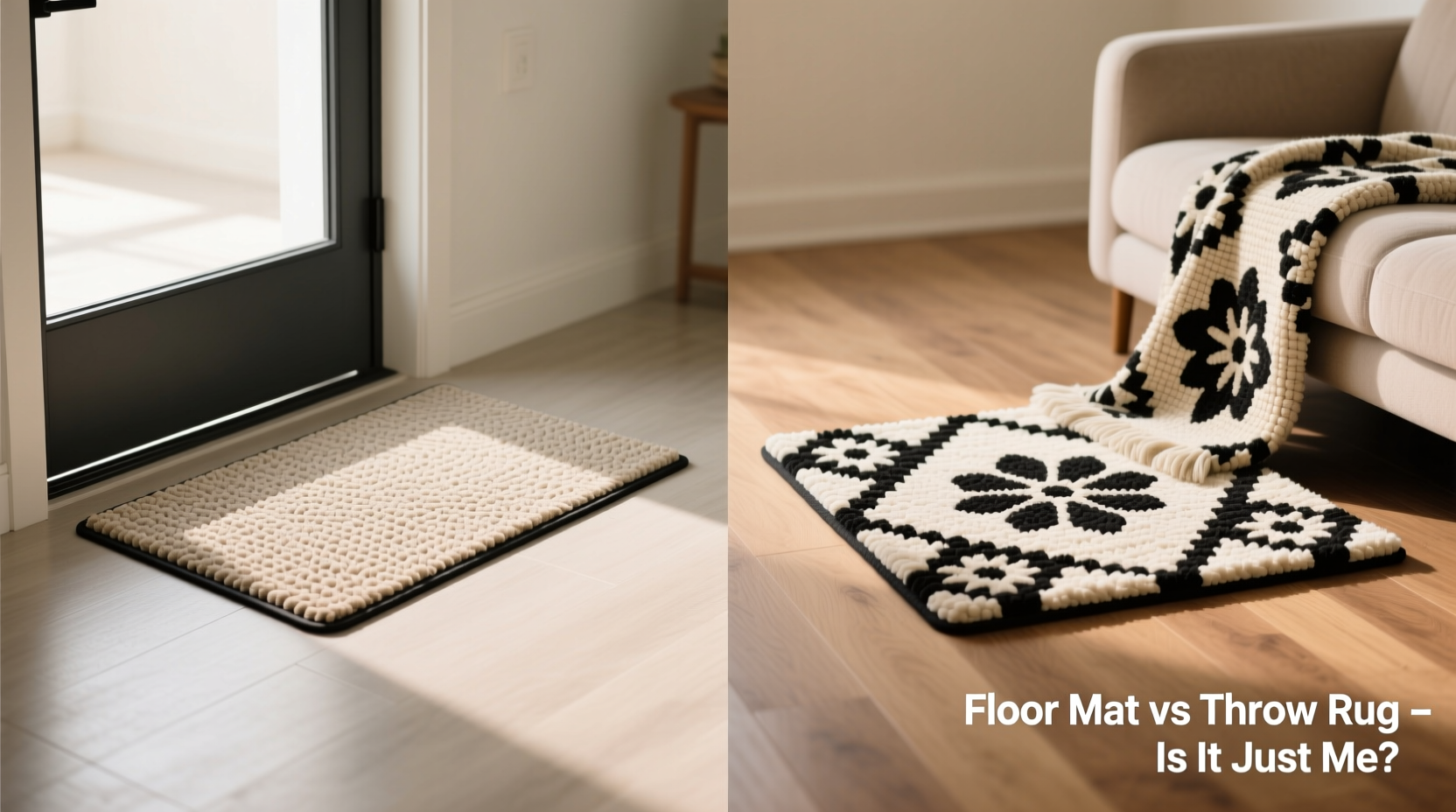
A floor mat is typically designed with utility in mind. Its primary function is protective or transitional. Think of the doormat by your front entrance, the bath mat beside your shower, or the small rectangle under your office chair. Mats are built to endure specific conditions: moisture, dirt, heavy foot traffic, or abrasion from shoes.
Mats are commonly made from materials like rubber, coir, polypropylene, or memory foam—substances chosen for water resistance, grip, or cushioning. They tend to be thinner than rugs, often less than half an inch thick, and are rarely considered decorative centerpieces. Instead, they serve as functional layers that protect flooring, reduce slipping, or trap debris before it spreads into living spaces.
What Makes a Throw Rug Different?
A throw rug, also known as an area rug or accent rug, is primarily decorative. It’s used to define space, add warmth, or introduce color and pattern into a room. Throw rugs range widely in size—from 2x3 feet to 8x10 feet—and are often placed over hardwood, tile, or carpet to create visual interest or comfort underfoot.
Materials vary significantly: wool, cotton, jute, silk, and synthetic blends are common. Unlike mats, throw rugs are usually thicker, softer, and more textured. They’re not intended for constant exposure to moisture or heavy abrasion. You won’t typically see a Persian-style throw rug at a building entrance—it would degrade quickly. Instead, they belong in living rooms, bedrooms, or dining areas where aesthetics and comfort take priority.
“Rugs are the jewelry of the floor—they complete the look of a room. Mats are the footwear: practical, protective, and often hidden in plain sight.” — Lena Patel, Interior Designer & Founder of Space & Grain
Key Differences: A Practical Comparison
To understand when the difference matters, consider these five core factors:
| Feature | Floor Mat | Throw Rug |
|---|---|---|
| Primary Purpose | Protection, hygiene, safety | Decoration, comfort, acoustics |
| Material | Rubber, coir, microfiber, vinyl | Wool, cotton, jute, synthetics |
| Thickness | Thin (under 0.5\") | Medium to thick (0.5\"–1.5\") |
| Placement | Entryways, bathrooms, kitchens, offices | Living rooms, bedrooms, sitting areas |
| Cleaning Needs | High frequency, spot cleaning, hose-down capable | Less frequent, vacuuming, professional cleaning |
The table shows that while overlap exists—especially with indoor-outdoor rugs or washable cotton mats—the intent behind each product shapes its construction and ideal use.
When the Difference Actually Matters
In casual conversation, calling a small rug a “mat” or vice versa won’t cause issues. But in real-world applications, confusing the two can lead to premature wear, safety hazards, or design missteps.
For example, placing a wool throw rug at a front door in a rainy climate invites mold, staining, and rapid deterioration. Conversely, using a stiff coir mat in a bedroom defeats the purpose of softness and warmth you likely want in a sleeping area.
One common mistake is assuming all small rugs are interchangeable. A 2x3 cotton dhurrie might look great in a hallway, but without a non-slip pad underneath, it becomes a tripping hazard—something a properly designed floor mat would prevent with built-in grip.
Mini Case Study: The Overlooked Entryway
Sarah, a homeowner in Seattle, replaced her front door coir mat every six months, frustrated by how quickly it frayed and mildewed. She switched to a flat-woven cotton “throw rug” because she liked the boho look. Within three weeks, the fibers began breaking down from constant rain and muddy boots. After consulting a designer, she learned that aesthetic appeal shouldn’t override function in high-moisture zones. She returned to a layered approach: a durable rubber-backed outdoor mat to catch debris, topped with a smaller decorative indoor mat that she rotates seasonally. Now, both longevity and style are achieved.
Choosing the Right One: A Step-by-Step Guide
Follow this sequence to determine whether you need a floor mat, a throw rug, or both:
- Assess the location. Is it near a door, sink, or shower? High moisture or dirt exposure means a mat is better.
- Consider foot traffic. Heavy use (e.g., entry hall, kitchen) favors durable, easy-to-clean mats.
- Determine your goal. Do you want to trap dirt, add comfort, or enhance decor? Function points to mats; aesthetics to rugs.
- Check flooring type. Hard surfaces benefit from rugs for warmth; mats protect them from scratches.
- Evaluate maintenance needs. Can you clean it weekly? If not, opt for low-maintenance mats with stain resistance.
Blurred Lines: Where Mats and Rugs Overlap
Modern design has blurred the boundary. Washable cotton rugs, indoor-outdoor synthetics, and minimalist rubber mats with artistic patterns now bridge the gap. Brands like Ruggable and Safavieh offer “rug-like” mats that are machine-washable, stylish, and durable—effectively functioning as both.
This convergence explains why the average shopper might feel confused. A 3x5 polyester rug labeled “perfect for kitchens” behaves more like a mat. Similarly, some luxury bathroom mats mimic the plushness of throw rugs. In these cases, the distinction shifts from naming to performance: what the product does, not what it’s called.
FAQ: Common Questions Answered
Can I use a throw rug as a floor mat?
You can, but not wisely in high-traffic or wet areas. Most throw rugs lack the durability and moisture resistance needed for entryways or bathrooms. Without proper backing, they may slip or harbor mold. If you insist on using one, pair it with a non-slip underlay and commit to frequent cleaning.
Are floor mats safe on hardwood floors?
Yes, but only if they have breathable, non-staining backings. Rubber or vinyl mats can trap moisture and damage wood over time. Look for mats labeled “floor-safe” or “non-slip without residue.” Natural fiber mats like coir are generally safer but should be kept dry.
How do I clean a floor mat versus a throw rug?
Floor mats often tolerate aggressive cleaning: hosing down, scrubbing, or machine washing (if fabric). Throw rugs require gentler care—regular vacuuming, spot treatment, and occasional professional steam cleaning. Always check manufacturer labels, as natural fibers like wool can shrink or discolor if mishandled.
Final Checklist Before You Buy
- ☑️ Identify the room and its primary use (entry, bath, living space)
- ☑️ Measure the area to ensure proper fit
- ☑️ Check for non-slip backing or compatibility with rug pads
- ☑️ Confirm material suitability (water-resistant for wet zones, soft for lounging)
- ☑️ Consider ease of cleaning and long-term maintenance
- ☑️ Match style to existing decor—but don’t prioritize looks over safety
Conclusion: It’s Not Just You—But the Difference Matters When It Counts
So, is there barely a difference between a floor mat and a throw rug? In casual settings, maybe not. Colloquially, the terms get swapped all the time. But functionally, the distinction is real and consequential. A mat protects. A rug beautifies. Confusing the two might save a few dollars upfront but cost more in replacements, hazards, or disappointment.
The best approach? Think like a designer: layer intention with aesthetics. Use mats where performance is non-negotiable. Bring in throw rugs where comfort and style elevate the space. And when in doubt, choose based on environment, not just appearance.




 浙公网安备
33010002000092号
浙公网安备
33010002000092号 浙B2-20120091-4
Comments
No comments yet. Why don't you start the discussion?