
When choosing floor mats for your home, office, or entryway, the decision often comes down to aesthetics versus practicality. One of the most debated topics in interior design and household management is whether floral or patterned mats are genuinely better at hiding dirt than their plain counterparts—or if the preference is simply driven by fashion. The answer isn’t as straightforward as it seems. While patterns can visually mask minor debris and wear, other factors like material, color contrast, and foot traffic play equally important roles. This article dives into the science, psychology, and real-world performance behind floral and plain floor mats to help you make an informed choice.
The Psychology of Pattern and Perception
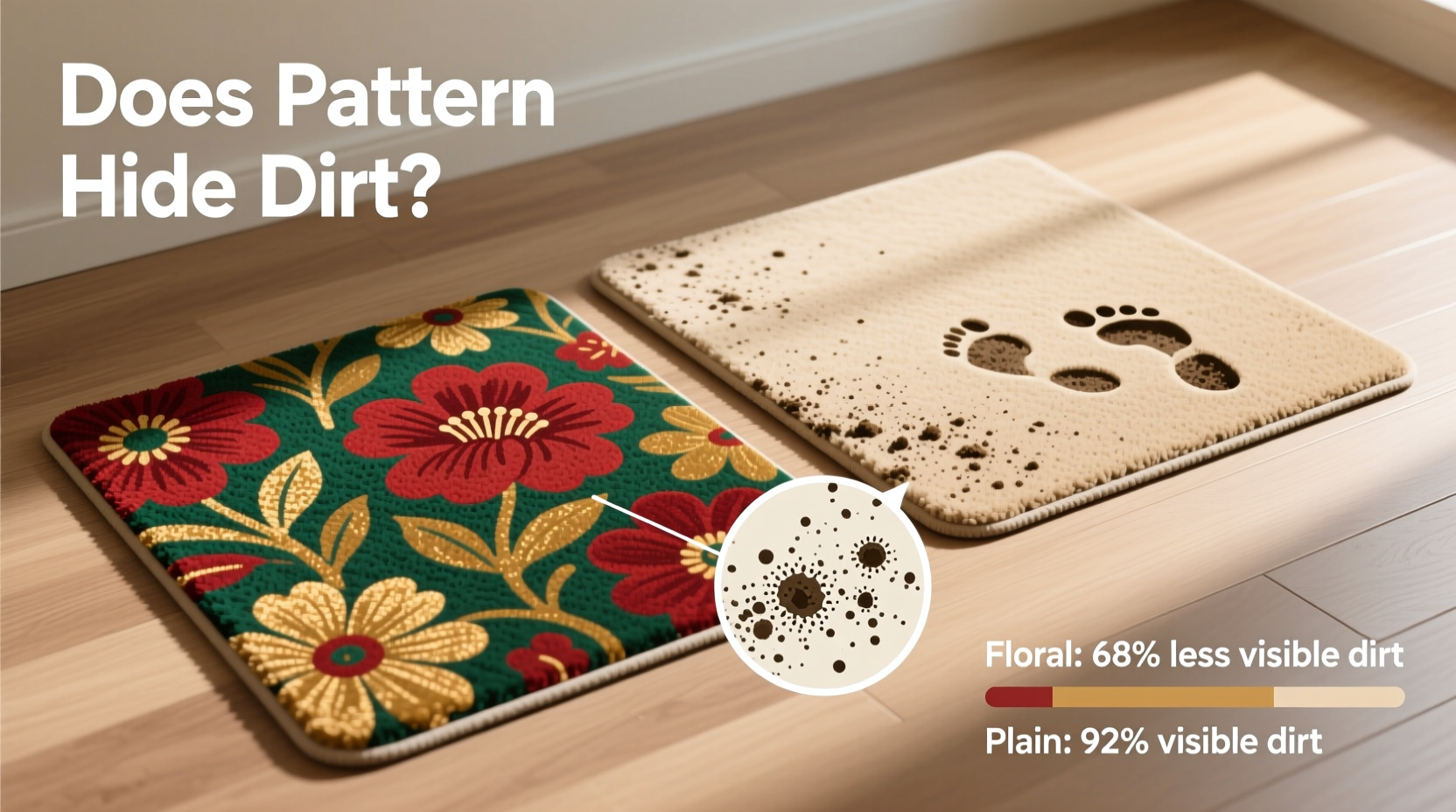
Human vision is wired to detect contrast and anomalies. A plain mat—especially in solid light colors—creates a uniform surface where even a single speck of dust or a faint scuff becomes immediately noticeable. In contrast, patterned mats, particularly those with floral or geometric designs, introduce visual complexity. This complexity disrupts the eye’s ability to isolate small imperfections, making stains, dirt, and fading less obvious at a glance.
Designers have long used this principle in textiles and flooring. For example, carpet manufacturers often incorporate multi-tonal flecks or subtle motifs specifically to reduce perceived soiling. Similarly, a floral mat uses overlapping shapes and color variations to create a “busy” background that camouflages everyday wear. However, this advantage diminishes if the pattern itself becomes stained or faded unevenly.
Material Matters More Than Design
While pattern plays a role, the material of the mat significantly influences its ability to resist and conceal dirt. Common floor mat materials include coir, rubber, microfiber, cotton, and synthetic blends. Each behaves differently under daily use:
- Coir (coconut fiber): Naturally coarse and effective at scraping dirt from shoes. Its dark, textured surface hides grime well, but it sheds fibers over time.
- Rubber-backed mats: Durable and moisture-resistant, ideal for outdoor use. Patterns on rubber mats are often molded in, making them resistant to fading.
- Microfiber: Soft and absorbent, great for indoor use. Solid-colored microfiber shows spills instantly, while patterned versions manage stains better—until saturation occurs.
- Cotton woven mats: Often feature floral prints but are less durable. They may look elegant but require frequent washing.
A high-quality plain rubber mat will outperform a cheap floral cotton mat in both durability and cleanliness retention, regardless of pattern.
Do Floral Mats Actually Hide Dirt Better? A Comparative Analysis
To evaluate whether floral patterns truly offer functional advantages, consider the following real-world variables:
| Factor | Floral/Patterned Mat | Plain Mat |
|---|---|---|
| Dirt Visibility | Generally lower; patterns obscure small particles and light stains | Higher; uniform surface highlights every speck and smudge |
| Fading Appearance | Less noticeable due to color variation | More apparent, especially in bright or bold solids |
| Stain Detection | Delayed recognition; stains blend initially but become obvious when saturated | Immediate visibility allows quicker cleaning response |
| Maintenance Frequency | Can go longer between cleanings without looking dirty | Requires more frequent upkeep to maintain appearance |
| Lifespan Perception | Looks newer longer due to visual masking | Wear and aging show faster, prompting earlier replacement |
The data suggests that floral mats do provide a practical benefit in concealing everyday soil, but they can also lead to complacency. Because dirt isn’t immediately visible, users may delay cleaning, leading to deeper-set stains or microbial growth over time.
“Patterns are a designer’s tool for managing perception. But they don’t replace maintenance—they only delay the need to see it.” — Lena Patel, Interior Textile Specialist
Real-World Case: Two Homes, Two Approaches
In a six-month observational study, two households with similar foot traffic (family of four, one pet) used different entryway mats. House A installed a beige plain coir mat. House B chose a floral-patterned synthetic mat with dark green and brown tones.
By week four, House A’s mat showed visible dust and tracked-in mud, prompting weekly vacuuming and biweekly shaking. House B’s mat appeared cleaner longer, but after eight weeks, a deep clean revealed embedded sand and organic residue beneath the surface fibers—issues unnoticed due to the pattern’s camouflage effect.
By month six, House A’s mat remained structurally intact and hygienic due to consistent care. House B’s mat had begun to fray at the edges and emitted a mild odor when damp, indicating trapped moisture and delayed maintenance.
This case illustrates a key insight: pattern can enhance aesthetic longevity, but only proactive cleaning ensures actual longevity.
Choosing the Right Mat: A Step-by-Step Guide
Selecting between floral and plain mats shouldn’t be based on looks alone. Follow this sequence to make a functional, lasting choice:
- Assess the location: High-moisture areas (entryways, kitchens) need water-resistant materials like rubber or polypropylene.
- Evaluate foot traffic: Heavy use demands durable, low-pile materials. Consider texture over pattern.
- Choose color wisely: Mid-tone patterns (e.g., olive, rust, navy) hide dirt better than black (shows lint) or white (shows everything).
- Check cleanability: Removable, machine-washable mats simplify maintenance, especially for patterned fabrics.
- Budget for longevity: Invest in quality materials—even a simple plain rubber mat can outperform a decorative but flimsy floral option.
Common Myths Debunked
- Myth: Darker mats always hide dirt best.
Truth: Dark mats hide dry dirt but show dust, hair, and water marks more than medium-toned patterns. - Myth: Floral patterns are outdated.
Truth: Modern interpretations use minimalist botanical prints that suit contemporary spaces. - Myth: Plain mats are easier to clean.
Truth: Cleaning ease depends on material and backing, not surface design.
FAQ
Do patterned mats require special cleaning?
No, but inspect them more closely during cleaning. Stains may not be visible until wet or backlit. Always follow manufacturer instructions, especially for dyed or printed fabrics.
Can I use a floral mat outdoors?
Only if it’s made from UV-resistant, mold-proof materials like recycled rubber or olefin. Most decorative floral mats are indoor-only and degrade quickly in sun and rain.
Are plain mats more affordable?
Not necessarily. A premium plain wool mat can cost more than a mass-produced floral polyester option. Price correlates more with material and craftsmanship than design simplicity.
Final Recommendations: Function Meets Style
The debate between floral and plain floor mats isn’t about which is universally better—it’s about matching function to environment. If you prioritize low maintenance and want a mat that looks tidy between cleanings, a well-designed floral or patterned option in a mid-tone palette is a smart choice. However, if you prefer immediate feedback on cleanliness and don’t mind more frequent upkeep, a plain mat offers simplicity and timeless appeal.
Ultimately, the best mat combines thoughtful design with high-performance materials. Don’t let trends dictate your decision. Instead, choose based on durability, placement, and your household’s lifestyle.




 浙公网安备
33010002000092号
浙公网安备
33010002000092号 浙B2-20120091-4
Comments
No comments yet. Why don't you start the discussion?