
For years, foldable phones were dismissed as fragile novelties—innovative in concept but impractical for daily use. The biggest concern? Screen durability. Early models creased easily, collected dust under the display, and failed under modest pressure. Fast forward to 2024, and the landscape has shifted dramatically. Manufacturers like Samsung, Google, and Motorola have poured resources into engineering more resilient folding mechanisms and advanced protective layers. But how do they truly stack up against traditional flagships like the iPhone 15 Pro or Galaxy S24 Ultra? Is screen durability in foldables now on par—or even ahead—of their rigid counterparts?
The answer isn’t a simple yes or no. It depends on usage patterns, build quality, and evolving materials science. This article examines the current state of foldable screen resilience, compares it with standard flagships, and evaluates whether the gap has closed for good.
Evolution of Foldable Display Technology
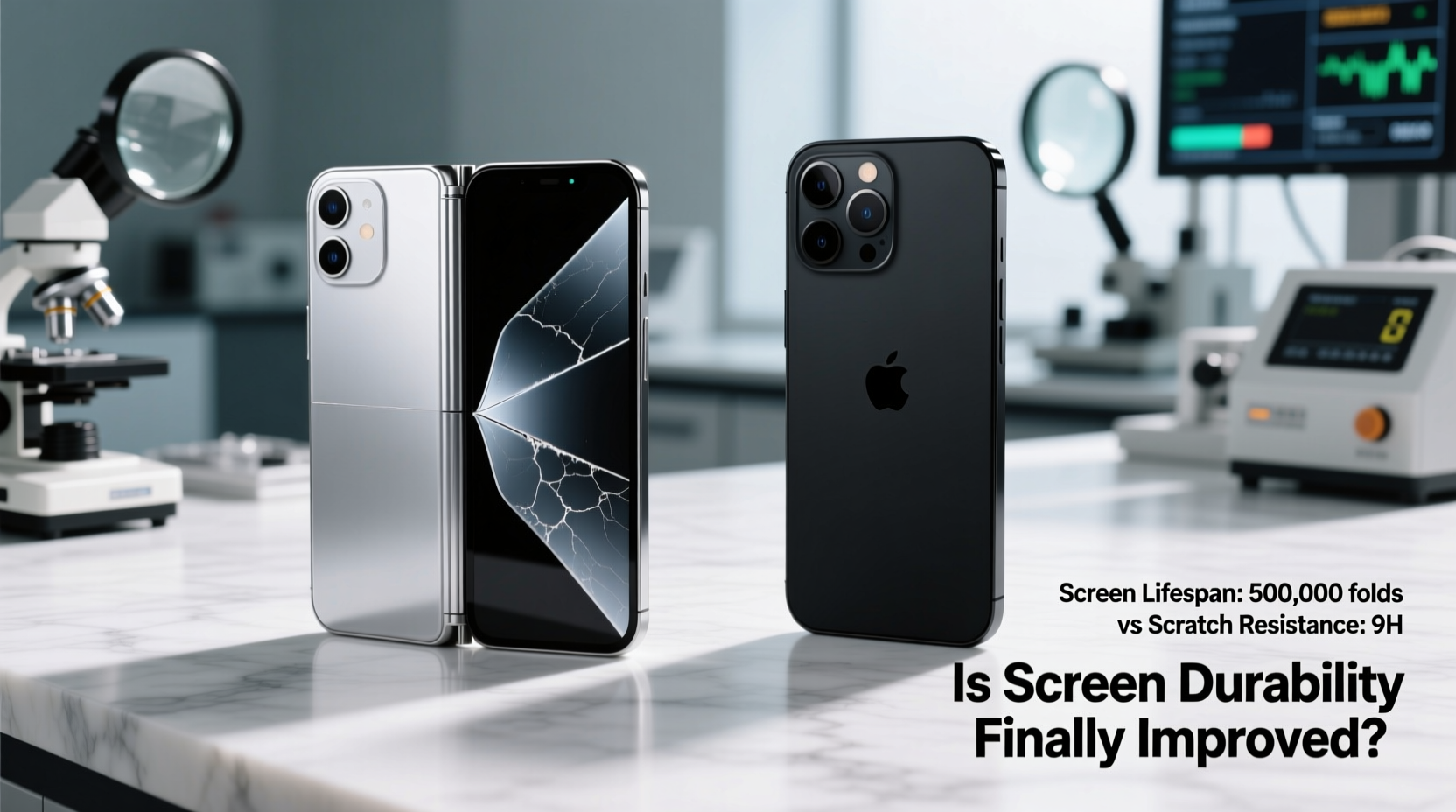
Foldable phones began as experimental devices, with the first mainstream release—the Samsung Galaxy Fold in 2019—marred by widespread screen failures during review periods. Critics cited poor hinge design, inadequate sealing, and a lack of scratch resistance. The ultra-thin polymer layer used instead of glass was particularly vulnerable.
Since then, manufacturers have made significant strides. Key advancements include:
- Ultra-Thin Glass (UTG): Replacing plastic overlays, UTG offers better rigidity and scratch resistance while maintaining flexibility.
- Improved Hinge Mechanisms: Sealed, multi-angle hinges reduce dust ingress and support smoother folding with less stress on the display.
- Water Resistance Ratings: Some models now carry IPX8 ratings, previously unthinkable for foldables.
- Dust Protection: Enhanced barriers prevent particulates from entering the crease zone, a major cause of pixel damage.
Samsung’s latest Galaxy Z Fold 5 and Z Flip 5 use Armor Aluminum frames and Gorilla Glass Victus 2 on outer displays, while the inner foldable screen benefits from an enhanced UTG layer developed with Schott. Meanwhile, Google’s Pixel Fold employs a custom shatter-resistant coating over its flexible OLED, and Motorola’s Razr+ features a \"water-repellent nano-coating\" designed to minimize friction at the fold line.
“Two years ago, recommending a foldable for heavy users was risky. Today, with proper care, they can last just as long as conventional phones.” — Dr. Lena Park, Senior Materials Engineer at DisplayMate Technologies
Durability Showdown: Foldable vs Standard Flagship
To assess whether foldables have caught up, we must examine multiple dimensions of screen durability: scratch resistance, impact resilience, long-term crease development, and environmental protection.
| Factor | Foldable Phones (2023–2024) | Standard Flagships (2023–2024) |
|---|---|---|
| Scratch Resistance | Moderate (inner screen); High (outer screen with Gorilla Glass) | High (Gorilla Glass Victus 2 or Ceramic Shield) |
| Impact Resistance | Lower (flexible layer prone to cracking if bent sharply) | Higher (rigid glass distributes force better) |
| Creative Development | Possible over time, though reduced with UTG | N/A (flat screens don’t crease) |
| Dust & Debris Protection | Improved (IPX8 on some models, sealed hinges) | Excellent (IP68 common across flagships) |
| Lifespan (Display Cycles) | Rated for 200,000+ folds (~5 years of daily use) | No mechanical wear points |
While modern foldables are engineered for longevity, their inner screens remain inherently more delicate than the tempered glass found on standard smartphones. However, real-world data suggests that most users aren't subjecting devices to extreme conditions—and under normal handling, failure rates have dropped significantly.
Real-World Performance: A User Case Study
Take Mark T., a digital marketing consultant based in Austin, who switched from an iPhone 14 Pro to a Galaxy Z Fold 5 in early 2023. His work involves constant multitasking, frequent travel, and reliance on video calls—all scenarios where the large foldable display offered clear advantages.
After 14 months of near-daily use—including being carried in bags alongside laptops and chargers, occasional drops on carpeted floors, and exposure to high humidity during business trips—Mark reports only minor surface scuffs on the outer glass. The inner screen shows no visible creasing beyond the intended fold line, and no functional issues have arisen.
“I was nervous at first,” he admits. “But using the official case and avoiding direct finger contact with the inner screen when possible made a big difference. Honestly, I’ve had worse luck with shattered iPhone screens in the past.”
This experience aligns with broader trends observed in consumer reports and repair shop data. While drop damage remains riskier for foldables due to potential hinge misalignment or internal component stress, everyday wear-and-tear is increasingly manageable.
How to Maximize Foldable Screen Longevity
Even with technological improvements, user behavior plays a critical role in determining device lifespan. Here’s a practical checklist to protect your investment:
- Use Manufacturer-Approved Accessories: Third-party cases may interfere with the folding mechanism or fail to shield the screen properly.
- Keep It Clean: Use a soft microfiber cloth to wipe the screen weekly. Avoid liquids or abrasive cleaners.
- Let It Breathe: Don’t force the phone open or closed; let the hinge guide the motion smoothly.
- Avoid Extreme Temperatures: Heat can degrade adhesive layers beneath the display; cold makes polymers brittle.
- Don’t Overstuff Pockets or Bags: Pressure from hard objects increases the chance of micro-scratches or panel stress.
- Update Firmware Regularly: Software updates often include hinge calibration improvements and display optimization.
“Most foldable screen failures I see in repairs stem from improper cleaning or using non-certified screen protectors that trap debris.” — Carlos Mendez, Owner of TechFix Pro, New York City
Are Standard Flagships Still More Durable?
In raw structural terms, yes—standard smartphones still hold an edge. Their monolithic glass panels are optimized for drop survival and scratch resistance through years of refinement. Apple’s Ceramic Shield, Corning’s Gorilla Glass series, and reinforced aluminum frames make today’s flagships remarkably tough.
However, this advantage comes with trade-offs. Traditional phones offer limited screen real estate in compact form factors, whereas foldables deliver tablet-like experiences without sacrificing portability. And crucially, the durability gap has narrowed enough that for many users, the benefits outweigh the risks.
Moreover, insurance and warranty coverage have adapted. Samsung Care+, for example, now covers accidental damage on foldables for a fee—something unthinkable five years ago. Similarly, carriers like Verizon and AT&T treat foldables like any other premium device for replacement purposes.
The shift reflects growing confidence—not just from consumers, but from the companies backing these products.
FAQ: Common Questions About Foldable Durability
Can I use my finger directly on the inner screen?
Yes, but gently. Modern foldables are designed for touch input, but fingernails or rings can cause micro-scratches over time. Consider using a stylus for precision tasks.
Will the crease get worse over time?
The visible crease is intentional and built into the design. With current UTG technology, there is minimal deepening after the initial settling period (first few hundred folds). It does not affect usability or image quality.
Is it safe to leave a foldable in a hot car?
No. Temperatures above 35°C (95°F) can compromise the adhesive between display layers and accelerate aging of the polymer substrate. Always store in shaded, temperature-controlled environments.
Final Verdict: Durability Has Improved—But Smart Habits Matter
The question isn’t whether foldable phones are now as durable as standard flagships in every way—they’re not. Rigid glass still wins in drop tests and scratch resistance. But the more relevant metric is real-world reliability, and here, foldables have crossed a threshold.
Thanks to ultra-thin glass, better sealing, stronger hinges, and smarter materials, today’s foldable screens can withstand typical daily use just as well as conventional smartphones—if treated with reasonable care. For professionals needing larger screens, travelers seeking versatility, or tech enthusiasts valuing innovation, foldables are no longer a gamble.
They represent a mature category where durability concerns have been addressed not with hype, but with measurable engineering progress. The era of foldables as fragile curiosities is over. They are now viable, long-term alternatives to standard flagships.




 浙公网安备
33010002000092号
浙公网安备
33010002000092号 浙B2-20120091-4
Comments
No comments yet. Why don't you start the discussion?