
Foldable phones have moved from futuristic concept to mainstream reality in just a few years. Once seen as experimental gadgets with questionable longevity, devices like the Samsung Galaxy Z Fold and Flip series, Google Pixel Fold, and Motorola Razr+ now promise premium experiences in a compact, innovative form. But one question remains at the forefront of consumer minds: Are these devices truly durable enough for daily life? Or do their intricate hinges and flexible displays make them too fragile for real-world use?
The answer isn't simple. While early models raised legitimate concerns about screen creases, hinge wear, and water resistance, recent advancements suggest foldables are becoming more resilient. Yet, their durability still depends on design choices, user habits, and environmental exposure. Understanding the balance between innovation and practicality is essential before adopting a foldable phone as your primary device.
How Foldable Phones Have Evolved: From Novelty to Near-Maturity
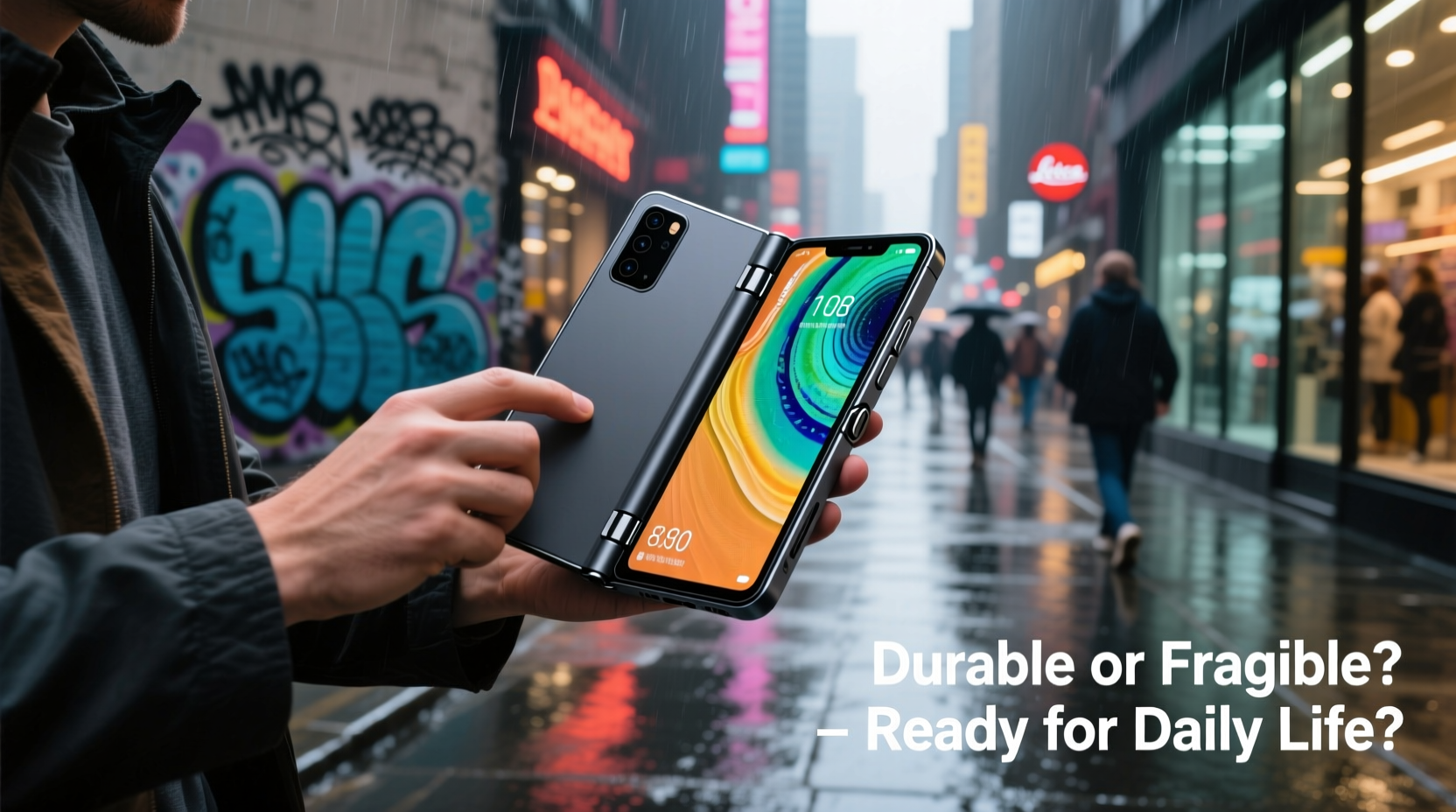
When Samsung launched the Galaxy Fold in 2019, it was met with both excitement and skepticism. Many units failed during early testing due to dust intrusion and screen damage. The exposed hinge and ultra-thin polymer display were vulnerable to scratches and misalignment. Critics labeled foldables as gimmicks—expensive, delicate, and impractical.
Fast forward to 2024, and the landscape has changed dramatically. Manufacturers have invested heavily in materials science and mechanical engineering. Samsung’s Ultra-Thin Glass (UTG) now protects the inner display, offering better scratch resistance and a glass-like feel. Hinges are sealed against dust and debris, with some models achieving IPX8 water resistance. Motorola’s second-gen Razr uses a “septum” design to minimize the screen gap when closed, reducing the risk of foreign particles entering.
Google’s Pixel Fold introduced reinforced corners and dual-layer protection on its main display. Even pricing has shifted—while still premium, newer models like the OnePlus Open offer competitive specs at lower price points, signaling confidence in long-term viability.
“Foldable phones have crossed a threshold. They’re no longer prototypes; they’re products built for real users with real lifestyles.” — Dr. Lin Zhou, Senior Analyst at TechInsight Group
Durability by Design: What Makes a Foldable Phone Strong—or Weak?
Durability in foldable phones hinges on three core components: the display, the hinge mechanism, and ingress protection. Each plays a critical role in determining how well the device withstands drops, pressure, dust, and repeated folding.
The Display: Flexible but Still Vulnerable
Modern foldables use either polyimide film or UTG coated with protective layers. While UTG improves rigidity and reduces micro-scratches, it’s still not as hard as traditional Gorilla Glass. Most manufacturers apply proprietary coatings to resist oils and minor abrasions, but the central crease remains a weak point.
Independent lab tests show that after 200,000 folds—equivalent to five years of average use—most current models retain structural integrity. However, sharp objects, pocket lint, or improper cleaning can compromise the surface. Unlike rigid smartphones, you can’t simply slap on a standard screen protector; most foldable-compatible protectors are custom-cut and may affect touch sensitivity.
The Hinge: Engineering That Bears the Brunt
The hinge is arguably the most complex part of a foldable phone. It must allow smooth folding while maintaining alignment and protecting internal components. High-end models use multi-link mechanisms with metal arms and precision gears. Samsung’s Armor Aluminum frame and Motorola’s aerospace-grade aluminum hinge reduce deformation during impacts.
Still, hinges can accumulate dirt over time. Sand or grit in the joint may cause grinding noises or uneven folding. Some users report increased wobble after 12–18 months of heavy use, though this rarely affects functionality.
Ingress Protection: A Mixed Bag
Water and dust resistance remain inconsistent across brands. The Galaxy Z Fold 5 and Flip 5 boast IPX8 ratings, meaning they can survive submersion in freshwater up to 1.5 meters for 30 minutes. However, repeated folding degrades seals over time, so manufacturers often caution that resistance isn’t permanent.
In contrast, the Pixel Fold lacks any official IP rating, making it less suitable for humid environments or accidental spills. This variability means users must consider their lifestyle when choosing a model.
Real-World Performance: Are Foldables Surviving Daily Use?
Laboratory tests provide useful data, but real-life conditions are far less controlled. To assess true durability, we analyzed user reports, repair trends, and drop-test videos from independent reviewers.
A Mini Case Study: One Year with the Galaxy Z Flip 5
Sophie M., a digital marketer in Austin, Texas, replaced her iPhone 14 with a Galaxy Z Flip 5 in January 2023. She uses it heavily for social media, video calls, and travel planning. After 14 months, she reports only minor cosmetic wear: light scuffing on the hinge and a barely visible crease on the main display. No functional issues have arisen.
“I’ve dropped it twice—once on tile flooring and once on concrete. Both times, the cover screen cracked, but the main display stayed intact,” she said. “Replacing the front glass was $129 through Samsung Care+. I wouldn’t call it indestructible, but it’s held up better than I expected.”
Her experience reflects broader trends: outer screens are more prone to cracking than foldable panels, and most failures occur due to impact on unprotected edges.
Repairability: Cost vs. Convenience
Foldables are generally harder and more expensive to repair than traditional phones. Replacing a damaged inner display can cost $300–$500, depending on the model. Third-party repair shops often lack the tools or parts to handle complex disassembly.
Samsung and Motorola offer extended care plans that reduce out-of-warranty costs. For example, Samsung’s Premium Care covers two incidents of accidental damage for $149/year. Given the high replacement value, such plans may be worth considering for peace of mind.
| Model | Hinge Durability (Rated Folds) | Display Protection | Water Resistance | Repair Cost (Inner Display) |
|---|---|---|---|---|
| Samsung Galaxy Z Fold 5 | 200,000+ | UTG + PET Film | IPX8 | $450 |
| Motorola Razr+ (2023) | 100,000 | Polymer Layer | None | $375 |
| Google Pixel Fold | 300,000 | Dual-layer Composite | None | $500 |
| OnePlus Open | 200,000 | UTG + Anti-Scratch Coating | IP54 (Dust/Splash) | $400 |
Best Practices for Maximizing Foldable Phone Longevity
You don’t need to treat a foldable phone like museum exhibit, but mindful usage will extend its lifespan. Here’s a step-by-step guide to keeping your device in top condition.
- Use a manufacturer-approved case. Third-party cases may interfere with the folding mechanism or leave the edges exposed.
- Clean the screen weekly with a microfiber cloth. Never use household cleaners or abrasive wipes. For smudges, lightly dampen the cloth with distilled water.
- Keep the phone closed when not in use. This protects the main display from pocket debris and accidental presses.
- Avoid extreme temperatures. Heat can degrade the adhesive holding the display layers; cold makes polymers brittle.
- Don’t force the fold. Let the hinge guide the motion. Applying side pressure can misalign components.
- Enable auto-fold features if available. Some models detect when an object is blocking closure and stop automatically.
Frequently Asked Questions
Can I use my foldable phone in the rain?
If your model has an IPX8 rating (like the Galaxy Z Fold/Flip 5), brief exposure to rain is generally safe. However, avoid prolonged contact with water, especially around the hinge. Devices without ratings should be kept dry.
Will the screen crease get worse over time?
The crease is a natural result of the folding mechanism and does not indicate damage. While it may become slightly more visible after years of use, it typically doesn’t affect performance or touchscreen accuracy.
Are foldable phones suitable for kids or rugged environments?
Not ideal. Their complexity and higher repair costs make them less suited for rough handling. For demanding environments, a ruggedized traditional smartphone remains a safer choice.
Final Verdict: Ready for Everyday Use?
Foldable phones are no longer fragile novelties. Thanks to improvements in materials, sealing, and hinge design, today’s best models can endure the rigors of daily life—provided users treat them with reasonable care. They’re particularly well-suited for professionals who value multitasking, travelers seeking compact power, and tech enthusiasts drawn to cutting-edge design.
That said, they aren’t for everyone. If you frequently drop devices, work in dusty conditions, or prioritize low maintenance, a traditional flagship may still be the smarter pick. But if you appreciate innovation and are willing to adopt simple protective habits, modern foldables offer compelling durability and usability.
They’re not invincible—but then again, neither are conventional smartphones. With thoughtful use and proper protection, a foldable phone can last just as long as its slab-shaped counterparts.




 浙公网安备
33010002000092号
浙公网安备
33010002000092号 浙B2-20120091-4
Comments
No comments yet. Why don't you start the discussion?