
For urban dwellers navigating congested streets, limited parking, and unpredictable transit delays, cycling has emerged as a smart, sustainable alternative to cars and public transport. But when it comes to choosing the right bike, a critical decision arises: should you go with a folding bike or stick with a traditional regular bike? The answer isn’t one-size-fits-all. It depends on your lifestyle, storage space, commute length, and how you blend transportation modes. While both options have loyal followings, understanding their real-world trade-offs reveals which option delivers true practicality in city environments.
Portability and Storage: The Folding Bike’s Core Advantage
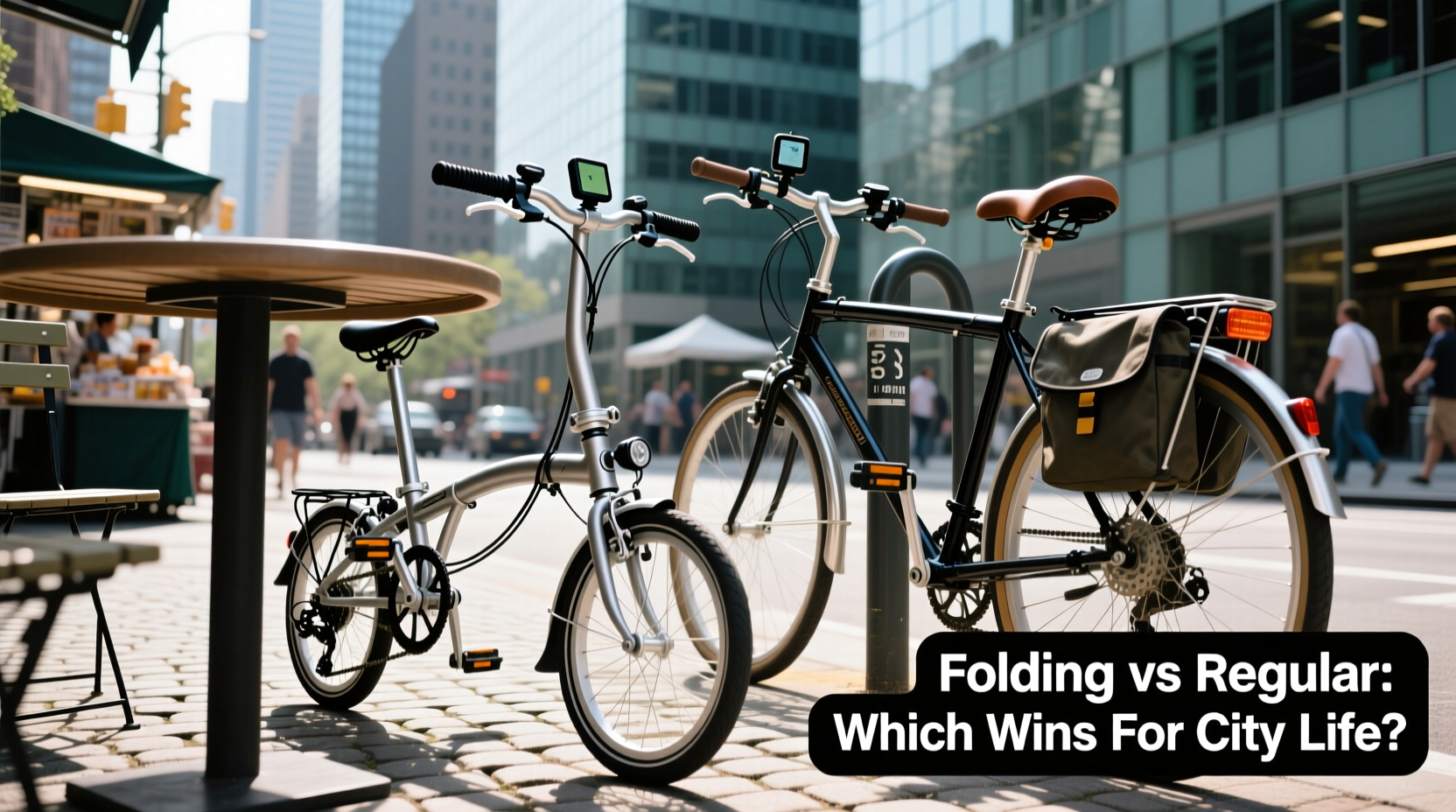
The most compelling argument for folding bikes lies in their unmatched portability. Weighing between 20–30 lbs (9–14 kg) and collapsing into a compact form, they can be carried onto buses, trains, elevators, and even stored under a desk or in a closet. For commuters who rely on multi-modal travel—biking to a train station, then riding the last mile to work—a folding bike eliminates the hassle of locking up outside or dealing with crowded bike racks.
In contrast, regular bikes—even compact city hybrids—are bulky. Even with quick-release wheels, disassembling a standard frame for indoor storage is impractical for most. Apartments in dense cities often lack secure bike storage, making theft a real concern. A folding bike sidesteps this by becoming a personal item you take with you, much like a briefcase.
Ride Quality and Comfort: Where Regular Bikes Shine
While folding bikes win on convenience, they often compromise on ride quality. Their smaller wheels (typically 16” or 20”) transmit more road vibration, resulting in a bumpier ride over uneven pavement. Tire options are also more limited, and many models use narrower tires, reducing shock absorption. On longer commutes (over 5 miles), this can lead to fatigue and discomfort.
Regular bikes, especially hybrid or commuter models, offer larger 700c wheels that roll smoothly over cracks, potholes, and curbs. They provide better stability at higher speeds and improved aerodynamics. Frame geometry is generally more ergonomic, allowing for a natural riding posture. Suspension forks, wider tires, and adjustable handlebars further enhance comfort—features rarely found on compact folding designs.
“Folding bikes are brilliant for short urban hops, but if you're covering more than 4–5 miles daily, ride quality becomes a major factor in long-term usability.” — David Lin, Urban Mobility Consultant
Cost and Value Comparison
One common misconception is that folding bikes are inherently cheaper. In reality, high-quality folding models from reputable brands like Brompton, Tern, or Dahon often cost significantly more than comparable regular commuter bikes. A premium folding bike can easily exceed $2,000, while a durable hybrid or city bike with similar components might range from $600–$1,000.
This price gap stems from engineering complexity—compact frames require reinforced joints, specialized hinges, and lightweight materials to maintain strength without sacrificing portability. Meanwhile, regular bikes benefit from economies of scale and simpler construction.
However, value isn’t just about upfront cost. Consider total ownership benefits: reduced theft risk (due to indoor storage), lower reliance on transit fares, and minimal maintenance from shorter, less strenuous rides. For some users, these factors justify the premium.
| Feature | Folding Bikes | Regular Bikes |
|---|---|---|
| Average Price Range | $800–$2,500+ | $400–$1,500 |
| Storage Flexibility | Excellent (indoor carry) | Limited (needs garage/locker) |
| Commute Distance Suitability | Best under 5 miles | Ideal for 3–15 miles |
| Maintenance Complexity | Moderate (hinges, folding mechanisms) | Standard (chain, brakes, gears) |
| Resale Value | High (especially Brompton) | Moderate |
Security and Theft Prevention
Bike theft remains a persistent issue in cities. According to a 2023 study by the National Institute of Justice, over 188,000 bicycles are reported stolen annually in the U.S. alone—with urban areas accounting for the majority. Traditional bikes left at outdoor racks, even with locks, are prime targets.
Folding bikes mitigate this risk through sheer unpredictability. Because they can be brought indoors, they’re far less vulnerable. You won’t need to invest in multiple heavy-duty locks or worry about leaving your bike unattended overnight. This peace of mind adds significant intangible value, especially in high-theft neighborhoods.
That said, not all folding bikes are immune. Lightweight models may attract thieves seeking easy resale, particularly if left unattended in semi-public spaces like café patios. Always treat any bike as a potential target—but having the option to remove it entirely from the equation is a game-changer.
Real-World Commuter Scenario: Sarah’s Daily Routine
Sarah lives in downtown Chicago and works in a high-rise office building 3.2 miles from her apartment. Her morning routine used to involve a 20-minute wait for the bus, followed by a 15-minute walk. After purchasing a Brompton M6L, she now cycles the full distance in 22 minutes, folds the bike in under 20 seconds, and carries it onto the elevator. She stores it beside her desk, eliminating the need for a locker or outdoor rack. Rainy days are handled with fenders and a quick wipe-down. Over six months, she’s saved over $300 in transit costs and reports feeling more energized at work.
Meanwhile, her colleague Mark bikes 8 miles each way on a Trek FX3 hybrid. He enjoys a smoother ride and greater speed but must park in a secured basement bike room, which requires key access and advance sign-up. He also carries a U-lock and chain, adding weight to his commute. On snowy winter mornings, he opts for public transit instead, losing the consistency Sarah maintains.
Their experiences highlight a key insight: practicality depends on context. For Sarah, the folding bike aligns perfectly with her environment and needs. For Mark, the regular bike supports a longer, faster commute but introduces logistical friction.
Choosing Based on Your Commute: A Step-by-Step Guide
Selecting the right bike shouldn’t be arbitrary. Follow this decision-making process to determine which option suits your situation best:
- Map your route. Use Google Maps or Strava to calculate exact distance and elevation. If it exceeds 6 miles one-way, prioritize ride comfort and efficiency—favoring a regular bike.
- Evaluate storage options. Do you have secure indoor space at home and work? If not, a folding bike offers a clear advantage.
- Assess multi-modal needs. Will you combine biking with subway, bus, or train travel? Folding bikes integrate seamlessly; regular bikes face access restrictions during peak hours on many transit systems.
- Test ride both types. Visit local shops to experience handling differences firsthand. Note how easily a folding model unfolds and whether its seated position feels natural.
- Calculate total cost of ownership. Include purchase price, locks, maintenance, transit savings, and potential insurance or registration fees.
- Consider weather and terrain. Rough roads favor larger-wheeled bikes. If your city lacks protected bike lanes, stability becomes crucial.
Frequently Asked Questions
Can folding bikes handle hills effectively?
Yes, but with limitations. Most folding bikes come with adequate gearing for moderate inclines. However, their shorter wheelbase and lighter frames can make steep climbs feel less stable compared to regular bikes with longer cranks and better weight distribution. Riders should expect to pedal harder on sustained gradients.
Are folding bikes slower than regular bikes?
Not inherently, but aerodynamics and wheel size play a role. Smaller wheels create more rolling resistance and turbulence, typically reducing average speed by 1–3 mph under similar conditions. For short commutes, this difference is negligible. Over longer distances, it accumulates.
Do folding bikes break more often due to the hinges?
Well-designed folding mechanisms from reputable brands are extremely durable. Brompton, for example, subjects its hinges to over 100,000 fold/unfold cycles in testing. Regular maintenance—such as checking bolt tightness and lubricating pivot points—is essential, but failure rates are low when used as intended.
Actionable Checklist: Choosing Your City Commuter Bike
- ✅ Measure your one-way commute distance
- ✅ Confirm indoor storage availability at home and workplace
- ✅ Research local transit rules for bike carriage
- ✅ Test ride a folding model and a hybrid city bike
- ✅ Compare total costs: purchase, security, maintenance
- ✅ Evaluate route conditions: traffic, bike lanes, surface quality
- ✅ Consider seasonal weather patterns and year-round usability
Final Verdict: Practicality Depends on Priorities
So, which is truly practical for city commuting? The answer hinges on what “practical” means to you. If your top priorities are space-saving, seamless integration with public transit, and minimizing theft risk, a folding bike is likely the superior choice—especially for commutes under five miles. Its ability to transform from transportation to personal luggage is unmatched.
However, if you value ride comfort, speed, and longer-distance efficiency, a regular commuter or hybrid bike will serve you better. These bikes deliver a smoother, more enjoyable experience over varied terrain and are often more affordable upfront.
In rapidly densifying cities where living spaces shrink and transit systems remain imperfect, folding bikes represent the future of micro-mobility. Yet, for those with access to secure storage and longer commutes, traditional bikes continue to offer unmatched value and performance.
Ultimately, the most practical bike is the one you’ll use consistently. Choose based on your actual environment, not ideals. Whether folded beside your desk or locked securely at a rack, the best bike is the one that gets you where you need to go—reliably, comfortably, and without hassle.




 浙公网安备
33010002000092号
浙公网安备
33010002000092号 浙B2-20120091-4
Comments
No comments yet. Why don't you start the discussion?