
Choosing a winter coat isn’t just about style or warmth—it’s also about how you buy it. With online retailers offering free shipping on nearly every outerwear item and local stores just a short drive away, consumers face a daily dilemma: Is the ease of doorstep delivery worth sacrificing the ability to try before you buy? Or does the immediate gratification of walking out with a coat from a local boutique outweigh the hidden costs of sales tax and limited inventory?
The answer isn't always obvious. While free shipping can seem like an unbeatable deal, especially during seasonal sales, it often comes with trade-offs in fit accuracy, return logistics, and wait times. On the other hand, buying locally offers instant access and personalized service but may come at a higher price point. Understanding when each option makes sense requires evaluating more than just the sticker price.
Cost Comparison: What “Free” Shipping Really Costs
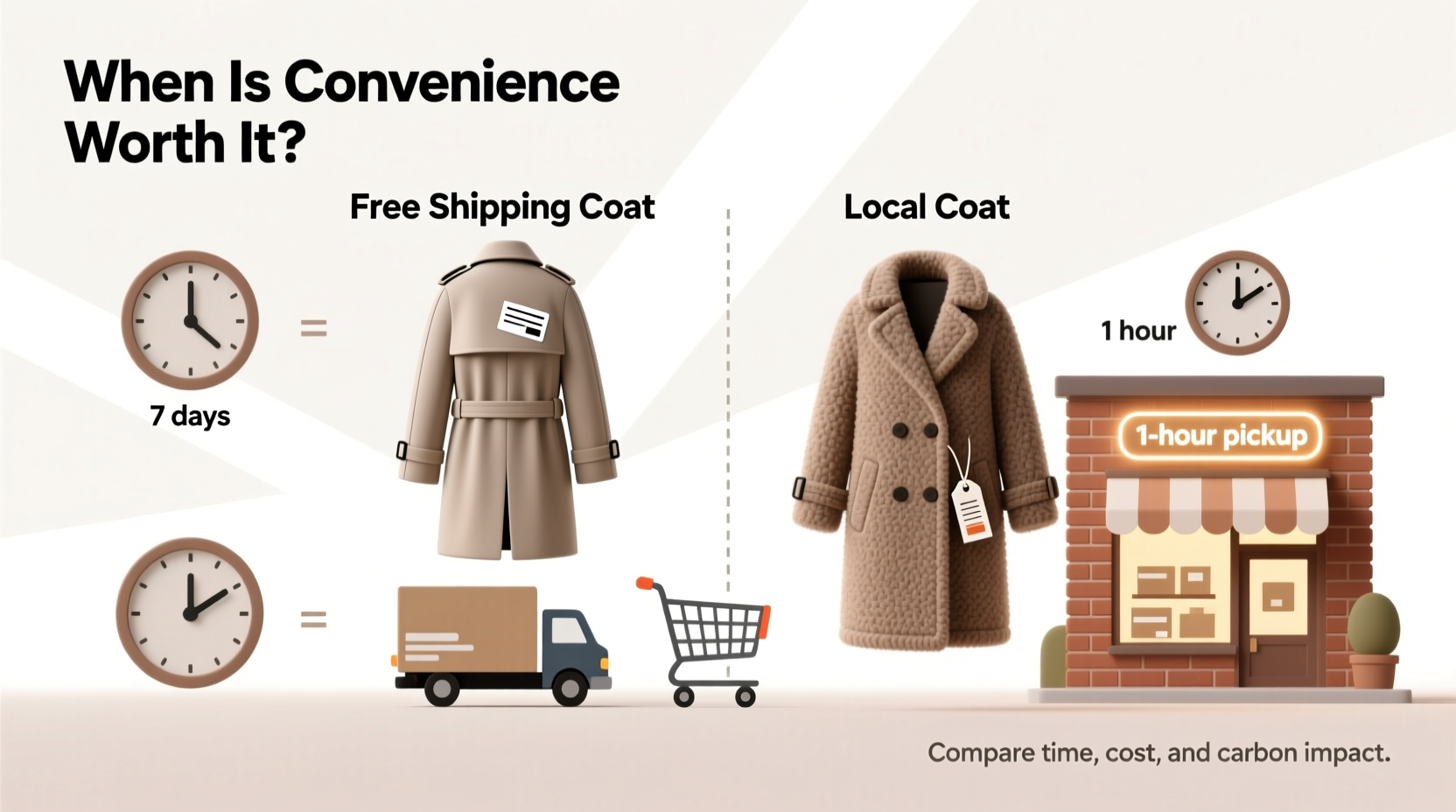
At first glance, “free shipping” sounds like a win. But dig deeper, and the economics shift. Retailers rarely absorb shipping costs—they pass them on through subtle pricing strategies. A coat listed at $149 with free shipping might be priced $20–$30 higher than its in-store counterpart. Additionally, many online brands inflate prices knowing customers value convenience over comparison shopping.
Local stores, meanwhile, operate with tighter margins. They often source directly from regional distributors, avoiding middlemen markups. However, they must charge sales tax, which can add 6–10% depending on location. Still, after factoring in potential return shipping fees (averaging $12–$25 for online orders), the total cost of an online purchase can exceed a local one—even with free initial delivery.
“Consumers assume free shipping means savings, but unless they're comparing identical models across channels, they’re often paying more for convenience.” — Dana Reeves, Consumer Economics Analyst at Retail Insights Group
Fit, Quality, and the Touch Test
No amount of product photography can replicate the feel of fabric against your skin or the way a wool blend drapes across the shoulders. Buying a coat online removes tactile feedback—a critical factor when assessing insulation, lining smoothness, and collar structure.
One common complaint among online shoppers is inconsistent sizing. Brands vary widely: a medium from Brand A may fit like a small from Brand B. Without trying it on, buyers rely on size charts that don’t account for body shape nuances. According to a 2023 National Retail Federation report, 38% of returned apparel items are due to incorrect sizing—many of those from outerwear purchases.
In contrast, local stores allow full physical evaluation. You can move around in the coat, test pocket placement, check sleeve length, and assess warmth by holding the material. Sales associates can offer insights into care requirements or durability based on customer feedback.
Time Sensitivity: Urgency vs. Planning
If you need a coat tomorrow because temperatures are dropping to -10°C, waiting five to seven business days for delivery isn’t practical. Local availability becomes essential in urgent situations. Even expedited shipping adds cost—often negating the “free” benefit.
Conversely, if you're preparing for next winter or shopping during off-season sales (like July clearance events), online free shipping shines. You can research extensively, read verified buyer reviews, and schedule delivery months in advance without pressure.
Consider this timeline when deciding:
- Less than 7 days until cold weather: Prioritize local purchase.
- 7–30 days: Weigh urgency against return policies; consider same-day pickup options online.
- More than 30 days: Free shipping online is ideal for price comparison and bulk planning.
Environmental and Ethical Considerations
The environmental impact of shipping plays a growing role in consumer decisions. Each shipped package contributes to carbon emissions, packaging waste, and last-mile delivery inefficiencies. A single online order with returns can generate up to three times the emissions of a consolidated trip to a local store.
Supporting local businesses also strengthens community economies. Independent retailers reinvest approximately 48% of revenue locally, compared to 14% for national chains (per U.S. Office of Economic Adjustment data). Choosing local supports jobs, reduces transportation footprint, and fosters long-term retail resilience.
That said, some online brands offset emissions through carbon-neutral shipping programs or use recycled materials. If sustainability matters, investigate both the brand’s ethics and your personal travel distance to the store. Driving 20 miles round-trip to save on shipping may not be greener than consolidated delivery.
Decision-Making Table: Online vs. Local Coat Purchase
| Factor | Free Shipping (Online) | Local Store |
|---|---|---|
| Upfront Cost | May include hidden markup; no tax until checkout | Visible price + sales tax |
| Shipping/Travel Cost | Free, but return shipping may apply | Gas/parking if driving; time cost |
| Fit Accuracy | Risk of wrong size; relies on charts/reviews | Try before you buy; adjustable fitting |
| Time to Use | 3–10 business days (longer during peak) | Immediate |
| Return Process | Print label, repack, drop-off/shipping | Walk in with receipt; instant exchange |
| Sustainability | Higher emissions if returned; packaging waste | Lower per-trip impact if nearby |
| Customer Support | Email/chat; slower resolution | Face-to-face assistance; faster problem-solving |
Real Example: Sarah’s Winter Coat Dilemma
Sarah, a teacher in Minneapolis, needed a new parka by December 1st. She found her ideal coat online—rated 4.8 stars, with free shipping and returns. The price was $169. She ordered it two weeks in advance. It arrived in six days, but the fit was too boxy, and the hood didn’t stay up in wind.
She initiated a return, paid $18.95 for return shipping (not covered under “free” policy), and reordered a size down. The second one arrived four days later—perfect fit, but now she’d spent $187.94 total and waited nearly three weeks.
Meanwhile, her neighbor bought the same brand at a local outdoor gear shop for $179 (including tax), tried three styles, left with the best-fitting one, and avoided all shipping hassles. Though slightly more upfront, the neighbor saved time, stress, and emissions.
Sarah now uses a hybrid approach: she researches online, checks local stock via store apps, and visits in person when possible.
Actionable Checklist: How to Decide Where to Buy Your Coat
- ✅ Determine your deadline: Do you need it within a week?
- ✅ Compare exact models: Are you looking at the same fabric, insulation, and cut?
- ✅ Check return policies: Does the online store charge for returns?
- ✅ Calculate total cost: Include tax, shipping, and potential return fees.
- ✅ Assess fit complexity: Is it a tailored wool coat or an oversized puffer?
- ✅ Evaluate proximity: Is the nearest store less than 15 minutes away?
- ✅ Research sustainability: Does the brand use eco-packaging or offset shipping?
Frequently Asked Questions
Does free shipping always mean a better deal?
Not necessarily. Many online retailers build shipping costs into the product price. Always compare the final delivered cost—including taxes and potential return fees—with local retail prices before assuming savings.
Can I try on clothes at a local store and buy online?
You can, but it's ethically questionable and harms small businesses. This practice, known as “showrooming,” deprives staff of commissions and increases overhead for stores that provide service without sales. If you try it locally, consider purchasing there to support the experience.
Are online coat reviews reliable?
They can be helpful, but read critically. Look for reviews with photos, mention of body type, and specific climate conditions. Be cautious of overly positive language or multiple reviews posted on the same day, which may indicate manipulation.
Conclusion: Make Convenience Work for You, Not Against You
The choice between a free-shipping coat and a local one isn’t binary. It’s a strategic decision shaped by timing, budget, values, and personal needs. Free shipping wins when you plan ahead, prioritize price, and trust the brand’s sizing. Local purchases excel when fit, immediacy, and service matter most.
The smartest shoppers don’t default to one method—they combine both. Use online tools to research, then verify in person when possible. Or, buy online with free returns only when you’re confident in the brand’s consistency. Either way, awareness of hidden costs and trade-offs turns convenience into true value.




 浙公网安备
33010002000092号
浙公网安备
33010002000092号 浙B2-20120091-4
Comments
No comments yet. Why don't you start the discussion?