
The Fujifilm X100V has become something of a legend among street photographers, travel shooters, and analog enthusiasts drawn to its hybrid digital-film experience. With its retro design, fixed 35mm-equivalent lens, and iconic Film Simulation modes like Classic Chrome and Acros, it’s no wonder demand far exceeds supply. For months, many retailers have listed the X100V as “backordered” or priced it well above retail due to scarcity. If you're tired of refreshing online stores every few hours, it's time to consider real alternatives—cameras that offer comparable image quality, strong color science, and actual availability.
Finding a camera with Fujifilm’s signature look doesn’t mean you need to wait indefinitely. Several manufacturers now prioritize in-camera aesthetics, offering rich JPEG engines and customizable color profiles that rival Fujifilm’s renowned simulations. The key is knowing where to look—and what trade-offs are worth making.
Why the X100V Is So Hard to Find
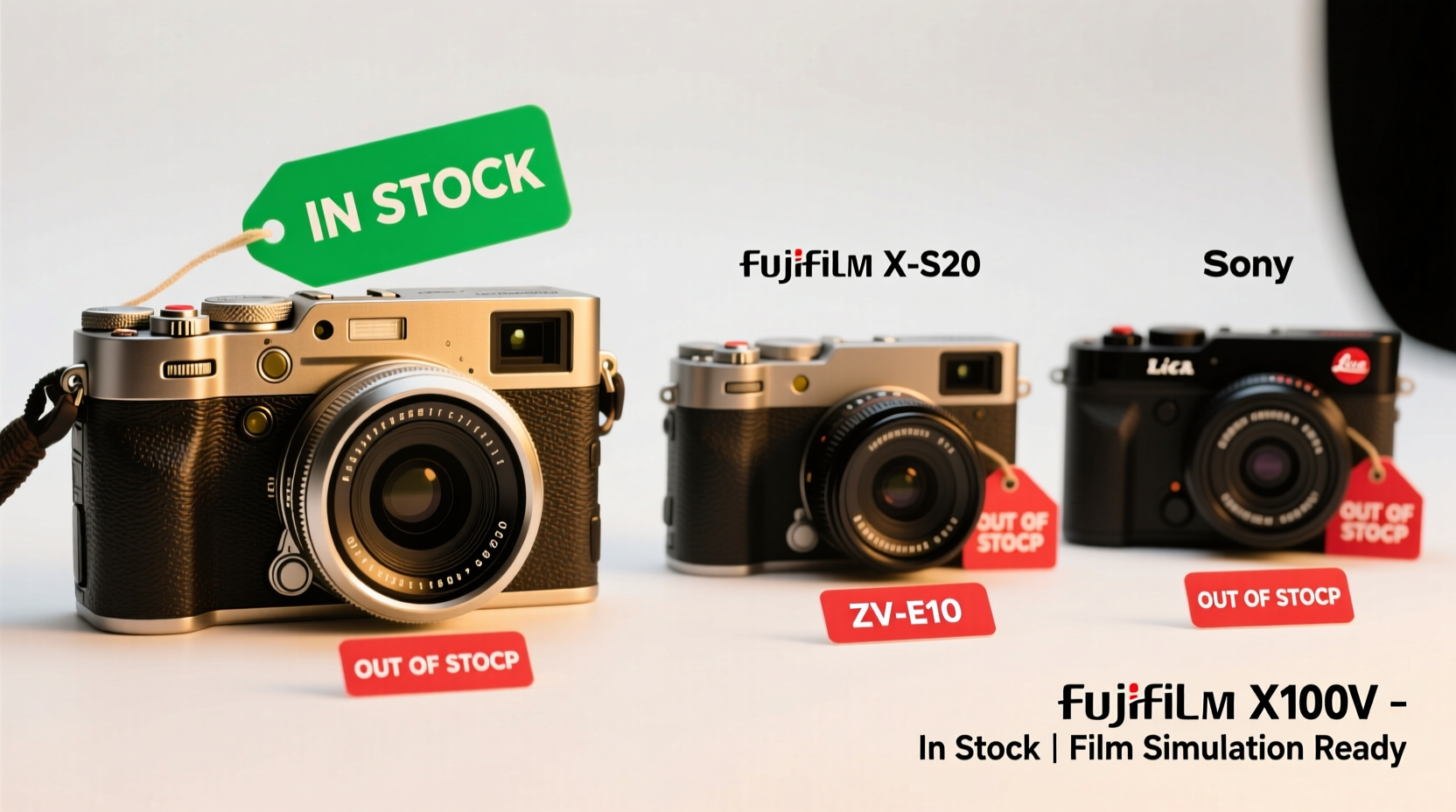
Supply chain disruptions, high consumer demand, and Fujifilm’s limited production runs have all contributed to the X100V’s near-permanent out-of-stock status. Introduced in early 2020, the model quickly gained acclaim for combining a 26.1MP APS-C sensor, improved autofocus, and a redesigned lens with Fujifilm’s most advanced Film Simulation suite at the time. Its blend of portability, manual controls, and visual charm struck a chord with photographers who value both form and function.
But popularity comes at a cost. As one reviewer noted:
“Cameras like the X100V aren't just tools—they’re experiences. People don’t just want them; they feel they need them.” — David Lin, Independent Camera Journalist
This emotional attachment, combined with resellers hoarding units, has created an artificial scarcity that frustrates even seasoned buyers. Rather than settling for inflated prices or endless waiting, exploring alternatives can lead to equally satisfying results—sometimes even better suited to your shooting style.
Key Features to Look for in a Film Simulation Alternative
When stepping away from the X100V, identify which aspects matter most to you. The appeal isn’t just about hardware—it’s about output. A great alternative should meet several core criteria:
- Strong JPEG engine: Produces pleasing colors straight out of camera without heavy editing.
- Customizable color profiles: Allows fine-tuning of tone, saturation, and contrast.
- Compact size: Fits easily in a jacket pocket or small bag for spontaneous shooting.
- Manual controls: Physical dials for shutter speed, ISO, and exposure compensation.
- Lens quality: Sharp optics with minimal distortion, ideally with a classic focal length (28–35mm equivalent).
Some brands emphasize post-processing flexibility over in-camera rendering, but the cameras discussed below prioritize aesthetic immediacy—the kind that makes you want to print a JPEG without touching Lightroom.
Top Fujifilm X100V Alternatives That Are Actually Available
The following cameras deliver compelling visuals, strong build quality, and—critically—are currently easier to purchase at or near MSRP. Each brings something unique while maintaining the spirit of the X100V: simplicity, intentionality, and beautiful color.
1. Ricoh GR III / GR IIIx
The Ricoh GR series has long been a cult favorite among street photographers. The GR III (28mm eq.) and GR IIIx (40mm eq.) feature 24MP APS-C sensors, compact bodies barely larger than a deck of cards, and a dedicated “Positive Film” mode that mimics warm, saturated slide film. Additional settings like “Negative High Sensitivity” emulate grainy, high-contrast black-and-white looks.
While Ricoh doesn’t offer as many built-in simulations as Fujifilm, the GR’s color processing is subtle and natural. Its snap focus mode allows pre-set focusing distances—a boon for zone focusing in fast-paced environments.
2. Panasonic Lumix LX100 II
Panasonic’s Micro Four Thirds sensor may be smaller than APS-C, but the LX100 II punches above its weight. It includes 17 creative control modes, including “My Color” presets that let users save custom white balance, tint, and saturation combinations. The 24–75mm f/1.7–2.8 zoom lens provides versatility Fujifilm’s fixed prime lacks.
More importantly, Panasonic’s “Vivid,” “Natural,” and “Monochrome” picture styles produce punchy, clean JPEGs. Add in full manual controls, a high-res EVF, and 4K video, and you have a powerful all-in-one option.
3. Nikon Z fc + 28mm f/2.8 SE
Nikon’s Z fc is a direct homage to the FM2 film camera, complete with aluminum top plate and dial-based interface. It uses the same 20.9MP APS-C sensor as the Z50, delivering sharp, dynamic files. What sets it apart is Nikon’s Picture Control system, particularly the “Nostalgic Negative” and “Dramatic Tone” profiles—both designed to mimic analog film characteristics.
Pair it with the compact 28mm f/2.8 pancake lens, and you get a lightweight setup with genuine retro flair. Unlike the X100V, the Z fc is widely available through major retailers, often bundled with accessories.
4. Olympus OM-D E-M10 Mark IV with M.17mm f/1.8
Micro Four Thirds means a smaller sensor, but Olympus compensates with some of the best in-camera processing in the industry. The E-M10 Mark IV offers 25 Art Filters, including “Grainy Film,” “Pop Art,” and “Pale & Light Color”—all adjustable in intensity.
Its 20MP sensor produces clean files, and the 40MP High Res Shot mode (via sensor shift) gives extra detail when mounted on a tripod. When paired with the M.17mm f/1.8 (34mm eq.), you achieve a near-identical field of view to the X100V, with excellent bokeh and low-light performance.
5. Canon EOS R50 with RF-S 24mm f/1.8
Canon’s newer mirrorless models include “Creative Assist” and “Creative Filters” that allow real-time adjustments to tone and color. While not marketed as “film simulations,” modes like “Ambience,” “Clear,” and “Warm” can replicate vintage moods effectively.
The R50 is compact, intuitive, and widely stocked. The RF-S 24mm f/1.8 lens (38mm eq.) is small, fast, and affordable. Combined, they form a modern, accessible alternative ideal for beginners and mobile-first photographers transitioning to dedicated gear.
Comparison Table: Key Specs and Availability
| Camera | Sensor | Lens (equiv.) | Film-Like Modes | Availability | Approx. Price (USD) |
|---|---|---|---|---|---|
| Ricoh GR III | APS-C | 28mm f/2.8 | Positive Film, B&W, Soft, Hard | Moderate (GR IIIx slightly easier) | $900 |
| Panasonic LX100 II | MFT (crop APS-C) | 24–75mm f/1.7–2.8 | Vivid, Monochrome, My Color | High | $950 |
| Nikon Z fc | APS-C | 28mm f/2.8 (kit option) | Nostalgic Negative, Dramatic Tone | High | $970 (body only) |
| Olympus E-M10 Mark IV | MFT | 34mm f/3.6 (with 17mm lens) | Grainy Film, Pale Color, Pop Art | High | $750 (body), $400 (lens) |
| Canon R50 | APS-C | 38mm f/2.7 (with 24mm lens) | Warm, Cool, Clear, Ambience | Very High | $650 (body), $350 (lens) |
Step-by-Step Guide to Choosing Your Alternative
Finding the right substitute for the X100V requires more than matching specs—it’s about aligning with your photographic intent. Follow this sequence to make a confident decision:
- Define your primary use case: Are you shooting street, travel, portraits, or casual everyday moments? This determines whether you prioritize portability (Ricoh), zoom range (Panasonic), or retro handling (Nikon).
- Test sample JPEGs: Visit sites like DPReview or Flickr and search for “Ricoh GR III JPEG” or “Nikon Z fc Nostalgic Negative” to see real-world output.
- Check local inventory: Use retailer stock checkers (B&H, Adorama, Amazon) to verify current availability before committing.
- Try before you buy: Visit a camera store or rent the model for a weekend. Handling matters as much as image quality.
- Factor in lens ecosystem: If you plan to expand later, consider systems with strong native lens lineups (e.g., Canon RF-S, Nikon Z).
Real Example: From X100V Waitlist to Nikon Z fc Satisfaction
Maya Torres, a documentary photographer based in Portland, spent eight months checking online retailers for the X100V. After seeing used prices exceed $1,500, she shifted focus. “I didn’t want to pay a premium for a camera I could replicate,” she said. She tested the Nikon Z fc at a local shop and was immediately drawn to its tactile dials and the “Nostalgic Negative” profile.
“It gives my photos this soft warmth—like old Fuji Superia scans,” she explained. “I shot a weekend market series entirely in JPEG, and editors loved the consistency.” Now using the Z fc as her daily carry, Maya says she feels more present during shoots without worrying about missing fleeting expressions.
Her story reflects a growing trend: photographers valuing accessibility and authenticity over brand prestige.
Checklist: How to Move Forward Without the X100V
- ☐ Identify which X100V features are non-negotiable (e.g., fixed lens, film sims, size)
- ☐ Research at least three alternative models with available stock
- ☐ Compare real-world JPEG samples from each camera
- ☐ Rent or test one in person before purchasing
- ☐ Set up custom picture profiles to mimic your preferred film look
- ☐ Join user forums (e.g., Reddit’s r/AnalogCommunity) for workflow tips
Frequently Asked Questions
Can other brands truly replicate Fujifilm’s Film Simulation look?
While no camera duplicates Fujifilm’s exact algorithms, many come close. Nikon’s “Nostalgic Negative,” Ricoh’s “Positive Film,” and Olympus’ “Grainy Film” all evoke distinct analog moods. With minor tweaks to contrast and white balance, you can achieve visually similar results—especially when shooting in consistent lighting.
Is buying a used X100V a good idea?
Only if purchased from a trusted seller with verifiable condition history. Due to high demand, the used market is flooded with overpriced or poorly maintained units. You may pay more for a used X100V than a new Nikon Z fc or Ricoh GR III—without warranty or reliability assurance.
Are smaller sensors a dealbreaker for film simulation quality?
No. Image character depends more on processing engine than sensor size. Cameras like the LX100 II and E-M10 IV prove that thoughtful color science can outweigh physical limitations. In practice, prints up to 13x19 inches show no meaningful difference in tonal rendering.
Final Thoughts: Embrace the Opportunity to Explore
The frustration of missing out on the Fujifilm X100V is real—but it might also be a gift in disguise. Sticking rigidly to one model risks overlooking equally capable, more accessible tools that could better suit your needs. The rise of film-inspired digital photography isn’t limited to one brand or model. It’s a movement toward intentional, expressive image-making—one that thrives on experimentation.
Instead of chasing scarcity, invest your energy in discovering what truly elevates your work. Whether it’s the stealthy sharpness of the Ricoh GR III, the nostalgic charm of the Nikon Z fc, or the versatile creativity of the Olympus E-M10, there’s a camera out there ready to deliver the aesthetic satisfaction you’re seeking—without the wait.




 浙公网安备
33010002000092号
浙公网安备
33010002000092号 浙B2-20120091-4
Comments
No comments yet. Why don't you start the discussion?