
Frizz creeping in minutes after spending time straightening your hair can be frustrating—especially when you’re aiming for sleek, polished results. Many people assume their hair type or humidity is the sole culprit, but more often than not, the real issue lies in technique, product choice, or preparation. The good news? Most post-straightening frizz is preventable. By understanding what’s going wrong and applying targeted fixes, you can extend your smooth style from hours to days.
The Science Behind Frizz After Straightening
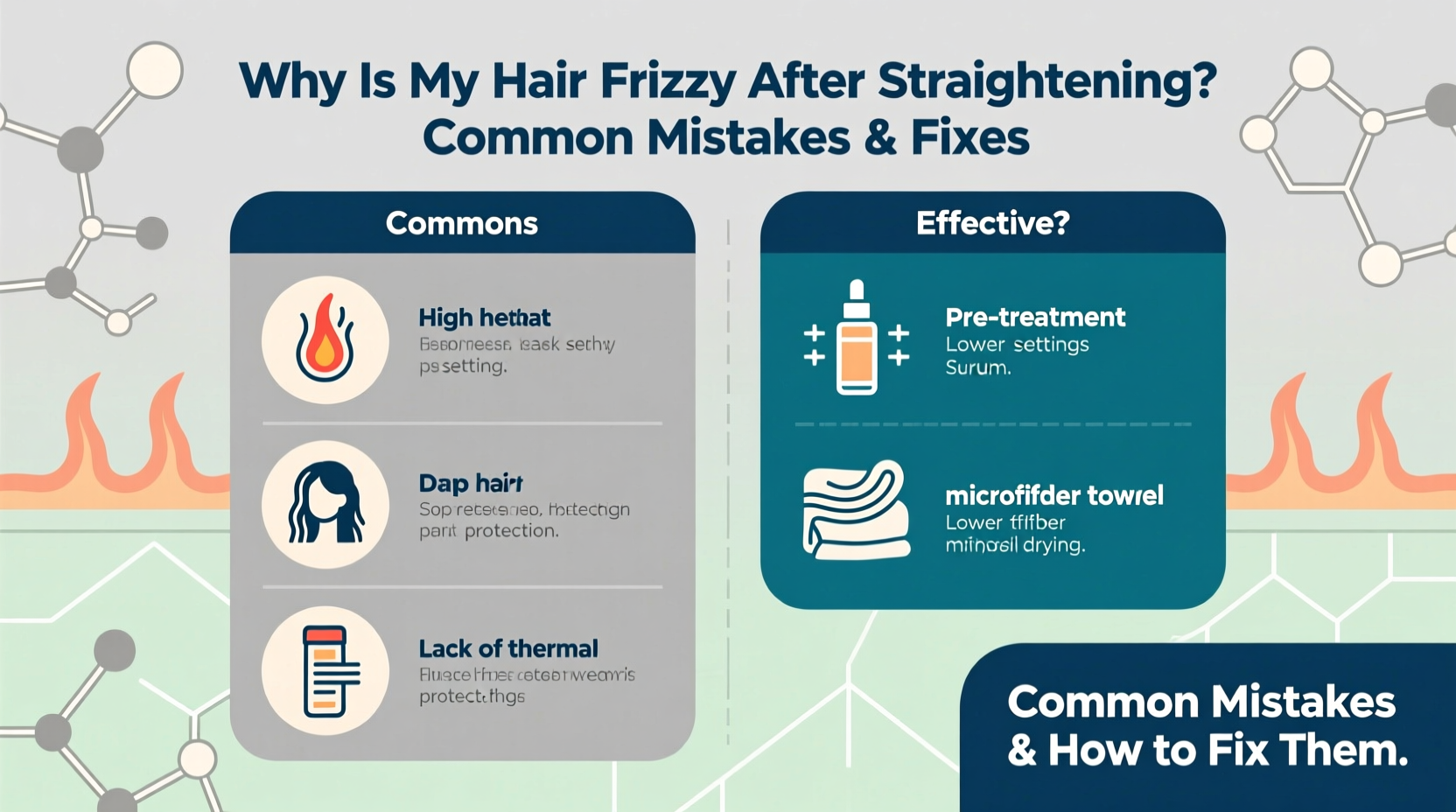
Frizz occurs when the hair cuticle lifts, allowing moisture from the air to penetrate the cortex. This causes strands to swell and lose their uniform shape, creating that fuzzy, uneven texture. Hair naturally seeks equilibrium with its environment—so if humidity is high, hair absorbs moisture and frizzes. But even in dry climates, improper straightening techniques can damage the cuticle, leaving it vulnerable to immediate frizz.
Straightening works by temporarily breaking hydrogen bonds in the hair shaft using heat. When done correctly, the cuticle lies flat, reflecting light and creating a smooth appearance. However, if the process is rushed, performed on damp hair, or uses inadequate protection, the cuticle becomes roughened. This compromised surface attracts moisture faster and increases static, both of which accelerate frizz.
“Even the best flat iron can’t compensate for poor prep. Smooth results start long before the first pass.” — Dr. Lena Patel, Trichologist & Hair Research Specialist
5 Common Mistakes That Cause Post-Straightening Frizz
Many well-intentioned styling habits actually sabotage your efforts. Identifying these errors is the first step toward lasting smoothness.
1. Straightening Damp or Incompletely Dried Hair
One of the most frequent—and damaging—mistakes is applying heat to wet or even slightly damp hair. Water turns to steam under high temperatures, causing bubbles within the hair shaft. This leads to internal damage known as “bubble hair,” weakening the structure and increasing porosity. Porous hair absorbs moisture rapidly, resulting in frizz within minutes.
2. Skipping Heat Protectant
Flat irons typically operate between 300°F and 450°F—temperatures that can degrade keratin and strip natural oils. Without a thermal protectant, the cuticle becomes brittle and lifts easily. Even if your flat iron has ceramic or tourmaline plates, direct exposure to heat without a barrier accelerates damage and frizz.
3. Using the Wrong Temperature for Your Hair Type
Not all hair tolerates the same heat levels. Fine or color-treated hair can be damaged at temperatures above 350°F, while coarse or thick hair may require up to 400°F for effective smoothing. Using too high a temperature fries the hair, while too low fails to seal the cuticle, leaving it open to humidity.
4. Overlapping Passes Too Frequently
Repeatedly going over the same section doesn’t make hair straighter—it makes it drier and more prone to breakage. Each pass removes additional moisture and stresses the cuticle. After two passes max, further heat only degrades integrity and invites frizz.
5. Touching or Styling Hair Immediately After Straightening
As tempting as it is to run your fingers through freshly straightened hair, doing so transfers oil, dirt, and friction—all of which disrupt the smooth surface. Hands generate static and lift the cuticle, undoing your work within minutes.
Do’s and Don’ts: A Quick Reference Table
| Do | Don’t |
|---|---|
| Use a heat protectant every time | Straighten soaking wet or damp hair |
| Dry hair completely before heat styling | Use maximum heat regardless of hair type |
| Section hair for even, controlled passes | Pass the iron over one section more than twice |
| Finish with a cool shot or serum to seal cuticle | Touch hair with hands immediately after styling |
| Store flat iron safely after cooling down | Leave hot tools unattended or wrapped in cords |
How to Fix Frizz After Straightening: A Step-by-Step Guide
If frizz appears despite your best efforts, don’t reach for the flat iron again. Instead, reset and rebuild smoothness with this gentle recovery method.
- Assess the Damage: Run fingers lightly over strands. If hair feels rough or dry, it’s likely over-processed. Avoid re-heating.
- Apply a Lightweight Smoothing Serum: Use a pea-sized amount of argan or marula oil-based serum. Focus on mid-lengths to ends—never roots—to avoid greasiness.
- Re-Blow Dry on Cool Setting: Attach a concentrator nozzle and use cold air to smooth the cuticle. Cold air contracts the cuticle, locking in smoothness.
- Use a Boar Bristle Brush: Gently brush from roots to ends to redistribute natural oils and tame flyaways without adding tension.
- Seal with a Finishing Spray: Choose an anti-humidity spray with polymers that form a protective film around each strand.
Real-Life Example: Sarah’s Transformation
Sarah, a 32-year-old teacher with wavy, medium-thick hair, struggled with frizz returning within 30 minutes of straightening. She used a high-end flat iron but skipped heat protectant, believing her hair was “too healthy” to need it. She also regularly straightened hair that was still slightly damp after showering.
After consulting a stylist, she changed three key habits: she began blow-drying her hair completely, applied a silicone-free heat protectant, and lowered her iron’s temperature to 360°F. Within a week, her straight style lasted over 24 hours—even during humid mornings. Her hair also felt softer and showed less breakage.
This case highlights how small adjustments, rooted in proper science, yield dramatic improvements—even without new tools or expensive treatments.
Proactive Prevention Checklist
To maintain frizz-free results long-term, follow this daily and weekly checklist:
- ✅ Blow-dry hair fully before any heat application
- ✅ Apply heat protectant evenly from mid-lengths to ends
- ✅ Set flat iron to appropriate temperature (fine: 300–350°F; thick: 375–400°F)
- ✅ Work in small sections (1–2 inches wide) for consistent contact
- ✅ Limit each section to one or two passes max
- ✅ Finish with a blast of cool air or a drop of smoothing serum
- ✅ Avoid touching hair until it cools completely
- ✅ Wash with sulfate-free shampoo weekly to preserve natural oils
- ✅ Use a weekly deep conditioning mask to improve moisture retention
- ✅ Sleep on a silk pillowcase or use a silk scrunchie to reduce friction
“Silk reduces friction by up to 70% compared to cotton. That simple switch can dramatically reduce overnight frizz and breakage.” — Jamal Rivers, Celebrity Stylist & Texture Specialist
Frequently Asked Questions
Can I straighten my hair every day without causing damage?
Daily straightening is possible with proper precautions, but not ideal. Frequent heat exposure increases porosity and weakens the hair shaft over time. If you must style daily, always use a heat protectant, keep temperatures moderate, and incorporate weekly deep conditioning. Consider rotating with heatless styles like overnight braids or silk wraps to give hair a break.
Why does my hair get frizzy only at the roots after straightening?
Root frizz usually stems from either excess oil mixing with dead skin cells, or from lifting the roots too aggressively during styling. It can also occur if you apply too much product at the scalp, attracting environmental debris. To fix this, clarify your scalp weekly with a gentle exfoliating shampoo and avoid applying serums or oils directly to roots. When straightening, pull the root area taut and make one quick, smooth pass—don’t linger.
Is there a difference between frizz and poofiness?
Yes. Frizz refers to individual strands escaping the hair’s pattern due to cuticle damage or moisture imbalance. Poofiness, on the other hand, is volume caused by loss of definition in curly or wavy hair—often from incomplete drying or mechanical disruption. While both create a bulky look, frizz is addressed with smoothing and sealing, while poofiness requires better drying techniques and curl support products.
Conclusion: Achieve Lasting Smoothness With Smart Habits
Frizz after straightening isn’t inevitable—it’s a signal that something in your routine needs adjustment. From skipping heat protectant to using incorrect temperatures, the culprits are often easy to correct. The path to sleek, shiny hair lies in consistency, precision, and respect for your hair’s limits. By preparing properly, styling gently, and protecting against environmental stressors, you can enjoy smooth results that last far beyond your morning routine.




 浙公网安备
33010002000092号
浙公网安备
33010002000092号 浙B2-20120091-4
Comments
No comments yet. Why don't you start the discussion?