
Choosing the right iPhone case is more than a matter of aesthetics—it’s a decision that affects your device’s longevity, usability, and safety. As smartphone designs become sleeker and more premium, the debate between full coverage and minimalist cases intensifies. One promises maximum protection; the other, elegance and minimal bulk. But when you strip away layers of rubber, plastic, and raised edges, does going minimalist expose your phone to unnecessary risk?
The answer isn’t straightforward. It depends on how you use your phone, where you take it, and what kind of damage you’re most likely to encounter. Understanding the trade-offs between these two design philosophies helps users make informed decisions—ones that balance peace of mind with practicality.
Understanding Full Coverage Cases
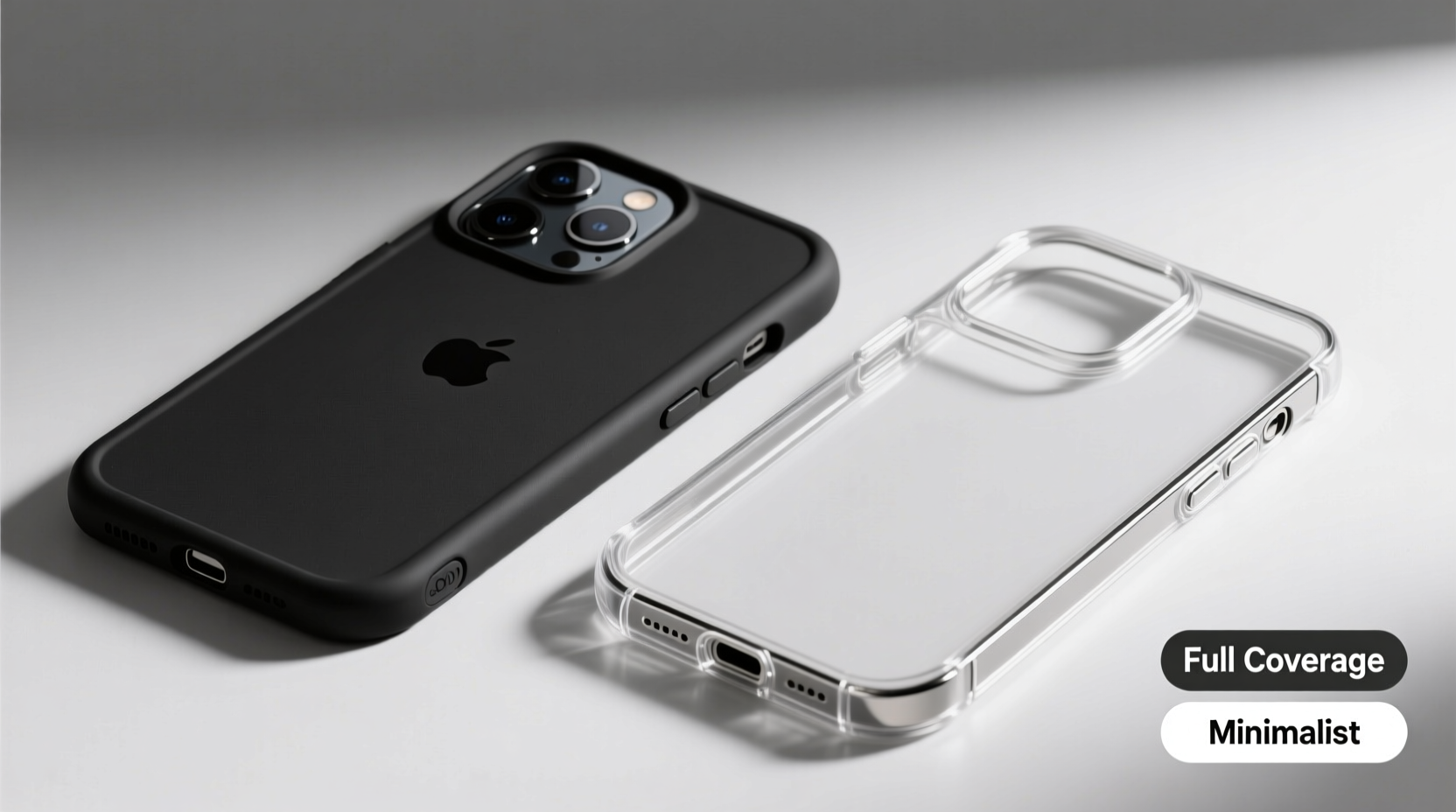
Full coverage cases are engineered for defense. They typically wrap around the entire phone, including the screen and camera module, often featuring built-in flaps or lens shields. These cases prioritize protection above all else, making them popular among outdoor workers, travelers, parents, and anyone who regularly subjects their devices to harsh conditions.
Key features include:
- Raised bezels that protect the screen when placed face-down
- Deep sides that shield the display from drops
- Reinforced corners with shock-absorbing materials like TPU or polycarbonate
- Water and dust resistance (some models meet military-grade drop standards)
- Coverage over camera lenses to prevent scratches
Manufacturers like OtterBox, UAG (Urban Armor Gear), and Lifeproof have built reputations on rugged reliability. Their products often undergo MIL-STD-810G testing, simulating 26 drops from 4 feet onto concrete. In real-world scenarios, this level of engineering can be the difference between a minor bump and a shattered screen.
The Appeal of Minimalist Cases
Minimalist cases embrace simplicity. Often made from thin leather, silicone, or ultra-slim TPU, they add just enough protection to guard against everyday scuffs while preserving the iPhone’s original design. Apple’s own silicone and leather cases fall into this category—elegant, lightweight, and barely noticeable.
These cases appeal to users who value:
- Aesthetic integrity—the ability to see and feel the phone’s craftsmanship
- Pocketability, especially in tight jeans or slim jackets
- Wireless charging compatibility without removal
- Tactile feedback and precise button response
However, minimalist doesn’t always mean fragile. Some brands incorporate micro-shock absorption or corner reinforcement without adding bulk. Still, they rarely match the impact resistance of their heavier counterparts.
“Most people don’t need a tank-like case for daily city life. A well-designed minimalist case handles desk drops and pocket wear better than expected.” — Jordan Lee, Mobile Accessory Designer at TechForm Labs
Comparing Risk: Protection vs. Practicality
The core question—does less case mean more risk?—depends on context. Not all risks are equal. A lab-tested 6-foot drop onto concrete poses far greater danger than sliding off a couch onto carpet. Your environment dictates the appropriate level of defense.
To clarify the differences, here’s a comparison table outlining key factors:
| Feature | Full Coverage Case | Minimalist Case |
|---|---|---|
| Dropping Protection | High – absorbs major impacts, reinforced corners | Low to Moderate – limited shock absorption |
| Screen Protection | Yes – raised edges or full-screen cover | No – screen remains exposed |
| Lens Protection | Yes – elevated bezel or cap over camera | Rarely – lenses sit flush or slightly exposed |
| Weight & Bulk | Heavier, thicker, less pocket-friendly | Lightweight, sleek, easy to carry |
| Dust/Water Resistance | Sometimes – sealed ports and gaskets | No – open design exposes ports |
| Price Range | $30–$80+ | $20–$50 |
| Best For | Outdoor use, kids, travel, rough handling | Office work, urban commuting, style-conscious users |
Real-World Scenario: Two Users, Two Choices
Consider two individuals: Maya, a landscape photographer, and David, a financial analyst.
Maya hikes mountain trails weekly, sets her phone on rocky outcrops, and occasionally shoots in light rain. She uses an OtterBox Defender. Last month, her phone slipped from her hand down a gravel slope. The case survived with only minor scuffing. The screen? Intact. For her, the extra weight is a non-issue compared to the cost of replacing a cracked display in the field.
David commutes by subway, keeps his phone in a padded laptop bag, and mostly uses it for emails and calls. He prefers a Slickwrap leather sleeve—thin, elegant, and RFID-blocking. His biggest threat is keys in the same pocket. After 18 months, his phone has no cracks, just faint surface marks. His minimalist approach works because his usage pattern minimizes high-impact risks.
This contrast illustrates a crucial point: risk is not inherent to the phone alone but emerges from behavior and environment.
When Minimalism Becomes a Liability
Minimalist cases fail most dramatically in edge-case scenarios:
- Face-down drops: Without raised edges, the screen hits first. Even tempered glass like Ceramic Shield has limits.
- Corner impacts: iPhones are prone to “corner shattering” due to curved glass. Minimal cases offer little cushioning at these stress points.
- Lens scratches: Sliding a phone across a table can grind debris into the camera sapphire, causing permanent abrasions.
A study by SquareTrade (now part of Consumer Reports) found that 70% of accidental phone damage comes from drops under 3 feet—desk to floor, bed to carpet. While full coverage cases reduce repair likelihood by up to 60%, minimalist cases may only delay inevitable damage in high-risk settings.
Action Checklist: Choosing the Right Case for You
Ask yourself these questions before deciding:
- Do I frequently place my phone face-down on rough surfaces?
- Am I active outdoors or in environments with dust, moisture, or vibration?
- Have I broken or damaged a phone in the past year?
- Do I carry my phone loosely in pockets with keys or coins?
- Is wireless charging important, and do I want to avoid removing the case?
- How much do I value the phone’s original look and feel?
If you answered “yes” to the first four, a full coverage case is likely the safer bet. If the last two resonate more, a minimalist option may suit you—provided you accept the higher risk of cosmetic or structural damage.
Frequently Asked Questions
Can a minimalist case protect against a 5-foot drop?
It depends on the model and landing angle. Most minimalist cases lack sufficient shock absorption for serious falls. While some survive low-height drops, they are not designed for repeated high-impact events. Independent tests show failure rates increase sharply beyond 3 feet.
Are full coverage cases bad for heat dissipation?
Slightly. Thick materials can trap heat during intensive tasks like gaming or video editing. However, modern cases use breathable polymers and strategic venting to mitigate this. Unless you're pushing your phone to thermal limits daily, overheating is rarely a concern.
Do I still need a screen protector with a full coverage case?
Yes. Even with raised edges, sudden force or grit between the case and screen can cause micro-fractures. A tempered glass protector adds an extra layer of defense, especially if the case ever shifts out of alignment.
Final Thoughts: Balance Over Extremes
The choice between full coverage and minimalist iPhone cases isn’t about which is universally better—it’s about alignment with your lifestyle. More protection means fewer surprises, but also added bulk. Less case enhances design and convenience, but demands greater caution.
There’s a middle ground: hybrid designs that offer moderate drop protection with slim profiles. Brands like Spigen’s Liquid Crystal series or ESR’s MetaTough line blend flexibility, clarity, and slight elevation—ideal for users who want more than bare minimum defense without sacrificing form.




 浙公网安备
33010002000092号
浙公网安备
33010002000092号 浙B2-20120091-4
Comments
No comments yet. Why don't you start the discussion?