
For collectors, preserving the pristine condition of Funko Pop figures—and especially their original packaging—is critical to maintaining long-term value. Over time, exposure to dust, light, moisture, and physical handling can degrade a box’s integrity, leading to yellowing, creases, or dents that significantly reduce resale potential. One of the most debated topics among enthusiasts is whether soft sleeves or hard cases are more effective when stacking Pops for storage. The answer isn’t always straightforward, as both methods offer distinct advantages and drawbacks depending on usage, environment, and collection size.
This article breaks down the key differences between soft and hard protector stacking, evaluates how each impacts box preservation, and provides actionable guidance for maximizing your collection’s longevity and market value.
Understanding Box Preservation and Its Impact on Value
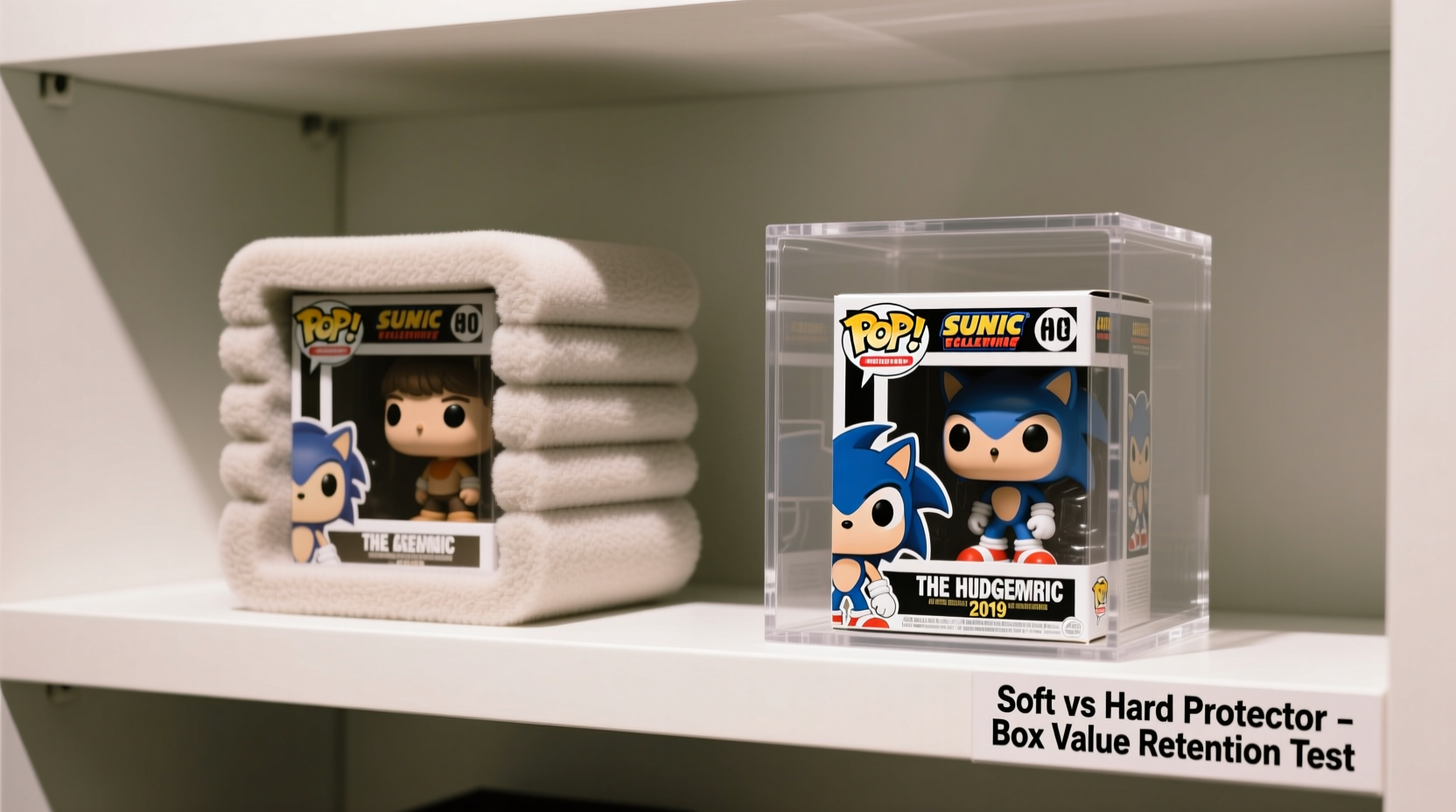
The condition of a Funko Pop’s box directly influences its collectible worth. A mint-condition figure in a flawless box can command double—or even triple—the price of one with visible shelf wear, corner dings, or sun-faded colors. Grading services like PSA (Professional Sports Authenticator) now rate vinyl figures similarly to trading cards, with grades from 1 to 10 based on box centering, seam splits, edge wear, and overall presentation.
Because of this growing trend toward formalized grading, collectors are increasingly investing in protective solutions. However, simply adding a sleeve or case isn't enough—how you store and stack them matters just as much. Stacking improperly can lead to pressure marks, crushed corners, or trapped moisture, undermining the very purpose of protection.
“Preservation starts the moment a Pop leaves the blind box. Every decision—from unboxing to storage—affects future value.” — Jason Reed, Collectibles Appraiser & Founder of VinylVault Reviews
Soft Protectors: Pros, Cons, and Stacking Risks
Soft protectors, typically made from polypropylene or archival-safe plastic sleeves, are lightweight, affordable, and easy to use. They shield against dust, fingerprints, and minor abrasions but offer little resistance to compression or impact.
When used in stacked configurations, soft sleeves present several concerns:
- Compression damage: Weight from multiple stacked boxes can press into lower-tier figures, causing permanent indentations on the box top or sides.
- Friction wear: Slight movement between stacked items may create micro-scratches, especially if the outer sleeve lacks anti-static properties.
- Limited structural support: Soft sleeves do not reinforce weak points like box flaps or seams, leaving them vulnerable to splitting under stress.
That said, soft protectors excel in low-density storage setups. For collections displayed upright on shelves without vertical stacking, they provide adequate defense against environmental contaminants while allowing clear visibility.
Hard Case Protectors: Superior Defense with Trade-offs
Hard case protectors, often constructed from rigid PET plastic or acrylic, form a near-impenetrable shell around each Funko Pop box. Unlike soft sleeves, they resist crushing, punctures, and lateral pressure, making them ideal for dense storage environments where stacking is unavoidable.
Key benefits include:
- Impact resistance: Hard cases absorb shocks and prevent direct contact between boxes.
- No compression marks: Rigid walls maintain space around the box, eliminating pressure points even under heavy stacking.
- UV and moisture shielding: Higher-end models feature UV-blocking coatings and sealed edges to guard against sunlight and humidity.
However, hard cases come with notable downsides:
- Cost: Prices range from $8–$15 per unit, making full-case protection expensive for large collections.
- Bulk: Increased dimensions complicate shelving and reduce storage density.
- Ventilation issues: Poor airflow inside sealed cases can trap moisture, potentially encouraging mold if stored in damp areas.
Despite these limitations, serious collectors aiming to preserve resale or graded value overwhelmingly favor hard cases—especially when stacking more than three units high.
Comparison: Soft vs Hard Stack Protection
| Feature | Soft Sleeve Stack | Hard Case Stack |
|---|---|---|
| Crush Resistance | Poor – susceptible to compression dents | Excellent – fully rigid structure |
| Cost per Unit | $1–$3 | $8–$15 |
| Stack Stability | Moderate – prone to shifting/sliding | High – uniform shape improves alignment |
| Dust/Moisture Protection | Good – open ends allow some infiltration | Superior – sealed designs available |
| Shelf Space Efficiency | High – minimal added bulk | Low – increases footprint by ~20% |
| Ideal For | Casual collectors, display shelves, short-term storage | Serious collectors, long-term preservation, stacking >3 high |
Real-World Example: The Garage Storage Test
In 2022, collector Marcus T. conducted a year-long experiment comparing two identical sets of 12 limited-edition Marvel Pops. One set was protected with soft sleeves and stacked vertically in a climate-controlled closet. The second set used hard cases and was stored in the same location but placed on a lower shelf subject to occasional vibration from nearby laundry appliances.
After 12 months, the soft-sleeved group showed visible wear: two boxes had corner dents from shifting, one developed a hairline split along the flap seal, and all exhibited slight surface haze from static dust accumulation. In contrast, the hard-cased figures remained untouched—no marks, no fading, no structural compromise—even after being moved twice during home renovations.
When submitted for third-party grading, the hard-case group averaged a 9.4, while the soft-sleeve group scored 7.8 due to handling flaws. On the secondary market, the difference translated to a $220 total premium for the preserved set.
This case illustrates that while environment plays a role, the choice of protector dramatically influences outcome—particularly when stacking introduces mechanical stress.
Best Practices for Stacking Without Sacrificing Box Value
Whether using soft or hard protectors, proper stacking technique is essential. Follow this step-by-step guide to minimize risk:
- Sort by size and weight: Place larger, heavier figures at the bottom. Avoid stacking small or fragile variants (e.g., glow-in-the-dark or flocked Pops) beneath heavier ones.
- Use spacers or dividers: Insert foam board or corrugated cardboard between layers to distribute weight evenly, especially with soft sleeves.
- Limit stack height: Never exceed five units unless using hard cases. Even then, cap stacks at seven to reduce base pressure.
- Align boxes precisely: Misaligned stacks increase shear forces that can tear box flaps or crush edges.
- Store upright only: Laying stacks horizontally risks warping and internal figure movement.
- Control environment: Maintain temperatures between 65–75°F (18–24°C), relative humidity below 55%, and zero direct sunlight exposure.
Checklist: Protect Your Collection Before Stacking
- ✅ Inspect each box for factory defects before applying protectors
- ✅ Choose acid-free, BPA-free materials for long-term safety
- ✅ Label protectors or boxes discreetly (avoid tape on surfaces)
- ✅ Invest in hard cases for chase variants, exclusives, or high-value Pops
- ✅ Use shelf risers or display tiers to avoid stacking altogether when possible
- ✅ Monitor for pests or moisture, especially in basements or attics
Frequently Asked Questions
Can I mix soft and hard protectors in the same stack?
Technically yes, but it's not recommended. Mixing creates uneven surfaces and pressure points. If combining, place hard-cased figures at the bottom and limit stack height to three units to reduce instability.
Do soft sleeves cause yellowing over time?
Poor-quality sleeves containing PVC or plasticizers can leach chemicals that discolor cardboard. Always select sleeves labeled “PVC-free,” “acid-free,” and “archival safe” to prevent degradation.
Are hard cases worth the cost for common Pops?
For mass-produced, low-market-value figures, hard cases may not offer a financial return. However, if you plan to keep them long-term or display them densely, the protection still adds qualitative value by keeping your collection looking new.
Final Recommendation: Match Protector to Purpose
The choice between soft and hard protectors ultimately depends on your goals. If you're curating a casual display with minimal stacking and frequent rotation, soft sleeves offer a budget-friendly, visually clean solution. But if you're building a long-term investment-grade collection—especially one requiring vertical stacking—hard cases are the superior option for preserving box integrity and maximizing future value.
Consider adopting a hybrid strategy: use hard cases for rare, valuable, or graded candidates, and reserve soft sleeves for common editions stored in low-risk environments. This balanced approach optimizes protection while managing cost and space constraints.
“The right protector doesn’t just shield—it preserves intent. A perfectly kept box tells a story of care, and that narrative has real market weight.” — Lena Choi, Curator at Pop Culture Archive Project
Take Action Today to Protect Tomorrow’s Value
Your Funko Pop collection is more than a hobby—it’s a curated archive of pop culture history. Every box you keep intact strengthens its legacy and financial potential. Start by auditing your current storage setup: Are your stacks causing unseen damage? Are you using materials that could degrade over time?
Upgrade your weakest links. Replace old or questionable sleeves with archival-safe options. Prioritize hard cases for your top-tier pieces. And share what you learn—help fellow collectors make informed choices that benefit the entire community.




 浙公网安备
33010002000092号
浙公网安备
33010002000092号 浙B2-20120091-4
Comments
No comments yet. Why don't you start the discussion?