
When shopping for a new Samsung smartphone on a budget, two models often stand out: the Galaxy A16 and the Galaxy A54. Both are part of Samsung’s reliable A-series lineup, designed to deliver solid performance at accessible price points. But with a noticeable gap in cost—often $150 or more—the question arises: does the Galaxy A54 offer enough improvements to justify its higher price tag over the A16? The answer depends on what you value most in a phone: basic functionality or long-term usability, durability, and performance.
This breakdown compares key aspects like display, processor, camera, battery life, software support, and build quality to help you determine whether the upgrade is truly worth it—or if the A16 covers your needs just fine.
Design and Build Quality: Plastic vs Premium Feel
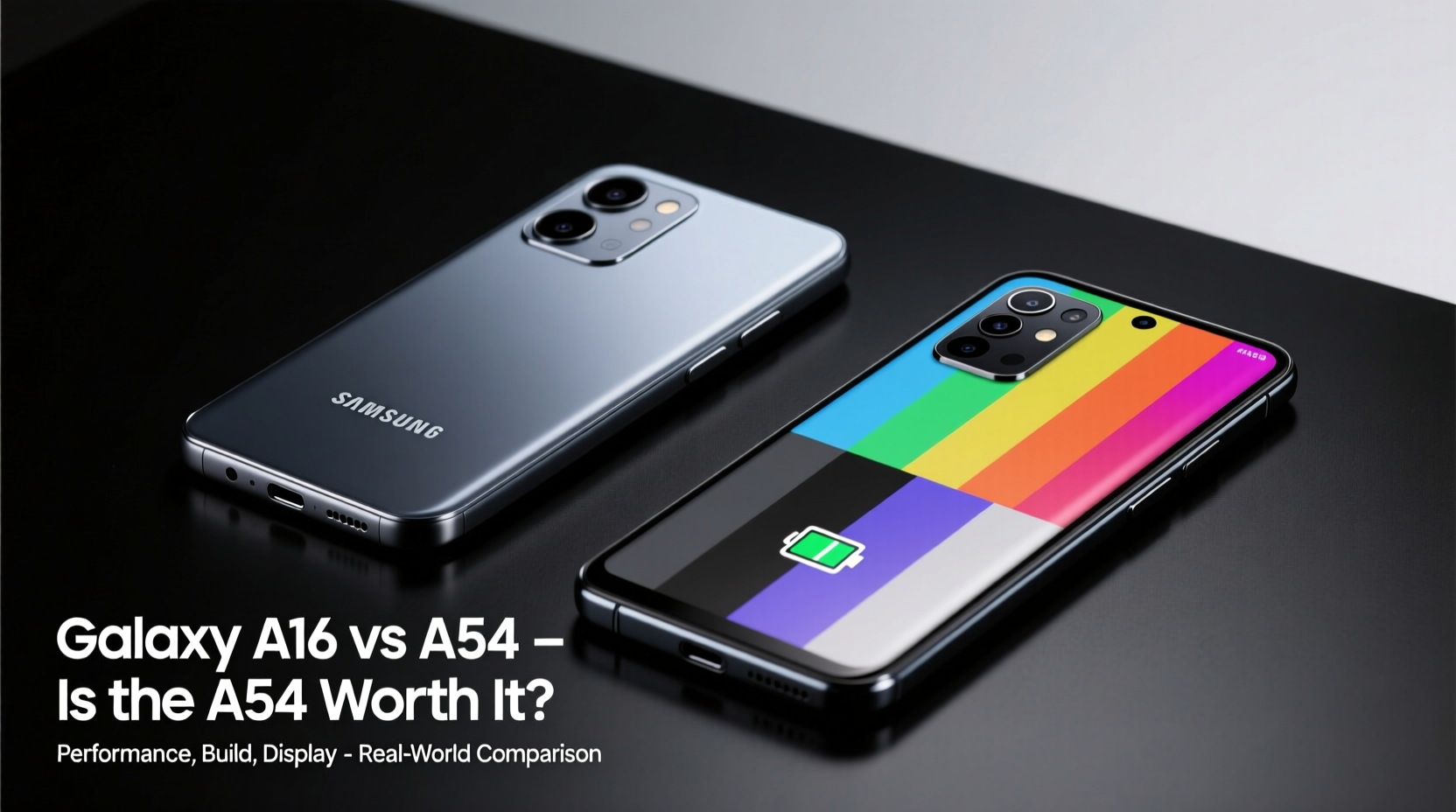
The first difference you’ll notice between the Galaxy A16 and A54 is in their physical design and materials. The A16 uses a standard plastic back and frame, which keeps costs low but feels less premium in hand. It’s lightweight and functional, but prone to scratches and lacks water resistance.
In contrast, the Galaxy A54 features a matte-finish polycarbonate back with a glass-like texture and an aluminum frame. While not full glass, this gives it a more refined look and better grip. More importantly, the A54 includes IP67 dust and water resistance—a rare feature at this price point. This means it can survive submersion in up to 1 meter of water for 30 minutes, offering peace of mind during rain or accidental spills.
“IP67 certification isn’t just a luxury—it’s a longevity booster. Phones that withstand moisture and dust tend to last longer in daily use.” — David Lin, Mobile Hardware Analyst
Display and Performance: Smoothness Matters
The screen is where most users spend their time, so differences here significantly impact experience. The Galaxy A16 sports a 6.5-inch HD+ (720p) Super AMOLED display with a 60Hz refresh rate. Colors are vibrant thanks to AMOLED technology, but the lower resolution and slower refresh rate make scrolling feel less fluid compared to modern standards.
The A54, meanwhile, steps up with a 6.6-inch FHD+ (1080p) Super AMOLED display and a 120Hz adaptive refresh rate. This means smoother animations, quicker response times, and better readability in sunlight. The higher resolution also enhances text clarity and image detail, especially when streaming videos or reading e-books.
Under the hood, performance gaps widen further. The A16 runs on the MediaTek Helio G99—a capable chip for calls, messaging, and light apps—but struggles with multitasking and graphically intensive games. The A54 uses Samsung’s Exynos 1380, a mid-tier processor built on a more efficient 5nm process. It delivers noticeably faster app launches, smoother gaming, and better background task handling.
Performance Comparison Table
| Feature | Galaxy A16 | Galaxy A54 |
|---|---|---|
| Processor | MediaTek Helio G99 | Exynos 1380 |
| RAM Options | 4GB / 6GB | 6GB / 8GB |
| Storage | 64GB / 128GB (expandable) | 128GB / 256GB (expandable) |
| Refresh Rate | 60Hz | 120Hz (adaptive) |
| Display Resolution | HD+ (720 x 1600) | FHD+ (1080 x 2408) |
Camera Capabilities: From Decent to Competitive
Camera expectations vary, but most users want clear photos in daylight and usable low-light shots. The Galaxy A16 comes with a triple rear setup: 50MP main, 5MP ultrawide, and 2MP macro. In good lighting, the main sensor captures decent detail, but the ultrawide and macro lenses are underwhelming. Low-light performance is noisy, and video tops out at 1080p/30fps.
The A54 improves across the board. Its 50MP main sensor includes optical image stabilization (OIS), which reduces blur from shaky hands—especially helpful in dim conditions. The ultrawide lens is 12MP, capturing wider scenes with better clarity. There’s no dedicated macro lens, but the software-based macro mode works well. Most notably, the A54 supports 4K video recording at 30fps, giving creators more flexibility.
Front cameras also differ: the A16 has an 8MP selfie shooter, while the A54 offers a sharper 13MP sensor with improved skin tone rendering and portrait mode accuracy.
Software Support and Longevity
One of the most overlooked factors in smartphone value is software update policy. The Galaxy A16 is expected to receive 2 major Android OS upgrades and 3 years of security patches. That’s standard for budget devices, but limits long-term usability.
The Galaxy A54, however, benefits from Samsung’s expanded commitment to mid-range devices: it promises 4 OS upgrades and 5 years of security updates. This means it could run Android 17 or later by 2027, staying compatible with modern apps and services far longer than the A16.
For users who keep phones for 3+ years, this extended support translates into better resale value, continued performance, and enhanced security against emerging threats.
Real-World Example: Maria’s Upgrade Dilemma
Maria, a college student, needed a new phone for online classes, social media, and occasional photography. She considered both models. The A16 was tempting at $229, but after testing both in-store, she noticed how much smoother the A54 felt when switching between Zoom, Chrome, and Instagram. She also liked the brighter, crisper screen for watching lectures. Though the A54 cost $379, she chose it knowing she’d likely keep it through graduation. Two years later, her A54 still receives monthly updates and handles multitasking without lag—proving the initial investment wise.
Should You Buy the Galaxy A16 or A54? A Practical Checklist
Choosing between these phones ultimately comes down to usage patterns and budget tolerance. Use this checklist to decide:
- ✅ Do you prioritize smooth scrolling and fast app performance? → Choose A54
- ✅ Will you keep the phone for more than 2 years? → A54’s longer software support wins
- ✅ Do you take photos regularly, especially in low light? → A54 with OIS is superior
- ✅ Is water resistance important (e.g., gym, outdoor work, parenting)? → Only A54 offers IP67
- ✅ Are you on a tight budget and only need basics like calls, texts, and YouTube? → A16 may suffice
- ✅ Do you prefer a lighter, simpler device? → A16 is slightly smaller and less complex
Frequently Asked Questions
Is the Galaxy A54 waterproof?
The Galaxy A54 has an IP67 rating, meaning it is dust-tight and can withstand being submerged in up to 1 meter of freshwater for 30 minutes. It is not fully waterproof under all conditions, but offers strong protection against spills and rain.
Can the Galaxy A16 handle gaming?
The A16 can run casual games like Candy Crush or Among Us smoothly, but demanding titles like Genshin Impact or Call of Duty Mobile will struggle due to the 60Hz screen and less powerful processor. Frame drops and overheating are common during extended sessions.
Does the price difference justify the upgrade?
If you plan to use your phone heavily for three years or more, yes. The A54’s superior display, processor, camera, and software support provide tangible benefits that accumulate over time. For short-term or minimal use, the A16 remains a functional, cost-effective option.
Final Verdict: When the Extra Cost Pays Off
The Galaxy A16 is a competent entry-level phone. It delivers core smartphone functions at a low price, making it suitable for secondary devices, seniors, or users with limited digital needs. However, the Galaxy A54 operates in a different league—not just as a phone, but as a long-term tool.
The $150–$200 premium buys meaningful upgrades: a responsive 120Hz display, reliable OIS camera, stronger processor, IP67 protection, and five years of security updates. These aren’t just nice-to-haves—they reduce friction in daily use, enhance durability, and delay the need for another purchase.
If your budget allows, the Galaxy A54 is absolutely worth the extra money. It strikes a rare balance between affordability and future-proofing, offering a near-flagship experience without the flagship price. For most primary phone users, skipping the A54 to save money may end up costing more in frustration, replacement, and obsolescence down the line.




 浙公网安备
33010002000092号
浙公网安备
33010002000092号 浙B2-20120091-4
Comments
No comments yet. Why don't you start the discussion?