
When comparing the Samsung Galaxy S10 and the Apple iPhone XS, one of the most debated aspects is their respective processors. On paper, both devices launched with top-tier silicon—Samsung’s Exynos 9820 or Snapdragon 855 (depending on region) and Apple’s A12 Bionic. But specs alone don’t tell the full story. The real question isn’t just which chip is faster in benchmarks, but how that performance translates into daily tasks like launching apps, multitasking, browsing, and camera processing. Understanding the practical impact of these processors reveals more than synthetic scores ever could.
The Processors: A Technical Overview
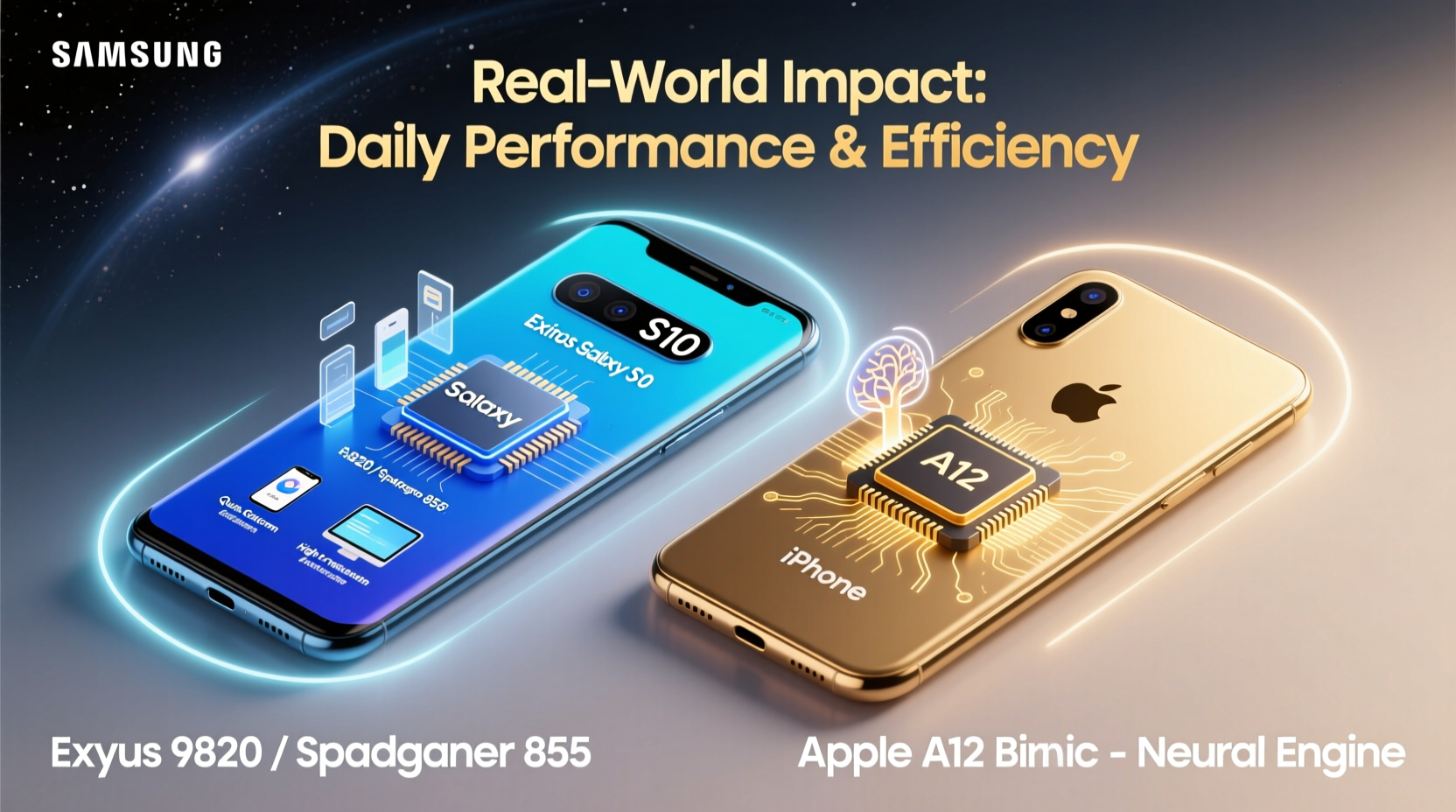
The Galaxy S10 was released with two different chipsets based on region: the Qualcomm Snapdragon 855 in North America and parts of Asia, and the Exynos 9820 in Europe and other markets. Meanwhile, every iPhone XS shipped with Apple’s custom-designed A12 Bionic chip, built on a 7nm process and featuring a six-core CPU, four-core GPU, and an eight-core Neural Engine.
While the Snapdragon 855 offered improvements in AI processing and graphics rendering over its predecessor, the Exynos 9820 lagged slightly behind in efficiency and sustained performance. In contrast, the A12 Bionic set a new standard for mobile SoCs at the time, particularly in single-core performance and machine learning tasks.
“Apple’s vertical integration gives them a unique edge—tight control over hardware and software means even a technically smaller chip can outperform larger competitors in real use.” — Mark Liu, Mobile Semiconductor Analyst
Real-World Performance: Where Speed Meets Experience
Benchmarks often favor the A12 Bionic, especially in single-threaded workloads. But users don’t live in Geekbench scores—they live in Instagram feeds, WhatsApp chats, Safari tabs, and photo editing apps. Here’s where the differences become nuanced.
In day-to-day usage, both phones feel fast. Apps launch quickly on both devices. However, subtle distinctions emerge under pressure. For example:
- App Launching: iOS tends to reload background apps less frequently due to tighter memory management, making returns to recent apps feel instant—even after extended periods.
- Multitasking: The Galaxy S10 allows deeper split-screen functionality and floating windows, but switching between heavy apps (like Photoshop Express and YouTube) occasionally shows minor stutters on Exynos models.
- Camera Processing: The iPhone XS applies computational photography effects (Smart HDR, depth mapping) nearly instantly. The Galaxy S10 processes similar scenes well but sometimes takes a fraction longer, especially in low light when stacking multiple exposures.
- Gaming: Both handle modern games smoothly, but the A12 maintains higher frame rate consistency during extended play sessions, while some Exynos-powered S10 units show thermal throttling after 20 minutes of gameplay.
Performance Over Time: Longevity Matters
A processor’s true test isn’t just initial speed—it’s how well it holds up after months or years of use. This is where Apple’s ecosystem shines. Thanks to iOS updates being optimized specifically for each generation of A-series chips, iPhone XS units from 2018 still receive feature updates and security patches several years later.
Samsung has improved its update policy significantly since 2019, but at the time of the S10’s release, only two major Android OS upgrades were promised. Even with excellent hardware, fragmented software support can make a phone feel sluggish sooner—not because the processor degraded, but because newer versions of Android and apps demand more resources.
Moreover, iOS uses just-in-time (JIT) compilation efficiently, meaning JavaScript-heavy websites load faster over time as code gets cached and optimized. On Android, this depends more on Chrome’s engine and available RAM, leading to variable results across devices—even within the same model line depending on chipset.
Comparative Table: Processor Impact on Daily Tasks
| Task | Galaxy S10 (Snapdragon 855) | Galrey S10 (Exynos 9820) | iPhone XS (A12 Bionic) |
|---|---|---|---|
| App Launch Speed | Fast | Fast (slightly slower than Snapdragon) | Faster (especially cold launches) |
| Multitasking Fluidity | Very Good | Good (occasional hiccups) | Excellent |
| Web Browsing (Complex Sites) | Smooth | Adequate (higher power draw) | Smoother with lower latency |
| Photo/Video Processing | Excellent (with AI enhancements) | Very Good | Outstanding (real-time Smart HDR) |
| Thermal Throttling Under Load | Moderate | Pronounced after 15–20 mins | Minimal |
| Long-Term Software Support | Limited to ~3 years | Limited to ~3 years | 5+ years (ongoing updates) |
Mini Case Study: Two Users, Two Experiences
Consider Sarah and James, both tech-savvy professionals who bought their phones in late 2019. Sarah chose the Galaxy S10 (Snapdragon version), using it heavily for email, Slack, Google Docs, and social media. By 2022, she noticed her phone slowing down during meetings—apps reloading, delays in opening PDFs, and occasional crashes in Zoom.
James, using an iPhone XS, performed similar tasks but reported no noticeable slowdown until mid-2023. His device continued receiving iOS updates, including features like Focus Modes and Live Text, despite its age. While neither processor physically degraded, the combination of iOS optimization and consistent software updates kept the A12 feeling relevant longer.
This doesn’t mean the Galaxy S10 was poorly designed—it simply highlights how processor performance intersects with operating system strategy. Raw power matters, but so does how intelligently that power is used over time.
Actionable Checklist: Choosing Based on Real Usage
Before deciding which processor serves you better, consider your habits. Use this checklist to evaluate what truly matters:
- ✅ Do you keep phones for 3+ years? → Prioritize long-term software support (iPhone wins).
- ✅ Are you a power user running multiple productivity apps? → Look for consistent multitasking (A12 has edge).
- ✅ Do you play high-end mobile games regularly? → Check thermal behavior; Snapdragon > Exynos > A12 (for raw gaming muscle), but A12 leads in stability.
- ✅ Do you value camera speed and computational photography? → iPhone XS processes images faster in real time.
- ✅ Do you rely on split-screen or multi-window workflows? → Android offers more flexibility here, regardless of processor.
Frequently Asked Questions
Does the iPhone XS still perform well in 2024?
Yes. While not suitable for the latest AR-heavy games or pro video editing, the A12 Bionic continues to handle everyday tasks efficiently. With iOS 17 support confirmed, many iPhone XS users report smooth performance for messaging, browsing, and media consumption.
Is the Galaxy S10’s processor outdated now?
In absolute terms, yes—both the Snapdragon 855 and Exynos 9820 are surpassed by current-gen chips. However, for basic use, they remain capable. The bottleneck today is less about the processor and more about aging batteries and lack of recent OS updates.
Which processor is better for battery life?
The A12 Bionic generally delivers better power efficiency per task, especially in idle and light-use scenarios. iOS’s aggressive background app suspension contributes to longer effective battery life, even with a smaller physical battery than the S10.
Conclusion: It’s Not Just About Specs
The Galaxy S10 and iPhone XS represent two philosophies in mobile computing. Samsung focused on versatility, expandability, and hardware diversity. Apple prioritized integration, longevity, and consistent performance. When evaluating which processor makes a difference in everyday use, the answer depends on what “everyday” means to you.
If you value seamless transitions between apps, long-term reliability, and minimal maintenance, the iPhone XS—with its A12 Bionic—delivers a noticeably cohesive experience. If you prefer customization, multitasking features, and near-stock Android, the Galaxy S10 remains a strong contender, especially with the Snapdragon variant.
Ultimately, processor performance isn’t just about gigahertz or core count. It’s about how the entire system works together to serve your routine. And in that regard, the iPhone XS edges ahead—not because its chip is objectively superior in every benchmark, but because it sustains its performance advantage where it counts: day after day, year after year.




 浙公网安备
33010002000092号
浙公网安备
33010002000092号 浙B2-20120091-4
Comments
No comments yet. Why don't you start the discussion?