
The Samsung Galaxy Z Fold series represents the cutting edge of smartphone innovation—offering a foldable display that transforms from phone to tablet in seconds. But with its advanced engineering comes a delicate balance between functionality and fragility. One of the most debated accessories among owners is the case: should you go for a rugged, shockproof model, or is a standard slim case sufficient? More importantly, is opting for heavy-duty protection overkill—or is skipping it outright reckless?
This question isn’t just about aesthetics or bulk; it’s about long-term value, repair costs, and daily usability. The Z Fold’s price tag alone—often exceeding $1,700—makes damage prevention a top priority. Let’s examine the real risks, user behaviors, and protection strategies to determine what kind of case truly makes sense.
The Vulnerability of Foldable Phones
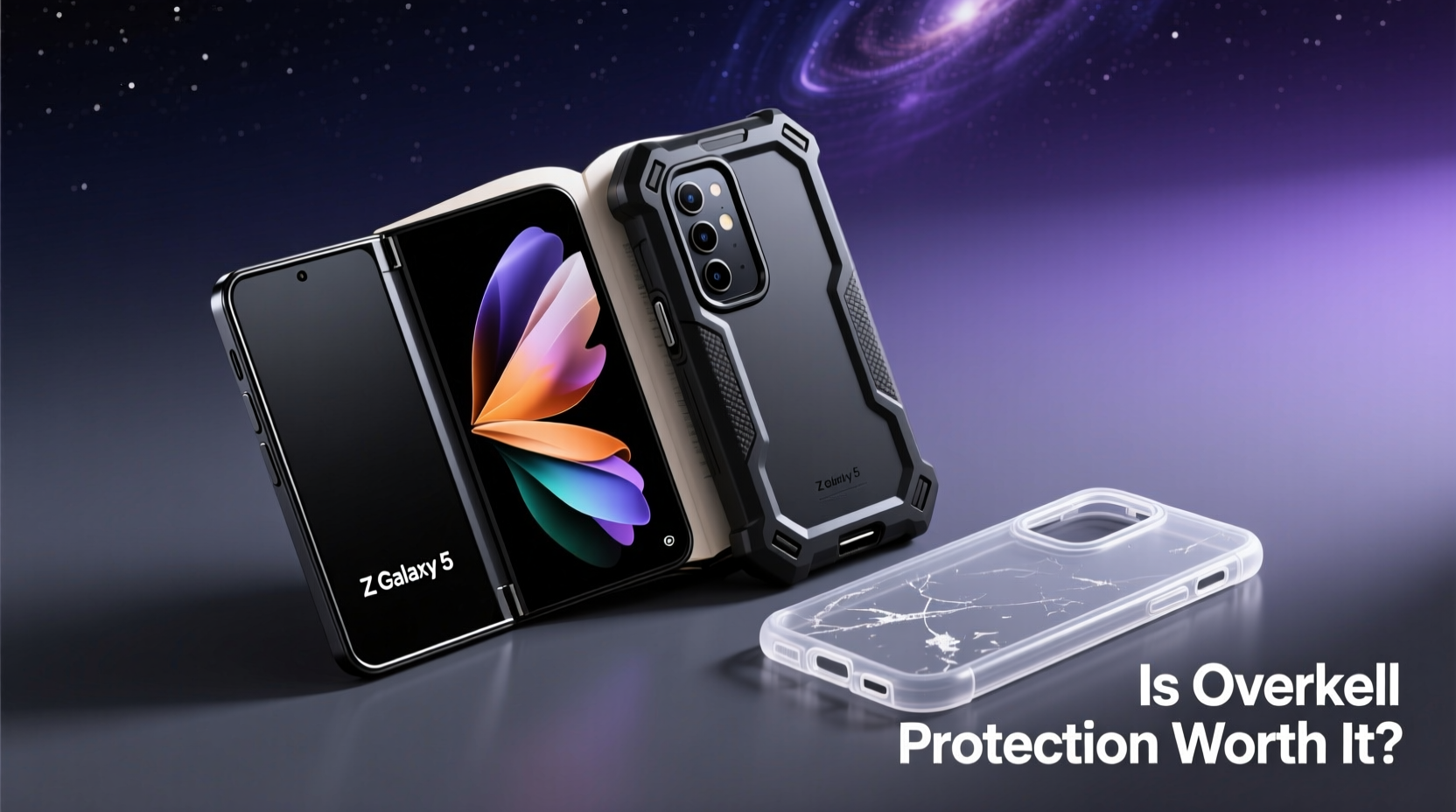
Foldable phones like the Galaxy Z Fold are inherently more complex than traditional smartphones. They feature a flexible OLED display, a precision hinge mechanism, and multiple layers of polymer film designed to withstand repeated folding. While Samsung has improved durability with each generation—especially with the introduction of the Armor Aluminum frame and Gorilla Glass Victus 2 on outer panels—the inner screen remains sensitive.
Unlike conventional glass, the main display uses a plastic-based layer that can scratch more easily and is susceptible to punctures. Even minor impacts near the hinge can misalign components, leading to creasing, screen bubbles, or permanent damage. According to iFixit’s teardown analysis, the internal structure leaves little room for error during impact.
“Foldables aren’t just expensive—they’re precision instruments. A single drop at the wrong angle can compromise both screen integrity and hinge performance.” — David Molko, Mobile Repair Specialist, TechFix Labs
Given this fragility, relying solely on the phone’s built-in durability features may not be enough for everyday use, especially if you're active, commute frequently, or have children around.
Shockproof Cases: Overkill or Essential Insurance?
Shockproof cases are typically made from multi-layer materials—such as TPU (thermoplastic polyurethane), polycarbonate, and reinforced corners—that absorb impact from drops. Many include raised bezels, kickstands, and even screen protectors built into the design. Brands like Spigen, OtterBox, and UAG offer models specifically engineered for the Z Fold series.
Critics argue these cases add unnecessary bulk and detract from the sleek, futuristic appeal of the device. But proponents highlight their real-world benefits:
- Drop protection from heights up to 6–8 feet
- Reinforced corners that absorb direct impact
- Added grip to prevent accidental slips
- Hinge coverage that shields against debris ingress
For users who carry their Z Fold in backpacks, purses, or pockets alongside keys and coins, a rugged case acts as a first line of defense. It's not just about surviving a fall—it's about preventing micro-abrasions and hinge strain over time.
Regular Cases: Convenience vs. Compromise
Standard cases for the Z Fold tend to be minimalist—slim TPU sleeves or leather folios that protect against light scuffs and add grip. They preserve the phone’s slim profile when folded and maintain easy pocketability.
However, they offer minimal protection against drops. Most lack corner reinforcement and don’t extend high enough to protect the screen when the device lands face-down. In practical terms, a regular case might save your phone from a desk bump but won't help much if it slips off a restaurant table onto tile.
A 2023 consumer survey by MobileCare Insights found that 68% of Z Fold users who relied only on slim cases experienced at least one screen-related issue within 12 months—ranging from hinge dust accumulation to visible scratches on the inner display. Meanwhile, only 29% of those using shockproof cases reported similar problems.
Case Comparison: Features at a Glance
| Feature | Shockproof Case | Regular Case |
|---|---|---|
| Drop Protection | High (up to 8 ft) | Low to None |
| Hinge Coverage | Full or partial shielding | Limited or exposed |
| Bulk Added | Moderate to High | Minimal |
| Snap-on Screen Protector | Often included | Rarely included |
| Cost Range | $35–$60 | $20–$40 |
| Long-Term Durability Benefit | Significant | Marginal |
Real-World Scenario: Two Users, Two Outcomes
Consider two Z Fold 5 owners: Maya and Jordan.
Maya opts for a premium leather folio case—sleek, stylish, and wallet-friendly. She likes how thin it keeps the phone when folded. Three months in, she sets her phone down on a café table while reaching for her coffee. It slides off and lands screen-open on a hardwood floor. The impact causes a small crack near the hinge, and Samsung service quotes $599 for a screen replacement.
Jordan chooses a Spigen Tough Armor case with air-cushion corners and an integrated screen protector. He accidentally drops his phone on asphalt while walking. The case takes the brunt, showing scuff marks but leaving the phone unharmed. No repairs needed.
This isn’t an isolated incident. Repair shops across urban centers report a noticeable trend: foldable phones without robust protection account for over 75% of display-related service visits.
What Experts Recommend: A Balanced Approach
While some users prioritize form over function, experts consistently advise prioritizing protection—especially given the exorbitant cost of repairs. That said, not all shockproof cases are created equal.
The best strategy combines smart case selection with good habits:
- Choose a case with **corner air channels** for impact dispersion.
- Ensure the case includes a **built-in screen protector** or allows for third-party installation without interference.
- Look for models with **dust-resistant hinge covers** to prevent particle buildup.
- Avoid overly bulky designs that make folding awkward or prevent proper closure.
- Pair the case with a **screen protector** specifically designed for foldables (e.g., adhesive-free, multi-layer films).
“The right case doesn’t just protect against drops—it reduces wear on the hinge and prevents micro-scratches that degrade the display over time.” — Lena Park, Senior Analyst at MobileShield Review
Frequently Asked Questions
Can I use my Z Fold without any case?
You can, but it’s strongly discouraged. Even minor drops or contact with abrasive surfaces can lead to costly damage. Given the phone’s price, going bare is a high-risk choice with little upside.
Do shockproof cases interfere with wireless charging or folding?
Most well-designed models do not. Premium brands test for compatibility with Qi2 and ensure the case folds smoothly without putting pressure on the screen. Always check product specifications before purchasing.
Are third-party screen protectors safe for the Z Fold?
Only use protectors designed explicitly for your model. Generic ones may not align properly, cause bubbling, or interfere with folding. Adhesive-free, magnetic, or hybrid films from reputable brands (like ESR or Nillkin) are safest.
Action Checklist: Protecting Your Galaxy Z Fold
- ✅ Choose a case with MIL-STD-810G drop certification
- ✅ Confirm it includes hinge and screen edge protection
- ✅ Install a compatible foldable screen protector
- ✅ Avoid placing the phone face-up on hard surfaces
- ✅ Clean the hinge weekly with a dry brush to remove debris
- ✅ Consider a warranty or insurance plan as backup
Final Thoughts: Smart Protection Isn’t Overkill
Calling a shockproof case “overkill” for the Galaxy Z Fold misunderstands the device’s nature. This isn’t just another smartphone—it’s a sophisticated piece of engineering with unique vulnerabilities. Spending $40–$60 on a high-quality protective case is less than 3% of the phone’s total cost and can prevent thousands in repair fees.
Meanwhile, relying on a basic case or no case at all may feel convenient today, but it increases the likelihood of premature wear, screen damage, or hinge failure. In the long run, that convenience becomes costly.
If you’ve invested in a Galaxy Z Fold, treat it like the premium device it is. A slightly thicker profile is a small trade-off for peace of mind, longevity, and uninterrupted use. After all, the best feature of any phone is that it still works—day after day.




 浙公网安备
33010002000092号
浙公网安备
33010002000092号 浙B2-20120091-4
Comments
No comments yet. Why don't you start the discussion?