
A garage door that opens on its own is more than just a nuisance—it can be a serious safety and security risk. Whether it happens in the middle of the night or during the day with no one near the remote, unexpected activation undermines trust in your home’s security system. The causes range from simple signal interference to aging hardware or even faulty sensors. Understanding the root causes and knowing how to address them can prevent future incidents and restore peace of mind.
Common Reasons Why Your Garage Door Opens Randomly
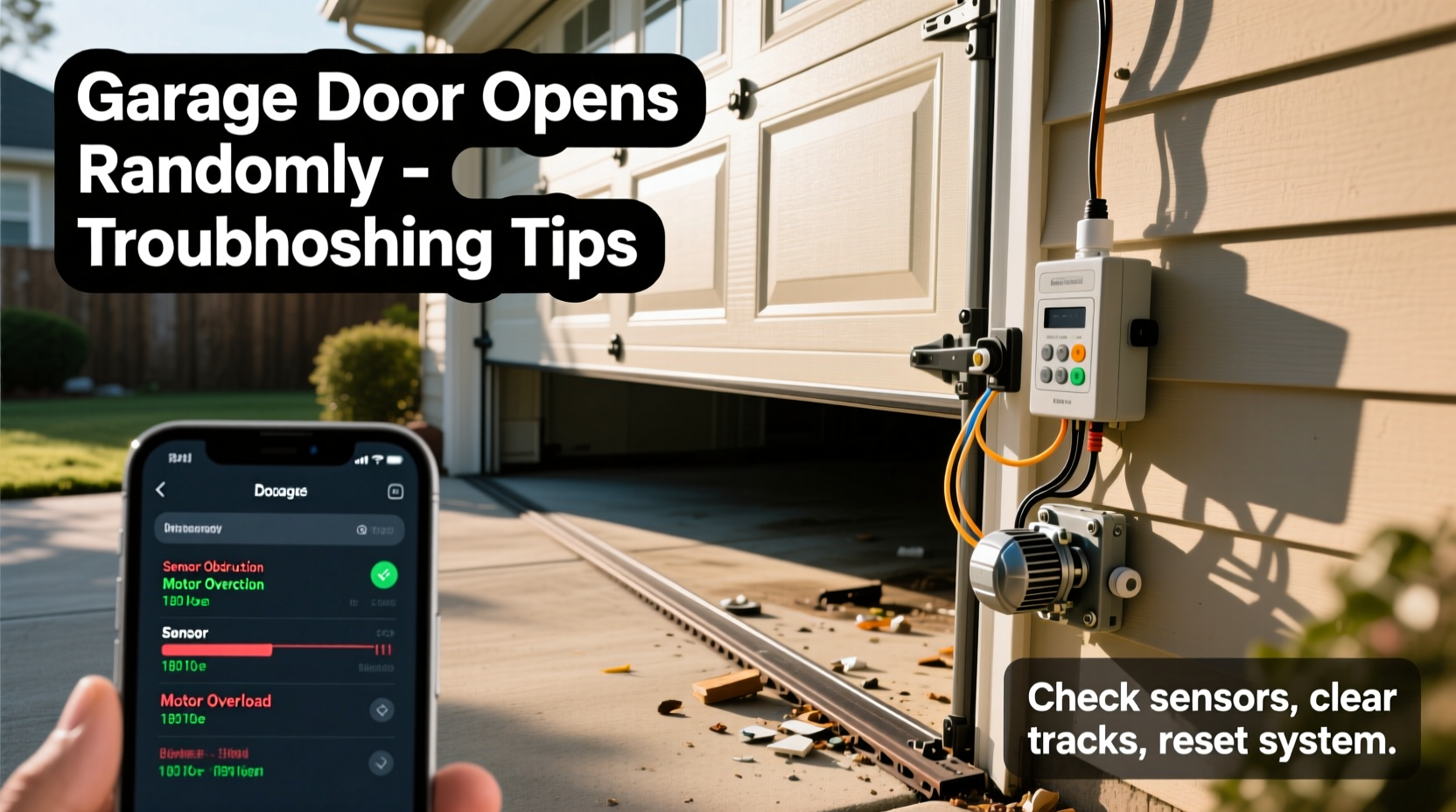
Several technical and environmental factors can trigger unintended garage door operation. Identifying these early helps narrow down the solution.
- Remote control interference: Nearby electronic devices, especially those using similar radio frequencies (like ham radios, baby monitors, or other remotes), can send signals that mimic your opener.
- Stuck or malfunctioning wall button: If the indoor control panel button is jammed or short-circuited, it may continuously send an open signal.
- Faulty logic board: The brain of your garage door opener can degrade over time, leading to erratic behavior like spontaneous activation.
- Neighbor’s remote frequency overlap: In rare cases, a neighbor’s garage remote may operate on a similar frequency, especially if both units are older models without rolling code technology.
- Loose wiring or damaged sensors: Wires that have come loose inside the motor unit or sensor misalignment can cause intermittent electrical signals that trigger movement.
- Solar flare or electromagnetic interference (EMI): Though uncommon, extreme EMI events have been documented to interfere with sensitive electronics, including garage door systems.
Step-by-Step Troubleshooting Guide
Follow this systematic approach to isolate and resolve the cause of random activation.
- Disconnect the wall control button. Unplug the wired switch from the opener. Monitor the door for 24 hours. If it stops opening randomly, the issue lies within the button or its wiring.
- Test each remote individually. Replace batteries and reprogram each remote one at a time. Observe if the problem returns after adding a specific remote back into the system.
- Check for physical obstructions around sensors. Ensure the safety reversal sensors near the floor are clean, aligned, and free of cobwebs or debris.
- Inspect wiring connections. Turn off power to the opener and examine all internal wires for fraying, corrosion, or looseness, particularly near the terminal block.
- Update or replace older openers. Units manufactured before 1993 lack modern safety standards and rolling codes, making them vulnerable to interference and hacking.
- Reset the opener’s logic board. Disconnect power for at least 5 minutes, then reconnect. This clears temporary glitches in some models.
Do’s and Don’ts When Dealing With Unplanned Activation
| Do | Don't |
|---|---|
| Keep remotes away from heat sources and electronics that emit signals | Leave spare remotes plugged into chargers near the opener |
| Regularly test sensor alignment and response | Ignore flickering lights on the opener unit |
| Upgrade to a model with rolling code encryption | Use duct tape or makeshift fixes on wiring |
| Label and store remotes securely out of children's reach | Assume the problem is “just static” without investigation |
Real-Life Example: The Case of the Midnight Openings
In suburban Columbus, Ohio, a homeowner reported their garage door opening every night around 2:17 AM. No remotes were being used, and the wall button appeared functional. After ruling out pets and weather, a technician discovered that a new Wi-Fi router installed in the adjacent house was emitting a pulse pattern that closely matched the legacy frequency of the garage opener. The homeowner had a 15-year-old chain-drive model without rolling code protection. Replacing the opener with a modern belt-drive unit featuring encrypted signals resolved the issue permanently.
“Older garage door openers are surprisingly vulnerable to cross-signals. We recommend upgrading any unit over 10 years old—not just for reliability, but for security.” — Daniel Reeves, Certified Door Technician (CDT), Overhead Door Systems
When to Call a Professional
While many issues can be diagnosed at home, certain red flags demand expert attention:
- The opener emits burning smells or unusual noises.
- Multiple components fail repeatedly despite replacement.
- You suspect tampering or unauthorized access.
- The door reverses unpredictably or fails to close completely.
Professionals can perform diagnostic tests using oscilloscopes to detect rogue signals and verify circuit integrity. They can also ensure compliance with current UL 325 safety standards, which govern automatic residential gate and door operators.
Preventative Maintenance Checklist
Stay ahead of malfunctions with regular upkeep. Use this checklist monthly or quarterly:
- ✅ Test reverse mechanism by placing an object under the door—should reverse upon contact
- ✅ Clean photo-eye lenses with a soft cloth
- ✅ Tighten loose screws on tracks and brackets
- ✅ Lubricate rollers, hinges, and rail (avoid lubricating the track itself)
- ✅ Verify remote range isn’t excessive (shouldn’t work from the street)
- ✅ Reprogram remotes and erase unused ones
- ✅ Inspect wiring for wear or rodent damage
- ✅ Confirm the emergency release cord operates smoothly
Frequently Asked Questions
Can a power surge cause my garage door to open by itself?
Yes. A strong electrical surge can reset the opener’s logic board or trigger a false command. Installing a surge protector designed for garage door motors reduces this risk significantly.
Is it possible someone is hacking my garage door?
With older fixed-code openers, yes. Hackers can use replay devices to capture and resend your signal. Modern rolling code systems change the code with every use, making this nearly impossible. Always upgrade to a model with Security+ 2.0 or equivalent encryption.
Why does my garage door open only once and not repeat?
If the event is isolated, it could be due to transient interference—a passing vehicle with a powerful transmitter, nearby construction equipment, or even atmospheric conditions. However, if it recurs, treat it as a developing fault and investigate systematically.
Conclusion: Take Control of Your Garage Security
A garage door that opens randomly isn’t something to ignore. It reflects underlying vulnerabilities in your home’s automation system—whether mechanical, electrical, or technological. By methodically testing components, eliminating interference, and upgrading outdated hardware, you regain full control over your garage’s operation. Don’t wait for a break-in or accident to act. Implement the checks outlined here, stay vigilant about maintenance, and consider investing in smart openers with app-based monitoring for real-time alerts.




 浙公网安备
33010002000092号
浙公网安备
33010002000092号 浙B2-20120091-4
Comments
No comments yet. Why don't you start the discussion?