
Choosing the right phone case isn’t just about style—it’s about long-term protection. As smartphones become more advanced and expensive, safeguarding them from drops, scratches, and internal damage is critical. Two increasingly popular options are geometric cases and magnetic cases. While both offer distinct advantages, they also come with unique trade-offs that can affect your phone’s safety over time. Understanding these differences helps you decide which option truly protects your device for years to come.
Understanding Geometric Phone Cases
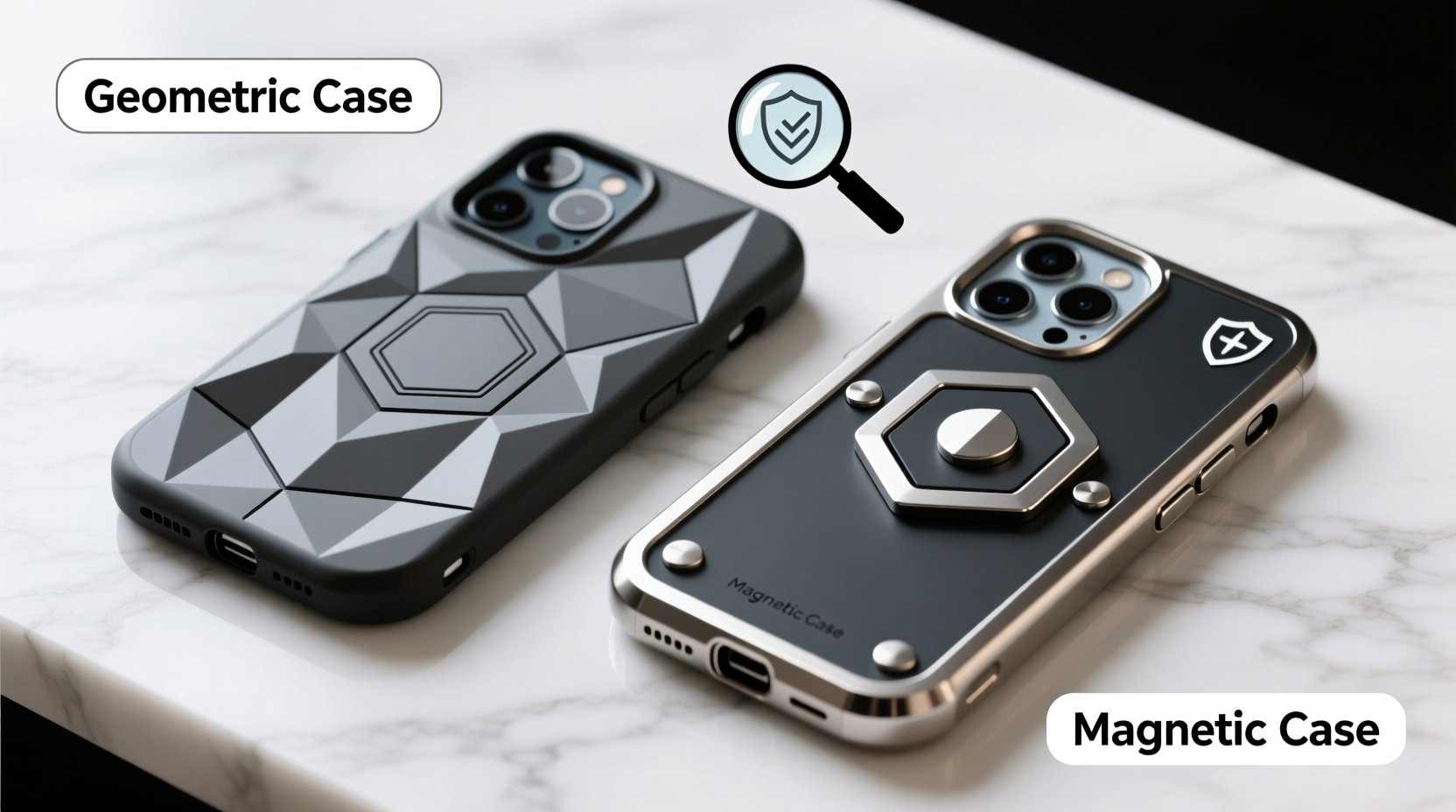
Geometric phone cases are named for their angular, often multi-faceted designs that combine aesthetic appeal with structural reinforcement. Typically made from rigid polycarbonate or TPU (thermoplastic polyurethane), these cases feature raised edges, shock-absorbing corners, and sometimes layered construction to disperse impact energy during a fall.
Their design philosophy centers on physical protection: thickened edges guard the screen and camera when placed face-down, while textured surfaces improve grip. Some models even incorporate air-cushion technology in the corners—small hollow zones engineered to compress upon impact, reducing stress on the phone’s chassis.
How Magnetic Cases Work—and What They’re Used For
Magnetic cases integrate metal plates or built-in magnets into the back panel, enabling compatibility with car mounts, wireless chargers, and modular accessories. Most use neodymium magnets, known for their strong pull force despite small size. These cases range from minimalist folios to rugged hybrid models with magnetic backs.
The convenience factor is undeniable: snap your phone onto a dashboard mount without fumbling with clamps, or attach external battery packs magnetically. Apple’s MagSafe ecosystem has accelerated this trend, with many third-party manufacturers producing compatible cases featuring ring-shaped magnet arrays precisely aligned for optimal attachment and charging efficiency.
“Magnetic alignment systems like MagSafe are engineered to minimize interference, but improper third-party cases can disrupt signal transmission or cause uneven wear.” — Dr. Alan Zhou, Mobile Hardware Engineer at TechInsight Labs
Comparing Long-Term Safety: Key Factors
When evaluating long-term safety, consider not just immediate protection but how each case type affects your phone’s hardware, software performance, and daily usability over months or years.
| Factor | Geometric Case | Magnetic Case |
|---|---|---|
| Dropping Protection | Excellent—engineered shock dispersion, reinforced corners | Fair to Good—depends on build; some prioritize magnetism over padding |
| Screen & Camera Clearance | High—raised bezels prevent surface contact | Variable—cheaper models may lack proper elevation |
| Magnet Interference Risk | None | Low with certified cases; higher with off-brand models |
| Heat Dissipation | Good—rigid materials allow airflow | Potentially reduced—metal components trap heat near back panel |
| Durability Over Time | High—resists yellowing and cracking if UV-resistant | Moderate—adhesives holding magnets may degrade |
| Compatibility with Wireless Charging | Generally good unless overly thick | Designed for it (especially MagSafe), but misaligned magnets reduce efficiency |
Hidden Risks of Magnetic Cases
While modern smartphones are designed to tolerate moderate magnetic fields, poorly constructed magnetic cases introduce subtle long-term risks. The most common issue is adhesive failure: many budget magnetic cases use double-sided tape to attach the metal plate, which weakens over time due to temperature fluctuations and repeated mounting/demounting. A loose metal plate can shift inside the case, creating pressure points that crack the phone’s back glass—especially problematic for devices with glass-backed bodies like iPhones or Galaxy S series models.
Additionally, strong magnets placed too close to the compass or NFC module can interfere with sensor calibration. Users have reported temporary GPS inaccuracies or difficulty using contactless payments after prolonged use of non-compliant magnetic cases. Though firmware updates often compensate, persistent interference may require recalibration or case removal.
A Real-World Example: The Commuter’s Dilemma
Consider Sarah, a sales executive who drives two hours daily and relies on her phone for navigation. She initially chose a sleek magnetic case for easy car mounting. After nine months, she noticed her phone’s battery drained faster during drives and the compass frequently recalibrated mid-route. Upon inspection, a technician found the case’s unshielded magnet was affecting the proximity sensor and inducing minor electrical resistance in the charging coil. Switching to a geometric case with a separate, adjustable vent mount resolved the issues—her phone stabilized, and she retained drop protection without compromising functionality.
Best Practices for Long-Term Phone Safety
No matter which case type you choose, longevity depends on usage habits and product quality. Follow this checklist to maximize protection and minimize hidden damage.
✅ Phone Case Safety Checklist
- Choose cases from reputable brands with independent drop-test certifications.
- Ensure precise cutouts for ports, speakers, and cameras to prevent dust buildup or obstruction.
- Inspect your case monthly for cracks, warping, or loosening components.
- Remove the case weekly to clean dust and debris from the phone’s edges.
- Replace any case showing signs of wear—especially after a major drop.
- If using a magnetic case, verify compatibility with your phone model and wireless charging standard.
- Avoid exposing either case type to extreme heat (e.g., left in a hot car), which accelerates material degradation.
Which Is Safer in the Long Run?
For pure physical protection and consistent performance over time, geometric cases hold a clear advantage. Their focus on structural integrity, impact absorption, and material resilience makes them ideal for users prioritizing durability. They don’t introduce electromagnetic variables and typically age more predictably than magnetic counterparts.
Magnetic cases excel in convenience and ecosystem integration but require careful selection. High-quality, manufacturer-approved magnetic cases—such as Apple-certified MagSafe models—are engineered to coexist safely with internal components. However, cheaper alternatives pose measurable risks: adhesive failure, heat retention, and sensor disruption can accumulate into premature wear or functional issues.
“The safest case isn’t always the most convenient one. If you value your phone’s lifespan, prioritize protection first, then add accessories thoughtfully.” — Lena Patel, Senior Device Analyst at MobileGuard Review
Frequently Asked Questions
Can magnetic cases damage my phone’s battery?
No direct evidence shows magnets degrade lithium-ion batteries. However, inefficient wireless charging caused by misaligned magnets can generate excess heat, which over time contributes to battery wear. Using well-designed magnetic cases minimizes this risk.
Do geometric cases yellow over time?
Some transparent geometric cases made from lower-grade TPU may yellow due to UV exposure and skin oils. Opt for UV-resistant or matte-finish models to reduce discoloration. Regular cleaning with isopropyl alcohol (diluted) helps maintain clarity.
Are magnetic cases safe for medical devices like pacemakers?
The FDA advises keeping all magnets—at least 6 inches away—from implanted medical devices. If you or someone nearby uses a pacemaker or defibrillator, avoid carrying a magnetic phone case in a chest pocket.
Final Recommendation
For long-term phone safety, geometric cases offer superior, predictable protection without introducing secondary risks. They shield against drops, scratches, and environmental wear—common causes of permanent damage. Magnetic cases can be safe if chosen carefully: stick to trusted brands, ensure proper fit, and monitor for signs of interference or overheating.
Ultimately, the best case balances protection, usability, and peace of mind. Evaluate your lifestyle: if you frequently drive and rely on mounts, pair a durable geometric case with a clip-on magnetic adapter instead of embedding magnets directly. This hybrid approach preserves safety while retaining convenience.




 浙公网安备
33010002000092号
浙公网安备
33010002000092号 浙B2-20120091-4
Comments
No comments yet. Why don't you start the discussion?