
Children who are labeled as \"gifted and talented\" often demonstrate exceptional abilities across one or more domains, including intellectual, creative, artistic, leadership, or academic fields. Yet despite the frequency of the term in educational settings, confusion persists about what it truly means to be gifted. Misconceptions range from equating giftedness with high achievement to assuming that gifted students require no additional support. A deeper understanding of the definition, identification criteria, and core characteristics is essential for parents, educators, and policymakers aiming to foster equitable and effective learning environments.
Defining Gifted and Talented: Beyond High Test Scores
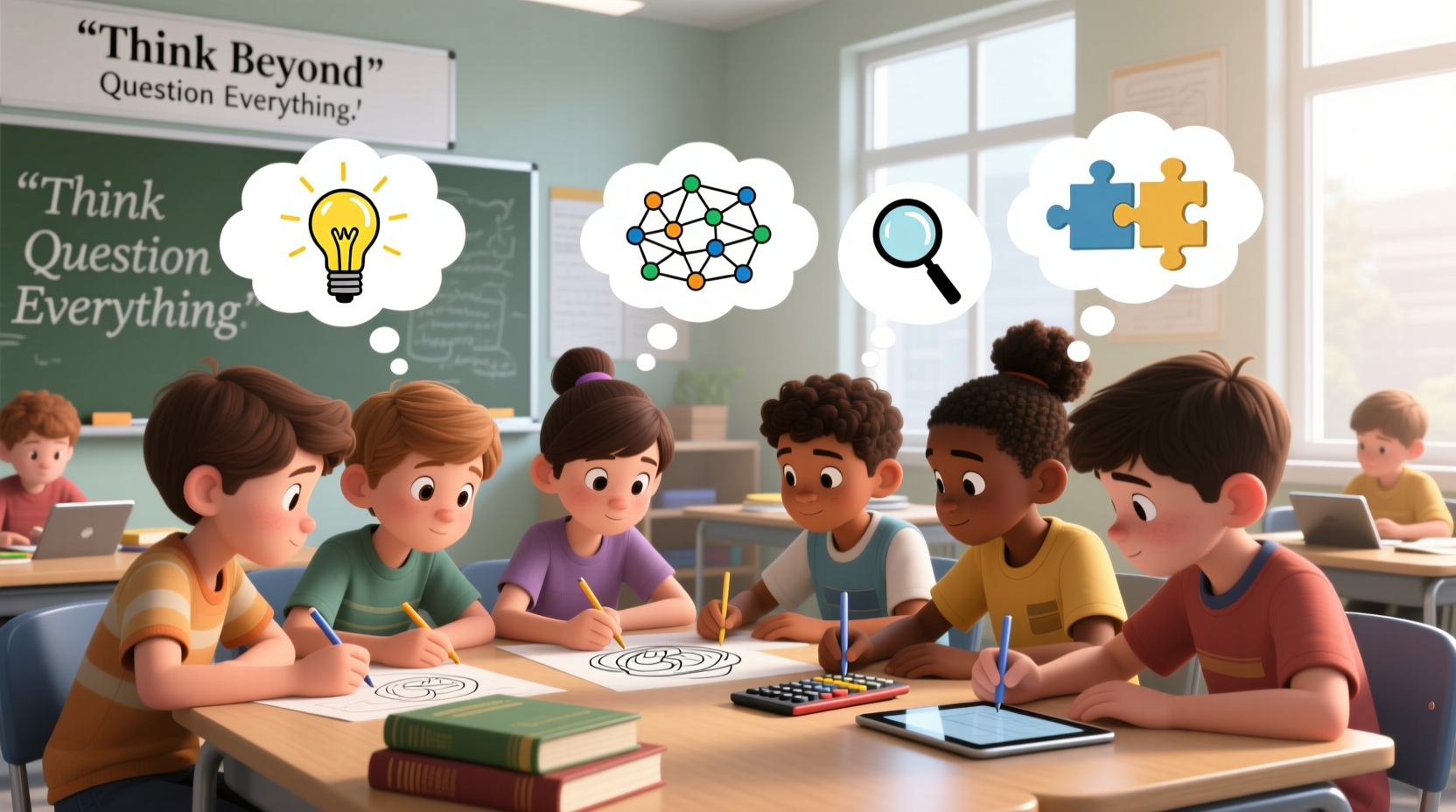
The term \"gifted and talented\" is not universally standardized, but most definitions emphasize advanced cognitive ability, creativity, or specific aptitudes that place a student significantly above peers in a particular area. The U.S. Department of Education’s National Excellence Report (1993) defines gifted students as those who “give evidence of high performance capability in areas such as intellectual, creative, artistic, or leadership capacity, or in specific academic fields, and who require services or activities not ordinarily provided by the school to fully develop such capabilities.”
This definition underscores a crucial point: giftedness is not just about excelling in schoolwork—it’s about potential that demands tailored educational experiences. A child may score exceptionally high on an IQ test, show intense curiosity, master complex concepts rapidly, or display deep emotional sensitivity—yet still go unidentified if schools rely solely on grades or compliance as markers of ability.
“Giftedness is not a privilege; it’s a different way of thinking and experiencing the world that requires thoughtful support.” — Dr. Joanne Foster, Child Development Expert
Core Characteristics of Gifted Learners
While no two gifted children are alike, certain traits commonly appear across populations. These characteristics can manifest in cognitive, social-emotional, and behavioral domains:
- Advanced reasoning skills: Ability to grasp abstract concepts quickly, see patterns, and solve problems in unconventional ways.
- Intense curiosity: Asks probing questions, seeks out information independently, and shows passion for specific topics.
- High memory capacity: Retains large amounts of information with minimal repetition.
- Asynchronous development: Cognitive abilities may far exceed emotional or physical maturity, leading to mismatches in expectations.
- Sensitivity and empathy: Deep emotional responses to events, concern for fairness, and heightened awareness of others’ feelings.
- Perfectionism: Sets extremely high standards, which can lead to frustration or avoidance when outcomes fall short.
- Preference for older companions: Often feels more comfortable interacting with adults or older peers due to shared interests or communication style.
Identification Methods and Common Pitfalls
Identifying gifted students requires more than a single IQ test. Best practices involve multiple sources of data, including teacher observations, portfolio reviews, achievement testing, and behavioral checklists. Some schools use group IQ screenings (e.g., CogAT), while others employ individual assessments like the WISC-V for deeper analysis.
Despite available tools, many gifted children remain under-identified—especially those from low-income families, English language learners, or students with coexisting learning disabilities (twice-exceptional or 2e learners). Bias in referral processes and overreliance on standardized metrics contribute to disparities in representation.
| Identification Method | Strengths | Limits |
|---|---|---|
| IQ Testing | Measures cognitive potential objectively | May miss creative or practical intelligence; cultural bias possible |
| Teacher Nomination | Reflects real-world classroom behavior | Subject to implicit bias or lack of training |
| Portfolios/Work Samples | Showcases depth of thinking and creativity | Time-intensive to evaluate; inconsistent criteria |
| Parent Input | Provides developmental history and home behaviors | May reflect subjective pride or concern |
Real Example: Maya’s Story
Maya, a third-grader in a suburban public school, consistently finished math assignments in half the time of her peers. She began reading chapter books fluently by age five and could recite entire sections of science documentaries. However, she frequently disrupted class by blurting out answers and became frustrated when lessons moved slowly. Her teacher initially viewed her as “disruptive” rather than gifted. It wasn’t until a school psychologist administered a cognitive assessment—and her parents submitted a portfolio of her independent projects—that Maya was identified for the gifted program. With appropriate differentiation and mentorship, her engagement and peer relationships improved dramatically.
Maya’s case illustrates how behavioral challenges can mask giftedness, particularly in children who haven’t learned to regulate their intensity. Without proactive identification strategies, such students risk being misunderstood or mislabeled.
Supporting Gifted Learners: A Practical Checklist
Effective support begins with recognition—but must extend into daily practice. Whether at home or in the classroom, here’s what helps gifted students thrive:
- Evaluate multiple forms of evidence before identifying giftedness.
- Offer curriculum compacting to eliminate redundant material.
- Provide opportunities for independent study or passion projects.
- Incorporate critical thinking and open-ended problem-solving tasks.
- Teach emotional regulation and coping strategies for perfectionism.
- Encourage peer collaboration with intellectual equals through cluster grouping or pull-out programs.
- Train educators on the social-emotional needs of gifted learners.
- Maintain communication between parents, teachers, and specialists.
FAQ: Common Questions About Giftedness
Can a child be gifted and have a learning disability?
Yes. These students are referred to as twice-exceptional (2e). For example, a child might have a high IQ and strong verbal reasoning but struggle with dyslexia or ADHD. Their strengths can mask their challenges—and vice versa—making diagnosis and support complex but essential.
Do gifted students always get good grades?
Not necessarily. Some gifted learners underachieve due to boredom, lack of challenge, anxiety, or asynchronous development. A student may master material quickly but refuse to complete repetitive assignments, resulting in poor grades despite high ability.
Is giftedness something you’re born with, or can it be developed?
While innate aptitude plays a role, environment and opportunity are equally important. Giftedness involves both potential and development. Access to enriched learning experiences, mentorship, and encouragement can help latent talents emerge and flourish.
Conclusion: Recognizing Potential, Nurturing Growth
Understanding what it means to be gifted and talented goes beyond labels and test scores. It requires recognizing diverse expressions of ability, addressing the unique social and emotional needs of these learners, and ensuring equitable access to appropriate educational opportunities. Too many bright minds are overlooked because they don’t fit a narrow mold of what giftedness “should” look like. By embracing a broader, more inclusive perspective, educators and families can create environments where all high-potential students—regardless of background or behavior—are seen, supported, and challenged to reach their full potential.




 浙公网安备
33010002000092号
浙公网安备
33010002000092号 浙B2-20120091-4
Comments
No comments yet. Why don't you start the discussion?