
Recognizing a gifted child goes beyond high test scores or early reading skills. True giftedness often reveals itself through patterns of thinking, emotional depth, and behavioral tendencies that differ significantly from developmental norms. For parents and educators, understanding these signs is the first step toward nurturing a child’s extraordinary potential. Without proper identification and support, gifted children may underperform, become disengaged, or struggle emotionally. This guide provides a comprehensive look at the behavioral indicators of giftedness, actionable steps to foster development, and real-world insights to help you respond effectively.
Understanding Giftedness: Beyond Intelligence
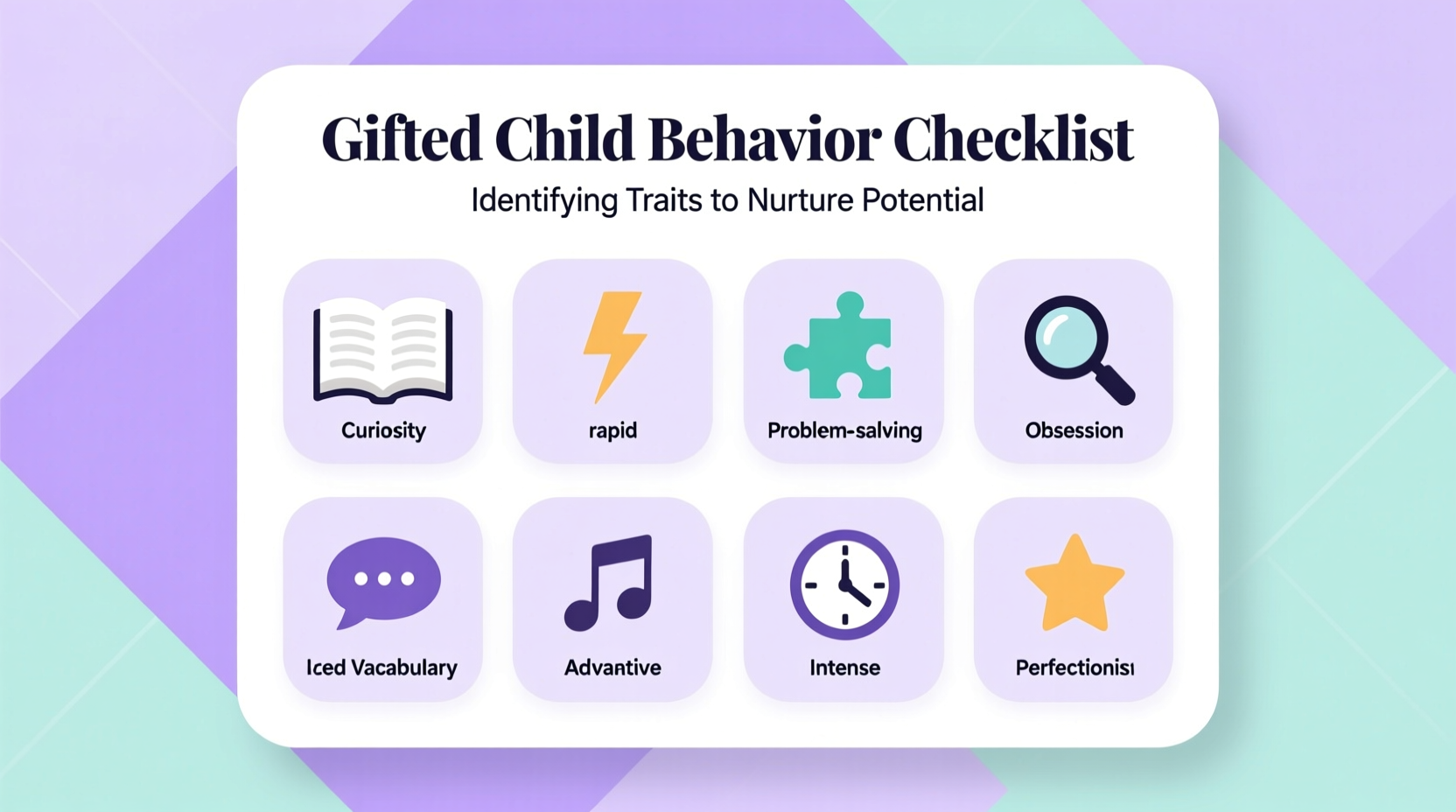
Giftedness is not solely about IQ. While cognitive ability plays a role, it's only one dimension. The National Association for Gifted Children (NAGC) defines gifted individuals as those who demonstrate \"out-of-the-box\" reasoning, exceptional creativity, intense focus, and advanced problem-solving skills in one or more domains—academic, artistic, leadership, or kinesthetic.
Many gifted children process information differently. They may:
- Ask complex questions about abstract concepts like time, morality, or existence.
- Display an unusual memory for details, such as dates, facts, or sequences heard once.
- Teach themselves to read, write, or calculate well before school age.
- Exhibit asynchronous development—advanced intellectually but emotionally younger than peers.
This mismatch between intellectual and emotional maturity can lead to frustration, perfectionism, or social isolation if not properly addressed.
“Giftedness is not just about being ‘smart.’ It’s about perceiving the world differently—with greater intensity, complexity, and emotional resonance.” — Dr. Marylou Kelly Streznewski, author of *Gifted Grownups*
Behavioral Checklist: Identifying Traits of a Gifted Child
Early recognition allows caregivers to tailor environments that challenge and support the child. Use this evidence-based checklist to assess potential signs of giftedness across key developmental areas.
| Domain | Common Behaviors | When to Explore Further |
|---|---|---|
| Cognitive | Asks probing questions; grasps complex ideas quickly; self-teaches new skills; remembers vast amounts of information. | If the child consistently masters material far beyond grade level without formal instruction. |
| Creativity | Invents stories, games, or systems; thinks in metaphors; resists conventional solutions. | If imaginative output is highly detailed, original, and sustained over time. |
| Emotional Sensitivity | Deeply affected by injustice, illness, or global issues; worries about death or fairness; forms intense attachments. | If emotional reactions seem disproportionate or persistent despite reassurance. |
| Social Behavior | Prefers older companions; struggles with peer play due to mismatched interests; may withdraw or dominate conversations. | If the child expresses loneliness despite high intelligence or avoids group activities. |
| Learning Habits | Hyperfocuses on topics of interest; resists repetitive drills; becomes bored easily in structured settings. | If boredom leads to defiance, daydreaming, or declining academic performance. |
Nurturing Potential: Practical Strategies for Parents and Educators
Once traits are identified, the focus shifts from detection to development. Nurturing a gifted child requires intentionality—not pushing achievement, but supporting growth in a balanced way.
1. Provide Intellectual Challenge
Gifted children thrive on meaningful work. Offer open-ended projects, access to advanced materials, and opportunities to explore passions deeply. Instead of accelerating grades, consider enrichment: visiting museums, engaging in Socratic discussions, or connecting with mentors in fields of interest.
2. Support Emotional Development
High sensitivity often accompanies giftedness. Validate feelings without dismissing them as “too dramatic.” Teach coping strategies like journaling, mindfulness, or using a feelings chart to articulate inner experiences.
3. Encourage Peer Connections
Isolation is a common risk. Seek out gifted programs, summer camps, or online communities where children can interact with intellectual peers. Shared curiosity fosters belonging.
4. Balance Structure and Autonomy
While routines provide security, gifted children need space for self-directed learning. Allow choice in homework order, project topics, or free time activities to build intrinsic motivation.
Real Example: How One Family Responded to Early Signs
Sophie, age 6, taught herself to read at 3 and could recite entire dinosaur classifications by heart. In first grade, she began refusing to go to school, saying, “It’s all baby stuff.” Her parents noticed she was also crying over news reports about climate change and writing elaborate stories about intergalactic peace treaties.
After consulting a child psychologist specializing in gifted education, Sophie was formally assessed. Results confirmed advanced cognitive abilities and heightened emotional intensity. Her school agreed to compact her curriculum—allowing her to skip redundant lessons—and introduced independent study blocks. At home, her parents started a weekly “Big Questions” discussion and enrolled her in a local science outreach program for young learners.
Within three months, Sophie’s anxiety decreased, and she began making friends who shared her interests. The key wasn’t acceleration alone—it was alignment: matching her environment to her intellectual and emotional needs.
Step-by-Step Guide to Supporting a Gifted Child
- Observe and Document: Keep a log of behaviors, questions, and interests over several weeks.
- Consult Professionals: Seek evaluation from a licensed psychologist experienced in gifted assessment.
- Communicate with School: Share findings with teachers; request differentiated instruction or enrichment options.
- Create a Growth Plan: Set goals for intellectual, social, and emotional development with input from the child.
- Monitor Progress and Adjust: Reassess every 6–12 months; adapt strategies as the child grows.
Frequently Asked Questions
Can a gifted child also have a learning disability?
Yes. This is known as twice-exceptional (2e). A child might be gifted in math but have dyslexia or ADHD. These coexisting conditions can mask each other, leading to missed diagnoses. Comprehensive assessment is essential.
What if my child excels in one area but not others?
Asynchronous development is common. A child may read at a 5th-grade level while struggling with fine motor skills or social cues. Support should be tailored to strengths and challenges, not averaged across domains.
Do gifted children always succeed academically?
No. Without appropriate stimulation, they may disengage, underachieve, or develop avoidance behaviors. Boredom can manifest as distraction, defiance, or withdrawal. Success depends on environmental fit, not potential alone.
Conclusion: Empowering Extraordinary Minds
Identifying a gifted child is not about labeling—it’s about listening. Their intense questions, deep empathy, and relentless curiosity are signals, not disruptions. By recognizing the full spectrum of gifted behaviors and responding with informed care, parents and educators can transform potential into purpose.
The goal isn’t to raise a prodigy, but to raise a resilient, thoughtful individual who feels seen, challenged, and supported. Start today: observe with curiosity, act with compassion, and advocate with confidence.




 浙公网安备
33010002000092号
浙公网安备
33010002000092号 浙B2-20120091-4
Comments
No comments yet. Why don't you start the discussion?