
Gifted learners process information differently. They often grasp complex concepts quickly, ask deep questions, and exhibit intense focus on topics of interest. While their intellectual capacity is advanced, their emotional and social development may progress at a different pace. Choosing the right gift isn’t just about entertainment—it’s about meeting their cognitive needs, validating their passions, and encouraging exploration beyond the classroom.
The best gifts for gifted learners don’t simply occupy time; they challenge assumptions, invite problem-solving, and open doors to new ways of thinking. Whether it's a puzzle that requires lateral reasoning or a science kit that allows real-world experimentation, these tools become catalysts for deeper inquiry and sustained engagement.
Understanding the Mind of a Gifted Learner
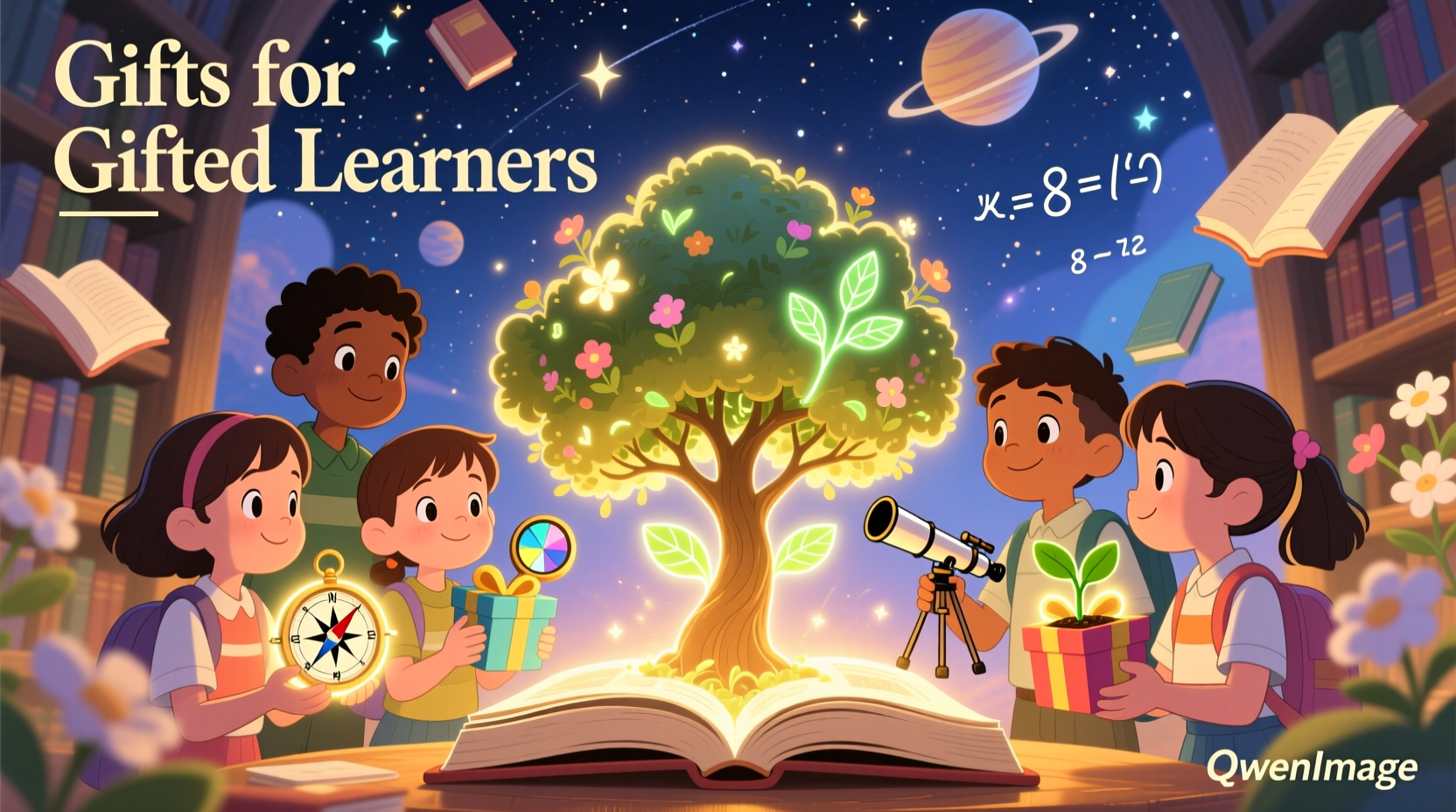
Giftedness goes beyond high test scores or early reading skills. It often includes traits like asynchronous development (where cognitive abilities outpace emotional maturity), perfectionism, sensitivity to injustice, and an insatiable appetite for learning. These children may become frustrated with repetitive schoolwork or disengage when material lacks depth.
Because of this, traditional toys or off-the-shelf games rarely hold their attention. What excites them is complexity, autonomy, and meaning. A gift that respects their intellect—by offering open-ended challenges or opportunities for discovery—can have lasting impact.
“Curiosity is the engine of intellectual achievement in gifted children. The right tools don’t just entertain—they sustain that inner drive.” — Dr. Rebecca Kim, Child Cognitive Psychologist
Choosing Gifts That Encourage Deep Engagement
When selecting a gift, consider whether it supports self-directed learning, invites iteration, and allows room for failure—a crucial part of growth. Open-ended materials are especially effective because they adapt to evolving interests and skill levels.
For example, a simple electronics kit can evolve from basic circuit building to programming microcontrollers as the child advances. Similarly, a journal paired with a field guide transforms into a personal research log during nature walks or urban explorations.
Key Criteria for Thoughtful Selection
- Depth over breadth: Choose items that allow progressive mastery rather than one-time use.
- Autonomy: Prioritize gifts that let the learner take ownership of the process.
- Interdisciplinary potential: Look for tools bridging science, art, logic, and storytelling.
- Challenge tolerance: Include some level of difficulty to prevent boredom but avoid overwhelming frustration.
Top Gift Categories That Inspire Growth
Certain categories consistently resonate with gifted learners due to their flexibility, intellectual rigor, and creative possibilities.
1. Logic & Strategy Games
Games like Set, Rush Hour, or Laser Maze require deductive reasoning and spatial awareness. Unlike conventional board games, these emphasize pattern recognition and multi-step planning—skills central to mathematical and scientific thinking.
2. STEM Exploration Kits
High-quality kits in robotics, coding, chemistry, or astronomy provide hands-on experience with real phenomena. Options like Arduino starter kits or Thames & Kosmos engineering sets encourage trial, error, and refinement—mirroring authentic scientific inquiry.
3. Creative Expression Tools
Many gifted learners think in metaphors and images. Supplies such as animation software, stop-motion kits, or digital music composition apps empower them to translate abstract ideas into tangible creations.
4. Books That Provoke Thought
Look beyond age-level fiction. Biographies of scientists, philosophical picture books (Is a Worry Worrying?), or nonfiction titles like The Boy Who Harnessed the Wind stimulate moral reasoning and contextual understanding.
5. Real-World Problem-Solving Challenges
Subscriptions to platforms like Breakout EDU or DIY.org offer weekly missions ranging from designing sustainable cities to decoding ancient scripts. These simulate project-based learning environments outside school.
| Age Range | Recommended Gift Type | Why It Works |
|---|---|---|
| 6–9 | Magnatiles + Challenge Cards | Builds spatial reasoning and creative engineering skills through open-ended play. |
| 8–12 | Osmo Coding Kit | Introduces computational thinking with tactile blocks and instant feedback. |
| 10+ | National Geographic Rock Tumbler | Combines geology, patience, and craftsmanship—ideal for deep-dive learners. |
| 12+ | Python for Kids programming book + Raspberry Pi | Enables real coding projects, fostering independence and technical fluency. |
A Real Example: How One Gift Changed a Learner’s Trajectory
Twelve-year-old Maya had always loved patterns but felt disconnected in math class, where lessons moved too slowly. For her birthday, her aunt gave her a cryptography workbook paired with a simple cipher wheel. Within weeks, Maya was decoding messages, researching historical codes, and even creating her own encryption method.
Her parents noticed a shift—not only did she spend hours on self-designed puzzles, but she began asking to study modular arithmetic and binary systems. By January, she enrolled in an online cryptography course for teens. The gift didn’t just entertain; it unlocked a pathway to autonomous learning and confidence in tackling advanced material.
This illustrates a powerful truth: when gifted learners find a domain that matches their intensity, they don’t just learn—they dive in completely.
Step-by-Step Guide to Selecting the Right Gift
Finding the ideal gift doesn’t have to be guesswork. Follow this five-step process to ensure your choice aligns with the child’s cognitive profile and interests.
- Observe current fascinations: Note what they read, draw, or talk about repeatedly—dinosaurs, space, architecture, ethics.
- Assess learning style: Are they visual, kinesthetic, or auditory? Do they prefer solo projects or collaborative ones?
- Identify gaps: Does their environment lack creative outlets, scientific tools, or intellectual peers?
- Research quality options: Prioritize reputable brands known for educational value (e.g., ThinkFun, LEGO Education, Makeblock).
- Add a personal touch: Include a note inviting discussion: “I’d love to hear what you discover!” This validates their expertise and encourages reflection.
Common Pitfalls to Avoid
Even well-intentioned gifts can miss the mark if they underestimate the child’s capacity or impose rigid outcomes. Be mindful of these missteps:
- Over-scheduling with structured kits: Too many step-by-step instructions can stifle creativity.
- Dumbing down content: Avoid “kids’ versions” of topics they’ve already mastered.
- Focusing only on achievement: Gifts should celebrate curiosity, not just performance.
- Ignoring emotional needs: Some gifted learners feel isolated. Consider gifts that connect them to communities (e.g., online clubs, pen-pal programs).
FAQ
What if I don’t know the child’s specific interests?
Choose versatile, open-ended tools like a high-quality sketchbook with colored pencils, a beginner’s microscope, or a puzzle subscription box. These allow exploration without requiring prior knowledge.
Are expensive gifts necessary?
No. A $10 book on black holes or a set of blank lab notebooks can be more impactful than costly gadgets. What matters is relevance and intellectual respect.
How do I know if a STEM toy is truly challenging?
Look for features like scalability (can it grow with skill?), minimal scripting (does it allow improvisation?), and integration with real-world applications (e.g., coding a robot to navigate mazes).
Final Thoughts: Gifts as Gateways to Growth
The most meaningful gifts for gifted learners aren’t defined by price or popularity—they’re measured by the questions they provoke and the hours of joyful concentration they inspire. When you give a tool that honors a child’s mind, you’re doing more than marking a holiday or birthday. You’re signaling: Your curiosity matters. Your ideas have weight. You are seen.
In a world where standardized education often flattens differences, a single thoughtful gift can reignite a sense of wonder and possibility. It might be the spark that leads to a future scientist, writer, inventor, or advocate. Choose not just with generosity, but with intention.




 浙公网安备
33010002000092号
浙公网安备
33010002000092号 浙B2-20120091-4
Comments
No comments yet. Why don't you start the discussion?