
In the smartphone world, brand loyalty often runs deeper than specs or software. When Google launched the Pixel 3a in 2019 as a mid-range alternative to flagship phones, it attracted a wave of iPhone users looking for a fresh start—lower price, clean Android experience, and exceptional camera performance for the cost. But years later, many who made the switch from iPhone 8 to Pixel 3a report subtle regrets. Not outright failures, but quiet moments of friction: a notification that didn’t sync, a charging cable that felt flimsy, or a friend’s FaceTime call they couldn’t answer. Was the move worth it? And more importantly, are former iPhone users quietly longing for their old devices?
The Great Switch: Why iPhone Users Tried the Pixel 3a
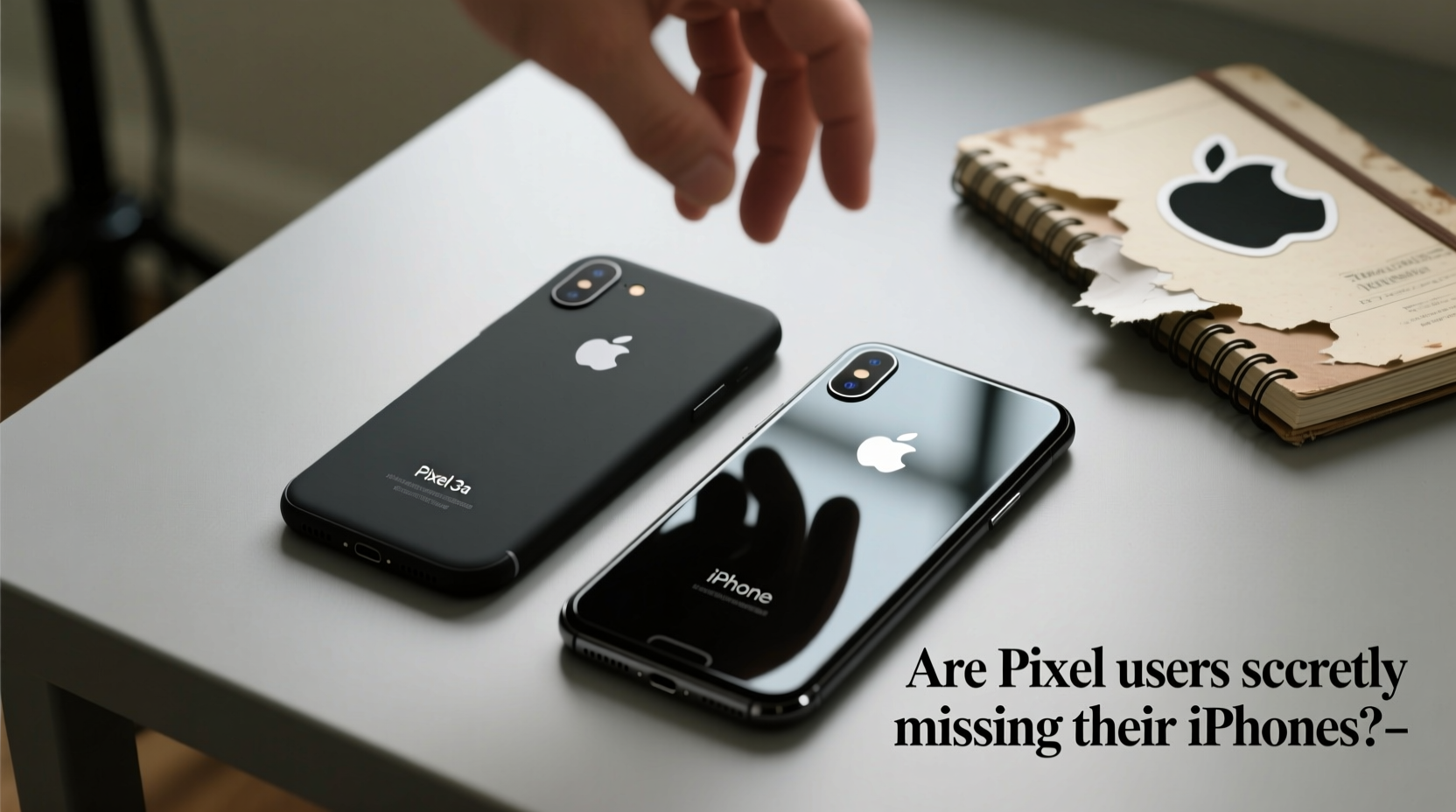
The Pixel 3a was marketed as the “iPhone killer” for budget-conscious consumers. At $399, it undercut the iPhone 8 by nearly $100 while offering features like a superior low-light camera, unlimited Google Photos backup (at the time), and guaranteed Android updates. For iPhone 8 owners frustrated with Apple’s slow innovation and high repair costs, the 3a represented freedom: affordable hardware with premium software support.
Many switched hoping for better value. Others wanted to escape Apple’s walled garden. Still others were curious about Android’s customization options. But switching ecosystems is never just about hardware—it’s about habits, integrations, and invisible dependencies built over years.
Performance and Daily Use: Where the Pixel Shines (and Stumbles)
The Pixel 3a’s camera remains one of the best in its class, even years later. Its Night Sight mode outperformed the iPhone 8 in dim lighting, and portrait mode was more consistent thanks to Google’s computational photography. Battery life, rated at up to 27 hours, held up well under moderate use—though fast charging required an additional purchase.
On the software side, stock Android offered simplicity and speed. Updates arrived promptly, and bloatware was nonexistent. However, some users found Android’s notification management less intuitive than iOS. Widgets were useful but cluttered the home screen. And despite Google’s integration strengths, certain workflows—like syncing notes or reminders across iCloud-connected devices—simply didn’t exist.
In contrast, the iPhone 8, though older, still ran iOS smoothly thanks to Apple’s efficient hardware-software pairing. Even in 2024, it supports iOS 16, which speaks volumes about longevity. The A11 Bionic chip, while not cutting-edge, handled everyday tasks without lag—a testament to Apple’s optimization.
Feature Comparison: Pixel 3a vs iPhone 8
| Feature | Google Pixel 3a | iPhone 8 |
|---|---|---|
| Release Year | 2019 | 2017 |
| Price at Launch | $399 | $699 |
| Operating System | Android 9 (upgradable to Android 13) | iOS 11 (upgradable to iOS 16) |
| Rear Camera | 12.2 MP, f/1.8, Night Sight | 12 MP, f/1.8, Portrait Mode |
| Front Camera | 8 MP, f/2.0 | 7 MP, f/2.2 |
| Battery Life | Up to 27 hours | Up to 13 hours |
| Charging | USB-C, no fast charging included | Lightning, 5W charger included |
| Ecosystem Integration | Google services, Wear OS, Chromebook | iCloud, AirPods, Mac, Apple Watch |
| Durability | Plastic body, IP52 splash-resistant | Glass back, IP67 water-resistant |
The Hidden Cost of Ecosystem Lock-In
One of the most underestimated factors in platform switching is ecosystem inertia. An iPhone user surrounded by Apple devices—MacBooks, iPads, AirPods, Apple Watches—experiences seamless continuity. Messages sync instantly. Handoff lets you start an email on your phone and finish it on your laptop. AirDrop makes sharing photos effortless.
Switching to the Pixel 3a breaks that chain. iMessage becomes green bubbles. AirDrop vanishes. Notes and passwords stored in iCloud aren’t automatically accessible. While Google offers equivalents—Messages, Nearby Share, Chrome Sync—they don’t feel quite as polished or universally adopted.
“Ecosystems aren’t just about features—they’re about muscle memory. Once you’ve spent years in one environment, small frictions add up.” — David Lin, Mobile UX Researcher at TechFlow Insights
For families using Family Sharing or shared photo albums, leaving iOS can feel socially isolating. Teenagers texting via iMessage won’t see read receipts or effects when you’re on Android. Group chats become fragmented. These aren’t technical flaws—they’re social ones.
Real User Experience: A Case Study
Sarah M., a graphic designer from Portland, switched from her iPhone 8 to a Pixel 3a in 2020. She loved the camera and lower price but returned to an iPhone SE (2022) within 18 months.
“I missed iMessage the most,” she said. “My clients used it for quick approvals, and my sister and I had a years-long photo thread. On Android, those conversations just… stopped being fun. Plus, copying text from my MacBook to my phone took three extra steps. I didn’t realize how much I relied on that.”
Her experience isn’t unique. A 2022 survey by Consumer Edge found that 68% of Android users who previously owned iPhones cited messaging, device integration, and app continuity as top pain points after switching.
Checklist: Are You Ready to Leave iPhone Behind?
- ✅ Can your essential apps (banking, work tools, fitness) run equally well on Android?
- ✅ Do you rely on iMessage or FaceTime for personal or professional communication?
- ✅ Are your other devices (laptop, tablet, watch) Apple-based?
- ✅ Will you lose access to shared family features like calendars or photo libraries?
- ✅ Have you tested Bluetooth connectivity with your car or headphones on Android?
- ✅ Are you comfortable relearning gestures, settings, and notification behaviors?
FAQ: Common Questions About Switching Platforms
Can I transfer everything from iPhone to Pixel?
You can migrate contacts, photos, calendars, and emails using Google’s Move to Android app. However, iMessages, third-party app data, and Health data do not transfer. Some apps may require manual reconfiguration.
Is the Pixel 3a still supported?
Yes, the Pixel 3a received its final Android version update (Android 13) and security patches until July 2023. It no longer receives official updates, which may concern long-term users.
Why do some people prefer iPhone over Pixel despite higher cost?
For many, it’s not about specs—it’s about reliability, ecosystem cohesion, and long-term software support. iPhones consistently receive 5–6 years of OS updates, while most Android phones get 3–4.
Conclusion: Loyalty Isn’t Just Marketing—It’s Experience
The Pixel 3a was a compelling phone. It delivered excellent camera quality, clean software, and strong value. But for former iPhone 8 users, the transition often revealed deeper attachments than anticipated. It wasn’t just about the phone—it was about the entire digital lifestyle Apple had quietly woven into their routines.
Switching platforms requires more than a spec sheet comparison. It demands a willingness to rebuild habits, reconfigure workflows, and accept temporary inefficiencies. For some, the freedom of Android is worth it. For others, the comfort of iOS is irreplaceable.




 浙公网安备
33010002000092号
浙公网安备
33010002000092号 浙B2-20120091-4
Comments
No comments yet. Why don't you start the discussion?