
In 2019, Google’s Pixel 4 entered the market as a premium Android contender, while Apple’s iPhone X—released in 2017—still held strong among iOS loyalists. For users caught between these two devices, especially those considering an upgrade from the iPhone X to the Pixel 4, the decision wasn’t just about specs. It involved ecosystem loyalty, software philosophy, camera expectations, and long-term usability. So, was switching from the iPhone X to the Pixel 4 truly worth it? The answer depends on what you value most in a smartphone experience.
Design and Build: Familiar Feel, Subtle Shifts
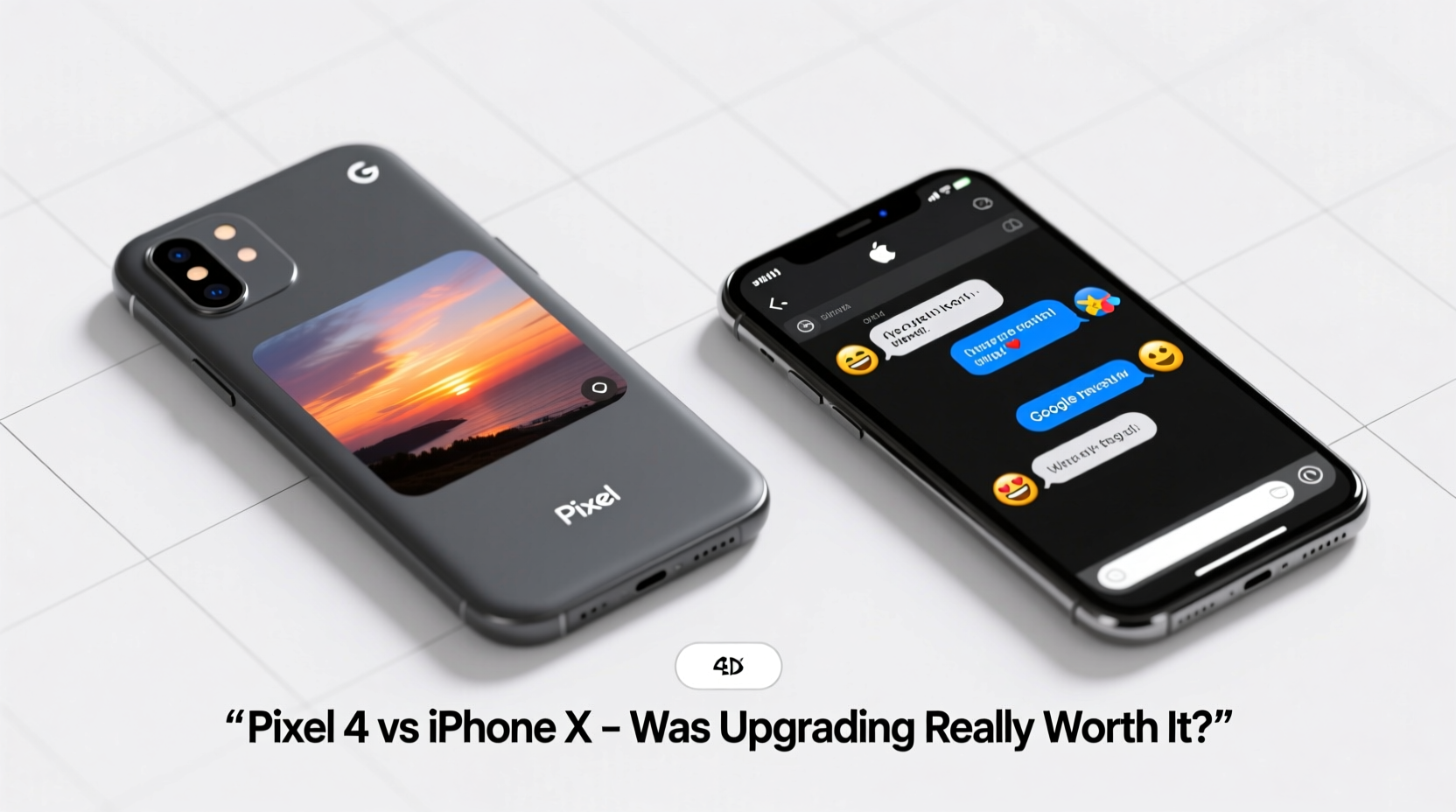
The iPhone X set a new design language for Apple with its edge-to-edge OLED display, stainless steel frame, and glass back enabling wireless charging. Its 5.8-inch screen offered a balanced blend of size and usability. The Pixel 4 matched that with a nearly identical 5.7-inch OLED display but adopted a more utilitarian aesthetic—matte aluminum frame, glossy glass back, and a bold two-tone rear panel.
Both phones are compact by today’s standards, but the Pixel 4 feels slightly denser due to its metal construction. The iPhone X remains sleeker and more minimalist, while the Pixel 4 prioritizes grip and durability. Neither device is waterproof at the IP68 level, though both offer splash resistance.
Display and Performance Comparison
The displays on both phones are excellent for their time. The iPhone X uses Apple’s Super Retina HD OLED with accurate color reproduction and deep blacks. The Pixel 4 also features a high-quality OLED panel but adds a 90Hz refresh rate—a standout feature in 2019 that made scrolling noticeably smoother.
Performance-wise, the iPhone X runs on Apple’s A11 Bionic chip, which, despite being two generations older, still handles daily tasks efficiently thanks to iOS optimization. The Pixel 4, powered by the Qualcomm Snapdragon 855, brought stronger multitasking and faster app launches, especially in Android-heavy workflows.
However, Google’s promise of “stock Android” came with trade-offs. While clean and bloat-free, Pixel 4 software updates were limited to three years (ending in 2022), whereas the iPhone X received iOS updates until iOS 16—nearly six years after release. This longevity gives Apple a significant advantage for users who keep phones longer than two years.
Key Differences at a Glance
| Feature | iPhone X | Pixel 4 |
|---|---|---|
| Processor | A11 Bionic | Snapdragon 855 |
| RAM | 3GB | 6GB |
| Display Refresh Rate | 60Hz | 90Hz |
| Software Support | ~6 years (iOS 11 to iOS 16) | 3 years (Android 10 to Android 13) |
| Storage Options | 64GB / 256GB | 64GB / 128GB |
Camera: Where the Pixel Shined
If there’s one area where the Pixel 4 clearly outperformed the iPhone X, it was photography. Despite having only a single rear lens (plus a telephoto), Google’s computational photography—powered by HDR+ and Night Sight—delivered stunning results in low light and dynamic range.
The iPhone X, while capable of producing natural, consistent photos, struggled in dim environments without a flash. The Pixel 4 could capture bright, detailed night shots without visible noise, often surpassing even higher-end competitors at the time.
“Google redefined mobile photography not with hardware, but with algorithms. The Pixel 4 proved that software can beat sensors.” — Mark Roper, Mobile Imaging Analyst at TechScope
Front cameras also favored the Pixel 4. Its 8MP selfie cam with face unlock performed better in varied lighting, while the iPhone X’s TrueDepth system, though secure, sometimes failed in low-light conditions.
Battery Life and Charging: A Major Trade-Off
This is where the Pixel 4 stumbled. With a modest 2800mAh battery, it consistently underperformed compared to the iPhone X’s 2716mAh unit—which lasted longer due to iOS efficiency. Real-world testing showed the Pixel 4 lasting around 5–6 hours of screen-on time, while the iPhone X managed 6–7 hours despite its age.
Neither phone supports fast charging out of the box (though third-party adapters helped), but the Pixel 4 introduced Face Unlock and Motion Sense (radar-based gestures), both of which drained the battery faster. Disabling these features improved endurance, but many users found them too gimmicky to justify the cost.
Wireless charging is available on both, but the iPhone X integrates better with accessories like AirPods cases and MagSafe-compatible chargers (via adapters).
Mini Case Study: Sarah’s Upgrade Dilemma
Sarah had used her iPhone X since 2018. By late 2019, she noticed slower performance and wanted better photos for her travel blog. She switched to the Pixel 4, excited by its camera reputation. Initially thrilled with photo quality, she quickly grew frustrated with daily charging anxiety. After six months, she reverted to an iPhone 11, citing battery life and ecosystem consistency as deciding factors.
Her experience reflects a common trend: while the Pixel 4 excelled in specific areas, its compromises made it less practical for all-day use.
Software Experience and Ecosystem Lock-In
Switching from iPhone to Android isn’t just about hardware—it’s a shift in digital lifestyle. iMessage, FaceTime, iCloud Photos, and seamless AirPods pairing create a sticky ecosystem. Moving to the Pixel 4 meant losing instant message sync, occasional blue-green bubble confusion, and slightly delayed Bluetooth connectivity.
On the flip side, the Pixel 4 offered Google Assistant integration, live call screening, and Call Hold—features unavailable on iPhones. Stock Android also meant fewer pre-installed apps and faster access to OS updates (while they lasted).
For power users who rely on Google services—Gmail, Drive, Calendar—the Pixel 4 felt more intuitive. But for families invested in Apple devices or those using Macs and iPads, the transition created friction.
Checklist: Is Upgrading from iPhone X to Pixel 4 Right for You?
- ✅ You prioritize camera quality, especially in low light
- ✅ You prefer stock Android and dislike bloatware
- ✅ You use Google services heavily (Gmail, Maps, Photos)
- ❌ You need all-day battery life without carrying a charger
- ❌ You rely on iMessage and Apple ecosystem integration
- ❌ You plan to keep your phone for more than three years
Frequently Asked Questions
Did the Pixel 4 receive security updates after 2022?
No. Google ended all software and security updates for the Pixel 4 in October 2022, making it vulnerable to newer threats. In contrast, the iPhone X continued receiving critical security patches through 2023.
Can the Pixel 4 run modern apps smoothly in 2024?
Barely. While basic apps like WhatsApp, Chrome, and Gmail still function, many newer applications run slowly or lack optimization. Gaming and multitasking performance have degraded significantly over time.
Was the Face Unlock on the Pixel 4 better than the iPhone X?
Technically, yes—it worked faster and supported attention detection. However, it lacked the security depth of Apple’s TrueDepth system, which uses 3D mapping. Google later disabled some features due to privacy concerns.
Final Verdict: Was the Upgrade Worth It?
For photographers and Android enthusiasts, the Pixel 4 represented a compelling leap forward from the iPhone X—especially in image processing and display smoothness. Its clean software and AI-powered features showcased Google’s vision for intelligent mobile computing.
But practicality matters. The short software lifespan, mediocre battery, and ecosystem disruption made it a risky upgrade for average users. The iPhone X, though older, remained reliable longer and integrated better across devices.
In hindsight, unless you were deeply embedded in Google’s ecosystem or needed superior point-and-shoot photography, upgrading from the iPhone X to the Pixel 4 was hard to justify beyond novelty. The Pixel 4 was innovative, but not enduring.




 浙公网安备
33010002000092号
浙公网安备
33010002000092号 浙B2-20120091-4
Comments
No comments yet. Why don't you start the discussion?